Home Blog Page 88

How to Be Less Defensive: 5 Tricks from Therapists

0

No one sets out to be defensive. It’s a label that reads as a critique: you overreact, you’re too sensitive, you’re unwilling to listen. But in reality, defensiveness isn’t a character flaw so much as a reflex.

At its core, that knee-jerk combativeness is a heightened sensitivity to perceived criticism—one that prompts your brain to scan for signs you’re being judged or misunderstood. It’s why one offhand remark (“Oh, you’re still single?”) can eclipse an otherwise reasonable conversation, or why you find yourself overexplaining your work competency even though no one was questioning it in the first place.

Sometimes that response is rooted in a deep desire to be understood—or to protect how you’re seen. Other times, defensiveness shows up around topics you genuinely care about, which makes it only natural to jump in and fight for your case. But in those moments of correcting, interrupting, and debating, you’re not really listening. Instead, “your focus shifts to how people perceive you and whether they’re getting it wrong,” Carolyn Rubenstein, PhD, a Miami-based clinical psychologist and author of Perseverance: How Young People Turn Fear into Hope, tells SELF—a pattern that exhausts not only you, but those around you.

So how do you interrupt something that feels more like a reflex? Here are a few go-to techniques from therapists.

1. Pause before you react.

According to Dr. Rubenstein, defensiveness doesn’t start with words: It begins in your body. Your jaw tightens, your heart races, your breathing shortens. These are early warning signs that your nervous system has registered a “threat, which is why the first intervention is physical, not verbal.

Unclench your jaw. Let your shoulders drop. Uncross your arms. Take a slower breath than feels natural. These small shifts should disrupt the automatic, “brace for impact” response—and give you the chance to respond more thoughtfully (and less reactively).

2. Get curious before you counter.

It’s easy to zero in on what feels unfair—someone’s tone, phrasing, or timing—while ignoring everything else. Your partner’s frustration about your tardiness becomes, in your mind, an indictment of your character. A manager’s blunt feedback registers as disrespect, not guidance.

However, curiosity can interrupt that narrow-minded thinking, according to Maya Nehru, MA, LMFT, a psychotherapist offering services in anxiety and trauma in San Diego and Washington. “Even if you initially disagree with the delivery or what they’re saying, ask yourself, ‘Is any of this even 5% useful?’” Nehru tells SELF. Acknowledging one valid critique doesn’t mean endorsing everything they said or did: Your friend shouldn’t have used expletives, but maybe they do bring up a good point about your unhealthy situationship. That passive-aggressive email ruined your mood, but the feedback about your project was pretty accurate. “What this does is it helps bypass the all-or-nothing thinking we tend to fall into,” Nehru says, making it easier to hone in on what matters—not what stings.

From Side Hustle to Global Empire: How Monique Rodriguez Mielle Organics Redefined Success

0

Photo Credit: Mielle Organics

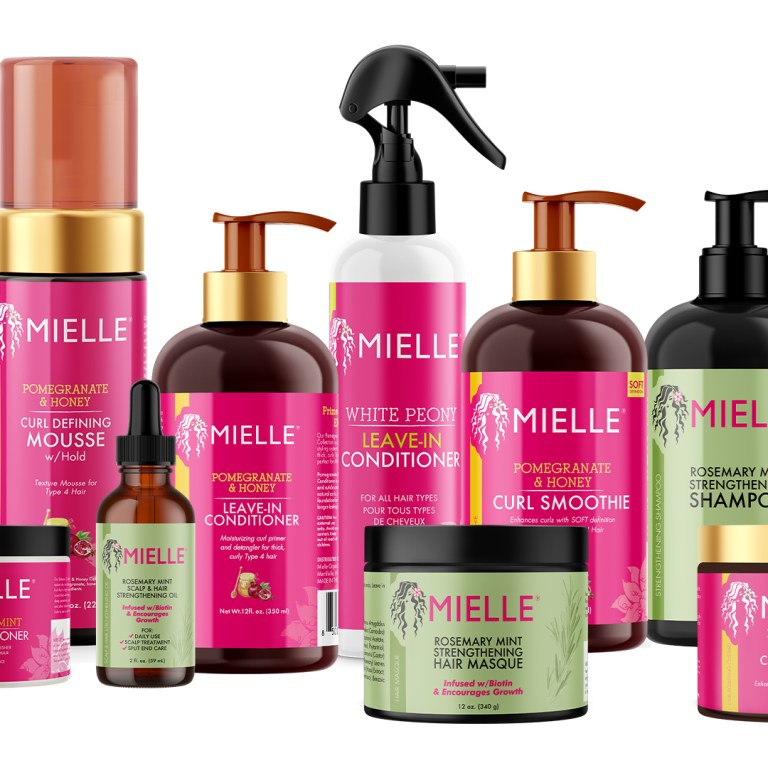
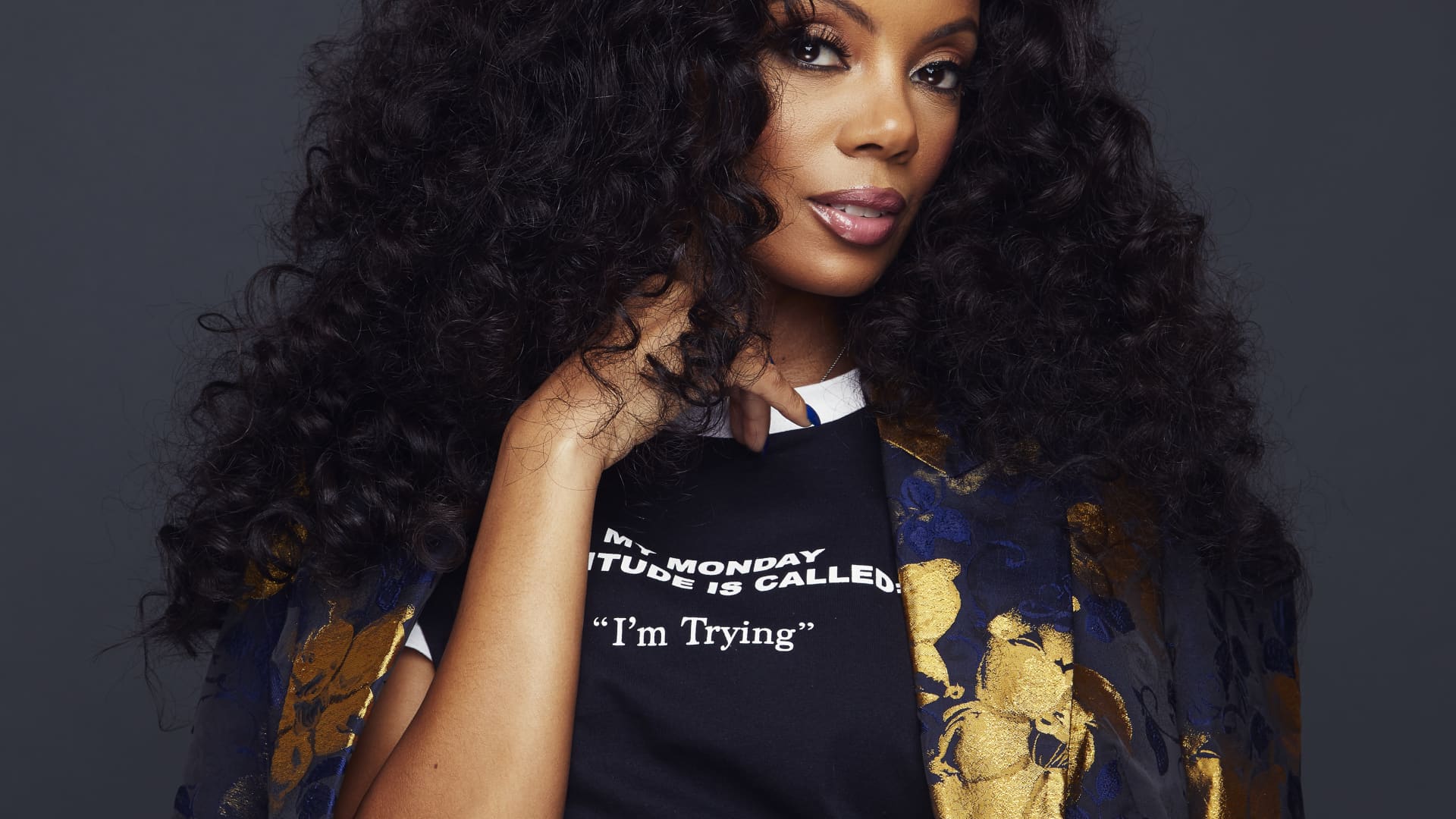
If you are looking for a sign to finally start that business in your garage or spare bedroom, this is it! The Monique Rodriguez Mielle Organics journey is the ultimate blueprint for turning a passion project into a global empire. Monique recently sat down with Emma Grede on the Side Hustle Stack podcast to get real about her transition from a registered nurse to the CEO of a billion dollar brand. It is so inspiring to hear her talk about the early days of mixing products in her kitchen and shipping orders from her basement, proving that you do not need a fancy office to start making history.

Lessons in Scale and Strategy

During her conversation with Emma Grede, the Monique Rodriguez Mielle Organics founder broke down what it really takes to scale a business while maintaining your peace and your purpose. She highlighted the importance of community and how staying connected to her customers helped her build a brand that people truly trust. It is not just about the hair care; it is about the legacy and the hard work that goes on behind the scenes when the cameras are off. Seeing two powerhouse Black women like Monique and Emma discuss the highs and lows of the beauty industry is the exact kind of “big sister” energy we need in our ears every single morning.

Group Hero Product Shot
Photo Credit: Mielle Organics

A Legacy Worth Celebrating

The Monique Rodriguez Mielle Organics acquisition by P&G was a historic moment that showed the world exactly what we already knew: our spending power and our brands are valuable. Monique continues to be a light for aspiring entrepreneurs who want to bridge the gap between a small side hustle and a massive corporate partnership without losing their soul. Her story reminds us that with enough grit and a solid plan, those “basement dreams” can eventually lead to a seat at the highest tables in the world. We are taking notes and manifesting this kind of growth for all of our favorite small businesses this year!

107170586 1671744599324 MoniqueRodriquezPhoto
Photo Credit: Mielle Organics

Megan Thee Stallion Looks Like a ’90s Prom Queen in Her Big, Blonde Updo — See Photos

0

Ah, prom season. I admit, I’m not really on top of how the teens are styling their hair for the big dance these days, but I have crystal-clear memories of how we used to do it in the 1990s. If you didn’t pile curls into a tendril-spilling tower atop your head, did you even read the special prom issue of YM? Well, it seems Megan Thee Stallion definitely did, and it apparently inspired her Broadway debut after-show glam.

Meg gave her first highly anticipated performance in Moulin Rouge!in which she’ll be playing the role of Zidler in the musical through mid-May. I would be remiss to not shout out her amazing hairstyle in the show—a glossy, Veronica Lake-esque look that’s bedazzled along its waves—but it’s her celebratory stage door style that’s really sending me back.

Photo: Getty Images

Everything about Megan’s look as she emerged from the Al Hirschfeld Theatre on March 24 screamed prom queen: the long, sequinned dress, the strappy, metallic shoes, the matching red mani-pedi, the gold Alexis Bittar jewelry (those bangles are so epic), the bold lips and shimmering eyes, because why take off your stage makeup if you’re going out after? She’s even carrying bouquets of flowers as if her name was just announced as the winner.

Megan Thee Stallion carrying bouquets of flowers in a sequin dress

Photo: Getty Images

Side Stitches: Why You Get Them and Quick Fixes that Help

0

You’re two miles into a run and feeling good. Your stride is relaxed, your breathing is controlled, and those endorphins are ~flowing~.

All of a sudden, you’re hit with a sharp, stabbing sensation on the side of your torso, just below your ribs. Without even thinking, you slow your pace, desperate to get rid of the pain. You planned to run six miles today, but now all you can think about is how the hell you’re gonna make it home in one piece.

Nothing kiboshes an otherwise awesome workout like the dreaded side stitch.

Clinically called exercise-related transient abdominal pain (ETAP for short), the side stitch is “very common,” Sydney Lopez, a licensed athletic trainer with The Stone Clinic in San Francisco, tells SELF. An older survey of 965 athletes, published in 2000 in the journal Medicine & Science in Sports & Exercise, found that nearly 70% of runners and 75% of swimmers reported a side stitch in the past year.

But just because the side stitch is common doesn’t mean you need to suffer through it. Read on to learn what the hell causes side stitches, expert-backed tips for banishing them, and the red flags that warrant a chat with your doctor.

What exactly is a side stitch?

The side stitch is a sharp, localized pain that comes on during exercise and occurs in the abdomen, typically below the rib cage, according to Hunter Carter, an exercise physiologist at Hospital for Special Surgery in New York City. “A lot of people will describe it as sort of like a stabbing pain in the ribs,” Carter tells SELF. For many people, this sensation crops up on the right side of the body, he says.

A side stitch is different from other exercise-induced abdominal issues, such as muscle cramps (which feel more like tightness) and GI distress (which can include cramping accompanied by bloating, nausea, and/or a sudden urge to poop), Carter says.

Why do people get side stitches?

As for what causes the side stitch, “there is no one exact mechanism that is absolutely agreed upon,” Carter says. But the leading theory is that it happens when the parietal peritoneum (a layer of abdominal lining) gets irritated with repetitive movement, he says.

Runners who have a lot of vertical oscillation—meaning they bounce up and down a bunch as they stride—can be especially susceptible, Cater says. That’s because all that vigorous motion can jostle and aggravate the parietal peritoneum.

11 Best Medicube Skin-Care Products for Smoother, Clearer Skin

0

The V-Roller Head is where things get especially good. It’s designed at a 62-degree angle, which sounds technical but really just means it glides along your cheekbones and jawline with even pressure and coverage. The modes let you shift gears depending on your mood: Red Mode for a firmer, bouncier look over time, Blue Mode for mornings when your face is holding onto last night (it helps de-puff and refine), and Purple Mode shifts into body care territory, which is surprisingly nice for tension in the neck and shoulders.

Then there’s the cleansing attachment, which goes beyond your hands to really get into pores, helping clear buildup, blackheads, and all those tricky little areas around the nose. You can go all in and use everything together in the same skin-care routine, or just pick your lane on any given day.

  • What’s included: Mini Booster Pro Plus, V-Roller Head, Cleansing Device

Frequently Asked Questions

Meet the experts

  • Charlotte Cho, an esthetician and co-founder of Soko Glam based in New York City
  • Jennifer Levine, MD, a board-certified plastic surgeon based in New York City

How we test and review products

When Allure tests a product, our editors look at it from every angle in an effort to best serve you. We review ingredients, scrutinize brand claims, and, when necessary, examine peer-reviewed scientific and medical studies. In addition to testing each and every product that’s included in each and every review, we rely on experts who shape their fields, including dermatology, cosmetic chemistry, and medicine, to help us vet the ingredients and formulas.

For our list of the best clay masks, we considered each product’s performance across five primary categories: product ingredients and efficacy, packaging, fragrance, texture, and product wear. Every product was determined to have excelled in each category by our editorial team, which is composed of in-house writers and editors as well as contributors—along with special consideration from dermatologists. To learn more information on our reporting and testing processes, read our complete reviews process and methodology page.

Our staff and testers

A beauty product is a personal purchase. You might be searching for a face cream to address persistent dryness or a new nail product to add to your Sunday self-care routine; you may simply be browsing around for the latest launches to hit the hair market. No matter what you seek or your individual needs and concerns, Allure wants to ensure that you love anything we recommend in our stories. We believe that having a diverse team of writers and editors—in addition to the wide range of outside testers and industry experts we regularly call upon—is essential to reaching that goal.

After all, can we really say a skin-care product is the “best” for people over 50 if the only testers we’ve solicited opinions from folks who have yet to hit 30? Can we honestly deem a high-end diffuser worthy of your hard-earned cash if it’s never been tested on curls? We’re proud that our staff spans a wide range of ages, skin tones, hair textures, genders, and backgrounds, which means that we are able to fairly assess any beauty product that comes into the beauty closet.

How To Choose A Non-Toxic Sunscreen

0

What Does “Organic Sunscreen” Actually Mean?

The word organic is incredibly confusing in many situations, but especially when referring to sunscreen. Technically, an “organic” sunscreen is one that uses carbon-based chemicals, like oxybenzone, avobenzone, and octinoxate, to diminish the impact of ultraviolet radiation. That’s what organic chemistry is all about—the study of molecules with carbon backbones and carbon-hydrogen bonds. Benzene (C6H6), a petrochemical and a known carcinogen, is an ORGANIC compound! (Insert horrified gasp here, please.)

The barrier chemicals, like zinc and titanium, are called inorganic because they are not carbon-based. Zinc oxide has the chemical formula ZnO—it is a zinc molecule and an oxygen molecule. In chemistry-speak, it is an inorganic compound.

All this said, when regular people (as opposed to chemists) refer to organic sunscreens or natural sunscreens for the face and body, they are usually talking about a barrier suncream made with zinc and/or titanium that typically contains fewer and healthier ingredients than a mainstream sunscreen you might find in the grocery store.

A less confusing term would be non-toxic sunscreen or natural sunscreen because it implies that we are comparing a more environmentally conscious product with a traditional sun protection product.

Why Choose a Non-Toxic or Natural Sunscreen?

Most widely available commercial sunscreens contain not only sun protection chemicals, but parabens, fragrance, phthalates, and multiple ethoxylated ingredients, and they are often packaged in aerosol cans.

That knowledge alone is a great reason to choose a non-toxic sunscreen over a traditional brand.

Specifically, the sunscreen ingredients oxybenzone and octinoxate are estrogenic and allergenic. Also watch for a “non-active” ingredient called methylisothiazolinone—a preservative commonly found in sunscreens and baby wipes that is increasingly recognized as a strong skin allergen.

Last, but definitely not least, many chemical sunscreens are toxic to marine environments. Oxybenzone and octinoxate have been shown to contribute to coral reef damage, which is why several coastal regions now restrict their use.

It’s hard to relax with a book on the beach when you know your sunscreen might be harming the reef the moment you step into the water.

What Is a Barrier Sunblock?

Zinc oxide and titanium dioxide are the two physical sunblocks used in the natural sunscreen industry. They block the sun’s rays rather than screening them, which is usually what people are looking for when they search for an organic sunblock or natural sunblock.

Zinc blocks both long and short-wave UVA rays and UVB rays, making it a more desirable sun protection ingredient than titanium dioxide, which blocks mostly UVB and short-wave UVA rays.

Rather than filtering UV radiation and diminishing its harmful effects, a physical sunblock sits on top of the skin and reflects sunlight. It’s like the difference between a filter and a mirror—the filter breaks up the sunlight and deactivates it, while the mirror reflects it instead.

Non-Nano vs Nano Sunscreen Particles

Nanoparticles complicate this issue because they may penetrate skin cells to some degree, and more research is needed to fully understand their biological and environmental effects.

Some researchers believe nanoparticles may be taken into skin cells where they could heat up and potentially accelerate UV damage. The evidence is still evolving.

For now, many people choose non-nano zinc oxide sunscreens because they sit on top of the skin and are less likely to be absorbed or enter aquatic ecosystems.

Is Mineral Sunscreen Better Than Chemical Sunscreen?

This is a much-argued point, and there is not enough science available to support extreme positions.

However, several concerns have been raised about certain chemical sunscreen ingredients.

Oxybenzone may act as an endocrine disruptor in the body, mimicking the action of estrogen. Retinyl palmitate can slow visible skin aging but may accelerate certain forms of skin damage when exposed to ultraviolet light. PABA was once widely used but caused allergic reactions in enough people that it has largely fallen out of favor.

In short, there are several compelling arguments for using a non-nano physical sunscreen made with zinc oxide or titanium dioxide.

Physical or mineral sunscreens

• are not absorbed by the skin
• are not degraded by sunlight
• are generally more photostable
• often contain fewer unnecessary ingredients

Of the chemical screens, avobenzone protects against UVA rays and appears to have a somewhat lower toxicity profile than some other chemical filters, at least based on current evidence.

How to Reduce the Chalky Look of Mineral Sunscreen

We know natural sunscreens can be a drag. They are often thick, chalky, or zinc-heavy.

Adding a drop or two of Nectar Nourishing Drops to your sunscreen can dramatically improve the texture and spreadability. Organic oils of safflower, argan, prickly pear, and pumpkin seed create a silky blend that helps the sunscreen apply more smoothly.

Adding a drop of oil may decrease the SPF very slightly, but not enough to matter if it helps you apply the sunscreen more evenly.

People with deeper skin tones may have to try a few formulations before finding one that blends without leaving a white cast. Fortunately, mineral sunscreen formulations are improving rapidly.

What Should You Look for in a Natural Sunscreen?

Look for fewer ingredients overall.

Choose non-nano zinc oxide or titanium dioxide until we know more about the effects of nanoparticles.

Avoid products containing parabens and fragrance. Even essential oils can oxidize in sunlight and increase the chance of skin reactions.

An SPF of 30 is usually sufficientand protective clothing, hats, and shade are still important when spending long periods outdoors.

Also remember that a small amount of sunlight—about 10 to 15 minutes of early or late day sun on bare skin a few times a week—can help maintain healthy vitamin D levels.

Most dermatologists will tell you that the best sunscreen is the one you will actually use. I agree that using sunscreen is better than skipping it altogether.

But I think we can do better: let’s look for natural sunscreen ingredients that aren’t harmful for human or environmental health. Why choose any sunscreen when you can easily choose a healthier one??

FAQ: Choosing a Non-Toxic Sunscreen

What is the safest sunscreen ingredient?

Zinc oxide is widely considered the safest and most effective sunscreen ingredient because it protects against both UVA and UVB rays and sits on top of the skin rather than being absorbed.

What does non-nano zinc oxide mean?

Non-nano zinc oxide refers to zinc particles that are large enough that they remain on the surface of the skin rather than penetrating skin cells. Many people prefer non-nano formulations because of potential environmental and absorption concerns.

Are chemical sunscreens harmful?

Not necessarily. Many chemical sunscreens have long safety records, but certain ingredients such as oxybenzone have raised concerns about hormone disruption, allergies, and environmental toxicity, and many chemical sunscreens contain inactive ingredients that come with health questions as well.

Is mineral sunscreen better for sensitive skin?

Yes. Mineral sunscreens made with zinc oxide are often better tolerated by people with sensitive skin, eczema, or perioral dermatitis.

Do mineral sunscreens protect as well as chemical sunscreens?

Yes, when properly formulated and applied in adequate amounts, mineral sunscreens provide excellent broad-spectrum protection.

Our Favorite Non-Toxic Sunscreens

Below are a few of the Osmia team’s favorite natural sunscreens.

Sarah

Mychelle is my go-to daily sunscreen. It does not seem to exacerbate my perioral dermatitis, which many natural sunscreens do. I also tested it on a dark-skinned friend, and it went in really well with minimal effort, which is not always the case with zinc-based sunscreens. I usually mix it with the Saie Slip Tint (SPF35) for a nice healthy glow—it comes in lots of shades. I really like Babo Botanicals for a natural body sunscreen.”

Mary

“I like the MyChelle Sun Shield SPF 28 Unscented sunscreen to protect my face during skiing, running, biking, and rafting adventures up here in the mountains. It’s a tiny bit white on your face at first but has a nice finish if you give it a minute. And, I’ve had good luck with it not causing breakouts despite long—sometimes grimy—days outdoors. So far, no burns!”

Lisa

“I love to have a tin of Badger sunscreen in my backpack for outdoor adventures.”

Annabelle

“I love Kora Organics Silky Sun Drops because there is no white residue and makes my skin soft and dewy.”

Karla

“I like Kinfield sunscreen because it blends nicely, leaves a nice glow and it doesn’t break me out.”

Doreen

“I love Kypris Pot of Shade sunscreen, because it has such a velvety feeling and makes my skin look radiant. A little goes a long way.”

Hope this helps you choose a sunscreen with fewer health implications for you, your loved ones, and the planet we all share!


The information contained in this post is for educational interest only. This information is not intended to be used for diagnosis or treatment of any physical or mental illness, disease, or skin conditions.

How to Lower Inflammation With 5 Simple Changes to Your Morning Routine

0

Adding them to your breakfast is simple: Toss a handful of blueberries or raspberries onto your oatmeal or yogurt, mix a square of dark chocolate (at least 70% cacao) into warm oats, or drizzle extra virgin olive oil over avocado toast or eggs. And if you’re a coffee drinker, your morning cup is a bonus—coffee is rich in chlorogenic acids, a type of polyphenol with antioxidant and anti-inflammatory properties. So sip with purpose and enjoy the added health perks.

Protein plays a different but equally important role in taming inflammation. Meals high in refined carbs that aren’t paired with protein or healthy fats may cause quick spikes and crashes in blood sugar, which may contribute to inflammation over time, especially if you’re managing insulin resistance or other metabolic health concerns. Starting your day with protein can help steady your blood sugar, which, in turn, may keep inflammation in check. It also provides the building blocks your body needs for tissue repair and overall resilience.

To get the most out of your morning meal, aim to eat 20 to 30 grams of protein. Try smashed avocado with two hard-boiled eggs, a tofu scramble, or Greek yogurt topped with fruit and nuts. If you’re craving something sweet, blend a scoop of protein powder into a smoothie with berries and milk, or pair a half-cup of cottage cheese with fresh fruit.

Squeeze in some quick, mindful movement

Let’s be real: mornings can feel hectic, fast. Just five minutes of mindful movement, like gentle stretching or a quick yoga flow, can help lower stress hormones and support your body’s natural anti-inflammatory defenses. You don’t need any special gear, or even a chic workout outfit—just you, a good playlist, and a few minutes to spare.

Chronic stress can cause your body to release cortisol, a hormone that, when elevated for too long, has been linked to increased inflammation. Movement can lower stress, which can help balance cortisol levels and support your immune system, giving your body a better foundation to manage inflammation.

Silab’s Neolipyl awarded at PCHi as interest in skin moisturizing grows

0

As the interest in moisturizing skincare ingredients is growing, Neolipyl, the new repairing natural active ingredient from Silabwas awarded the 2nd prize in the Skin Barrier Repair category, during the PCHi Fountain Awards evening on March 18, as part of the Chinese PCHi (Personal Care and Homecare Ingredients) exhibition held on March 18-20 in Hangzhou.

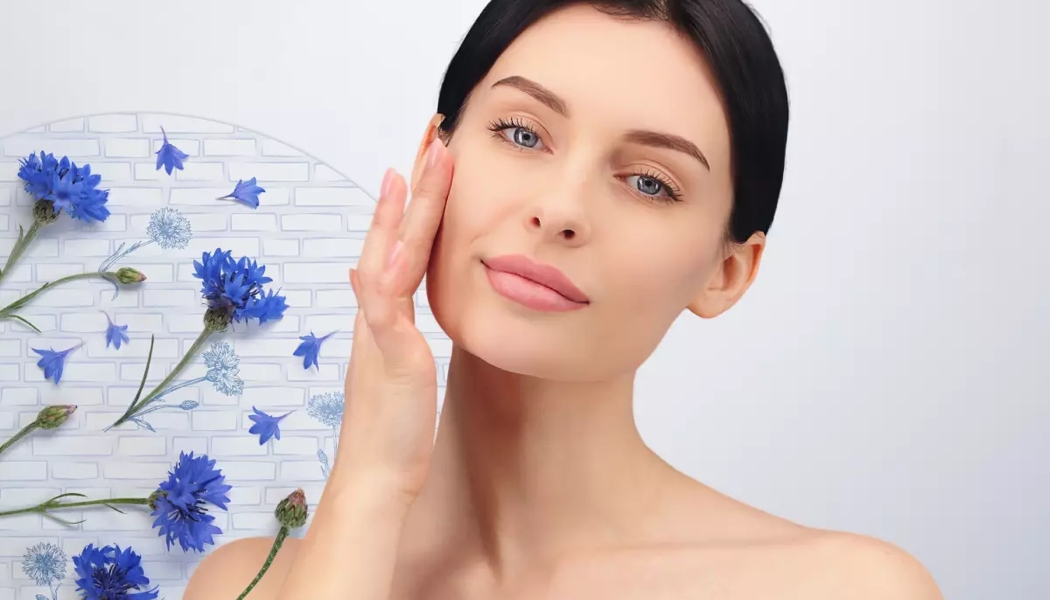
Neolipyl, which was launched last year, is a repairing natural active ingredient derived from cornflowers (Centaurea cyanus) targeting lipid disorders of dry skin. It received the 2nd prize of the PCHi Fountain Awards, behind an ingredient from the Chinese company Shenzhen Dieckmann Biotechnology Co.

We are very pleased to receive this award, which recognizes all the work we have done to decipher the characteristics of dry skin and offer an adapted solution. Indeed, to develop this active ingredient, we designed an unprecedented modeling study by leveraging our dual expertise in omics technologies, especially through lipidomic study, and optical biopsies. This enabled us to establish the lipid signature of dry skin for the first time: the results demonstrate weakened composition and structure of the lipid matrix,” commented Brigitte Closs-Gonthier, Chief Executive Officer at Silab.

Tested on this model, Neolipyl re-equilibrates this lipid matrix by acting on both its composition and structure, for hydrating and smoothing effects visible as of 14 days of application. In addition, combined with retinol on normal skin, it limits the adverse effects of this molecule and supports its cosmetic benefits.


A genuine lipid restructuring agent and natural partner of retinol, Neolipyl is a patented active ingredient recommended in all cares intended for the skin barrier,” said Silab in a released.

What’s a ‘Mormon Wife’ Supposed to Look Like in 2026? | The Secret Lives of Mormon Wives Cast Interview

0

March 2026 was poised to be perhaps the pinnacle of Utah Mormon cultural influence. The fourth season of the Hulu sensation The Secret Lives of Mormon Wives was dropping 10 new episodes of soft waves, plump lips, and perky breasts. And just 10 days later, the latest season of The Bachelorette would premiere on ABC with a Mormon woman—Taylor Frankie Paul, a cast member of SLOMW—at its center for the first time. But last week, what may have been cracks in the picture-perfect presentation of this demographic of Utah women became a major fissure when a 2023 video of Paul throwing metal barstools at her ex-partner, Dakota Mortenson, while her child is in the room surfaced online. Just three days before it was set to premiere, The Bachelorette—at a likely cost of tens of millions of dollars—was entirely cancelled. There are reports from cast members that the filming of season five of SLOMW has been paused. (As of press time, Hulu had not replied to a request for comment.)

Over the last decade, the cultural currency of the Church of Jesus Christ of Latter-day Saints (LDS) has risen sharply in the United States, as the Mormon lifestyle bloggers of the 2010s laid the groundwork for the reality show influencers of today. Those young content creators—with their long, shiny hair, mostly modest attire, affiliate links, and several children under five—walked so Paul and her #MomTok compatriots could run (perhaps a little too far). Is this month’s turmoil an indication that the Mormon commerce machine may come to its inevitable end? Or will it now morph once again?

A few weeks ago, I flew to Salt Lake City to report on the powerful 2.0 wave of Utahn beauty influence—timed perfectly to this Big Month for Mormons. I sat down with the cast of SLOMW (minus Paul, who pulled out the day before, and Whitney Leavitt, who is currently performing on Broadway as Roxie Hart in Chicago)visited the med spa of The Real Housewives of Salt Lake City’s Heather Gay, got Utah Curls™, and slurped on a “dirty soda.” This is what I found along Interstate 15—and where I think this aesthetic subculture-turned-juggernaut is headed next.


I’ve only been in Jessi Draper’s chair for four minutes when she starts telling me about her labiaplasty. “After having a baby, I was like, it’s not the same down there. It was hard to wear yoga pants. It was just distracting,” the 33-year-old hairstylist says while twirling a lock of my hair into her signature—and, since 2024, trademarked—“Utah Curls” style. The inner (or, in this case, outer) workings of their genitals may be TMI for the average chat with your hairstylist, but for Draper, this is small talk. In fact, she’s told this story before, on the first season of Hulu’s megahit reality show The Secret Lives of Mormon Wives. (Hulu doesn’t release its numbers, but there are rumors that ratings have topped that of The Kardashians.) Getting a labiaplasty—or breast implants, Botox injections, spray tans, or lash extensions—is par for the course in Utah Mormon beauty culture.

We’re in JZ Styles, a 15,000-square foot beauty behemoth that Draper founded in 2016 alongside her father. The salon is nestled in the Pleasant Grove suburb of Salt Lake City, Utah, just down the road from one of the town’s Swig locations, the “dirty soda” shop that skyrocketed to nationwide fame after the show’s premiere. (Mormon doctrine forbids alcohol consumption; it takes no issue, however, with drinking a blend of Diet Coke, flavored syrup, and half-and-half.) This area, which is home to utopian-sounding towns like Thanksgiving Point and American Fork, has more plastic surgeons per capita than Los Angeles, according to a 2017 report published by the Utah Women & Leadership Project. Utah also has more members of the Church of Jesus Christ of Latter-day Saints (LDS) than, well, anywhere else in the United States; approximately 42% of the state’s population identifies as Mormon.

How to Build a Wardrobe of Outfits (not just basics) — Inside Out Style

0

twitterpinterestlinkedinmail

A reader wrote to me and said, “My question is, how do I build a wardrobe of outfits instead of just basics?”

And I love this question because it gets to the heart of why so many intelligent, capable women open their wardrobes and think, I have plenty of clothes, so why do I feel like I have nothing to wear?

We are so often told that everybody needs these basics. There are endless lists. The white shirt. The black blazer. The perfect jeans. The neutral knit.

So you diligently collect the basics. You tick them off the list.

And then suddenly you go, I have got these basics, but everything feels bland because everything is too basic.

If your wardrobe feels like dry toast, it is not because you have failed at fashion. It is because you have been sold an incomplete formula.

Let’s fix that.

Step One: Your Colour Palette Is Number One

When we are thinking about building a wardrobe of outfits, a personal colour analysis colour palette is your number one tool as it is your guide to selecting colours that both look fabulous on you but also work beautifully together.

When you have your best colour palette where everything works together, you will find outfits come together really easily. This is not magic. This is colour theory.

You want to make sure that your basics also work together. This is why having a colour palette where your neutrals complement your colours is really important.

Not all neutrals work together.  Cool grey clashes with warm brown.

These Neutrals Are Not the Same

If you look at the neutrals in the Spicy and Sublime palettes pictured below – they are really quite different from each other.
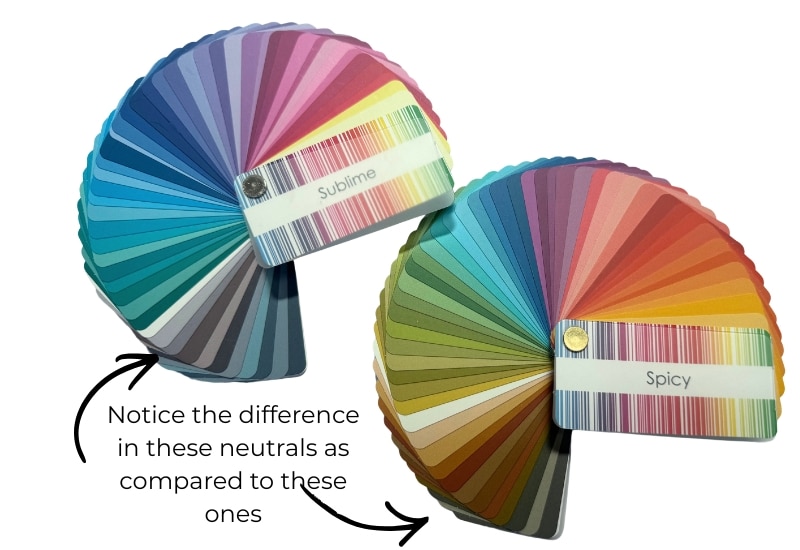
See the differene between neutrals in a warm palette as compared to a cool oneNotice that you can’t mix the warm neutrals with the cool colours.
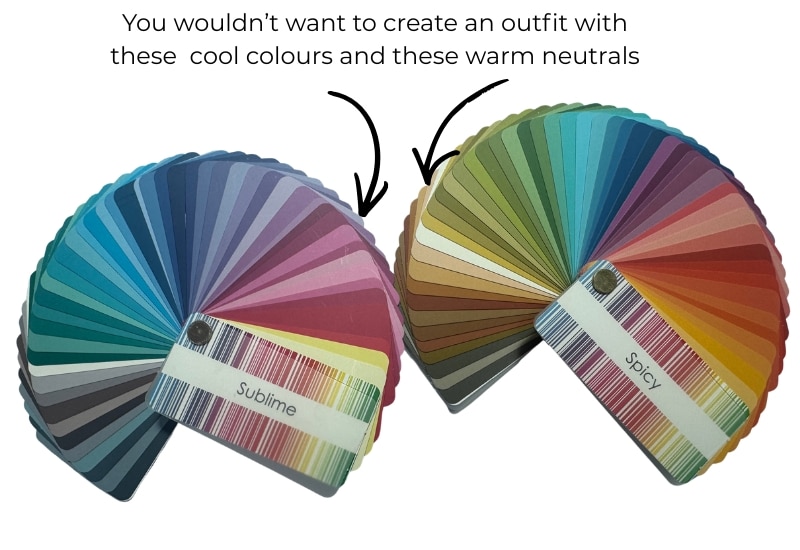
Warm neutrals don't look good with cool colours

Nor can you mix cool neutrals with warm colours to create a harmonious effect.
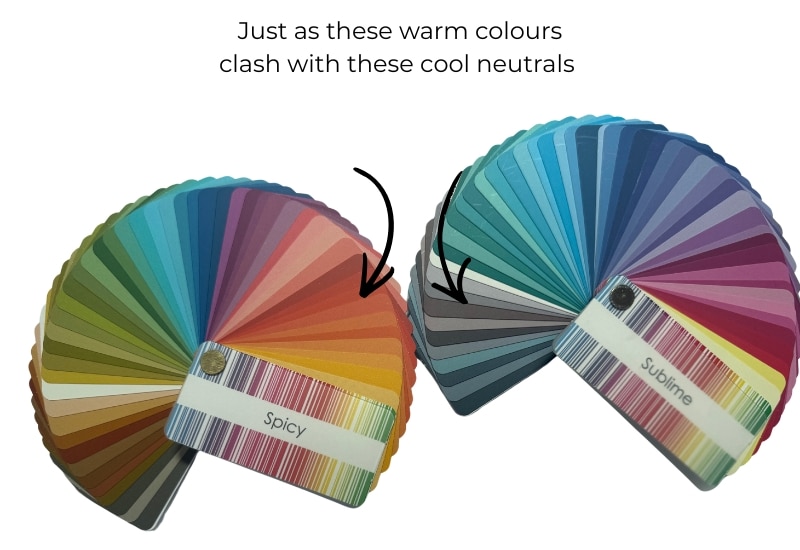
Warm colours don't mix well with cool neutralsThis is where, even if it is a neutral basic garment, it still needs to be in your colour palette.

This is why I teach personal colour analysis as a science, not a trend. When your colours harmonise with you and with each other, your wardrobe becomes mix and match by design, not by luck.

If you’d love to discover your palette to make it easier to select colours that work easily together, you can get an online colour analysis here.  It does not matter where you are in the world. What matters is that you stop guessing.

Because when your palette is right, suddenly you have more options to build outfits.

What Actually Makes an Outfit?

Thinking about an outfit, what makes an outfit?

  1. The colours coordinate.
  2. There is something about the styles, of garments, the fabrics and level of refinement that relates

If everything is super casual, that is fine. If everything is very smart, that is fine. But if you have very smart clothes with super casual, they just do not work as well together unless your personality is super creative or rebellious.

It is thinking about having clothes that fit together.

An outfit is not a random collection of pieces thrown on a body. It is a coordinated message.
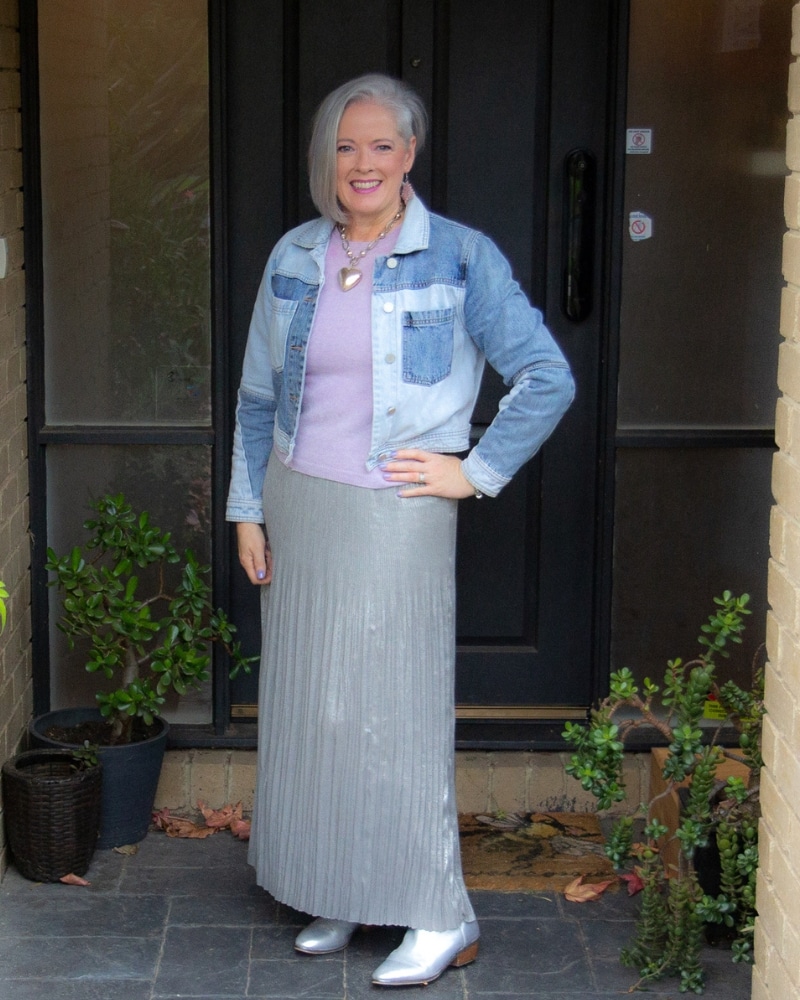
colours that work seamlessly together

Because my wardrobe is filled with colours from the same palette, it’s easy to mix and match different items and create new outfits.

And remember, your clothes are not just fabric. They are communicating. This is enclothed cognition in action. What you wear influences how you feel and how others perceive you. When the elements are cohesive, you feel coherent.

When they are not, you feel slightly off all day, and you may not even know why.

If You Have Only Basics, You May Need Hero Pieces

If you have built a wardrobe of basics, you might need a few hero garments or accessories to make an outfit individual and interesting.

Not everything has to be basic.

A hero piece is the garment that adds interest. It might be a blouse in a signature colour. A jacket with personality. A skirt in a pattern. A divine silk scarf. Something that has presence.

Not a plain white shirt one with interesting construction

This white shirt is a hero – the double cuff flared sleeves make it a standout.

Think of your basics as the supporting cast. Your hero pieces are the lead actors.

If everything is a supporting character, there is no story.

Accessories Turn Basics Into Outfits

This is where accessories come in.

Accessories are really useful for turning those basics into something interesting.

Jewellery, scarves, shoes, bags. These are not afterthoughts. They are the punctuation in your sentence.

Personally, my jewellery is in my colour palette and my signature colours. I am always looking for things that will work together naturally.

So when I get dressed, I am not trying to force combinations. They already belong together.

That is the power of a cohesive colour story.

Do You Like Interesting Basics or Plain Basics?

Here is a question most women never ask themselves.

Do I like interesting basics, or plain basics?

Some people have a style that is much simpler and plain. Other people need more excitement even in their basics.

You can have a grey T-shirt. But maybe it has some interesting construction. That moves it away from being a plain and simple basic to an item that has personality.

For some people, that interesting construction is perfect. For others, they don’t like that. Or maybe that interesting knit top with a batwing sleeve doesn’t allow you to layer in the way you want. So you might need to opt for a simpler piece that layers underneath a hero jacket.

Neither is right or wrong.

This is about understanding you.
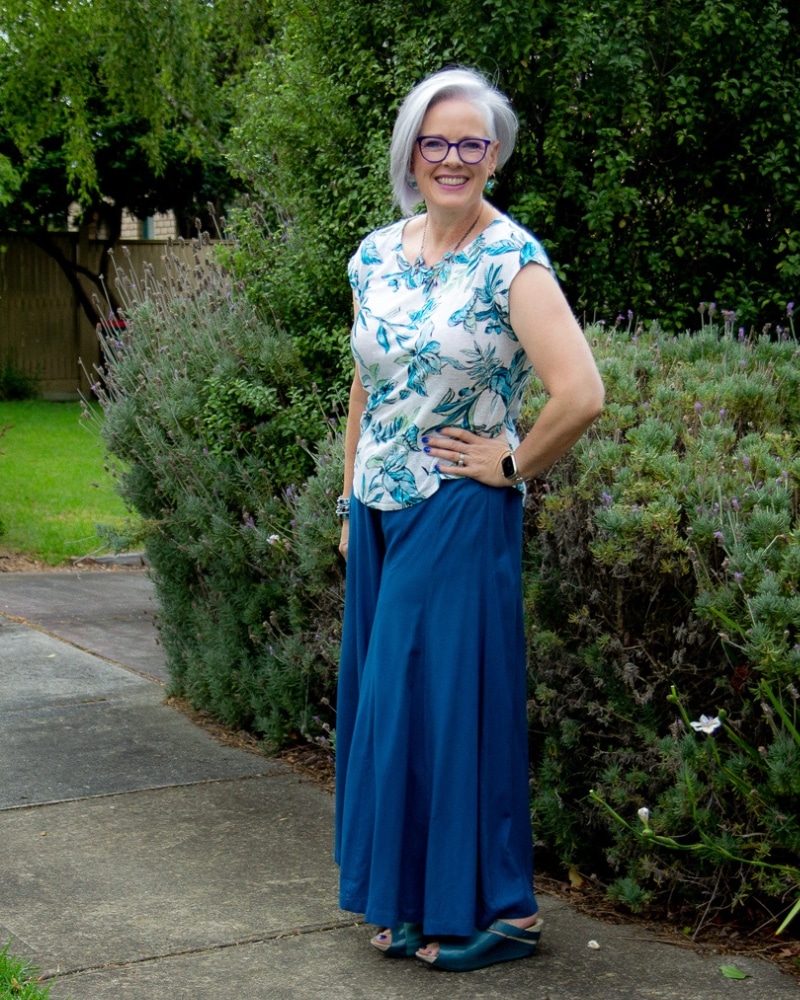
Patterned tee rather than plain

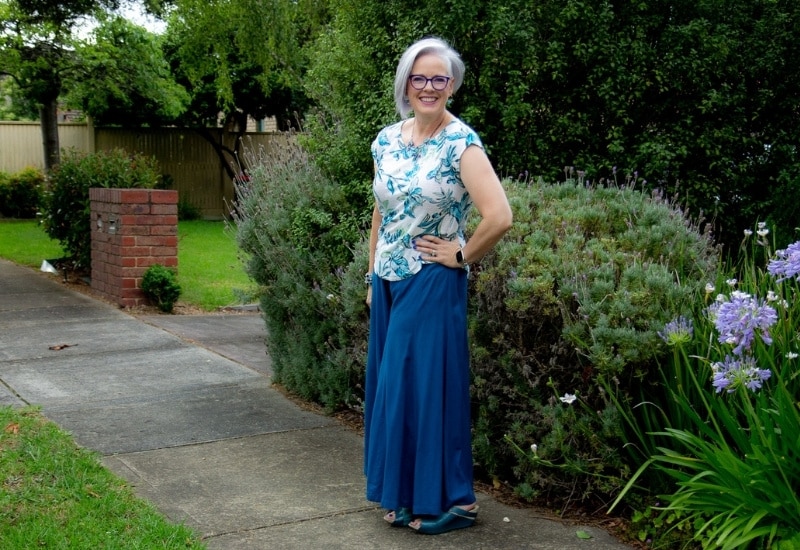
In summer, I opt for more patterned tees as I’m not layering on a third piece like I do in winter.  Notice that my pants are the same ones as in the photo above with the white shirt, my clothes become more transseasonal as the same family of colours are always in my closet winter and summer.

And this is where copying other people usually goes seriously wrong. We see someone else looking fabulous and think I will have that. But we are not them. We do not have their colouring, their proportions, their lifestyle, their personality.

What you want to do is understand yourself, then build a wardrobe around who you are.

Look at Your Favourites for Clues

Often, looking at your favourites can give you that information.

What are the pieces you reach for again and again and that make you feel great (we are not talking about the “it’ll do items that you wear so you’re not naked)?

What do they have in common?

Is it the fabrication? The simplicity? The level of detail? The colour intensity? The structure?

Your favourites are data.

And intelligent women love data.

So use it.

Make It Work for Your Real Life

Of course, you need to know your lifestyle and what works for you.

The day I made the video (above I felt like wearing this floral blouse. It is too cold here for it. But fortunately, I have two tops layered under it to keep me warm. They are all in the same colourway because my wardrobe is filled with pieces in that palette.

So it’s very easy for me to layer. Underneath is a merino wool top. So I can wear the blouse even on a winter’s day.

This is where it becomes so much easier when you have colours that work together. Layering becomes effortless rather than complicated.

But it only works because it aligns with my lifestyle and my climate.

You need to consider your location, how you spend your time, what you enjoy wearing and what you feel comfortable in.

Because it has got to be comfortable for you.

Stop Copying. Start Curating.

Understanding your personality is so important. Your style needs to express you.

Not copying me. Not copying influencers. Not copying a checklist from a magazine.

When you start copying other people, you do not feel good, and you do not feel comfortable.

Style is a skill. It is learnable. And it is deeply personal.

When you combine:

  1. A cohesive colour palette
  2. Coordinated style elements
  3. A few hero pieces
  4. Thoughtful accessories
  5. An understanding of your personality and lifestyle

You move from a wardrobe of basics to a wardrobe of outfits.

And that is when getting dressed becomes easy.

Your wardrobe should be like a great husband, not a bad boyfriend. Reliable. Supportive. Makes you feel fabulous every day.

Not confusing, inconsistent and full of regret purchases.

If your wardrobe currently feels like the bad boyfriend, do not panic.

We just need to give it a better framework.

Discover My Comprehensive Framework

If you’d like to finally get your style sorted out, then I’d love to invite you to join my 7 Steps to Style program. It covers not only your personal colour analysis, but also body shape, wardrobing and everything in between.
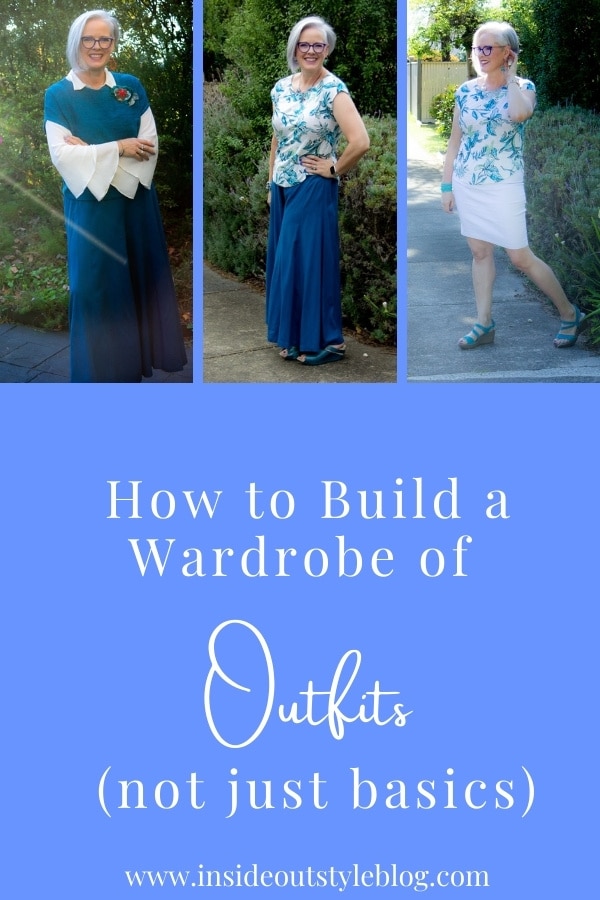
How to Build a Wardrobe of Outfits (not just basics)

Do You Need Interesting Basics or Understated Staple Garments in Your Wardrobe?

How to Use Accessories and Fabrics to Change Your Outfit’s Tone

Facebooktwitterpinterestlinkedinmail