

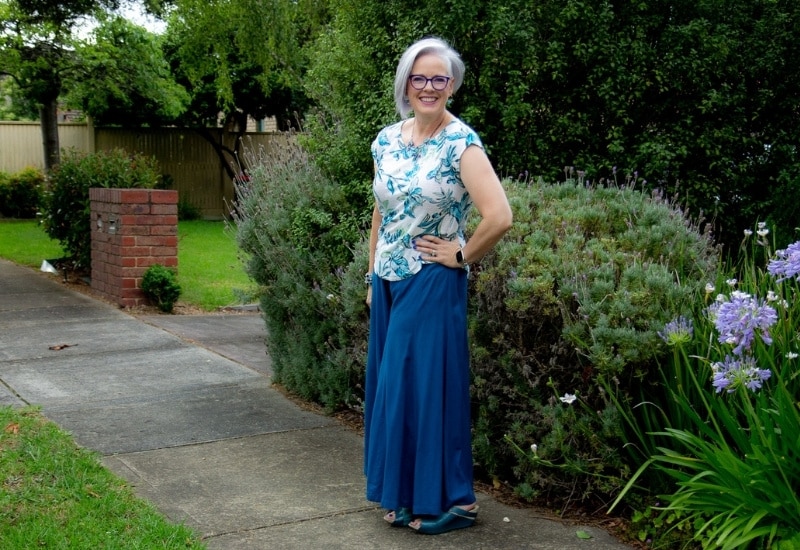



A reader wrote to me and said, “My question is, how do I build a wardrobe of outfits instead of just basics?”
And I love this question because it gets to the heart of why so many intelligent, capable women open their wardrobes and think, I have plenty of clothes, so why do I feel like I have nothing to wear?
We are so often told that everybody needs these basics. There are endless lists. The white shirt. The black blazer. The perfect jeans. The neutral knit.
So you diligently collect the basics. You tick them off the list.

And then suddenly you go, I have got these basics, but everything feels bland because everything is too basic.
If your wardrobe feels like dry toast, it is not because you have failed at fashion. It is because you have been sold an incomplete formula.
Let’s fix that.
Step One: Your Colour Palette Is Number One
When we are thinking about building a wardrobe of outfits, a personal colour analysis colour palette is your number one tool as it is your guide to selecting colours that both look fabulous on you but also work beautifully together.
When you have your best colour palette where everything works together, you will find outfits come together really easily. This is not magic. This is colour theory.
You want to make sure that your basics also work together. This is why having a colour palette where your neutrals complement your colours is really important.
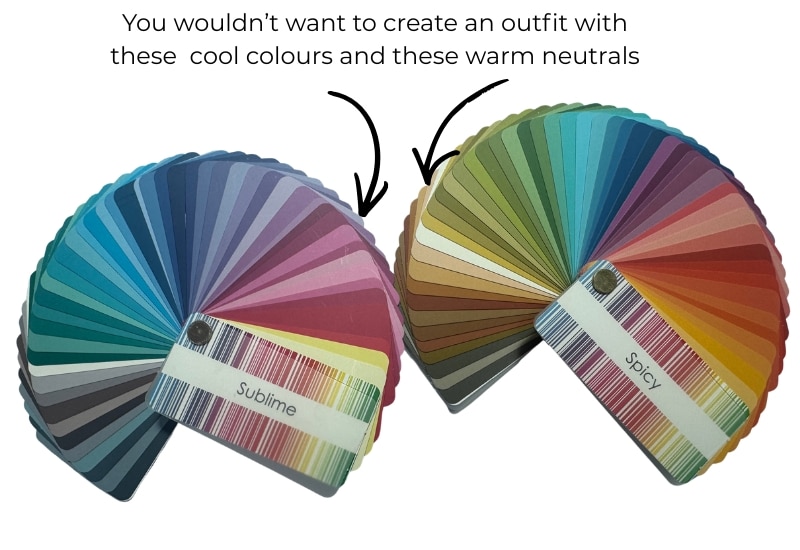
Not all neutrals work together. Cool grey clashes with warm brown.
These Neutrals Are Not the Same
If you look at the neutrals in the Spicy and Sublime palettes pictured below – they are really quite different from each other.
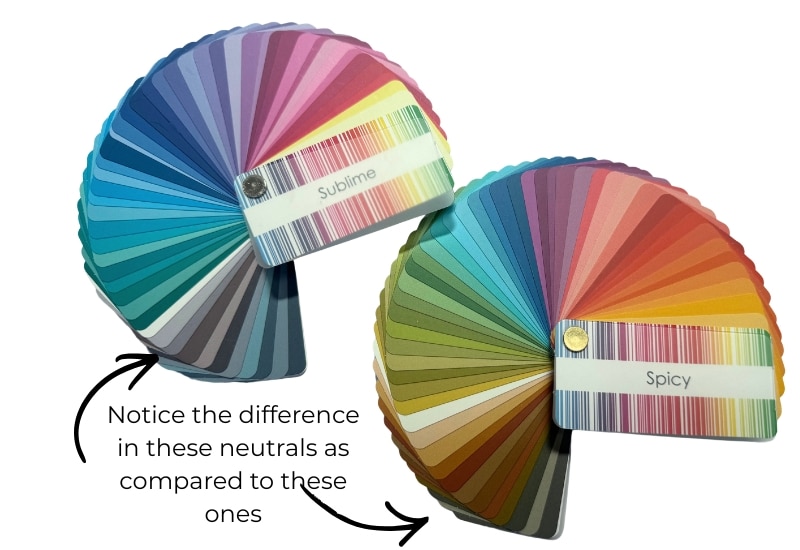 Notice that you can’t mix the warm neutrals with the cool colours.
Nor can you mix cool neutrals with warm colours to create a harmonious effect.
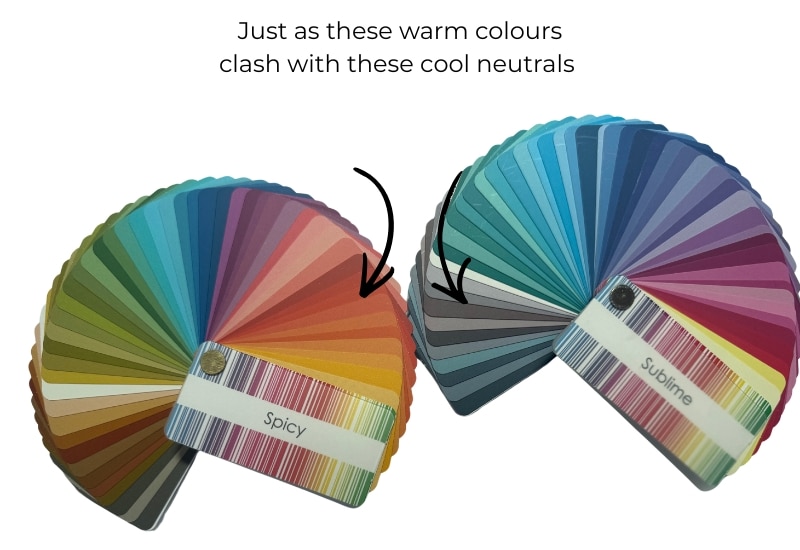 This is where, even if it is a neutral basic garment, it still needs to be in your colour palette.
This is why I teach personal colour analysis as a science, not a trend. When your colours harmonise with you and with each other, your wardrobe becomes mix and match by design, not by luck.
If you’d love to discover your palette to make it easier to select colours that work easily together, you can get an online colour analysis here. It does not matter where you are in the world. What matters is that you stop guessing.
Because when your palette is right, suddenly you have more options to build outfits.
What Actually Makes an Outfit?
Thinking about an outfit, what makes an outfit?
- The colours coordinate.
- There is something about the styles, of garments, the fabrics and level of refinement that relates
If everything is super casual, that is fine. If everything is very smart, that is fine. But if you have very smart clothes with super casual, they just do not work as well together unless your personality is super creative or rebellious.
It is thinking about having clothes that fit together.
An outfit is not a random collection of pieces thrown on a body. It is a coordinated message.
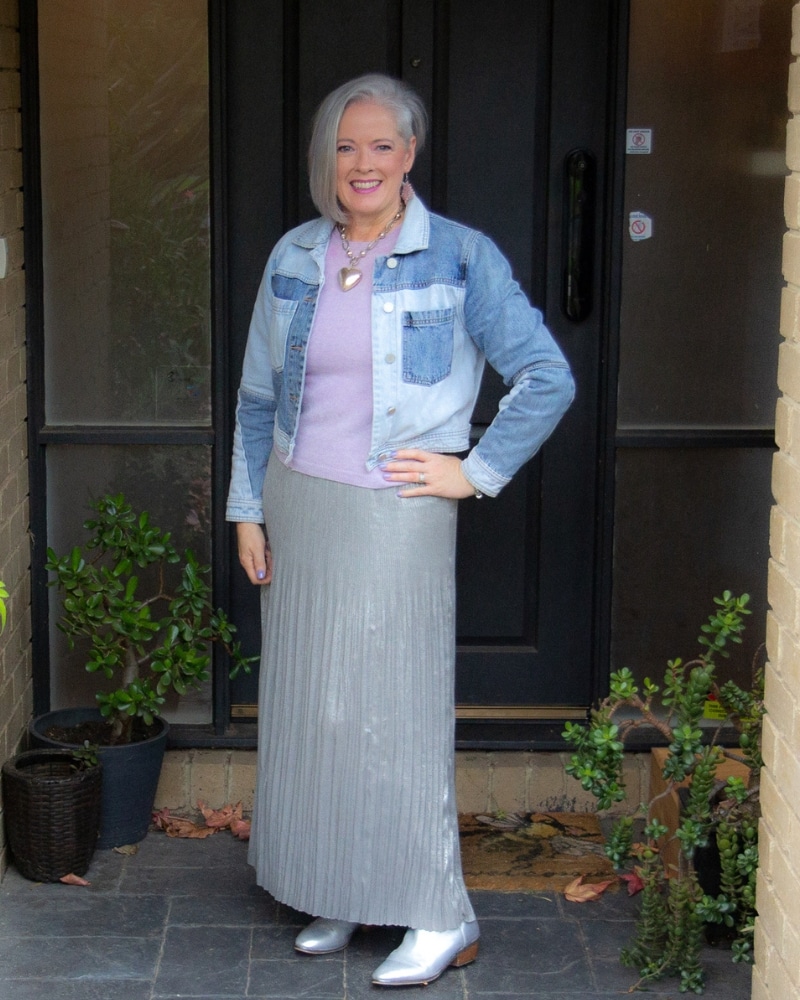
Because my wardrobe is filled with colours from the same palette, it’s easy to mix and match different items and create new outfits.
And remember, your clothes are not just fabric. They are communicating. This is enclothed cognition in action. What you wear influences how you feel and how others perceive you. When the elements are cohesive, you feel coherent.
When they are not, you feel slightly off all day, and you may not even know why.
If You Have Only Basics, You May Need Hero Pieces
If you have built a wardrobe of basics, you might need a few hero garments or accessories to make an outfit individual and interesting.
Not everything has to be basic.
A hero piece is the garment that adds interest. It might be a blouse in a signature colour. A jacket with personality. A skirt in a pattern. A divine silk scarf. Something that has presence.
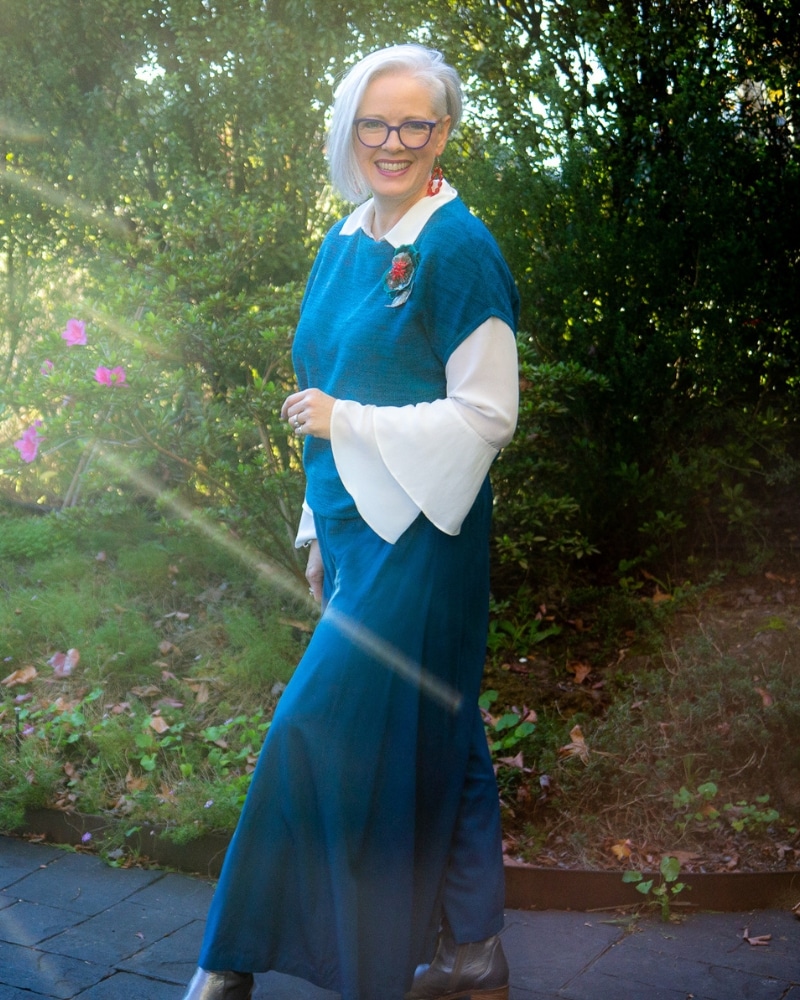
This white shirt is a hero – the double cuff flared sleeves make it a standout.
Think of your basics as the supporting cast. Your hero pieces are the lead actors.
If everything is a supporting character, there is no story.
Accessories Turn Basics Into Outfits
This is where accessories come in.
Accessories are really useful for turning those basics into something interesting.
Jewellery, scarves, shoes, bags. These are not afterthoughts. They are the punctuation in your sentence.
Personally, my jewellery is in my colour palette and my signature colours. I am always looking for things that will work together naturally.
So when I get dressed, I am not trying to force combinations. They already belong together.
That is the power of a cohesive colour story.
Do You Like Interesting Basics or Plain Basics?
Here is a question most women never ask themselves.
Do I like interesting basics, or plain basics?
Some people have a style that is much simpler and plain. Other people need more excitement even in their basics.
You can have a grey T-shirt. But maybe it has some interesting construction. That moves it away from being a plain and simple basic to an item that has personality.
For some people, that interesting construction is perfect. For others, they don’t like that. Or maybe that interesting knit top with a batwing sleeve doesn’t allow you to layer in the way you want. So you might need to opt for a simpler piece that layers underneath a hero jacket.
Neither is right or wrong.
This is about understanding you.
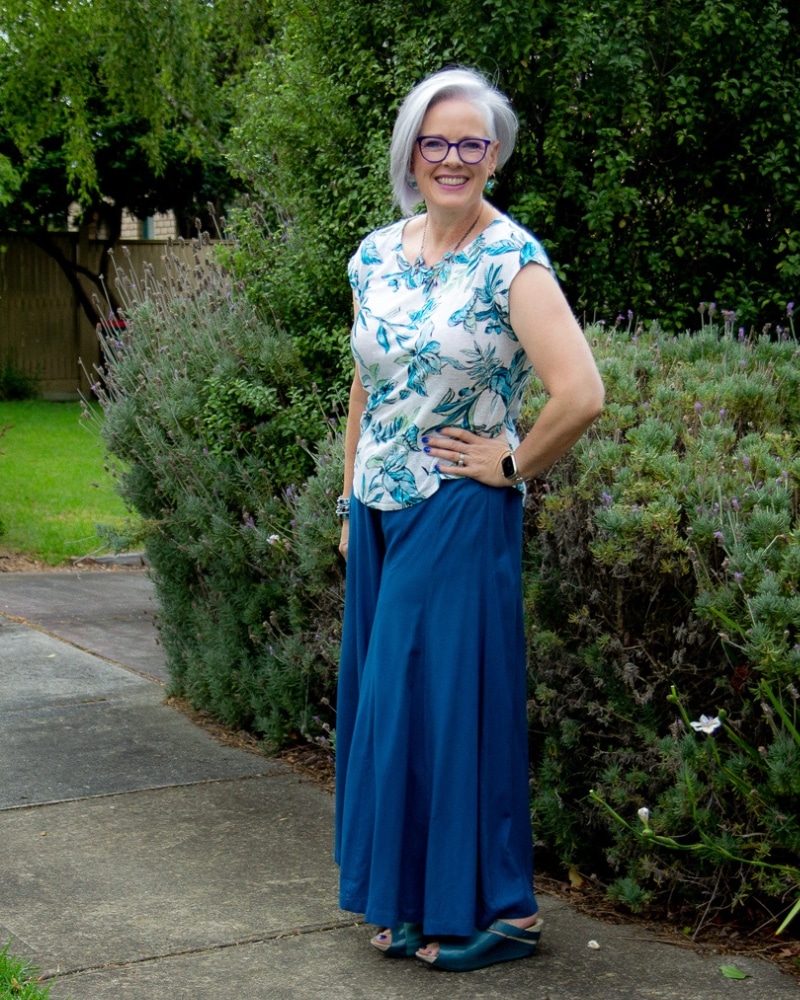
In summer, I opt for more patterned tees as I’m not layering on a third piece like I do in winter. Notice that my pants are the same ones as in the photo above with the white shirt, my clothes become more transseasonal as the same family of colours are always in my closet winter and summer.
And this is where copying other people usually goes seriously wrong. We see someone else looking fabulous and think I will have that. But we are not them. We do not have their colouring, their proportions, their lifestyle, their personality.
What you want to do is understand yourself, then build a wardrobe around who you are.
Look at Your Favourites for Clues
Often, looking at your favourites can give you that information.
What are the pieces you reach for again and again and that make you feel great (we are not talking about the “it’ll do items that you wear so you’re not naked)?
What do they have in common?
Is it the fabrication? The simplicity? The level of detail? The colour intensity? The structure?
Your favourites are data.
And intelligent women love data.
So use it.
Make It Work for Your Real Life
Of course, you need to know your lifestyle and what works for you.
The day I made the video (above I felt like wearing this floral blouse. It is too cold here for it. But fortunately, I have two tops layered under it to keep me warm. They are all in the same colourway because my wardrobe is filled with pieces in that palette.
So it’s very easy for me to layer. Underneath is a merino wool top. So I can wear the blouse even on a winter’s day.
This is where it becomes so much easier when you have colours that work together. Layering becomes effortless rather than complicated.
But it only works because it aligns with my lifestyle and my climate.
You need to consider your location, how you spend your time, what you enjoy wearing and what you feel comfortable in.
Because it has got to be comfortable for you.
Stop Copying. Start Curating.
Understanding your personality is so important. Your style needs to express you.
Not copying me. Not copying influencers. Not copying a checklist from a magazine.
When you start copying other people, you do not feel good, and you do not feel comfortable.
Style is a skill. It is learnable. And it is deeply personal.
When you combine:
- A cohesive colour palette
- Coordinated style elements
- A few hero pieces
- Thoughtful accessories
- An understanding of your personality and lifestyle
You move from a wardrobe of basics to a wardrobe of outfits.
And that is when getting dressed becomes easy.
Your wardrobe should be like a great husband, not a bad boyfriend. Reliable. Supportive. Makes you feel fabulous every day.
Not confusing, inconsistent and full of regret purchases.
If your wardrobe currently feels like the bad boyfriend, do not panic.
We just need to give it a better framework.
Discover My Comprehensive Framework
If you’d like to finally get your style sorted out, then I’d love to invite you to join my 7 Steps to Style program. It covers not only your personal colour analysis, but also body shape, wardrobing and everything in between.
Do You Need Interesting Basics or Understated Staple Garments in Your Wardrobe?
How to Use Accessories and Fabrics to Change Your Outfit’s Tone