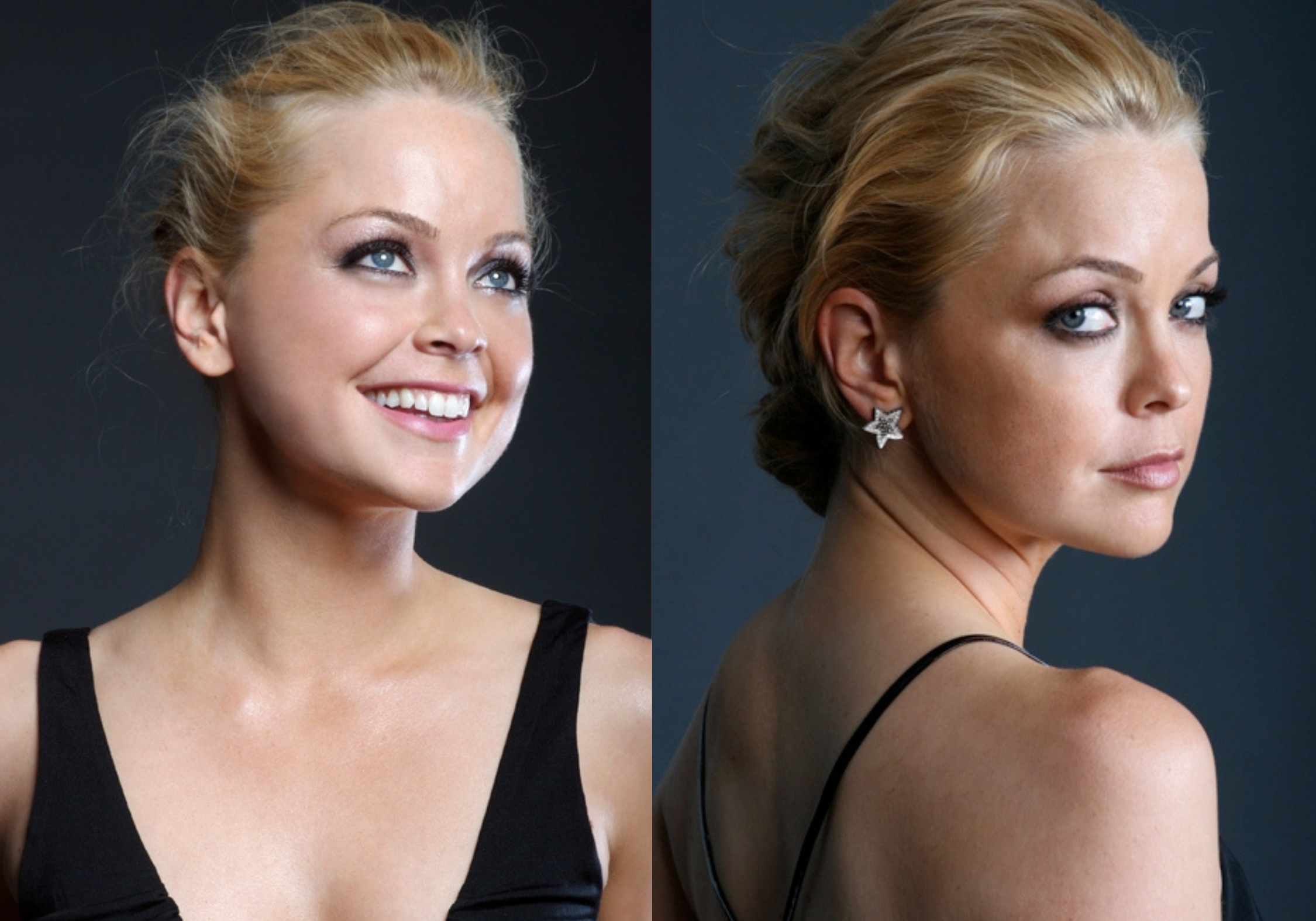
Marisa Coughlan has spent her career proving she’s never been just one thing—on screen or off. As Officer Ursula in Super Troopersshe became part of a cult-comedy phenomenon so enduring that strangers still shout at her from moving cars. Now, she’s stepping back into the role for the third installment, more than two decades after the franchise first found its audience. The film hits theaters August 7, with Brian Cox among the returning cast members.
But Ursula is just one piece of Coughlan’s wide-ranging career. A magna cum laude USC grad, Coughlan has moved fluidly between acting, writing and producing, most recently with Blue Eyed Girla film she wrote, produced and starred in. Along the way, she’s shared the screen with Kate Hudson, Matt Bomer and Liv Tyler, and appeared in series ranging from Boston Legal to Grey’s Anatomy. Off screen, she’s raising four kids and, by her own admission, still figuring out what self-care even looks like in the middle of it all.
We caught up with the star ahead of the film’s release—and a busy Comic-Con weekend—to talk about returning to Ursula, plus the skin care and wellness staples that carry her through long days on set and even longer ones at home.
Super Troopers has this incredible cult following that most films never achieve. When did you realize it had become something bigger than a movie?
“When I would walk down the street and people would roll down their windows and scream, ‘Hey, Charlie’s Angel!’ Ha! It was a slow burn, but when it finally hit, it hit.”
You’ve now played this character across three films and more than two decades. How has she changed, and how have you changed alongside her?
“Ursula has always been a strong, smart woman surrounded by a bunch of dudes who are slightly idiotic…and none of that has changed! Truthfully, Ursula has found more of her voice, and I would say the same could be said of my own journey. I feel more empowered today than I did 20 years ago—and aware that the worst-case scenario of being outspoken is usually not that bad. The upside is usually worth it.”
You graduated magna cum laude from USC. You write, produce and act. You clearly don’t fit a single mold. Has the industry caught up to that, or are you still fighting to be seen as more than one thing?
“It’s hard to wear multiple hats because the industry really loves to put you in a category and keep you there. I went from acting to writing, and people forgot I was an actor…then back to acting and they forget I’m also a writer. I had to produce something that combined it all in order to prove that I could do it all simultaneously.”
You have four kids and a very full creative life. What have you had to figure out about making time for yourself?
“Can I define self-care? I’m not familiar with it! But, in all honesty, it is a struggle, as I am a do-er and am on the move from the second I wake up. I sometimes lose track and realize that I didn’t sit down all day—or eat a real meal. I know this is relatable to most moms!”
What are some of your go-to beauty products—skin care, hair care, wellness—after a long day on set?
“After four pregnancies, I’m pretty cautious about products and what’s in them. I love a skin-care line called Evanhealy. It’s completely organic, smells amazing and is effective, in my opinion. I take a lot of gummy vitamins because it’s a great excuse to eat candy. Gruns gummies and some Create creatine gummies are my go-to. I love Athletic Greens, and also have used Armra colostrum a lot—I love the watermelon flavor. In terms of makeup, I love Molly Sims’ YISE line—it’s very natural and glowy. Also, I think she’s a badass.”
News just in: there’s a new bergamot beauty line just dropped and it’s perfectly timed for this latest heatwave. At the risk of becoming a bergamot boreI can’t not discuss Perfumer H’s four-piece hand and body collection*. In short, it’s a shower wash, hand wash, soap bar and body lotion. Perfumer H does citrus fragrances impeccably; not too sharp and always with a softer, sweeter note to offset the freshness.
The shower gel is particularly refreshing for an end-of-day cool shower. The bergamot opener has a delicious, almost tomato leaf green note, balanced with petitgrain, Sicilian lemon, juniper wood, tonka and lavender. In keeping with Perfumer H’s luxury positioning, the bottles are huge – 500ml each for the handwash (£55), shower wash (£55) and body lotion (£80) – in signature weighty smoked glass.
I think a smaller, travel size could definitely be added to the mix, but the gentle glycerine soap bar (£25, below) is a possible travel substitute. In keeping with the Perfumer H ‘ritualistic’ philosophy, there’s also a rather lovely hand or body ‘bathing bundle’* (top) that would make the ideal host or hostess gift.
See more here.
NOW CLICK BELOW TO SHOP THE POST (I MAY EARN A COMMISSION ON THE BASKET VALUE OF ITEMS BOUGHT*)…
WORDS: Disneyrollergirl / Navaz Batliwalla IMAGES: Perfumer H NOTE: Most images are digitally enhanced. Some posts use affiliate links* and PR samples. Please read my privacy and cookies policy here.
THE WHAT? Amorepacific is pursuing the sale of regional offices, logistics centres and its Anseong manufacturing plant as it streamlines its domestic asset base and redirects resources towards international expansion under its Vision 2035 strategy.
THE DETAILS The company is seeking buyers for regional offices in Busan, Daegu, Daejeon and Gwangju, alongside logistics centres in Incheon and Gimhae, while maintaining local sales operations after any disposals. It is also planning to transfer production from the Anseong health supplement plant to its larger Osan facility, consolidating manufacturing and improving operational efficiency. The property sales, excluding the Anseong plant, could reportedly generate around KRW150 billion. Amorepacific is simultaneously increasing investment in the US, Japan and Europe, supported by Amazon growth, brand expansion and the international development of COSRX and Aestura.
THE WHY? The restructuring reflects Amorepacific’s effort to improve capital and asset efficiency while funding its ambition to generate 70% of revenue overseas, reach KRW15 trillion in sales and become a top-three global premium skin care company by 2035.
The fashion industry has looked at ballet flats and trainers and decided, unnecessarilybut ratherbrilliantlythat we need both at once. Allow me to introduce you to the sneakerina: a ballet flat and trainer hybrid that is set to make your current trainer rotation suspiciously dull in comparison.
Featured in this article:
If you’re unfamiliar with this divisive ugly shoe trend, it’s origin story is less random than the name suggests. Onitsuka Tiger’s slim, striped trainers laid much of the groundwork, before lace-up styles such as Adidas’ Taekwondo Mei began appearing beneath everything from slip skirts to tailored trousers. Then came Puma’s Speedcat Ballet, complete with its motorsport sole and dainty Mary Jane strap, confirming that the season’s most desirable shoes would be neither properly sporty nor especially sensible. Miu Miu, Simone Rocha and a growing cast of brands have all since played with the same formula.
But how do you style them? Naturally, I would like to add granny jeans to the equation.
Granny jeans are the slightly primmer cousin of the mom jean: high on the waist, relaxed through the leg and often cropped or turned up at the ankle. They have none of the puddling, dragging or dramatic proportions that have dominated denim recently. Instead, they look like something your chicest relative might wear to browse the garden centre before ordering a very good lunch.
Paired with sneakerinas, however, they lose any trace of sensible Sunday dressing. A flash of mesh, a satin strap or a long lace threaded around the foot gives the jeans a strange, sporty prettiness, while their ankle-skimming hem ensures the shoes get the attention they so clearly demand.
It is a niche combination, certainly. But in a summer ruled by oddly specific micro-trends, granny jeans and sneakerinas may be fashion’s most convincing new double act.
Even without acne prone skin, I appreciate a good face cream that is non-comedogenic.
If you’re prone to breakouts, choosing a moisturizer can feel like a high stakes gamble. I’m not acne-prone, but I am still choosy as to what I put on my face. Your face needs a moisturizer, but it needs one that will hydrate without physically blocking hair follicles and clogging pores. To spare your face and wallet, I’ve rounded up the best non-comedogenic moisturizers that provide moisture without congestion.
**This post contains affiliate links, and if you make a purchase through them, I may earn a small commission at no additional cost to you—I only recommend products and brands I genuinely trust and use myself.
Best Non-Comedogenic Moisturizers
What is a non-comedogenic moisturizer?
A non-comedogenic moisturizer does not contain pore-clogging ingredients such as coconut oil or cocoa butter.
How does a moisturizer clog pores?
When a moisturizer contains comedogenic ingredients, they can create a film that traps dead skin cells, dirt, and oil leading to clogged pores.
Ingredients That May Clog Pores
Oils and buttersalthough rich in nutrients, can be too heavy for facial pores. Some of the most problematic ingredients include: coconut oil, Moroccan oil, cocoa butter, palm kernel oil, wheat germ oil, sweet almond oil, and soybean oil.
Occlusives such as lanolin and petroleum jelly can be effective at locking in moisture, but can also trap oil and dead skin cells in pores.
Some synthetic and modified fatty esters can get into the pores and trap debris. These emollients and esters include: Isopropyl Myristate and Isopropyl Palmitate, Ethylhexyl Palmitate, Myristyl Myristate and Myristyl Lactate, Isostearyl Neopentanoate, Butyl Stearate.
Certain fatty acids and alcohols can cause congestion in the pores. These include: Lauric Acid and Myristic Acid, Cetearyl Alcohol and Ceteareth-20, Oleyl Alcohol.
With the right ingredients, you can hydrate your skin without worrying about clogging your pores!
Helpful Ingredients For Acne-Prone Skin
Salicylic Acid (BHA) is oil-soluble which allows it to get into pores and hair follicles to dissolve dead skin cells and other build-up.
Benzoyl Peroxide serves as an antimicrobial that destroys acne-causing bacteria.
Retinoids speed up cell turnover and orchestrate how your skin sheds its cells.
Azelaic Acid is a multipurpose ingredient that targets hyperpigmentation, redness, and acne.
Niacinamidealso known as B3, supports healthy skin from the inside out.
Hyaluronic Acid is a humectant, which means it hydrates and plumps the skin.
How I Chose These Moisturizers
While it’s easy to just go by marketing claims when it comes to a non-comedogenic moisturizer, I don’t. The problem with that is everyone’s skin is different and what works for one person, may not work for another. There are so many factors to consider.
When choosing these moisturizers I instead looked at overall formulation. I considered ingredients that do support hydration but are lightweight. Ingredients like squalane, glycerin, niacinamide, and more. The goal was to avoid the heavier oils that can often cause clogged pores. I also chose creams that didn’t have artificial fragrance and supported a healthy skin barrier. Lastly, I wanted the formulas to be clean, made with ingredients that didn’t compromise my clean beauty standards.
Why You Should Trust My Picks
I’m a 20+ year Esthetician that has worked with many different skin types over the years and identified what works and what doesn’t when it comes to skincare products. I also have been a natural beauty blogger for the last 11+ years. My expertise in natural skincare products has grown since testing and writing about them.
Best Non-Comedogenic Moisturizers
Typology 9-ingredient Face Moisturizer
Best Non-Comedogenic Face Cream For Sensitive Skin
I really like how it has such a minimal ingredient list overall. It just uses ingredients that perform and leaves out the ones that don’t. Perfect for sensitive skin.
I like how the ingredient list isn’t long and while it is a richer cream it still leans more non-comedogenic. I often need a heavier moisturizer but they all contain more comedogenic ingredient lists.
Things to consider
This face cream could still cause clogged pores if you are prone to heavier oils. It’s a great ingredient list but if you find heavier creams cause acne or clogged pores, this may be one you want to skip.
Tower28 SOS Recovery Cream
Best Barrier Repair Non-Comedogenic Face Cream
Key Ingredients
Hyaluronic Acid, Ceramides, Allantoin
Texture
The texture feels creamy but not light. It’s like a lotion and a cream had a baby!
Why I recommend it
This is such a great moisturizer if you have a compromised skin barrier. Whether it’s due to products that have caused irritation or weather. This can really help to bring a sense of calm and support to the skin.
Things to consider
There’s nothing I didn’t like! I especially think it’s great for those who don’t like a lot of botanicals.
The texture is very lightweight. Feels like a lighter lotion.
Why I recommend it
This is a great product for those that want a lighter lotion overall. Especially great for daytime wear or under makeup as it’s not so heavy.
Things to consider
It is really light and for someone who has dry skin, I found I sometimes needed additional moisturizer. I like this in the summer when there is more moisture in the air.
Use code GURLGONEGREEN10 to save 10% off your purchase!
Clearstem Hydraglow
Best Non-Comedogenic Face Cream For Mature Skin
Key Ingredients
Bakuchiol, Plant Stem Cells, Squalane
Texture
The texture feels lighter but not as light as the OSEA Water Cream. I like how it sinks in.
Why I recommend it
I like how this is more non-comedogenic, yet still full of some skin actives to really help with mature and aging skin.
Things to consider
It does have more botanicals and actives in it, so if you’re wanting something more soothing/calming this might not be it.
Use code GURLGONEGREEN to save 15% off your purchase!
Indie Lee Brightening Cream
Best Non-Comedogenic Face Cream For Combination Skin
The texture feels lightweight, yet really nourishing because it is more of a cream overall.
Why I recommend it
I like how the ingredient list is geared towards more oily skin types. It’s really nourishing but has ingredients that generally don’t clog pores, think lightweight emollients instead of rich butters.
Things to consider
This formula excels at hydration, but doesn’t have a ton of active ingredients to fight aging- something to be aware of.
Frequently Asked Questions
What moisturizer won’t clog pores?
Look for moisturizers thatt are water-based, oil-free, or state that they are non-comedogenic.
How do you know if a moisturizer is non-comedogenic?
Moisturizers that are non-comedogenic shouldn’t list heavy oils and butters in their list of ingredients. Squalane, glycerin, or hyaluronic acid may be used to provide moisture without creating congestion in the pores. You can also use a site like Incidecoder.com to decode your skincare ingredients.
Is non-comedogenic regulated?
Non-comedogenic is not regulated, that’s why it’s important to check the ingredient label, not just the marketing label.
Can a moisturizer cause acne?
A moisturizer can most definitely cause acne. It can cause clogged pores, contact dermatitis, and fungal acne.
If you liked this post, check out these past posts:
*Affiliate Disclosure: I do have affiliate links in this blog post. If you purchase something from my link, I will receive a small commission from the sale. This comes at no cost to you, but is paid by the company. I do not take becoming an affiliate with any company lightly. If I am, it’s because I believe in the company and their product.
*Suzi(Gurl Gone Green) is a participant in the Amazon Services LLC Associates Program, an affiliate advertising program designed to provide a means for sites to earn advertising fees by advertising and linking to amazon.com.
Most skincare advice is about adding things: a new serum, a targeted treatment, an extra step for your concerns.
But what if the problem isn’t what you’re missing from your routine, but instead it’s how much your skin is already being asked to process? Have you ever heard of the concept of overstimulated skin?
In this episode of Green Beauty Conversations, Lorraine Dallmeier talks to Nicole Spangenberg, founder and formulator behind TSORI, a waterless skincare line built around the idea that ingredient overload may be behind some of the most frustrating, hard-to-explain skin reactivity people experience.
Nicole goes further than most minimalism advocates. Her philosophy operates at the formulation level: asking whether the ingredients inside a single product are each doing something distinct, or whether a formula has simply accumulated ingredients that all do the same thing.
“The goal isn’t more products, it’s fewer decisions.” — Nicole Spangenberg, TSORI
In this episode with Nicole Spangenberg, you will hear:
What overstimulated skin actually is — and whether it’s a new idea or a new name. Nicole defines it as a pattern of skin instability caused by too many simultaneous inputs. Lorraine presses her on whether this meaningfully differs from established clinical terms like barrier disruption and contact sensitisation — and Nicole’s answer is that it doesn’t replace them, but describes the pattern behind them. Listen to the episode and make up your own mind on this term.
The signal load concept — and its limits. Signal load is Nicole’s shorthand for cumulative stimulation across a routine. Nicole is clear this is a formulation philosophy grounded in her own observations.
Formulators building ranges could think about cumulative overlap. A product that performs well alone may behave differently layered on top of two others with overlapping functions. Nicole looks at her range as a system — asking what the total input looks like when someone uses everything together.
Stripping everything back is not the answer. The social media advice to remove an entire routine is well-intentioned but leaves people with nothing useful. The real question is which functions are being duplicated and where — not whether to use products at all.
A luxury price point and a minimalist philosophy can sit together. TSORI products are priced at the higher end, justified by the number of steps they replace. Nicole acknowledges the trade-off: at that price, customers want documented proof, and she is currently pursuing dermatologist-backed studies.
Meet our guest: Nicole Spangenberg, Founder of TSORI
Nicole Spangenberg is the founder and formulator behind TSORI, a waterless skincare line built around the concept of overstimulated skin.
Drawing on years of experience supporting her daughter’s eczema-prone skin, Nicole developed a formulation philosophy centred on reducing total ingredient input — creating multi-functional, oil-based products designed to replace steps rather than add them, and to eliminate ingredient overlap across a routine.
TSORI currently sells four products online and has been trading for just over a year.
Find out more about TSORI:
Related episodes:
Thank you for joining us for this episode of the Formula Botanica Green Beauty Conversations podcast. If you enjoyed listening, please share, subscribe and review this episode on Apple Podcasts, Spotify or Youtube so that more people can enjoy the show. Don’t forget to follow and connect with us on Facebook and Instagram.
FREE TRAINING
Learn how to become an Organic Skincare Formulator
Join over 100,000 other Formulators
By providing your details, you agree to receive additional educational & marketing emails from Formula Botanica, which further introduce our curriculum. Your data is never shared or sold. Read our Privacy Policy.
FREE TRAINING
How to become an Organic Skincare Entrepreneur
Join over 100,000 other Formulators
By providing your details, you agree to receive additional educational & marketing emails from Formula Botanica, which further introduce our curriculum. Your data is never shared or sold. Read our Privacy Policy.
FREE TRAINING
How to become an Organic Skincare Entrepreneur
Join over 100,000 other Formulators
By providing your details, you agree to receive additional educational & marketing emails from Formula Botanica, which further introduce our curriculum. Your data is never shared or sold. Read our Privacy Policy.
Lorraine Dallmeier is a Biologist, Chartered Environmentalist and the CEO of Formula Botanica, the award-winning online organic cosmetic science school. Read more about Lorraine and the Formula Botanica Team.
Heads up: some links in this article are affiliate links, and I may earn a small commission if you buy through them, at no extra cost to you. It never changes what I recommend.
The lightest, freshest Creme de la Mer, and the first one I’d actually hand a man with combination skin. A real pleasure to use, as long as you’re clear you’re paying for the experience more than the actives.
What’s good
The lightest, fastest-absorbing La Mer, and the first that suits combination or oil-prone skin
Sinks in cool and weightless with no grease, and leaves skin soft and comfortable
The scent and the warm-it-in-your-palms ritual make it a pleasure to use
Works either as a ten-second functional step or a slow evening ritual, your choice
What I’d change
The price. You’re paying for the Miracle Broth story and the brand, not for actives you can’t get far cheaper
Fragranced, with several allergens and a fairly high placement of alcohol, so not for reactive, rosacea- or eczema-prone skin
The ‘balance sebum and banish excess oil’ claim is marketing; it’s a light moisturiser, not oil control
Not oil-free despite the featherlight feel (meadowfoam, sesame, silicones), so very oily skin may still find it a touch much
La Mer’s The Moisturizing Fresh Cream is the lightest of the brand’s three core face creams, and the first one I’d actually hand to a man with combination or oil-prone skin. Where the original Creme de la Mer is a rich, warm-it-in-your-hands balm built for dry skin, the Fresh Cream is a cool, featherlight gel-cream that sinks in fast and leaves no grease.
So is it worth it? As a light, well-made moisturiser that’s a pleasure to use, yes, and I’ll come to why. As a piece of anti-ageing science, you’re mostly paying for the Miracle Broth story and the name on the jar rather than for anything you can’t buy far cheaper. Both of those are true at once, and the honest answer depends on which one you’re buying it for.
First impressions and texture
The jar is the usual La Mer weight and ceremony: heavy glass, a lid that shuts with a reassuring twist. Inside, the Fresh Cream is nothing like the original. It’s a cool, almost gel-like cream that breaks over warm skin and disappears in seconds. There’s none of the warm-it-between-your-fingers ritual the original demands. This one is light enough to smooth straight on.
It’s fragranced, and I’ll be honest that the scent is part of the pleasure for me, clean and faintly marine with the Lime Tea extract. If you’re sensitive to fragrance that counts against it, and I’ll come back to that, but on skin that tolerates it, the way it sits, cool and weightless, is lovely.
What’s actually in it
The headline is Miracle Broth, La Mer’s fermented sea-kelp extract. Let’s be fair to it: fermented kelp is a legitimate hydrating, antioxidant, skin-calming ingredient, and fermentation can make those compounds easier for skin to use. There’s real botanical logic here, and I like a good marine ferment. What there isn’t is independent published proof that Miracle Broth does anything a good ferment-and-emollient base wouldn’t, and the “fermented with light and sound” story is folklore, not science.
The ingredients doing the actual work are the ordinary ones. Glycerin and sodium hyaluronate pull in water. Dimethicone, squalane and a couple of plant oils soften and seal, which is also why, for all its lightness, it isn’t oil-free. Vitamin E and a little caffeine round it out. There are peptides too, Argireline among them, which are a sensible, on-trend inclusion but subtle at best, not Botox in a jar. None of that is a criticism of the formula. It’s a criticism of the price, because every one of those useful actives is something you can buy for a fraction of what La Mer charges.
One thing to flag properly: alongside added fragrance it carries several fragrance allergens (limonene, linalool, citronellol, geraniol, hydroxycitronellal), a fairly high placement of alcohol, and a couple of botanical sensitisers in eucalyptus oil and lime peel extract. That suits most skin, and the alcohol is part of what gives that fresh, fast-absorbing feel, but if your skin is reactive, rosacea- or eczema-prone, this isn’t the moisturiser for you.
What La Mer claims
La Mer’s pitch is renewal and moisture, and for the Fresh Cream specifically, that it works to “balance sebum and banish excess oil” for combination skin. Take that one with a pinch of salt. A cream feeling lighter on the skin is not the same as it reducing how much oil you produce, and there’s no independent evidence the Fresh Cream controls sebum. What it does is moisturise without the heaviness of the original, which for combination skin is the whole point. Just don’t expect it to run your oil for you.
How to use it
Here’s where I’d steer you, because most people use this wrong by putting too much of it in too many places.
Don’t layer it over your aftershave balm. If you already like a post-shave product, say the Aesop Moroccan Neroli Post-Shave Lotion, and your skin does well under it, use that where you shave and leave it at that.
Piling an expensive moisturiser on top of a balm is just stacking emollient on emollient, and you’re wasting the good stuff. Put the Fresh Cream where you haven’t already covered: the tops of the cheeks, the nose, the T-zone, the forehead.
The one bit of ceremony I’d recommend is the back of the neck. Warm a little between your palms, then massage it into the back and sides of your neck (keep a rich cream off the hairline itself if you’re prone to breakouts there). The warmth lifts the scent, the skin round there gets conditioned and softened, and it doubles as a quick bit of self-massage at the end of the day.
And that’s the charm of it: you can go fast. Ten seconds, purely functional, done, which is exactly why it suits men who don’t want a routine. Or, if you’ve got a quiet evening and the bathroom to yourself, you can slow the same product right down and make it a ritual. It doesn’t demand the faff, but it rewards it if you’re in the mood.
In the morning, whatever else you do, follow it with sunscreen. The Fresh Cream has no SPF, and no moisturiser replaces daily sun protection.
Does it actually work?
For what it is, yes. It hydrates, it softens, it sits beautifully, and it’s the first La Mer texture that works on combination skin rather than sitting there like a mask. The pleasure is real, and I don’t want to talk anyone out of enjoying it.
But “work” in the sense of a treatment that changes your skin? No, and nothing at this price honestly does that with these actives. This is a lovely moisturiser, not an anti-ageing programme. The way I’ve made my peace with it is the car analogy: a Dacia (the Sandero being my first ever car!) and a Jaguar both get you from A to B, but one makes the journey feel like something, the other is an unbalanced 0.9L Turbo that feels like riding a lawnmower on the motorway. It’s the journey not the result here.
The Fresh Cream is therefore the Jaguar, baby-calf-leather seats and all. If you value how a product feels to use, that’s a fair thing to spend money on. If you only care about results per pound, it isn’t, and I’d rather tell you that than pretend otherwise. That’s why it’s a four and not a five: the rating is for how much I love using it, held against how clear-eyed I am about what I’m paying for.
How it compares
Within the range, the original Creme de la Mer is the richest, a warm-it-in balm for dry skin; The Moisturizing Soft Cream is the mid-weight middle; and the Fresh Cream is the lightest, the one for combination or oil-prone skin. La Mer has actually retired its old Cool Gel Cream and now positions the Fresh Cream itself as its lightest option, so within the line this is as far down the weight scale as you can go.
Outside the range, be honest with yourself about what you’re paying for. The hydration and softening here come from glycerin, hyaluronic acid, squalane and a good silicone-emollient base, and a well-made ceramide or hyaluronic gel-cream will do that job for £15 to £25. If your skin is properly oily or reactive, a fragrance-free one will suit you better than anything in this scented range. What the cheaper option won’t do is feel like this, or smell like this, or come in this jar. That’s the whole trade, and only you can price it. If you want to see where else La Mer’s maths lands, my verdict on The Eye Concentrate runs through the same worth-it question, and Perricone MD’s Cold Plasma Plus is another luxury moisturiser where I landed in much the same place: lovely to use, priced for the experience.
Key specs
Size
30ml reviewed (RRP £165); also sold in 15ml and 60ml
Format
Lightweight cooling gel-cream, the lightest of La Mer’s three core creams
Best for
Normal to combination skin wanting Creme de la Mer without the weight
Key actives
Miracle Broth (fermented sea kelp / algae extract), squalane, glycerin, sodium hyaluronate, peptides (Acetyl Hexapeptide-8, Palmitoyl Hexapeptide-12), caffeine, vitamin E, a stable vitamin C ester; contains fragrance + alcohol denat.
What’s the difference between La Mer Fresh Cream, Soft Cream and the original Creme de la Mer?
They run heaviest to lightest. The original Creme de la Mer is a rich, near-balm texture you warm between your fingers, built for dry skin. The Moisturizing Soft Cream is the mid-weight, whipped version for normal-to-dry skin. The Moisturizing Fresh Cream is the lightest, a cool gel-cream for combination or oil-prone skin. If the other two feel heavy on you, Fresh is the one to pick.
Is La Mer The Moisturizing Fresh Cream worth it?
As a light, lovely moisturiser, yes, it’s a pleasure to use. As anti-ageing science, no, you’re paying mostly for the Miracle Broth story and the brand rather than for actives you can’t buy far cheaper. Worth it if you value how a product feels to use; not if you only want the most active per pound.
Is it good for oily or combination skin?
It’s the best La Mer for combination and oil-prone skin, because it’s the lightest and least greasy of the three creams, and La Mer even retired its old Cool Gel Cream and now points oilier skin here. But it isn’t oil-free, it doesn’t actually control oil, and it’s fragranced, so if your skin is genuinely oily or reactive, a cheaper fragrance-free gel-cream will suit you better.
How do you use La Mer Fresh Cream, and do you warm it first?
The original Creme de la Mer needs warming between your fingers; the Fresh Cream doesn’t, it’s light enough to smooth straight on. Warming a little in your palms is a nice optional ritual, and lovely worked into the back of the neck. Apply it to areas a rich aftershave balm hasn’t already covered, and always follow with SPF in the morning.
DoorDash isn’t just for late-night snack runs anymore. Today, the app is running a genuinely good Sephora deal: $40 off orders of $100 or more, and it applies to pretty much everything in the store.
Here’s how it works. The deal went live at 9 a.m. ET and is open to anyone with a DashPass membership—DoorDash’s paid subscription that also gets you $0 delivery fees and lower service fees. Just use code “BEAUTY40” at checkout on a Sephora delivery order through the app (the code doesn’t work on pickup orders). Don’t have DashPass yet? You can sign up for a 30-day free trial and still snag the discount; just remember it renews at $9.99 a month if you don’t cancel.
A few things to know before you start filling your cart. The offer only works on the first 162,500 qualifying orders, so this is very much a “sooner rather than later” situation. The $40 comes off your subtotal only—so fees, taxes and tip aren’t included—and it’s capped at one use per DashPass account. That means your cart needs to hit $100 before any of those extras, so double-check your subtotal before you head to checkout. One more tip: link your Sephora Beauty Insider account to your DoorDash account, and you’ll still rack up points on the purchase.
The good news is basically everything on Sephora’s DoorDash storefront is fair game, including cult favorites from brands such as Summer Fridays, Ilia Beauty and Nars. If you’re not sure where to start, a vitamin C serum like Sunday Riley’s C.E.O. 15% Vitamin C Brightening Serum ($85) or sunscreen like Supergoop!’s Play Everyday Lotion SPF 50 ($28) are both easy wins— and together they’ll put you right over the $100 minimum.
The deal is part of DoorDash’s Summer of DashPass event and today happens to be the last day of “Sweet Treat Week,” so consider this the grand finale. Just don’t sleep on it: one-day deals like this tend to disappear fast once word gets out.
I’ve been using the Sisley Black Rose Cream Mask since 2015, when it retailed for $162 and Barneys was still one of its primary retailers. Eleven years, one price increase, and one significant retail shift later, it remains a permanent fixture in my routine. That kind of longevity is rare in a category this saturated, and it’s the reason I keep coming back to reassess whether the price still holds up. Here is my updated take.
What the Sisley Black Rose Cream Mask Actually Is
This is a cream-based treatment mask designed to visibly reduce signs of fatigue and restore plumpness within minutes of application. Unlike clay or exfoliating formulas, it works purely on hydration and comfort: no resurfacing, no active acids, nothing that requires a recovery period. The texture is creamy and not dense or balm-like. It applies in a thin, even layer without pilling.
The signature element is the scent profile: Rose, Magnolia, and Geranium essential oils, calibrated with enough restraint that the fragrance reads as refined rather than overpowering. It’s a detail that separates a well-formulated luxury mask from one that’s simply expensive.
Who This Mask Is Actually For (and Who Should Skip It)
This formula is best suited to dry, dull, or fatigued skin, particularly after sun exposure, air travel, or an aggressive run of active ingredients. It is not designed to manage oil production or congestion, and those with oily or acne-prone skin are unlikely to see the same benefit.
Because the formula relies on essential oils for its signature scent, including linalool, citronellol, and geraniol, those with fragrance sensitivities or compromised skin barriers should patch test before regular use.
What’s in the Sisley Black Rose Cream Mask? A Look at the Ingredients
The formula has been refined since I first reviewed it in 2015. The current version incorporates Padina Pavonica, a brown algae extract prized for its plumping properties, and Alkekengi Calyx extract, which supports skin tone and firmness. These additions sit alongside the original core: Black Rose extract, Red Vine Leaf, Chlorella, Shea Butter, and Pro-Vitamin B5.
This is not an actives-forward formula, and that is by design. There is no retinol, no acids, nothing intended to resurface or exfoliate. It is a comfort- and hydration-focused mask, and the ingredient list reflects that priority throughout.
What Sets It Apart at This Price Point
Many luxury masks in this category are selling packaging and brand equity more than performance. What distinguishes this one is a decade of third-party validation: multiple industry awards, a spot on WWD’s list of the 100 greatest skincare products of all time, and consistent inclusion in best-of roundups across the beauty press, including my own list of the best moisturizing masks for dry skin. That level of sustained recognition is difficult to manufacture through marketing alone, and it’s a meaningful data point when deciding whether a mask at this price is worth the investment.
How I use it
Sisley recommends applying a generous layer two to three times per week and removing any excess after 10 to 15 minutes. I use it differently: a thin layer applied after serum, left on overnight in place of a traditional night cream. The formula absorbs fully, so there is no need to remove it before bed.
It has also become a fixture in my travel routine. I apply it before boarding long flights to offset the effects of cabin air, and I reach for it after periods of heavier active ingredient use, when my skin needs to recover. I use it consistently, though sparingly, reserving it for the moments it delivers the most value.
One of my favorite pairings is layering a thin coat of this over Sisley’s Ecological Compound at night. I mentioned that combo when I reviewed the reformulated Ecological Compound, which by the way, continues to rank very highly on my list of all-time favorites facial moisturizers to date.
So, Is It Worth $225 in 2026?
The case for this mask isn’t sentimental, it’s the accumulated evidence of a decade: consistent industry recognition, no discounting, no reliance on constant reformulation to stay relevant. In my own experience, that translates directly into results I haven’t found in less expensive alternatives.
Eleven years in, I’d recommend it without reservation to anyone willing to invest in a luxury mask.
$225 (60ml) at sisley-paris.com, dermstore.com, nordstrom.com, neimanmarcus.com, or cultbeauty.com
Affiliate disclosure: This post contains affiliate links. I only recommend products I actually use and love. If you shop through these links, I may earn a small commission, which helps keep this site running.
This August, Ruka becomes the first Black-owned hair extensions brand to join Sephora, and the first hair extensions brand the retailer has carried in more than 20 years.
Founded by Tendai Moyo and Ugo Agbai, Ruka launched in London and has since built cult status among those with textured hair, with distribution through premium UK retailers like Selfridges. Its signature Synths™ fiber is a patent-pending, collagen-based alternative to traditional kanekalon, engineered to move, hold curl and mimic natural hair minus the itch, tangles and environmental cost that can come with synthetic extensions.
The Sephora rollout follows a $4.5 million funding round from Freedom Trail Capital and Henkel Ventures, along with several angel investors, bringing Ruka’s total funding to $10 million. Henkel’s involvement is worth noting on its own since the company already owns Olaplex and Schwarzkopf, so its bet on Ruka signals real confidence in where textured hair care is headed.
Hand
Starting August 4, Ruka’s lineup lands online at Sephora nationwide, led by its Synths™2 Braid-It extensions ($34) in different styles and colors. Rounding out the range are styling bestsellers like the Do-It-All Gel ($39), Save Me Serum ($39), Hold Me Down Edge Gel ($32) and the Coconilla Hair & Body Perfume ($45).
From August 14, the collection rolls into 10 Sephora stores across New York, Los Angeles and Atlanta, giving shoppers their first chance to feel, swatch and try the range in person before committing to a bundle.
As Moyo describes it, hair is having its own skinification moment, with people treating extensions the way they’d treat makeup and having open conversations about hair loss along the way. Sephora’s SVP of Haircare Merchandising Jennifer Lucchese echoed that shift, calling Ruka’s braiding bundles a brand-new category for the retailer.
Carving out a category Sephora hasn’t had before, Ruka has proven that better science and better representation can build something the whole industry follows.