Home Blog Page 120

8 Best Peptide Serums for Plump, Bouncy Skin

0

The serum is also super hydrating thanks to hyaluronic acid, so your skin is smooth and taut. As far as where this serum fits into your skin-care routine, you can use it day and/or night before your oil-based serums (like the brand’s vitamin C or retinal serums) and moisturizers.

Frequently Asked Questions

What are peptides?

Peptides are short chains of amino acids, “like glycine, arginine, histidine, et cetera,” says Dr. Kim. “They’re designed to boost and replenish amino acids, which are the building blocks for collagen production.” You might recognize amino acids as the building blocks of protein, but peptides tend to be shorter chains than proteins. And compared to topical collagen, peptides have a small particle size that allows them to penetrate the surface level of your skin at a deeper level. They’re great at reducing the appearance of fine lines and leaving skin firmer, Dr. Kim says.

​​How do peptides benefit the skin?

The abundance and quality of our body’s natural collagen production decrease over time, as Dr. Hartman previously explained. As a result, wrinkles start to form and skin begins to sag, but peptide chains mimic the structure of amino acids to diminish the look of these concerns. Mature skin, in particular, can benefit from peptides for their ability to improve skin firmness.

That said, not all peptides are created equal. The most common types of peptides consist of signal peptides, carrier peptides, enzyme-inhibitor peptides, and neurotransmitter-inhibitor peptides, which all have specific functions. (Also, keep in mind that labs and brands can and often do trademark their own peptide complexes.) For example, copper peptides are carrier peptides—they activate wound healing and deliver copper to the skin, which, in turn, stimulates collagen production. While you’ll often find “peptides” placed front and center on the actual product packaging, ingredient lists often categorize peptides by how many amino acids a peptide contains, such as dipeptide (two), tripeptide (three), and hexapeptide (six). It’s also not uncommon to see multiple peptides strung together to maximize their collagen-boosting benefits.

Peptides seldom cause skin sensitivity or irritation, but you should still be discerning of your serum’s formulation. “If someone has a [negative] reaction, it’s most likely from the preservatives, other chemicals, or essential oils in the formula, not the peptides,” Dr. Kim says.

Meet the experts

  • Mina Amin, MD, a board-certified dermatologist based in Los Angeles
  • Corey L. Hartman, MD, a board-certified dermatologist and founder of Skin Wellness Dermatology based in Birmingham, Alabama
  • Saami Khalifian, MD, a double board-certified dermatologist at SOM Aesthetics based in Encinitas, California
  • Blair Murphy Rose, MD, a board-certified dermatologist based in New York City
  • Dara Spearman, MD, a board-certified dermatologist at Radiant Dermatology Associates based in Fort Wayne, Indiana
  • May Hall, DO, a double board-certified dermatologist based in Asheville, North Carolina
  • David Kim, MD, a board-certified dermatologist in New York City

How we test and review products

When Allure tests a product, our editors look at it from every angle to best serve you. We review ingredients, scrutinize brand claims, and, when necessary, examine peer-reviewed scientific and medical studies. In addition to testing every product included in each review, we rely on experts who shape their fields, including dermatology, cosmetic chemistry, and medicine, to help us vet the ingredients and formulas.

For our list of the best peptide serums, we considered each product’s performance across five primary categories: product ingredients and efficacy, packaging, fragrance, texture, and product wear. Our editorial team, which is composed of in-house writers, editors, and contributors, determined that every product excelled in each category—along with special consideration from board-certified dermatologists. To learn more information on our reporting and testing processes, read our complete reviews process and methodology page.

Our staff and testers

A beauty product is a personal purchase. You might be searching for a face cream to address persistent dryness or a new nail product to add to your Sunday self-care routine; you may simply be browsing around for the latest launches to hit the hair market. No matter what you seek or your individual needs and concerns, Allure wants to ensure that you love anything we recommend in our stories. We believe that having a diverse team of writers and editors—in addition to the wide range of outside testers and industry experts we regularly call upon—is essential to reaching that goal.

After all, can we really say a skin-care product is the “best” for people over 50 if the only testers we’ve solicited opinions from folks who have yet to hit 30? Can we honestly deem a high-end diffuser worthy of your hard-earned cash if it’s never been tested on curls? We’re proud that our staff spans a wide range of ages, skin tones, hair textures, genders, and backgrounds, which means that we are able to fairly assess any beauty product that comes into the beauty closet.

Elevate your complexion with these Allure editor-approved additions to your routine:

How Often Do I Need a Hair Treatment? – OLAPLEX Inc.

0

Key Takeaways

  • Healthy or virgin hair benefits from weekly or bi-weekly maintenance, color-treated hair needs consistent weekly repair, and highly compromised hair may require treatments up to 2–3 times per week.
  • Bond-building treatments like Nº.3PLUS repair hair from within and can be used frequently without weighing hair down.
  • Professional Stand-Alone Treatments rebuild bonds at the deepest level, while consistent at-home treatments maintain and reinforce results for stronger, healthier hair over time.

Jump to

Hair treatments have become an essential part of modern haircare routines, not just because of their ability to repair, but their ability to restore long-term hair health. With so many treatment types available, understanding what your hair needs and how often it needs it makes all the difference.

Some treatments, such as protein or keratin, can cause the hair to become stiff or brittle when overused, while conditioning masks have the potential to weigh the hair down if the right one for your hair isn’t chosen. The new OLAPLEX® Nº.3PLUS Complete Repair Treatment works from within the hair to repair the cuticle using patented OLAPLEX Bond Building Technology™, restoring bonds, reducing breakage, and helping to prevent daily damage.

So how often should you treat your hair? The answer depends on your hair’s condition, its history, and the daily stressors put on it. Let’s walk through what kinds of hair treatments might work best for you and when you should use them.

When Would I Need a Hair Treatment?

Every head of hair is unique, but most fall into one of the following categories. Identifying your hair type helps to determine how often the Nº.3PLUS Complete Repair Treatment should be part of your routine.

Healthy or Virgin Hair

Even hair that hasn’t been chemically treated experiences daily damage from external stressors like brushing, heat styling, sun exposure, and environmental stress.

Recommended treatment frequency: Once weekly or once every other week.

Using OLAPLEX helps to repair daily damage and maintain the healthy hair you already have, making it even stronger and more resilient over time.

Color Treated Hair

Coloring and bleaching compromise hair structure by breaking bonds in order to create color change. Even if hair feels healthy, it still requires ongoing repair.

Recommended treatment frequency: Once a week.

Consistent use of the Nº.3PLUS Complete Repair Treatment can help reinforce weakened bonds, improve hair strength, and even support longer lasting color.

Highly Compromised Hair

Hair that has undergone repeated chemical services, extreme lightening, or frequent heat styling may show signs of severe damage, including breakage and dryness.

Recommended treatment frequency: Up to 2-3 times per week as needed

Because the formula for Nº.3PLUS Complete Repair Treatment was made to repair hair from the inside and out, it can be used more frequently without overloading the hair. It’s important to take note of hair damage and how the hair is behaving to determine how often you should be using treatment.

Using the Nº.3PLUS Complete Repair Treatment for Intensive Care

OLAPLEX® Nº.3PLUS Complete Repair Treatment is the next evolution of the iconic Nº.3 Hair Perfector®. Designed to repair damage past, present, and future, Nº.3PLUS delivers faster, stronger, healthier-looking hair in just 3 minutes.

Unlike traditional treatments, Nº.3PLUS works inside the hair to repair bonds across the cortex and cuticle, helping strengthen hair, improve softness, and reduce breakage.

How to Use Nº.3PLUS Complete Repair Treatment

  1. Wet hair in the shower and squeeze out excess water so hair is damp.
  2. Apply a generous amount of Nº.3PLUS from mid-lengths to ends.
  3. Leave on for 3 minutes.
  4. Rinse, shampoo, and condition as usual.

*Use weekly for maintenance, or up to 3 times per week for compromised hair.

For more effective damage repair, smoothness, and hair strength, follow the treatment up with OLAPLEX Nº.4 Bond Maintenance® Shampoo and Nº.5 Bond Maintenance® Conditioner.

In-Salon vs. At-Home Treatments: Understanding the Difference

Many don’t know OLAPLEX offers two complementary bond-building treatments. One is performed in a salon by a stylist who is educated in using OLAPLEX products and professional services, while the other is designed for at-home use.

Together, they deliver comprehensive hair repair.

When You Need an In-Salon Stand-Alone Treatment™?

The OLAPLEX Stand-Alone Treatment™ is the most concentrated OLAPLEX treatment available, performed exclusively in OLAPLEX salons using Nº.1 and Nº.2.

Best for:

  • First-time OLAPLEX users
  • Hair undergoing significant chemical services
  • Anyone seeking maximum bond repair

Recommended salon treatment frequency:

  • Healthy hair: once monthly
  • Highly compromised hair: as often as your stylist recommends

This treatment brings hair closer to its healthiest state by rebuilding bonds at the deepest level by using professional grade products.

When You Need an Intensive At-Home Treatment

At-home treatments like Nº3PLUS Complete Repair Treatment are designed to maintain and reinforce the results of professional services.

Think of the in-salon OLAPLEX Stand-Alone Treatment™ as the foundation, and the at-home routine as ongoing support between salon visits.

Recommended at-home treatment frequency:

  • At least once weekly
  • More often for damaged hair

Using both ensures hair remains strong, resilient, and visibly healthier over time.

Hair Grows Stronger with Consistency

Hair health isn’t achieved in a single treatment; it’s built through consistent care. By combining professional services with targeted at-home repair, you can strengthen your hair from the inside out.

Whether you’re maintaining healthy hair or repairing visible damage, understanding how often to treat your hair ensures you get the most from your routine.

Use the Salon Locator to find your nearest OLAPLEX stylist and get your first treatment!

6 Best Korean Scalp Treatments for Dry, Irritated, or Sensitive Scalps

0

Frequently Asked Questions

What makes Korean scalp treatments different from Western ones?

Korean scalp and hair treatments differ from many Western ones because they treat the scalp like skin. They’re usually lightweight, water- or essence-based formulas designed to absorb quickly and “create a healthy environment to nourish hair growth,” rather than coating the hair shaft, says Dr. Jhin. They focus on consistency, layering, and prevention, using gentle, multifunctional ingredients—like botanicals, ferments, and calming extracts—to balance oil, soothe irritation, and support the scalp barrier over time. Western scalp treatments often rely on stronger, single-minded actives (think minoxidil or high-dose exfoliants) aimed at correcting a problem quickly, while Korean formulas take a more holistic, long-game approach, combining soothing, strengthening, and circulation-stimulating ingredients.

How do you use Korean scalp tonics and serums?

Scalp tonics and serums are simple to fold into your everyday hair-care routine. Dr. Jhin recommends applying them directly to the scalp on clean, towel-dried hair after washing—or to dry hair between washes, depending on the formula. Part your hair in sections and dispense the product along the scalp, then massage it in for 30 to 60 seconds to help boost absorption and stimulate circulation. Some formulas come with rollerball tips, which make application easier while delivering a gentle scalp massage. “Because these products are lightweight and absorb quickly, they shouldn’t feel greasy or heavy at the roots,” says Dr. Jhin. Most are designed for daily or near-daily use, fitting easily into your routine before styling products.

What ingredients should I look for in Korean scalp care?

When shopping for Korean hair-care products, think of the scalp the same way you would your skin-care routine—supported by time-tested Korean ingredients that focus on balance and barrier health. Gotu kola is a standout for soothing irritation and supporting the scalp barrier, while ginseng is prized for stimulating circulation and supporting stronger roots. Green tea is another classic, offering antioxidant and calming benefits, especially for reactive or oily scalps. You’ll also see ingredients like mugwort (artemisia), which is commonly used in Korean formulas to ease inflammation. Fermented ingredients—such as fermented rice, soybean, or probiotics—are also key, as they help nourish the scalp. “These ingredients work gently and cumulatively,” Dr. Jhin notes, “which is why consistency matters more than quick fixes.”

Meet the experts

  • Jae Manuel Cardenas, a hairstylist at Sally Hershberger NoMad based in New York City
  • Cherin Choi, a hairstylist and colorist based in Los Angeles
  • Marie Jhin, MD, a board-certified dermatologist of Premier Dermatology, adjunct clinical instructor at Stanford University, and author of Asian Beauty Secrets and K-Beauty Secrets based in San Carlos, California

How we test and review products

When Allure tests a product, our editors look at it from every angle in an effort to best serve you. We review ingredients, scrutinize brand claims, and, when necessary, examine peer-reviewed scientific and medical studies. In addition to testing each and every product that’s included in each and every review, we rely on experts who shape their fields, including dermatology, cosmetic chemistry, and medicine, to help us vet the ingredients and formulas.

For our list of the best Korean scalp treatments, we considered each product’s performance across five primary categories: product ingredients and efficacy, packaging, fragrance, texture, and product wear. Every product was determined to have excelled in each category by our editorial team of in-house writers and editors, as well as contributors, along with special consideration from makeup artists and dermatologists. To learn more about our reporting and testing processes, read our complete reviews process and methodology page.

Our staff and testers

A beauty product is a personal purchase. You might be searching for a face cream to address persistent dryness or a new nail product to add to your Sunday self-care routine; you may simply be browsing around for the latest launches to hit the hair market. No matter what you seek or your individual needs and concerns, Allure wants to ensure that you love anything we recommend in our stories. We believe that having a diverse team of writers and editors—in addition to the wide range of outside testers and industry experts we regularly call upon—is essential to reaching that goal.

After all, can we really say a skin-care product is the “best” for people over 50 if the only testers we’ve solicited opinions from are folks who have yet to hit 30? Can we honestly deem a high-end diffuser worthy of your hard-earned cash if it’s never been tested on curls? We’re proud that our staff spans a wide range of ages, skin tones, hair textures, genders, and backgrounds, which means that we are able to fairly assess any beauty product that comes into the beauty closet.

Miracle Soap for Acne and Dark Marks: Does It Work?

0

Miracle soap is one of those skincare terms that spreads fast because it sounds simple. A bar that clears breakouts, fades dark marks, and makes your skin look “new” in a week. If you are dealing with acne or leftover marks that refuse to budge, it is easy to want something that feels quick and effortless.

The truth is, miracle soap can help, but it is not a guaranteed miracle. What matters is what is inside the bar, how strong it is, and whether your skin barrier can handle daily use.

Below is a realistic, skin-first guide to what miracle soap can do, what it cannot, and how to use it without triggering more irritation and more marks.

1. What “Miracle Soap” Usually Means

Miracle soap is not a regulated product category. It is usually a nickname for a bar cleanser that contains strong acne or brightening ingredients.

Common types of miracle soap you will see online include:

  • Kojic acid bars (often marketed for dark marks)

  • Sulfur bars (classic support for oily and acne-prone skin)

  • Salicylic acid bars (helps unclog pores)

  • Charcoal or clay bars (oil absorbing, sometimes drying)

  • Strong fragrance-heavy bars (often irritating, even if they feel “clean”)

So when people say miracle soap worked, what they usually mean is it had an active ingredient strong enough to change the look of the skin quickly.

2. Does Miracle Soap Work for Acne?

A well-formulated miracle soap can help acne, especially if your breakouts are driven by oil and clogged pores.

It tends to work best for:

  • blackheads and congestion

  • small inflamed bumps

  • oily skin that feels slick by midday

  • body acne (back, chest, shoulders)

Where miracle soap can backfire:

  • sensitive skin or rosacea-prone skin

  • dry skin that feels tight after cleansing

  • skin that is already irritated from retinol, acids, or acne treatments

  • painful cystic acne that flares hormonally

Why? Many miracle soap formulas are strong. If you strip the barrier, your skin can become more inflamed and that inflammation can keep acne active.

Pro tip: If your face feels squeaky clean after using miracle soap, that is usually a warning sign, not a win.

3. Does Miracle Soap Help Dark Marks?

Dark marks after acne are usually post-inflammatory hyperpigmentation. You are not only dealing with pigment, you are dealing with inflammation and slow turnover.

Miracle soap can help dark marks if it:

The catch: irritation can deepen marks. If miracle soap leaves you red, stingy, or peeling, it can make discoloration look worse over time because inflamed skin produces more uneven pigment.

Also, no brightening cleanser can outwork daily sun exposure. If you want marks to fade, sunscreen has to be part of the routine.

4. How to Use Miracle Soap Without Wrecking Your Skin

If you want results, use miracle soap like a targeted treatment, not a “forever cleanser.”

Face (start slow):

  • Use miracle soap once a day for 10 to 14 days

  • Lather in your hands first, then apply the foam to your face

  • Cleanse for 20 to 30 seconds, then rinse well

  • Follow with a calming, barrier-supporting moisturizer

Body (where it often performs better):

  • Use miracle soap 3 to 5 times a week on areas with breakouts

  • Do not scrub aggressively

  • Moisturize after, especially if you get dry patches

If you are already using retinol or exfoliating acids, do not stack intensity every night. That is how people end up with more redness, more texture, and marks that take longer to fade.

5. What to Look for Before You Buy a “Miracle Soap”

A good miracle soap should be clear about what it is doing. The label matters.

Green flags:

  • active ingredients are clearly listed (kojic acid, sulfur, salicylic acid)

  • minimal fragrance

  • directions that do not push long “leave-on” contact daily

  • your skin feels comfortable after rinsing

Red flags:

  • burning or stinging every time you use it

  • tightness that lasts for hours

  • flaking around the mouth or nose within a week

  • heavy perfume and essential oils “for glow” that leave you reactive

Skincare should not feel like punishment. If miracle soap hurts, your barrier is being compromised.

6. When to Expect Results

Results depend on consistency and irritation level.

For acne:

For dark marks:

  • mild marks can start fading in 4 to 8 weeks

  • stubborn marks can take 8 to 12+ weeks

  • ongoing breakouts slow fading because inflammation keeps triggering pigment

If you want faster fading, professional treatments can help once your skin is calm and not over-stripped from harsh cleansing.

Final Thoughts

Miracle soap can work for acne and dark marks, but it works best when you treat it as one part of a balanced routine. The goal is clearer skin without irritation, because irritation is what keeps acne active and dark marks stubborn.

If you want, send your next keyword and title and tell me if you want this one to lean more product-focused, spa-treatment focused, or a clean educational piece with subtle brand mentions.

Valentino Beauty’s Newest Fragrance Wraps You in a Warm Blanket of Nostalgia

0

Valentino Beauty has long been known for stirring up our senses. And the Born in Roma fragrance franchise has gone viral for a reason. First, there was Born in Roma Donna Eau de Parfum Intense—a warm floral made up of vanilla, jasmine, and benzoin—and it’s magnetic the second you smell it (to that end, it the won The Fragrance Foundation’s Luxury Fragrance of the Year award in 2024). And Man Born in Rome Coral Fantasywhich offered red apple dosed with tobacco and sage.

Each one more delectable than the last, always a “sensual interplay of contrasts,” as the brand eloquently describes, correctly characterizing the way their sweet scents tend to dip into savory, and the warm, woody offerings pack an invigorating punch. It’s sophisticated nostalgia, it’s mixed messages, and it’s downright iconic.

Hippolyte Petit


Today marks the launch of the newest iterations from the Born in Roma collection, Donna Born in Roma Purple Melancholia and Uomo Born in Roma Purple Melancholia, housed in Valentino’s signature rockstud bottle, reimagined in purple with black leather detailing.

Ahead, everything you need to know about Purple Melancholia, plus my honest review.

The Fragrances

Donna Born in Roma Purple Melancholia

A warm, fruity floral, Donna Born in Roma Purple blends a juicy bite of plum with osmanthus, as well as vanilla and musk. It’s intimate and comforting—but bright—and applies like velvet. It’s the fragrance version of “opposites attract,” and conjures memories of a first crush (and the rush of running into them unannounced). I know that’s abstract, but when you smell it you’ll know what I’m talking about.

At first spritz, it smells fruity. Then it settles into the soft florals and warm vanilla. It’s the base vanilla that lingers, and the reason it feels so familiar. I wore vanilla all through middle school, which is appropriate as the launch party for this fragrance gave intense early 2000s nostalgia (think chatting on AIM in your bedroom level wistfulness). The rich, sweet-and-tart burst of plum shakes up my usual idea of a fruity fragrance, and once again offers the contrast I crave. I’m hooked.

Hippolyte Petit


Born in Rome Purple Melancholia man

Now, this is the one I can’t stop dreaming about. Uomo Born in Roma Purple is a deeper, more textured juice filled with cream and spice. Highly aromatic cardamom immediately hits at first sniff, and then coconut and woody amber follow. Its intensity is enveloping, yet electric, and is the perfect sexy party scent for those who love both the familiar and the unexpected.

It’s no surprise this one is my favorite of the bunch, as I’m naturally drawn to warmer, spicier, woodier scents. But this one is different. The cool, creamy hits of coconut keep it fresh and balanced, offering a nutty sweetness in the middle. It’s limited edition, so you better believe I’ll be stocking up. It’s the type of fragrance you can’t quite put your finger on—which, I believe, is exactly the point.

Valentino Beauty likes to keep us on our toes. And consider me ready.

Hippolyte Petit


Valentino Beauty Donna Born in Roma Purple Melancholia and Uomo Born in Roma Purple Melancholia are available now at Sephora.

‘Consumer-first’ AI approach crucial in future beauty industry

0

As artificial intelligence becomes more embedded in beauty workflows, industry leaders foresee the next phase of adoption will extend well beyond personalization and digital try-on.

In this Q&A, we spoke with Anastasia Georgievskaya, CEO and Founder of Haut.AI, Jane Yoo, M.D., Assistant Clinical Professor, Department of Dermatology at Icahn School of Medicine at Mount Sinai, and Wayne Liu, Chief Growth Officer & President of Americas at Perfect Corp.

Here our experts outline how AI is expected to influence formulation science, claims substantiation and strategic investment decisions by 2026, with implications for manufacturers and suppliers across the United States cosmetics and personal care market.

CDU: From your vantage point, how will AI meaningfully change product development and formulation decisions in the beauty industry by mid-2026?

Anastasia Georgievskaya: AI’s most meaningful impact in beauty will move upstream — from personalization and marketing into product development and formulation validation. One of the biggest issues today is that product decisions are often made based on ingredient-level claims, while the finished formulation is rarely evaluated as a whole.

Consumers don’t use ingredients; they use products.

This is where AI can change how decisions are made. In our own work at Haut.AI, we started from clinical software used to measure before-and-after effects in controlled studies, and that experience made it clear how large the gap is between laboratory data and real consumer outcomes.

AI makes it possible to connect ingredient science, clinical insights, and real-world skin data to understand how finished formulations actually perform across different skin types and demographics.

As a result, product teams can iterate formulations based on evidence rather than assumptions. AI will be less about guessing what might work and more about validating what does — earlier, faster, and with greater confidence.

CDU: What AI capabilities do you expect manufacturers and suppliers to realistically adopt at scale this year, and which applications remain overhyped or not yet commercially viable?

Jane Yoo, M.D.: Capabilities that can realistically be adopted at scale include:

  • Quality control in manufacturing: Computer vision for fill levels, labeling errors, particulate detection, and batch consistency
  • Demand forecasting + inventory optimization: This prevents product discontinuations and reformulation churn.
  • Formulation knowledge management: AI systems that allow R&D teams to query internal data (“What happened to viscosity when we swapped X for Y?”).
  • Basic predictive toxicology triage: Early screening flags for sensitization risk or ingredient interactions—although this still would need to be tested with trials.

Here’s what is not commercially viable at scale:

  • Fully automated “AI makes a new active ingredient” with robust human safety/efficacy data in time for mass beauty launches.
  • Claims like “AI proved this reverses aging” without strong clinical validation.
  • Biometric personalization requiring extensive consumer data capture (continuous face scanning, real-time physiologic monitoring) as a mainstream model as there are too many privacy (HIPPA)/compliance and bias constraints.

CDU: How do you see AI influencing claims substantiation, safety assessment, and regulatory readiness over the next 18–24 months?

Wayne Liu: This is where AI becomes mission-critical rather than optional. The 2022 Modernization of Cosmetics Regulation Act now requires safety substantiation, serious adverse event reporting within 15 business days, and detailed record-keeping. Manually managing this compliance is challenging for brands operating at scale.

AI platforms can now complete safety assessments that traditionally took months in just minutes. However, the game-changer is the continuous, real-time monitoring that AI enables to identify safety concerns before they escalate.

By late 2026, I expect regulators to increasingly accept AI-generated documentation, but with caveats. Brands must be able to demonstrate exactly how their AI reached its safety conclusions, especially as claims substantiation is becoming more rigorous globally.

AI can help by matching claims to appropriate evidence types, like clinical studies for objective claims and consumer testing for subjective claims, but the underlying science must be valid.

CDU: As AI systems rely more heavily on consumer data, biometric inputs, and behavioral signals, what governance or ethical challenges should beauty companies be preparing for now?

Wayne Liu: The governance challenge of 2026 is about native design trust and holistic transparency. We are moving into an era of ‘Privacy-by-Design,’ where data protection is embedded into the architecture, design, and deployment, not just its legal terms.

First, we must champion granularity in consent architecture. I believe biometric analysis must be strictly opt-in and purpose-specific. Consumers shouldn’t just click the ‘agree’ button to a policy; they should affirmatively choose to engage with a specific feature.

The ‘consumer-first’ approach should move from optional to a business imperative.

Second, we face the challenge of Algorithmic Fairness. As AI moves into upstream formulation, companies must ensure their models are trained on inclusive datasets. If an AI is making formulation decisions, it must represent all 90,000+ skin tones we track to avoid ‘digital bias’ in product efficacy.

Finally, beauty companies must prepare for a de-fragmented global standard. Rather than a patchwork approach, the leaders of 2026 will adopt a ‘ceiling, not a floor’ strategy, applying the strictest global standards, like the EU AI Act, across all jurisdictions.

The goal is radical transparency: if a consumer asks why a recommendation was made, we should be able to provide the ‘explainability’ behind the algorithm.

CDU: If you were advising a mid-size beauty manufacturer today, what would be the single most strategic AI investment, or capability, they should prioritize?

Anastasia Georgievskaya: The most strategic investment is AI that improves decision-making around product performance and consumer outcomes, not AI that simply automates engagement. This means investing in systems that combine baseline skin measurement, validated scientific data, and real-world feedback to understand how products actually work.

From our perspective, tools that support formulation validation, claims substantiation, and accurate product matching deliver long-term value. They help brands reduce waste, improve consumer satisfaction, and build trust.

As consumers increasingly shop for results, evidence-based AI will matter far more than surface-level personalization or short-term conversion tools.

CDU: Looking ahead to 2026, how might AI reshape collaboration between brands, ingredient suppliers, and contract manufacturers across the value chain?

Jane Yoo, M.D.: AI will push the industry toward shared standards and faster iteration, but only if all partners agree on standardized data practices.

  • Brands will use AI to generate tighter specifications; CMs will use AI to validate manufacturability earlier.
  • Suppliers will package not just marketing claims, but structured data on stability, irritation risk, and compatible systems.
  • Digital twins for scale-up: More simulation of how a lab formula behaves in production—reducing failed scale-ups.
  • Increasing demand for provenance (sourcing, contaminants, allergens, impurities) with data systems that can be audited.

This will lead to higher requirements for suppliers to provide clean, standardized data.

12 Best Korean Hair Treatment Products for Healthier, Shinier Hair

0

Frequently Asked Questions

Is Korean hair care as good as Korean skin care?

Korean hair care is as advanced and thoughtful as its skin-care counterpart. “La’dor is an example of a brand that feels like skin care for your hair,” says Cho. “I remember trying their snail treatment for the first time and being shocked at how soft and silky my hair felt.” Like Korean skin care, many K-beauty hair brands focus on long-term health, using lightweight, nourishing formulas packed with ingredients like ginseng, mugwort, and fermented extracts. “Anillo’s hair essences are lightweight and nourishing,” says Cho.

Rooted in hanbang (traditional Korean herbal medicine) and backed by serious research, brands like RYO are leading the way. “I was very impressed at the level of hair loss research and Korean traditional ingredients they infused into each product,” Cho notes. “The philosophy behind this prestige hair brand is that they consider scalp care as the foundation of hair care.” In other words, it’s not just about achieving shiny glass-like hair—it’s about healthy hair from the root.

What do Koreans use for hair care?

Koreans take a holistic, skin care-inspired approach to hair care, prioritizing scalp health and gentle, nourishing ingredients. Their routines often include shampoos formulated with traditional herbs like ginseng, green tea, and fermented extracts to support healthy roots and reduce shedding, along with multitasking treatments like lightweight hair essences, masks, and ampoules for added shine and softness. “While many Japanese brands are traditionally well regarded in hair care, even in Korea, I’ve seen more Korean hair care brands like British M rising amongst the ranks in terms of popularity in Korea and beyond,” says Cho.

Meet the experts

  • Charlotte Cho, co-founder of Soko Glam, is based in New York City
  • Cherin Choi, a hairstylist and colorist based in Los Angeles
  • Mujin Choi, a Seoul-based hairstylist and colorist

How we test and review products

When Allure tests a product, our editors look at it from every angle in an effort to best serve you. We review ingredients, scrutinize brand claims, and, when necessary, examine peer-reviewed scientific and medical studies. In addition to testing each and every product that’s included in each and every review, we rely on experts who shape their fields, including dermatology, cosmetic chemistry, and medicine, to help us vet the ingredients and formulas.

For our list of the best body washes for dry skin, we considered each product’s performance across five primary categories: product ingredients and efficacy, packaging, fragrance (or lack thereof), texture, and product wear. Every product was determined to have excelled in each category by our editorial team, which is composed of in-house writers and editors as well as contributors—along with special consideration from board-certified dermatologists. To learn more information on our reporting and testing processes, read our complete reviews process and methodology page.

Our staff and testers

A beauty product is a personal purchase. You might be searching for a face cream to address persistent dryness or a new nail product to add to your Sunday self-care routine; you may simply be browsing around for the latest launches to hit the hair market. No matter what you seek or your individual needs and concerns, Allure wants to ensure that you love anything we recommend in our stories. We believe that having a diverse team of writers and editors—in addition to the wide range of outside testers and industry experts we regularly call upon—is essential to reaching that goal.

After all, can we really say a skin-care product is the “best” for people over 50 if the only testers we’ve solicited opinions from folks who have yet to hit 30? Can we honestly deem a high-end diffuser worthy of your hard-earned cash if it’s never been tested on curls? We’re proud that our staff spans a wide range of ages, skin tones, hair textures, genders, and backgrounds, which means that we are able to fairly assess any beauty product that comes into the beauty closet.

Is It Worth the Hype?

0

*Links marked with asterisks are affiliate links, these help Ree with running costs of the blog

Priced at

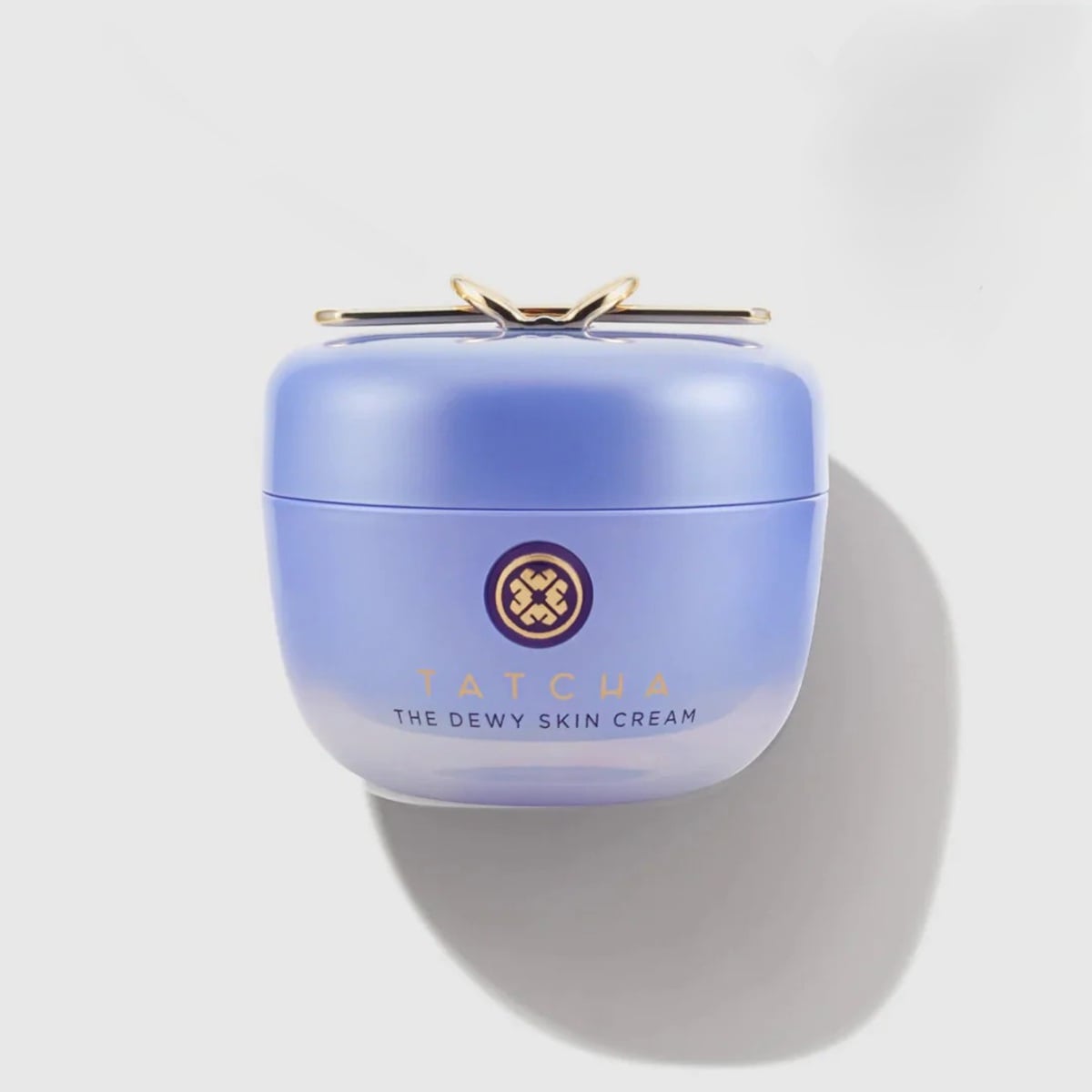
Tatcha The Dewy Skin Cream Review: Why I Always Come Back to This Glow-Boosting Moisturiser

There are some products I try, enjoy, and move on from, and then there are the ones I quietly repurchase, keep in rotation for years, and reach for instinctively when my skin needs something extra. Tatcha The Dewy Skin Cream firmly falls into the second category.

I’ve been using this moisturiser on and off for years, and the Dewy Skin franchise is easily my favourite from Tatcha. In fact, I first bought The Dewy Skin Cream long before Tatcha officially launched in the UK, after discovering it in the US.

I was instantly drawn to it because dewy skin has always been my thing, and while the name definitely caught my attention, it was the performance that made me keep coming back. What started as curiosity has turned into a long-standing staple and something I think is really worth investing in.

What Is Tatcha The Dewy Skin Cream?

What is Tatcha The Dewy Skin Cream?

Tatcha The Dewy Skin Cream is a rich, hydrating moisturiser designed to deliver plump, glowing skin with long-lasting hydration and is particularly loved by those with dry or dehydrated skin.

What it promises:

  • Deep, long-lasting hydration
  • A visible glow that enhances skin
  • Comfort and plumpness without feeling heavy

Although it’s been around for a while now, it’s still one of Tatcha’s best-sellers and in my experience, that’s because it genuinely performs.

Why the Dewy Skin Range Is My Favourite from Tatcha

I’ve always gravitated towards products that prioritise glow, hydration and skin comfort, and the Dewy Skin range really delivers on that philosophy.

The Luminous Dewy Skin Mist  is another product I love in this line. It gives that instantly juicy, fresh finish that makes skin look healthy rather than shiny. And I am also a fan of the Dewy Milk Moisturizer. It’s lighter than the cream, great if you have oily skin, or want something lightweight under makeup or a different texture for summer.

Tatcha The Dewy Skin Cream is one of those products that just makes sense if you love dewy skin, and yes, the name definitely caught my attention initially, but thankfully, it truly lives up to the hype.

My Review of Tatcha The Dewy Skin Cream

My Review of Tatcha The Dewy Skin Cream

Texture, Finish & Feel on the Skin

One of the standout features of The Dewy Skin Cream is its beautiful glossy texture.

Tatcha The Dewy Skin Cream Texture

It looks rich in the jar, and it is undeniably luxurious, but it melts into the skin far more easily than you might expect. A little really does go a long way. You only need a small amount to cover the face comfortably.

On the skin, it:

  • Feels immediately comforting and nourishing
  • Leaves a soft, healthy glow rather than grease
  • Makes skin look plumper and more alive

There’s a noticeable bounce to the skin after application, which I especially appreciate when my complexion is feeling dull, tight or a little stressed.

How It Performs Under Makeup

This is where Tatcha The Dewy Skin Cream really shines for me. I love it as a makeup-prep moisturiser, particularly when I want my base to look fresh, luminous and smooth. It gives the skin a subtle glow that genuinely enhances the look of foundation, rather than competing with it.

I find that:

  • Foundation glides on beautifully
  • Skin looks smoother and more hydrated throughout the day
  • Makeup wears better and looks less flat

If your makeup ever looks a bit lifeless or clings to dry areas, this is the kind of moisturiser that can quietly transform the finished result.

How I Use Tatcha The Dewy Skin Cream

How to use Tatcha The Dewy Skin Cream

I tend to reach for this cream when:

  • My skin feels dry or dehydrated
  • I want a glowier makeup look
  • My skin barrier needs a bit of TLC

I usually apply it in the morning, especially under makeup, but it also works beautifully at night when my skin needs extra comfort. Because it’s so hydrating, I don’t feel the need to layer lots of products underneath as it does a lot of the heavy lifting on its own.

It’s one of those products that’s stayed in my routine in various phases of my skin, which says a lot, especially for something I first discovered years ago overseas.

Who Is Tatcha The Dewy Skin Cream Best For?

I think this moisturiser is particularly well suited to:

  • Dry skin
  • Dehydrated skin
  • Normal to dry skin types
  • Mature skin
  • Anyone who loves a dewy, glowy finish

Who Might Not Love It as Much

If you have very oily skin or strongly prefer lightweight gel textures, you may find this richer than you need, especially in warmer months. If this is the case, go for Tatcha The Dewy Milk Moisturizer which is lighter in texture and great at balancing especially if your skin leans combination or oily but still craves glow.

Is Tatcha The Dewy Skin Cream Worth It?

This is definitely a luxury moisturiser, and I completely understand that it’s an investment. That said, I do think it earns its place if glow, hydration and makeup performance are high on your priority list.

Because you only need a small amount each time, one jar lasts surprisingly well, and the results have always made it one I’m genuinely happy to repurchase. For me, it’s not about chasing newness; it’s about relying on something that consistently delivers.

Final Thoughts

I first tried Tatcha The Dewy Skin Cream because the name spoke directly to my love of dewy skin, but I’ve continued to use it because it truly performs.

It gives my skin long-lasting hydration, a beautiful glow, and that healthy, plump look that makes makeup sit better and skin feel more comfortable all day long. It’s a product I trust, return to, and recommend when someone asks for a moisturiser that genuinely enhances the skin.

If dewy, glowing skin is your thing too, this is absolutely one worth trying.

If you want to discover more from Tatcha, you need to check out their newest launch which is an amazing moisturiser with a super unique texture. To find out more read: Tatcha The Longevity Memory Cream Review.

Where to buy it

Tatcha The Dewy Skin Cream is £67 for 50ml and available now via the link below:

Soluble Fiber vs. Insoluble Fiber: What’s the Difference?

0

Most people are well aware that fiber is a nutrient we want to eat enough of. Fewer know that there are two distinct types: soluble fiber and insoluble fiber. Both play different—but equally valuable—roles in your body. Does fiber make you poop? You bet. But as hyped as fiber’s poop-promoting powers may be—and make no mistake, that function is indeed essential—there’s actually a lot more to appreciate about the stuff, both in its soluble and insoluble forms.

In an effort to give fiber its full due, we broke it all down with the help of a few nutrition experts. Here’s everything you need to know about the two types of fiber, including what they do in your body, the foods where you can find them, and the health benefits they offer.

First of all: What actually is fiber?

Fiber, sometimes called dietary fiber, is a type of carbohydrate found in plant foods, according to the Food and Drug Administration (FDA). Its structure is formed by a bunch of sugar molecules, bound together in a way that makes it hard to readily break down and use as energy. The small intestine can’t digest fiber in the same way as other kinds of carbohydrates, so unlike sugar or starch, for instance, fiber is not a great source of fuel for the body. But it still plays a crucial role in a healthy diet.

So what foods are high in fiber generally? Lots of kinds of plants. Nearly all plant foods (which include vegetables, fruits, whole grains, legumes, seeds, and nuts) contain a combination of both soluble and insoluble fiber, according to the FDA. Sometimes the two types are listed separately on nutrition labels, but often, they’re lumped together as “fiber.” Take an apple, for instance. Its flesh contains some soluble fiber, while the skin is full of insoluble fiber, Whitney Linsenmeyer, PhD, RD, an assistant professor in the department of nutrition and dietetics at Saint Louis University’s Doisy College of Health Sciences and a national spokesperson for the Academy of Nutrition and Dietetics (AND), tells SELF.

Where both types of fiber don’t always show up is in fiber supplements (like psyllium husk products) and fiber-fortified foods (like high-fiber protein bars), which often contain large amounts of added fiber that consists of just one type or the other, Lisa Young, RDN, CDN, PhD, a nutrition counselor and adjunct professor in the department of nutrition and food studies at New York University, tells SELF. That not only denies you the benefits of both types, but can also be less than ideal for your stomach, as we’ll get into in a bit.

What is soluble fiber, and what does it do?

Soluble fiber is fiber that is able to dissolve in water. While there are “typically fewer rich sources of soluble fiber in our food supply than insoluble fiber,” Desiree Nielsen, RD, a recipe developer with a focus on plant-based nutrition, tells SELF, you probably still have plenty of decent options sitting in your pantry. Soluble fiber is found in grains (like barley and oats), legumes (like beans, lentils, and peas), seeds (like flaxseeds and chia seeds), nuts (like peanuts and macadamia nuts), and some fruits and vegetables (like bananas, avocados, citrus fruits, strawberries, and carrots), according to the US National Library of Medicine (plus okra and eggplant, Nielsen adds). It’s especially concentrated in berries, artichokes, broccoli, and winter squash, Kim Larson, RDN, a board-certified health and wellness coach, tells SELF.

My honest thoughts on the Bafta’s racial slur incident – as a Black disabled woman

0

By now, you have probably seen, or at least heard, about the moment during the 2026 Bafta Awards Ceremony, John Davidson, who has Tourette syndrome, shouted the N-word while Michael B Jordan and Delroy Lindo were presenting on stage.

Let’s talk about it.

Tourette Syndrome (TS) is a condition characterised by sudden, repetitive sounds or movements known as tics. Coprolalia is defined as “the involuntary outburst of obscene words or socially inappropriate and derogatory remarks” (per The Tourettes Association of America), which is a form of vocal tic experienced by some people living with TS.

Dr Valerie Brandt, an associate professor at the University of Southampton, told The Guardian: “It is possible that coprolalia happens especially because someone is very aware of how inappropriate it would be to say a taboo word out loud. Combined with a difficulty to suppress verbal output, this could result in coprolalia.”

There is no debating whether the moment was offensive or not; it was, and Michael B Jordan, Delroy Lindo and Black people globally have a right to be upset that they were invited to an evening to be celebrated and at a vulnerable moment heard one of the most triggering words they could have heard in that environment.

As Sinners‘ production designer, Hannah Beachler said in a statement, “The situation is almost impossible, but it happened 3 times that night, and one of the three times was directed at myself on the way to dinner after the show.”

“And a third time at a Black woman. I understand and deeply know why this is an impossible situation. I know we must handle this with grace and continue to push through. But what made the situation worse was the throw-away apology of ‘if you were offended’ at the end of the show.

As a Black disabled person, while I don’t have TS, I can empathise with both sides of this unfortunate and mortifying incident. For those with disabilities, seeing reactions saying John Davidson shouldn’t have been at an awards show sends a message that people living with uncontrollable conditions should simply be removed from public spaces, further emphasising why we feel marginalised. Our conditions are inconvenient. I feel the outrage of hearing a racial slur that we’re often told to ‘respond with grace’ to, and know the reality of having a disability. We must expand our understanding to hold two truths: that his involuntary words were racist, but that does not mean he is, but that being subjected to racist language for the whole world to see is dehumanising.

And what role should institutions like BAFTA and the BBC play in situations like this? A duty of care to all involved would surely mean that this wouldn’t make it into the final edit to cause large-scale embarrassment for all parties.

There was a two-hour broadcast delay between when the ceremony started and when it was aired on BBC One. It begs the question, who made the executive decision to keep that moment in and why? It was an unnecessary moment that could have been edited out without affecting continuity. This moment was kept in, but in contrast, Akinola Davies Jr (director of My Father’s Shadow)’s “Free Palestine” comment was edited out of his speech, presumably as they deemed that statement offensive. It’s giving we could have, but we didn’t want to. But I digress.

If you’re asking me, more should have been done by the BBC at that moment. At an organisation that big, someone should have edited it out for the sake of the public – especially the Black disabled community.