Home Blog Page 119

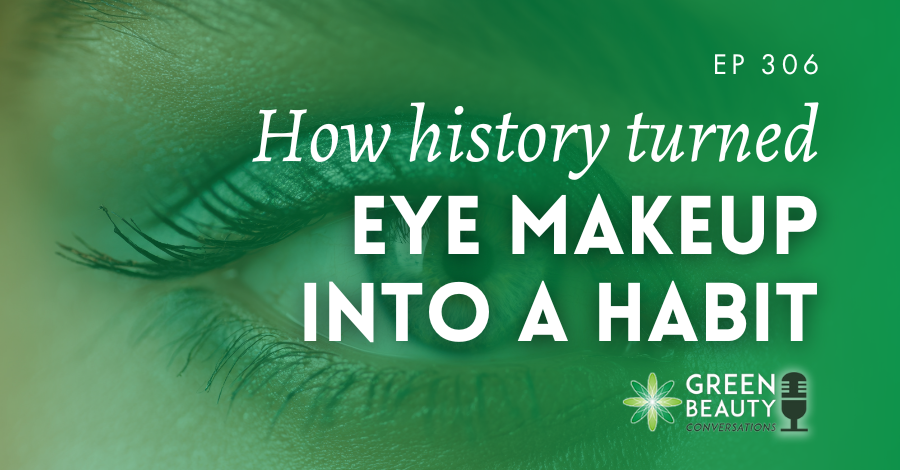
How 5,000 years of history turned eye makeup into a daily habit

0

What if the way you felt about eye makeup wasn’t actually a personal preference at all, but the result of thousands of years of cultural shifts, technological change, and social pressure?

In this thought-provoking episode of Green Beauty Conversations, Formula Botanica CEO Lorraine Dallmeier takes you on a journey through 5,000 years of beauty history to uncover how eye makeup evolved from ritual and symbolism into something many people now feel they have to wear every day.

Following on from last week’s powerful interview with Dr Pam Theriot about eye health and the products we use around our eyes, this episode zooms out to explore the cultural side of the conversation.

Lorraine unpacks where the idea of “I can’t leave the house without my face on” really came from – and why that feeling is surprisingly modern. Once you hear this, you’ll never look at your mascara the same way again.

From ancient kohl to old Hollywood close-ups and social media beauty standards, this episode connects the dots between history and the expectations many of us carry today.

If you’ve ever felt more “put together” with eyeliner on, or strangely exposed without mascara, this episode will make you question why. It’s part beauty history, part cultural commentary, and completely fascinating.

Miss this episode, and you miss the chance to see modern eye makeup through a completely different lens.

Listen here

“Eye makeup isn’t a test of professionalism, womanhood or worth. It’s a trend, a tool, a toy, a piece of culture we can pick up or put down whenever we like.” — Lorraine Dallmeier

Key takeaways:

  • Eye makeup started as a ritual, not a routine: Eye makeup began as a ritual, protection and symbolism rather than beauty in the modern sense. In ancient Egypt and other early civilisations, kohl was used by both men and women for spiritual, cultural and practical reasons, including protection from the sun and illness (and even the evil eye). This shows that eye makeup has deep historical roots, but those weren’t tied to everyday social expectations in the way they are today.
  • Beauty standards evolved throughout time and cultures: Attitudes towards eye makeup have shifted dramatically depending on time, place, and culture. In ancient Rome, subtle eye definition was acceptable, but anything too bold could attract moral judgment, while in medieval Europe, visible cosmetics were often associated with vanity or sin. At the same time, many cultures in the Middle East, North Africa and Asia maintained long, continuous traditions of eye adornment.
  • Technology helped turn eye makeup into an everyday norm: The rise of photography, cinema close-ups, electric lighting and better mirrors meant people could see their own faces more clearly and were seen more closely by others. Film studios helped popularise mascara and eyeliner so that actors’ eyes stood out on screen, and those looks filtered into everyday life. Over time, what started as performance makeup gradually became normalised as an everyday baseline.
  • Social media sped up the shift from expression to expectation: From the bold colours of the 1980s to the smoky eye of the 2000s and the sharply defined “Instagram eye”, trends began moving faster and becoming more visible than ever before. As these looks circulated widely, they subtly reshaped ideas of what a “finished” or “professional” face should look like. Many people internalised these standards so deeply that wearing eye makeup began to feel like a personal necessity rather than a cultural trend.
  • Eye makeup influences how women are judged: Research discussed in the episode also shows that eye makeup can affect how women are perceived in professional settings. Studies reveal that women wearing moderate makeup are often judged as more competent, likeable and trustworthy than the same women with bare faces, while heavier makeup can lead to negative judgments.

Thank you for joining us for this episode of the Formula Botanica Green Beauty Conversations podcast. If you enjoyed listening, please share, subscribe and review this episode on Apple Podcasts, Spotify or Youtube so that more people can enjoy the show. Don’t forget to follow and connect with us on Facebook and Instagram.

FREE TRAINING

Learn how to become an
Organic Skincare Formulator

Join over 100,000 other Formulators

By providing your details, you agree to receive additional educational & marketing emails from Formula Botanica, which further introduce our curriculum. Your data is never shared or sold. Read our Privacy Policy.

FREE TRAINING

How to become an
Organic Skincare Entrepreneur

Join over 100,000 other Formulators

By providing your details, you agree to receive additional educational & marketing emails from Formula Botanica, which further introduce our curriculum. Your data is never shared or sold. Read our Privacy Policy.

FREE TRAINING

How to become an
Organic Skincare Entrepreneur

Join over 100,000 other Formulators

By providing your details, you agree to receive additional educational & marketing emails from Formula Botanica, which further introduce our curriculum. Your data is never shared or sold. Read our Privacy Policy.

Leave us a comment

‘Adult Sleep Training’ Is on the Rise. Here’s Who It’s for—and How to Do It

0

Veronica Smith couldn’t sleep. As a freshman in college, she found herself tossing and turning all night, every night. “I would feel just drained, low energy, hard time concentrating,” she tells SELF. “I felt like I could sleep for days if I had the chance.”

Over the next few years, she completed her undergraduate degree, headed to grad school, and started her career. Throughout it all, the insomnia continued. She tried everything to fix it: sleeping pills, acupuncture, meditation, cutting out caffeine, speaking with various sleep specialists, and even getting a stellate ganglion block, an injection recommended for veterans who have insomnia and PTSD. Nothing worked as a long-term solution. But in June 2025, her therapist asked her if she had tried cognitive behavior therapy for insomnia, commonly referred to as CBT-I. Smith hadn’t.

While she was initially skeptical of the treatment—an evidence-based psychotherapy approach widely considered to be the gold standard for treating insomnia, involving a six-to-eight week program of regular therapy, daily exercises, and routine shifts—she ultimately decided to try it, pairing it with eye movement desensitization and reprocessing (EMDR) therapy at the suggestion of her therapist. It worked.

“It was a miracle,” she says. “I’m a disciplined person. I’m a type-A person. I do routines and all of the things. But this really helped.”

For many of us, the concept of sleep training conjures images of parents attempting to teach their infants to self-soothe: Ferber, “fading,” the “chair method” are just a few that terms might ring a bell. But those aren’t the only ways to teach someone better sleep. Adults—like Smith—are increasingly turning to CBT-I, where instead of focusing on just one aspect of someone’s sleeping issues, such as anxiety around getting shut-eye or lack of a quality bedtime routine, they take a more holistic approach.

What does adult sleep training entail?

On social media, sleep-obsessed influencers will suggest a litany of hacks to try for better shut-eye. But when it comes to CBT-I, the protocol is straightforward.

The five components of CBT-I (sleep hygiene, relaxation or stress reduction, stimulus control therapy, sleep restriction, and cognitive therapy) address unproductive behaviors that people learn over time to cope with their insomnia, says Meredith Broderick, MD, a neurologist and board-certified sleep and behavioral sleep medicine specialist. These behaviors, or adaptations, may include spending a lot of time in bed, not scheduling certain activities due to a fear of not sleeping, or resting a lot during the day, Dr. Broderick says. (However, note that none of these behaviors actually fix insomnia.)

South Korea and Brazil Sign K-Beauty and Trade Cooperation Deals

0

THE WHAT? South Korea and Brazil have signed a series of agreements, including a memorandum aimed at boosting regulatory cooperation in the health sector to facilitate greater access to K-beauty products in Brazil.

THE DETAILS The agreements were signed in Seoul during Brazilian President Luiz Inacio Lula da Silva’s state visit, alongside South Korean President Lee Jae Myung. Among the deals is a memorandum of understanding designed to enhance regulatory collaboration in the health sector, potentially easing barriers for South Korean skincare and cosmetic exports to Brazil.

South Korea has become a major global cosmetics exporter, shipping billions of dollars’ worth of beauty products annually, while Brazil ranks among the world’s largest beauty markets. The two leaders also agreed to elevate bilateral ties to a “strategic partnership,” with annual trade between the countries already exceeding US$10 billion.

THE WHY? The strengthened regulatory cooperation is intended to streamline market access for K-beauty brands in Brazil, deepening trade ties and supporting South Korea’s growing global beauty exports while reinforcing broader economic collaboration between the two nations.

Source: Barrons

The ’90s Fluffy Bob Will Make You Excited to Get a Silk Press

0

One of the best compliments I’ve ever received was being told that I looked “’90s fine.” My then-boyfriend said it as we were heading out for date night, and I knew exactly what he meant: that effortless, low-key sultry energy embodied by icons such as Halle Berry, Naomi Campbell, and Nia Long during that era. You might think the praise was referring to my outfit, but it had nothing to do with what I was wearing—it was for my hair. I had a freshly pressed, softly curled, fluffy bob that moved like silk, and conveyed just the right amount of drama.

“Bounce, volume, and playfulness are the hallmarks of the fluffy bob,” says Brenton Diallo, a New York City-based hairstylist who’s been working behind the chair since the early ’90s. He recalls clients routinely bringing in photos of the great Whitney Houston and Tisha Campbell as reference points.

Getty Images

“Soft, strategic layers are what give this cut its movement and fullness while keeping it light and bouncy,” says Alex Vann, a hairstylist and salon owner in Duluth, Georgia. “What makes it special is the lift at the root and those soft bends throughout the hair. It’s polished, touchable, and frames the face beautifully while still feeling effortless,” she adds.

Lead stylist at Twelve12 Salon, @hair.journies styling a fluffy bob.

Instagram / @twelve12salon

According to Diallo, the look was partly shaped by the tools of the era; heat-styling technology wasn’t as advanced at achieving pin-straight results on textured hair, so a silk press in the ’90s often yielded airy volume and soft fullness rather than the glassy, ultra-sleek finish that’s common today.

As trends tend to do, the fluffy bob has circled back around into the spotlight, though you could argue it never really left. Recently, Beyoncé debuted a bouncy, jaw-skimming blonde bob that promptly sent the internet into a tizzy. And if history tells us anything, her co-sign alone is enough to propel a hairstyle straight into trend territory. Says Vann, “That’s the energy we’re channeling with today’s fluffy bob, nostalgic but modernized.”

Ahead, pro hairstylists share their techniques for achieving this timeless look, plus the best tips for making your fluffy bob last as long as possible.

How to get a fluffy bob

“The cut itself is the foundation of the style,” Vann says. “To achieve the fluffy bob properly, soft layers must be added to create body, volume, and natural movement.” The stylist recommends booking an appointment for a layered bob haircut and bringing in reference images to communicate the exact look you want. After your cut (which usually happens after the hair has been washed and blown out), a classic silk press and pin-curl set (the large curls created with a barrel wand and held in place by clips) is the styling method that brings the fluffy bob to life.

This Powerful New Kiehl’s Cream Rescues Reactive Skin Fast

0

The eighth formula in Kiehl’s iconic Ultra Facial range is also its most targeted.

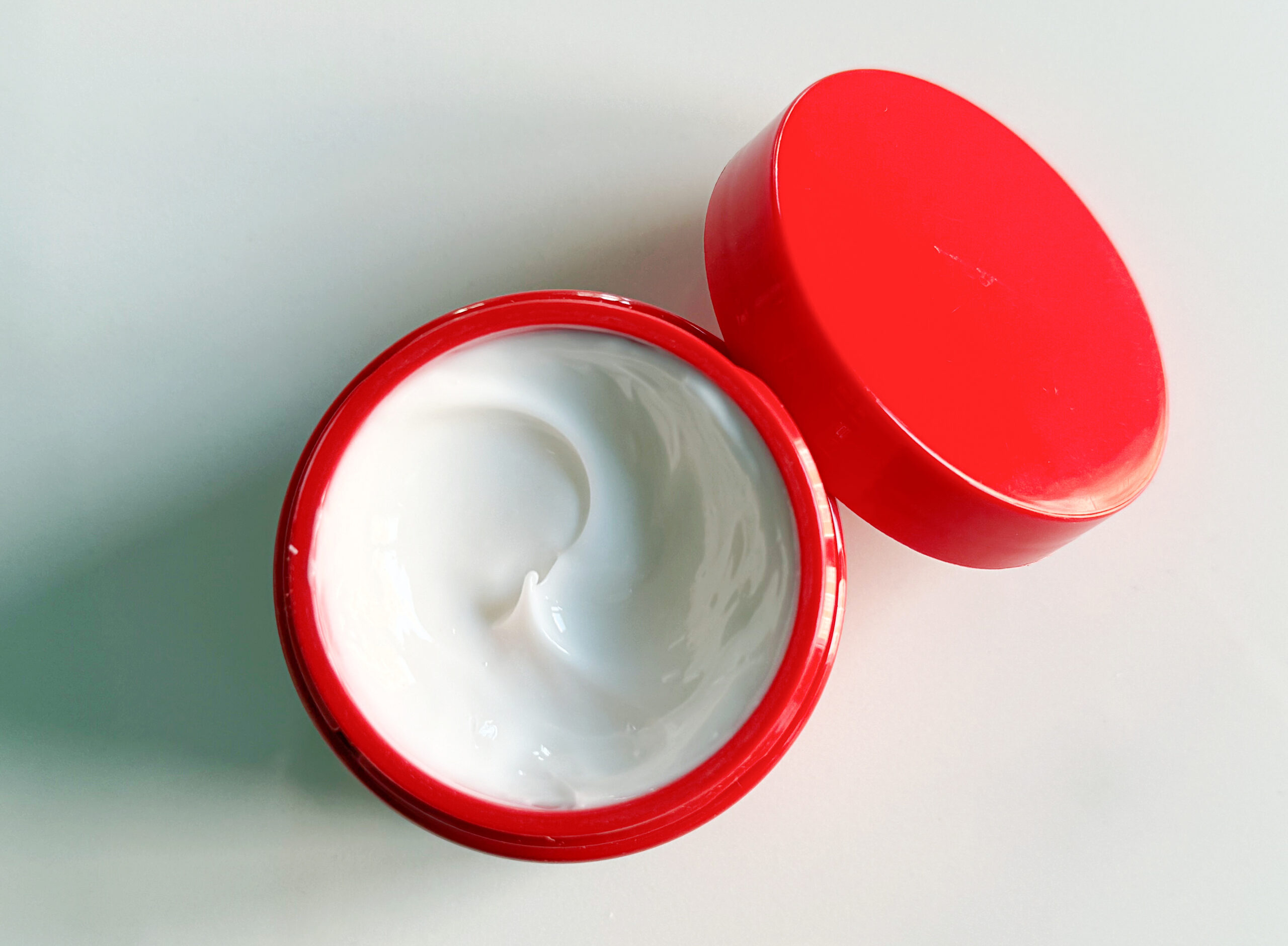
Kiehl’s has been plastering Madrid with it. Bus stops, social media, the works. That unmistakable red jar is impossible to miss, and clearly that was the point. After spotting the Ultra Facial Meltdown Recovery Cream everywhere short of my bathroom mirror, I had to find out if the formula was as attention-grabbing as the campaign. A genuine thank you to Kiehl’s Spain for the PR mailer, by the way. For context: after 15 years and countless deliveries stateside, getting on European media lists is its own kind of endurance sport.

New jar of Kiehl's face moisturizer in hand.

What is the Kiehl’s Ultra Facial Meltdown Recovery Cream?

This is the eighth moisturizer in the Ultra Facial range. It is also the most targeted formula Kiehl’s has ever added to the collection. The Ultra Facial line built its reputation on accessible, barrier-friendly hydration for everyone. The Meltdown Recovery Cream takes a sharp left turn from that.

Kiehl's face cream for red, angry, inflamed skin.

This is not a moisturizer for everyone. It is a moisturizer for skin that is currently losing.

Kiehl’s positions it for reactive, sensitised complexions. Think chronic redness, eczema, psoriasis, post-procedure recovery, or any situation where your skin barrier has waved a white flag. If most moisturizers sting, tighten, or flare you up rather than calm you down, this is the formula that is supposed to change that.

Kiehl's ultra meltdown recovery cream texture on skin.

Who will get the most out of it?

Anyone with finicky, temperamental, or compromised skin. But “sensitive skin” gets thrown around so loosely it has become nearly meaningless. Let me be more specific.

The Meltdown Recovery Cream is for the person whose skin reacts to fragrance, to actives, to weather changes, to stress. It is for the person who has tried half a dozen gentle moisturizers and found they were not gentle enough. It is also genuinely relevant for anyone coming out of a peel, laser, or microneedling session. Kiehl’s specifically calls out eczema and psoriasis sufferers. Based on the formulation, that is not just marketing. The ingredient logic actually supports it.

Kiehl's face cream for most sensitive skin types.

What is in it and why it matters

The word M.E.D.I.GRADE on the label will either reassure you or make you pause. To be clear, the M.E.D.I. part is marketing shorthand for Measured, Effective, Dosed, Ingredients. Clever branding. The GRADE part, however, carries real regulatory weight. The FDA classifies colloidal oatmeal as an over-the-counter active ingredient for treating skin conditions including eczema. Kiehl’s uses it at 1%, the standard efficacious concentration. It is the ingredient doing the heaviest lifting here. It calms inflammation, reinforces the barrier, and provides immediate relief on contact.


Ingredients of the new Kiehl's ultra facial meltdown recovery cream.

The supporting cast is where this formula gets interesting. Panthenol (Vitamin B5) is a proven humectant that also promotes skin barrier repair at a cellular level. It is not just a moisturising ingredient. It actively helps the skin rebuild its own lipid structure. Bisabolol, derived from chamomile, is one of the more underrated anti-inflammatory ingredients in skincare. It works fast and is exceptionally well-tolerated even by the most reactive skin. Squalane provides emollient hydration without any occlusive heaviness. Adenosine, often discussed for its collagen-adjacent anti-aging benefits, also carries meaningful anti-inflammatory properties that most people overlook. Glycerin rounds it out as the workhorse humectant keeping everything hydrated at the surface.

What the formula leaves out matters just as much. No fragrance, no essential oils, no known sensitizers. For this particular audience, that is half the story.

Kiehl's Ultra Facial cream for sensitive skin.

Texture, layering, and real-world use

This is where Kiehl’s genuinely surprised me. I do not say that lightly.

Every colloidal oatmeal moisturizer I have used before this one has been thick. Paste-like. The kind of thing you apply before bed and wake up feeling vaguely mummified. Functional, but not exactly something you would layer under makeup at 8am. The Meltdown Recovery Cream throws that expectation out completely. It is whipped and almost impossibly lightweight for what it claims to do. It absorbs in seconds. The texture is closer to the original Ultra Facial Cream than anything in the intensive repair category has any right to be.

Kiehl's new face cream for skin that is post procedure.

My standard layering test is tinted SPF on top. Zero pilling. It also plays well over water-based serums and facial mists. That is relevant because a lot of redness-prone skin types rely on a hydrating mist post-cleanse before moisturiser. No issues there either. Morning and evening use is entirely realistic. That is not always the case with ‘recovery’ formulas that can feel too heavy for daytime.


Review of the new Kiehl's Meltdown Recovery cream for sensitive skin.

Does it actually work?

Yes. But it is worth being precise about what working means here.

This is not a color-correcting green balm like those from Dr. Jart+ or Indie Lee. Those products neutralise redness visually by cancelling the color. The Meltdown Recovery Cream does not do that. It addresses the underlying cause instead. That is a compromised barrier that is allowing irritants in and moisture out.

Open jar of Kiehl's Ultra Facial cream in hand.

The relief is real and relatively fast. But if you are dealing with chronic redness or a diagnosed condition like rosacea, no moisturizer is going to fix that in three days. Think of this as a foundation for recovery rather than a quick fix. Used consistently, morning or evening or both, it creates the kind of stable and calm skin environment where other treatments can actually do their job without causing a flare.

For post-procedure use specifically, this is an easy recommendation. Lightweight enough not to interfere. Soothing enough to make the recovery window significantly more comfortable.

$45 for 50ml at kiehls.com, sephora.com, ulta.com or boots.com. If you’re reading from Spain, check out kiehls.es.

Other posts you will enjoy:


Affiliate disclosure: This post contains affiliate links, which means I may earn a small commission if you click through and purchase. It costs you nothing extra and helps keep omgbart running. I only recommend products I genuinely use and love, because recommending garbage would be bad for both of us.


Industry Season 5 Is Happening: Here’s What We Know

0

Company-wide email: Season five of Industry has just been confirmed.

HBO has renewed Industry for a fifth and final season.

The news comes as little surprise, as the show has been the talk of the town. Industryproduced by Bad Wolf, has seen season four average around 1.7 million viewers per episode so far — a 30 percent improvement on season three.

PHOTOGRAPHER:,Simon Ridgway

The penultimate season’s finale will be released on March 1 at 8 p.m. on HBO and HBO Max. Note that this is an hour earlier than the usual broadcast time, so don’t risk missing it! Over here, we can watch it on BBC.

In season four, Harper (Myha’la) and Yasmin (Marisa Abela) were drawn into a high-stakes, globetrotting cat-and-mouse game when a splashy fintech darling bursts onto the London scene. As Yasmin navigated her relationship with tech founder Sir Henry Muck (Kit Harington) and Harper was pulled into the orbit of enigmatic executive Whitney Halberstram (Max Minghella), their complicated friendship continued to warp and intensify under the pressure of money, power, and ambition.

Image may contain Blonde Hair Person Teen Accessories Glasses and Highlighted Hair

PHOTOGRAPHER:,Simon Ridgway

Will season five be the final season of Industry?

Before you start drafting a petition, note that creators Mickey Down and Konrad Kay were the ones who decided to conclude Industry with season five, according to HBO’s official statement accompanying the renewal announcement.

“For four seasons, Industry has thrilled us while examining power, money, politics, and class. Under Mickey and Konrad’s ambitious and singular vision, it has solidified itself as an important contemporary, genre-bending drama in HBO’s lineup that keeps viewers on the edge of their seat week after week,” Francesca Orsi, HBO’s executive vice president of programming and the head of its drama series and films, said. “It is gratifying that viewers and critics have recognized season four as bigger and more thrilling than ever, buoyed by career defining performances from our magnificent cast. Alongside the amazing team under executive producer Jane Tranter at Bad Wolf and executive producer Kathleen McCaffrey at Little Gems, we are so proud we can announce the fifth season of this terrific show, which Mickey and Konrad have decided will take us to the end of Industry’s story.”

Try These Exercises for Better Sex

0

When people think about exercising for better sex, they usually jump straight to Kegels. Sexual function requires muscle engagement, body awareness, endurance, and the ability to both build and release tension. It’s no surprise then that the exercises that could improve how you feel during sex are nuanced—and they involve many parts of your body.

That’s because, like just about any movement or activity, sex requires using multiple muscle groups. Strong core muscles are essential. But core muscles aren’t just the ones that make up your pelvic floor. They are also the muscles that control your legs, hips, and thighs. Paying close attention to the strength and flexibility of all of these muscles—and improving both—can enhance your experience and make you feel more confident in the bedroom.

“The pelvic floor is central to the sexual response cycle,” Justine Roper, PT, certified women’s pelvic specialist and pelvic floor therapist, tells SELF. “Think of it like a hammock of muscles. Its job is to support our bladder, uterus, rectum—and it’s a direct interface for the clitoris and vaginal canal.”

Why just doing Kegels won’t get you to the big O

“Most people want a strong pelvic floor, and that’s great,” Roper says. “But the pelvic floor should do two things: It should be able to contract and it should be able to relax.”

That balance is key to arousal and orgasm. During arousal, blood flow increases to the genital area, creating tension in the pelvic floor muscles; orgasm comes with their release. If those muscles are constantly clenched, that release can be harder to achieve, Roper explains.

“The harm in over-Kegeling is the stopping of the blood flow and ultimately the stopping of orgasmic response,” she says.

Even more surprising: Many people aren’t actually doing Kegels correctly. Instead of isolating the pelvic floor, they end up squeezing their glutes, inner thighs, or holding their breath.

Kegels are still important, but you need to learn to do them correctly. “A Kegel is very isolated. You’ve got to tap into your mind-body connection,” Roper says. One way to do that: Use your breath. “When you breathe in, your pelvic floor relaxes; when you exhale, it recoils. Your breath has to do that salsa dance with the pelvic floor.”

Once you’ve got that down, it’s time to think about the bigger picture. Because better sex isn’t just about your pelvic floor—it’s about how the rest of your body supports it too.

Meet the muscles that make sex better

While the pelvic floor gets the spotlight when it comes to great sex, these muscles don’t work alone. Strength, stability, and mobility across your body all play a role in how you move (and feel) during sex. Plus, being more limber can make it easier (and more comfortable) to get into and stay in different positions without strain.

L’Oréal Files Lawsuit Seeking Refund of Trump-Era Tariffs

0

THE WHAT? L’Oréal has filed a lawsuit in the U.S. Court of International Trade seeking refunds for tariffs paid under former President Donald Trump’s emergency trade measures, following a Supreme Court ruling that found the duties unlawful.

THE DETAILS The case was filed by L’Oréal Travel Retail Americas, the division responsible for selling beauty products in duty-free and travel retail channels. The filing comes days after the U.S. Supreme Court ruled in a 6–3 decision that Trump overstepped his authority by using the International Emergency Economic Powers Act (IEEPA) to impose tariffs on imported goods.

In its complaint, L’Oréal stated it served as the importer of record on goods subject to the IEEPA tariffs but did not disclose the amount it is seeking to recover. The lawsuit names U.S. Customs and Border Protection (CBP), its commissioner Rodney Scott and the United States of America as defendants. The broader refund process, potentially covering up to US$175 billion in tariff collections, is still to be determined by lower courts and could take months or years to resolve.

THE WHY? The legal action aims to recoup tariff payments deemed unlawfully collected after the Supreme Court invalidated the legal basis for the trade measures, as companies seek to recover potentially significant sums.

Source: Reuters

Chloe Veitch on Naming Her Anxiety and Practicing Self-Love

0

From her ice-cold de-puffing ritual to her can’t-live-without vitamin C serum, Netflix favorite Chloe Veitch approaches beauty with the same candor and charisma that first captivated audiences on Too Hot to Handle. But beyond self-care and skin care, Veitch’s true beauty secret is vulnerability—leaning into affirmations, honest conversations about mental health and the daily practice of self-love. Ahead, she opens up about her daily routine, confidence rituals and the wellness habits she swears by.

What does your daily beauty and skin-care routine look like, especially on busy days?

“When I wake up, I instantly put ice under my eyes. Then, I always apply a retinol cream before I put any moisturizer on, which really makes a difference. I even carry it in my bag everywhere I go. I also always use a sleep mask that is oil based at night so my skin is hydrated when I wake up because I tend to get really puffy!!! So I rely on ice ice ice!! I try to wait at least 30 minutes after massaging my face and doing a slight lymphatic drainage massage before applying any makeup.”

Are there any beauty treatments, tools or wellness practices you swear by?

“I swear by serums, and I absolutely love Osier’s Brighter Days Vitamin C Serum! I’m obsessed. It keeps my skin hydrated and looking glossy every day, even in this dry LA heat!”

What’s one wellness habit you wish you had adopted sooner?

“Massaging under my cheekbones and my jawline. I drain my face and my neck every morning and I swear this makes a big difference. I never understood how it worked and why people did this before, but now I do because it’s been in my routine for so long.”

You’ve been very open about your journey with confidence and self-acceptance. What has been the most transformative lesson along the way?

“The most transformative lesson that I’ve learned and really leaned into is opening up to my friends and being honest, even if it hurts or is embarrassing. After I do my morning affirmation and practice self-care and all of that fun stuff, it really does come down to being vulnerable. Having conversations about mental health has really helped show the younger version of me that she is loved unconditionally by the people that I trust. Being open and vulnerable really helps me with confidence and self-acceptance. I always recommend surrounding yourself with the people that you can be honest with and vulnerable with.”

How do you handle criticism or pressure, especially in such a public-facing career?

“I don’t really get a lot of criticism, but when I do, I just ignore it, and on my Instagram, I have blocked certain words so they don’t pop up. My mum actually made me do this when I first went on it, and I’ve never looked back.”

What advice would you give to women who struggle with confidence or self-doubt?

“Any advice that I would give to a woman or anyone in general who struggles with confidence or self-doubt is just to reassure them that it is completely normal. I doubt myself sometimes, but I’ve learned that self-love is a practice, not a destination. It’s something that you learn and continue to learn the more you evolve.

I’ve had multiple identity crises in my career, changing from reality TV talent to model to host. My mindset is always consistent, no matter where I am in my journey and career. I always give myself grace and compassion for how far I’ve come, and that I am still standing is an anchor to my core values and beliefs. Whenever I doubt myself, I remind myself that I am kind. I lead with love, everyone is equal, and I try to talk to myself kindly. The hardest thing is my own self-criticism. I’ve started naming my anxiety, and sometimes I call her out and tell her to F–off!

But it is important to always give yourself grace and compassion, surround yourself with people that you love, they are your anchors and remind yourself that there are 8 billion people on this planet, no one is near the same, and that is our superpower.”

Univar Solutions to distribute CABB’s glycolic acid in EMEA

0

Univar Solutions has inked an exclusive distribution partnership with the CABB Groupa provider of fine chemicals, specializing in customized active ingredients and high-purity solutions for life science, personal care, crop science, and specialty applications. The new distribution agreement includes glycolic acid in select European, Middle Eastern, and African (EMEA) markets [1].

This strategic alliance enhances our ability to deliver quality, innovative ingredients, and we are confident that together we can deliver greater value by offering glycolic acid solutions that meet the increasing demand for multi-purpose consumer products in the region,” said Nick Powell, CEO of Ingredients + Specialties from Univar Solutions.

Glycolic acid is commonly used in cosmetic products and skin treatments and is widely recognized for its efficacy in exfoliation, skin renewal, cleaning performance, and moisturizing. It is also a highly suitable choice for technical applications in home care and industrial cleaning due to its low toxicity, non-flammability, and VOC-free properties. Glycolic acid solutions in the new partnership include GLYCOS® Clear 70 and GLYTECH® Basic 70.

This new collaboration with CABB Group strengthens our commitment to delivering high-performance solutions with reliable supply and technical excellence,” added James Peterson, global vice president of CARE for Univar Solutions. “These ingredients are also efficient, versatile, and diverse, and we see them becoming more popular in modern skin care and personal care routines.

In addition, Univar has launched a new partnership in personal care with sight to bring their cutting‑edge VIZOR® Super Zinc® powders and dispersions to customers in Germany and Poland. With these next‑generation ingredients, formulators can develop SPF products that help deliver higher performance, enhanced safety, and improved transparency. VIZOR’s products offer dispersibility, superior wetting, and lower viscosity in formulation, allowing for higher SPF values with better transparency and aesthetics.

Finally, Univar Solutions’ home care and industrial cleaning business has announced a new partnership with Leagues to bring next‑generation biodegradable polymers to the home care and personal care markets in Europe. Lygos’ Soltellus™ 2101 is a high‑performance, readily biodegradable ingredient offering superior anti‑redeposition and stain‑removal performance in laundry with anti‑spotting and anti‑filming benefits in automatic dishwashing.

Footnotes

[1] Markets in agreement include: Germany, Austria, Switzerland, France, Belgium, Netherlands, Luxembourg, United Kingdom, Ireland, Finland, Sweden, Norway, Denmark, Greece, Estonia, Latvia, Lithuania, Turkey, Algeria, Morrocco, Tunisia, United Arab Emirates, Saudi Arabia, Dubai, Oman, Qatar, Bahrain, Kazakhstan, Kuwait, Kyrgyzstan, Tajikistan, and Uzbekistan