

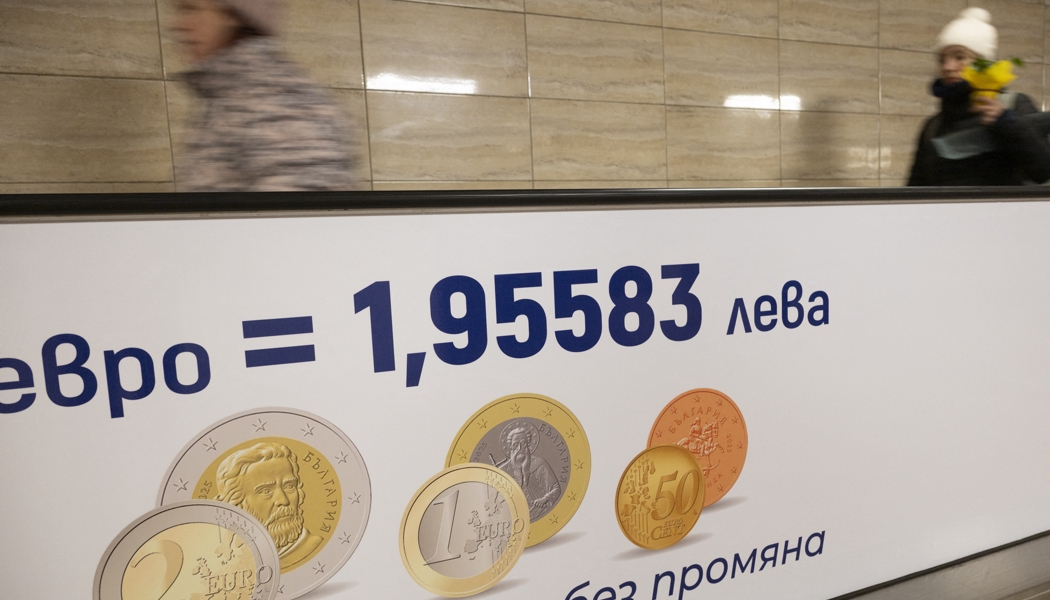
Bulgaria is preparing to switch to the euro on the night of December 31, 2025 to Thursday January 1, 2026, and thus become the 21st country to adopt the single European currency, an integration which some fear will fuel inflation and accentuate political instability.
At midnight (10 p.m. GMT Wednesday), the small Balkan state of 6.4 million inhabitants will say goodbye to 2025 but also to its currency, the lev, in circulation since the end of the 19th century. But already on Wednesday morning, the majority of stalls on the “women’s market”, the largest and oldest in the capital Sofia, display prices in leva and euros.
“All of Europe got by with the euro, we will get by too,” comments Vlad, a 66-year-old retiree who came to buy sparklers and fruit for the New Year’s meal. “The important thing is that Bulgaria stays in Europe and moves away from Moscow,” he adds.
In front of a canned vegetable stand, a long queue formed. Lucy, the seller, tells AFP that she already accepts payments in euros, and believes that the population will quickly get used to the new currency.
On the other hand, “people are afraid that prices will increase. Today, it is 4 leva and it will become 4 euros, while salaries will remain the same,” a woman in her forties who refuses to give her name told AFP.
Many Bulgarians fear that the introduction of the euro will lead to an inflationary spiral, while for example food prices have already increased by 5% year-on-year in November, according to the National Statistics Institute.
Reassuring speeches
Bulgarian leaders have tried to reassure, and promised that this entry into the euro zone will boost the economy of the country, one of the poorest in the European Union, which it joined in 2007, and anchor it further in the West to protect it from Russian influence.
The President of the European Commission Ursula von der Leyen assured Wednesday that “the euro will bring concrete benefits to Bulgarian citizens and businesses.” “It will facilitate travel and living abroad, strengthen the transparency and competitiveness of markets, and facilitate trade,” she added in a press release.
However, Bulgaria faces significant challenges, after anti-corruption protests that recently toppled the conservative coalition government in place for less than a year, and with the prospect of new parliamentary elections, the eighth in five years.
In this context, and while according to the latest Eurobarometer of the European Commission, 49% of Bulgarians are opposed to the single currency, any problem linked to the introduction of the euro will be exploited by anti-EU politicians, estimates Boryana Dimitrova of the Alpha Research polling institute.
“There will be challenges, but we are counting on the tolerance and understanding of citizens and businesses,” resigning Prime Minister Rossen Jeliazkov called on Tuesday, maintaining that “the introduction of the euro will have a positive long-term effect on the Bulgarian economy and on the environment in which the country develops.”
On Tuesday, under a beautiful winter sun, queues formed in front of the National Bank of Bulgaria and the exchange offices in the capital Sofia, to obtain euros, noted an AFP journalist.
Residents complained of difficulty getting their hands on the new coins and notes as banks advised people to carry cash, warning of possible disruptions to card payments and ATM withdrawals on New Year’s Eve.
However, payments in lev will continue to be accepted throughout the month of January, a challenge for merchants who will have to give change in euros.
Elena Shemtova, 37, owner of a small gallery and jewelry boutique in the city center, however, wanted to be optimistic. “We will feel the difficulties at the beginning, there will be problems giving change, but within a month we will be used to it.”
Before Bulgaria, Croatia, in January 2023, was the last country to adopt the single currency, initially introduced on January 1, 2002 in twelve EU countries. This will bring the number of Europeans using the euro to more than 357 million, according to European Commission figures.
