


GLP-1 medications like Ozempic and Wegovy have changed lives. Millions of people are experiencing meaningful, sustained weight loss and the health benefits that come with it. At Apex Skin, providers are seeing that firsthand.
“Patients are coming in feeling healthier, more confident, and excited about their progress,” says Dana Baker, RN. “The conversations we have around skin are more about refinement. Things like maintaining facial balance, supporting skin, and optimizing overall results after weight loss.”
Dana herself has had a positive experience with GLP-1s. Having lost 55 pounds, she understands the journey from both sides of the exam table.
“I’m very pro GLP-1s. They’ve been a game changer for so many patients, not just physically but mentally and emotionally as well.”
The reality is that when your body changes, your skin is part of that change too. And while the medication has positive skin effects like improvements in patients who have inflammatory skin conditions, some outcomes leave patients wanting to make some aesthetic improvements.
“Having gone through it myself, I can relate to both the excitement of the results and the desire to feel like everything matches how good you feel,” Dana says. “You’re not doing anything wrong. This is just part of the process for some patients. The good news is we have so many ways to support you along the way.”
#default-btn-bd3c9d9ca08ba13c6c0556cfeb291715.ico-right-side > i {
margin-right: 0px;
margin-left: 8px;
}
#default-btn-bd3c9d9ca08ba13c6c0556cfeb291715 > i {
margin-right: 8px;
}
What Is “Ozempic Face” and Is It Actually a Problem?
The term gets a lot of attention, but Dana is quick to reframe it.
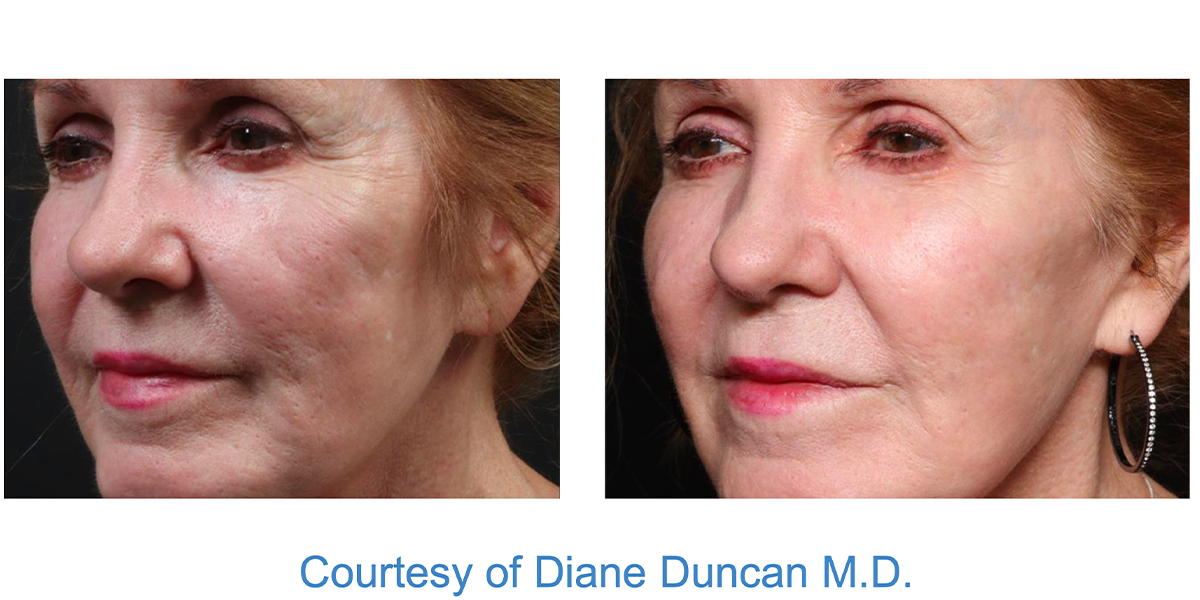
“The term ‘Ozempic face’ drives me crazy,” she says. “It’s simply facial volume changing as body fat decreases. When you lose weight, no matter how you do it, you can lose some of that natural fullness in the face. It’s not a bad thing. It just shifts facial balance a bit.”
That shift tends to show up first in the cheeks, under-eyes, and around the mouth. The degree of change varies based on age, skin quality, and how much weight has been lost. Older patients, whose skin has less elasticity to begin with, may notice more pronounced changes than younger ones. However, most patients don’t come in describing dramatic differences, just subtle shifts.
“Patients just feel like they look a little more tired than they expected. It’s rarely dramatic, just enough that they want to refresh things.”
“Ozempic Face” Treatment: What Actually Works
The good news is that facial volume loss after weight loss is one of the most well-addressed concerns in aesthetic medicine. There are effective, natural-looking options at multiple price points and timelines.
- Biostimulators like Sculptra provide a gradual, natural-looking improvement by rebuilding collagen over time.
- Dermal fillers can be used strategically to restore structure and support.
- Exion RF microneedling is a strong option for improving skin quality and firmness, using radiofrequency energy to trigger the body’s natural healing and collagen production response.
- EmFace lifts and tightens the face including areas like the eyes, chin, eyebrows, neck and jawline.
One patient Dana has helped was experiencing noticeable volume loss through the mid-face. Dana used dermal fillers which can restore structure and volume to the cheeks, temples, and under-eye area relatively quickly, with results that look refreshed rather than overdone.
“The end result was very natural, just a refreshed, well-rested version of her.”
One important timing consideration: Dana recommends that patients be close to their goal weight or at a stable point before pursuing filler treatments specifically so you can create a result that lasts and doesn’t need constant adjusting. Starting too early during active weight loss can mean results that need to be revisited more frequently.
Hair Loss After GLP-1 Medications: What’s Happening and How to Help
Hair shedding is one of the side effects that catches patients most off guard. It often starts a few months into their weight loss journey, and it can feel alarming.
“Hair shedding is usually related to rapid weight loss and the body adjusting, not the medication itself,” Dana explains. “It’s a temporary phase that we can absolutely support.”
The clinical term is telogen effluvium, a stress response in which more hair follicles than usual shift into a resting and shedding phase. It is triggered by the physiological stress of rapid weight change. For most patients, it is temporary.
Nutrition plays a meaningful role in recovery. “Protein intake is key, along with making sure you’re getting the right vitamins and nutrients,” Dana says. “Hair is not a priority for the body during rapid weight loss, so we want to give it the support it needs to bounce back.”
At Apex, patients dealing with GLP-1 related hair loss have access to both Nutrafol and Xtresse, professional-grade supplements designed to support hair regrowth from the inside out. Combined with in-office treatments, patients typically notice decreased shedding first, followed by gradual regrowth over the following months.
Skin Tightening After Weight Loss: Addressing Laxity Beyond the Face
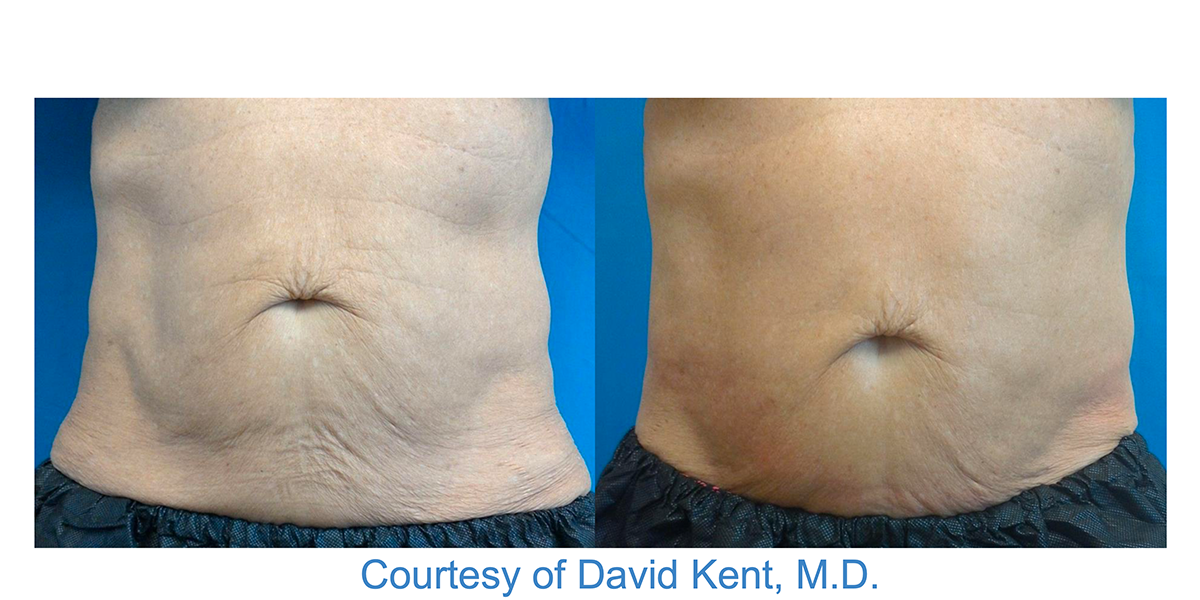
Beyond the face, the most common areas Dana sees skin laxity is in the abdomen, arms, inner thighs, and above the knees.
The skin in these areas has been stretched over time and may not snap back fully after significant weight loss, particularly in older patients or those who lost weight quickly. The mechanisms are the same as what happens in the face: reduced fat support combined with collagen and elastin that needs time and help to catch up.
EmSculpt Neo addresses muscle tone by simultaneously addressing fat and building muscle, using radiofrequency energy and high-intensity focused electromagnetic energy, helping patients achieve a more toned, contoured result in areas like the abdomen, arms and legs.
How Apex Approaches the GLP-1 Aesthetic Journey
No two patients are in the same place. Some are just starting a GLP-1 and want to be proactive. Others have already reached their goal weight and are ready to address specific concerns. Some are managing hair thinning, facial changes, and body laxity all at once.
“We take a layered approach. Typically, we start with what’s most noticeable to the patient, often facial balance, then build from there with skin tightening and hair support. It’s very customized and done in phases so everything looks natural.”
Ready to Talk About Your Next Step?
Whether you are currently on a GLP-1 medication, approaching your goal weight, or already there and ready to address some of the aesthetic changes, Apex Skin’s team is here to be your partner.
The Apex Skin Total Body Program is designed to help you lose weight safely and sustainably, guided by an expert. A medically guided path to weight loss using GLP-1 medications combined with support for your overall appearance, confidence, and long-term results.
Book a consultation with one of our providers to talk through your goals and build a plan that makes sense for you.
The post Treating Skin Changes After GLP-1 Weight Loss appeared first on Apex Skin.
