Home Blog Page 91

Clinique La Prairie launches Life Reset mental health longevity program

0

THE WHAT? Clinique La Prairie has launched Life Reset, a new mental health-focused longevity program, at its clinics in Switzerland and China.

THE DETAILS The seven-day, six-night program is designed for high-performing individuals or those beginning a longevity journey, with a focus on stress reduction, emotional balance and resilience. Life Reset is built around a proprietary framework described as the nine hallmarks of mental health and well-being, and follows the clinic’s established CLP Longevity Method, including molecular screening and personalised care plans.

The program combines mental health coaching with hypnotherapy, meditation, breathing techniques and immersive nature experiences, alongside non-invasive technology-based therapies such as sound vibration and vagus nerve stimulation. Participants also receive tailored supplements during their stay and for 60 days post-program.

THE WHY? As mental well-being becomes increasingly recognised as a core pillar of longevity, Clinique La Prairie is expanding beyond biological health into integrative, mind-body interventions. The launch also aligns with the rapid growth of the global mental health market, as premium wellness providers move to address demand for structured, science-backed mental health solutions within the longevity space.

Source: Clinique La Prairie

Managing Tangled Hair and Knots – OLAPLEX Inc.

0

Key Takeaways

  • Detangle wet hair with conditioner, starting from the ends with your fingers, then using a wide tooth comb. For dry hair, use a leave-in conditioner or hair oil, and work in sections.
  • Dryness, heat styling, split ends, and rough handling can cause tangled hair.
  • Prevent knots with gentle care and Nº.5 Leave-In Moisturize & Mend Leave-In Conditioner for continuous care from cortex to cuticle.

Jump to

Knot Anymore: Managing Tangled Hair and Knots

We all know the struggle: you’re trying to get a comb through your hair, only to be met with resistance in the form of knots. While removing the tangles in your hair can feel like a challenge, using the right techniques and products makes the process easier. Manage knotted hair and prevent breakage with this guide to detangling.

What Causes Hair Tangling?

Tangled hair occurs when two strands of hair wrap around each other to form a knot. If this happens to multiple strands of hair, removing the knots becomes more difficult. Damaged hair is more prone to tangling, while stronger hair doesn’t tangle as frequently. Other factors that can cause hair tangling include:

  • Using harsh haircare products
  • Over-washing your hair
  • Massaging too aggressively while shampooing
  • Lack of proper hydration
  • Frequent heat styling
  • Rubbing hair with a towel
  • Sleeping with hair loose
  • Wind exposure
  • Split ends
  • Inconsistent brushing or overbrushing


Detangling Wet Hair

For most hair types and textures, we recommend detangling your hair after you’ve applied conditioner. If you have curly, wavy, and/or coarser hair, here’s what you should do:

  1. After shampooing, or once your hair is wet, generously apply conditioner throughout your hair.

  2. Using your fingers, gently comb through your hair, beginning at the ends and working your way up. Avoid speeding through the process, as this can cause breakage.

  3. Once you’ve removed most of your tangles, switch to a wide tooth comb and repeat the process, moving from the ends of your hair to the roots.

Detangling Dry Hair

For finer and/or straighter hair types, you’ll be better off detangling your hair dry with the help of conditioning products, like this:

  1. Apply a hair oil, leave-in conditioneror detangling product throughout your hair.

  2. Divide your hair into four small sections, working on one section at a time to help you slow down and prevent damage.

  3. Using a wide tooth comb or a brush, start going through your hair from the ends while gently working your way upward. Be careful not to yank your hair.

How to Prevent Tangled Hair

Preventing tangled hair starts with a great haircare routine. Try these tips and products to reduce knots and promote healthier-looking hair:

  • Avoid shampooing the ends of your hair, as this can cause dryness, which leads to tangling.
  • Sleep with a silk pillowcase to reduce friction on your hair.
  • Avoid fine-tooth combs and use a brush or a wide tooth comb while detangling.
  • Don’t skip conditioner, especially before detangling wet hair.
  • Dry your hair with a microfiber towel instead of a cotton one.
  • Be gentle while shampooing your hair and opt for an SLS and SLES-free shampoo to prevent dryness.
  • Apply heat protectant before styling with hot tools.
  • Get regular trims, ideally every four to six weeks to prevent split ends.
  • Avoid haircare products that are overly drying or harsh.
  • Protect your hair with a scarf or hat while it’s windy.
  • Detangle your hair regularly to tackle knots while they’re still small.

Prevent Tangles with Nº.5 LEAVE-IN

Use OLAPLEX® Nº.5LEAVE-IN™ Moisturize & Mend Leave-In Conditioner before air-drying or blow-drying your hair. Nº.5 LEAVE-IN™ immediately improves visible hair health for stronger and healthier-looking hair. Reduce breakage by 81%* and increase moisture by 92%* after just one use with Nº.5 LEAVE-IN™. Using hot tools? Nº.5 LEAVE-IN™ provides heat protection up to 450°F or 232ºC.

*As tested in a clinical facility using curly hair.

Sources

  1. https://www.shape.com/lifestyle/beauty-style/how-to-detangle-hair
  2. https://www.refinery29.com/en-us/how-to-detangle-natural-hair
  3. https://www.nordstrom.com/browse/content/blog/how-to-detangle-hair

Best Facial Treatments That Actually Work for Your Skin Goals

0

When people search best facial treatmentsthey usually want one thing: results they can see. Clearer pores. Smoother texture. A more lifted look. Skin that looks healthier in daylight, not just right after a facial when everything is dewy.

The problem is that “best” is not universal. The best facial treatments are the ones that match your goal and your skin’s tolerance. If you book the wrong category, you can spend a lot and still walk out thinking, “That was nice, but nothing changed.”

Here’s a simple way to choose facial treatments that actually work based on what you want to improve.

1. If your goal is glow and smoother-looking skin

If your skin looks dull, makeup clings, or your face just looks tired, the best facial treatments are the ones that combine gentle resurfacing with deep hydration. This is the category that gives the biggest “wow” with the least risk.

What to look for:

  • light exfoliation that does not leave you peeling
  • hydration steps that plump and soften
  • calming finish so you leave bright, not red

Best for: dullness, rough texture, dry patches, pre-event glow.

2. If your goal is clearer pores and fewer breakouts

For blackheads, congestion, and breakouts, the best facial treatments focus on deep cleansing and rebalancing, not stripping. The goal is to clear buildup while keeping inflammation low, because inflammation is what makes acne and marks linger.

What to look for:

  • deep cleansing and pore-focused work
  • extractions only if your skin tolerates them
  • soothing steps after to calm redness

Best for: clogged pores, blackheads, hormonal breakouts, bumpy texture.

Pro tip: If you break out easily, avoid booking a strong peel as your first acne facial. Over-exfoliation can trigger more inflammation and make marks stick around longer.

3. If your goal is firming and lift

If your goal is a more sculpted look, you want facial treatments that focus on tone, not just hydration. This is where technology-backed options tend to shine.

What to look for:

  • microcurrent-based treatments for a lifted look
  • radio frequency or collagen-supporting protocols for firmness
  • consistent sessions instead of one “big” treatment

Best for: early signs of aging, loss of definition, tired-looking skin.

4. If your goal is better texture and more even tone

If your skin looks uneven even when it feels calm, you want controlled renewal. These are the best facial treatments when your concerns are texture, lingering marks, and tone that looks inconsistent in natural light.

What to look for:

  • resurfacing that is controlled and appropriate for your skin type
  • a plan that spaces treatments properly
  • calming steps after so your barrier stays strong

Best for: uneven texture, post-acne marks, stubborn dullness, tone issues.

Important: if you want tone to improve, sunscreen is part of the treatment plan. Without it, you are fighting your skin every day.

If your goal is calmer, less reactive skin

5. If your goal is calmer, less reactive skin

Sometimes the best facial treatments are the ones that stop the irritation cycle. If your skin gets red, stings easily, or feels tight all the time, “more exfoliation” is not the answer. Calm and barrier support come first.

What to look for:

  • soothing hydration and barrier support
  • minimal irritation protocols
  • LED or cooling steps that reduce inflammation

Best for: redness, sensitivity, stressed skin, barrier repair.

6. How often should you book facial treatments?

Consistency beats intensity. Most people see the best results with a realistic rhythm:

  • Every 4 weeks: great for glow, congestion, and maintenance
  • Every 6 to 8 weeks: good if you want results but need more spacing
  • In a short series: helpful for firming goals or stubborn texture concerns

If you’re sensitive, fewer sessions with smarter aftercare usually wins over frequent aggressive treatments.

7. The quickest way to waste a great facial

The biggest mistake people make after booking the best facial treatments is going home and doing too much. Keep it simple for 48 hours:

  • gentle cleanse
  • moisturizer
  • sunscreen every morning

Skip strong acids, harsh retinol, and scrubs right after a facial unless your provider specifically tells you to use them.

The best facial treatments are the ones that match your skin goals

Final thoughts

The best facial treatments are the ones that match your skin goals and improve your skin without triggering irritation. Book glow treatments when you’re dull, purifying treatments when you’re congested, firming treatments when you want lift, renewal treatments when tone and texture are uneven, and calming treatments when your barrier needs support. That’s how you get real results that actually last.

9 Ways to Say No to Alcohol When Everyone’s Being Nosy

0

Whatever the reason, choosing not to drink—and owning that decision—is definitely a process, whether you’re doing it for one night, a few months, or forever. Even as trends like the sober-curious movement and Dry January have helped normalize sobriety as a socially acceptable choice in a liquor-loving culture, some stigma and judgment—or even just questions—still linger.

In part, that’s because saying no often requires a level of self-advocacy many of us aren’t used to. “The discomfort around ordering a mocktail isn’t always about the alcohol itself,” Annalyse Lucero, LMFT, a licensed therapist based in Albuquerque, tells SELF. “Oftentimes, it’s more about the challenge of setting boundaries without feeling guilt and fear about disappointing others.” (Maybe you’re worried about seeming uptight around your tipsy coworkers, or dread standing out at a party with your empty hand.)

It’s not easy to confidently reply, “No thanks! Stop asking!” when you’re put on the spot. So to make boozy situations less nerve-wracking, we’ve rounded up a few direct responses (along with some clever excuses) for the next time you want to shut down follow-ups and enjoy your sparkling water in peace.

1. “Actually, I’m good with this.”

“Naturally, some people might call you out simply because they notice you don’t have a drink in your hand,” Lucero says. An easy fix, then, is to hold something—Coke, sparkling water with lime, or a fruity mocktail that looks like a real one.

And if someone does catch on to the fact that your cup is alcohol-free—and tries to change that by offering a complimentary tequila shot—then you can casually assert that you’re perfectly happy with what you’ve got, Lucero says. It’s a simple, non-confrontational way to stand your ground and avoid unnecessary back-and-forth.

2. “I’m trying to save money right now.”

In today’s economy, cocktails, vodka shots, even draft beers are getting undeniably pricey. Leaning into this financial reality isn’t just super relatable; it’s also a solid excuse most people won’t push back on, Sasha Hamdami, MD, a board-certified psychiatrist based in Kansas City, Missouri, tells SELF.

That said, this option might not work if you’re with generous friends who inconveniently insist on picking up the tab or covering your round. If that’s the case, consider pivoting to one of the many other responses below that might better fit your particular situation.

3. “I have to get up early tomorrow.”

What, exactly, you’re waking up for is up to your imagination, Amanda White, LPC, LMHC, owner of Therapy for Women Center in Philadelphia and author of Not Drinking Tonight: A Guide to Creating a Sober Life You Lovetells SELF. If you’re stuck at a Thursday happy hour, maybe it’s tomorrow’s 8 a.m. meeting you need to prep for. Or on the weekend, a Sunday morning yoga class you’re already committed to—and don’t want to show up hungover for.

ANJAC manages the environmental impact of its products with Fairglow and AI

0

The French manufacturer of health, beauty and food supplement products is joining forces with the Fairglow Life Cycle Analysis (LCA) platform, dedicated to the cosmetics industry. ANJAC thus becomes the first CDMO to adopt this analysis platform in order to deepen and accelerate the environmental assessment of its products and manufacturing sites.

Founded by a multidisciplinary team of French-American researchers, the Fairglow platform makes possible the complete evaluation of entire product portfolios in a few weeks while traditional approaches remain limited to complex one-off analyses.

By combining environmental sciences, LCA modeling, AI and an expert reference database of cosmetic ingredients, Fairglow intends to respond to a dual key issue in cosmetic Life Cycle Analysis (LCA): the dispersion of product data and the lack of reliable environmental data on ingredients. Its platform automates the collection and enrichment of data and is based on a proprietary database of emission factors, making it possible to quickly and reliably evaluate complete product portfolios, in accordance with ISO standards.

More than 2,700 references evaluated in 2025 at ANJAC

ANJAC initiated this collaboration in 2024 with a pilot project at its Roval production site in Normandy. The system was extended to the Eurowipes, Chemineau and Sicaf sites in 2025, and will be deployed on four additional sites from January 2026. All data transmitted is anonymized and processed in a highly secure environment, in compliance with the requirements of ISO 27001 and SOC 2. In total, more than 2,700 references were analyzed at ANJAC in 2025, a volume expected to increase with

continued deployment.

By partnering with Fairglow, ANJAC is able to assess the environmental impact of an individual product, a complete range and a production site. Thanks to the platform, ANJAC also offers modeling capabilities to measure the potential impact of a change in ingredients, packaging or manufacturing process in order to help companies evaluate their eco-design choices.

« Innovation at ANJAC is a global approach, integrated at all levels of the company. It is embodied in concrete solutions, designed to respond to the challenges of health, sustainability and industrial performance, while supporting our customers in the creation of their products. Thanks to this partnership with Fairglow, we have a concrete tool to better manage our scopes 1, 2 and 3 and integrate LCA from the product design phase. This is a notable lever for accelerating the transition towards a more responsible industry, for ANJAC and for our customers. », declares Anne Rutigliano, Marketing and Innovation Director, ANJAC Group.

Winter Skin Care Tips: How to Protect Dry, Sensitive, and Eczema-Prone Skin

0

As the year moves on, the weather changes, and our skin care routine must change along with it. Colder weather and drier air can have a significant effect on your skin that may lead to dry, cracked skin and lips. Without proper care, this dryness can cause itching, flaking, and irritation.

The good news? You don’t have to change your entire routine or switch out every skin care product you currently use.  A few simple changes can make a big difference. Here are some winter guidelines that will help you adjust your routine to be more in line with what your skin needs in the colder months.

Getting clean

Wash your face morning and night every day and after sweating, but don’t over wash it. Depending on your skin, washing once a day in the evening may be enough. Over-washing can dry out your skin. If your skin feels tight or dry right after you’ve washed your face, it could be a sign that you’re washing it too often or using the wrong product. Choose gentle, fragrance-free cleansers that are designed for the face.

Consider washing your body every other day and only using soap on key areas like groin, underarms, and feet. Limit bathing sessions to 5 to 10 minutes and use warm (not hot) water. Even though your skin is in contact with water, long hot showers and baths can draw moisture out of your skin and wash away natural oils.

Use a moisturizer

When you get out of the bath or shower, gently pat your skin dry and apply moisturizer and other products right away. This is the most effective time for your skin to absorb moisture and seal it in. You can duplicate this effect at other times by applying a thermal water spray before your other products.

Apply any medicated products or sunscreen to the skin first, directly onto clean skin; then apply a moisturizer. This ensures that active ingredients are properly absorbed and not blocked or diluted by the moisturizer.

Consider using a thicker moisturizer during cold weather, if your skin type can tolerate it. Creams, ointments, and oils are generally more moisturizing than lotions, as they form a protective barrier that helps prevent moisture loss.

The Canadian Dermatology Association recommends using moisturizers that contain ingredients such as lactic acid, urea, hyaluronic acid, dimethicone, glycerin, lanolin, mineral oil, petrolatum, or natural oils (e.g., sunflower seed oil or virgin coconut oil). However, for some people, these heavier products can increase the risk of acne breakouts or fungal infections. For help choosing skin care products that are suitable for your skin type, speak with a London Drugs pharmacist or beauty advisor.

Additional tips

  • Drink plenty of water to keep your body hydrated from the inside out.
  • Protect skin from cold and wind with a hat, scarf, and gloves.
  • Use gentle, fragrance-free soaps and cleansers for skin and laundry products.
  • Wear latex-free gloves for wet work or chemical exposure.
  • Moisturize hands after every hand wash.
  • Choose clothing with non-irritating fabrics made from natural fibers such as cotton or silk.
  • Consider using a humidifier to restore moisture in the air that is lost due to indoor heating.

Is it eczema?

Eczema, also known as atopic dermatitis, is a very common chronic condition that causes itchy, red, dry, or inflamed skin. People who have this condition have patches of very dry or cracked skin on their body that can be extremely itchy, especially at night. Commonly affected areas include the face, neck, inside of the elbows, behind the knees, and on the hands and feet.

Eczema is not contagious. Its cause may be linked to genetic factors (such as family history) or to environmental triggers like weather changes, stress, allergies, or contact with irritants.

Most cases of eczema can be managed with a routine of moisturizing consistently and using medications during flareups. Creams or ointments containing hydrocortisone or betamethasone are commonly applied to the skin to reduce inflammation. Antihistamines or allergy medications may help relieve itching. For severe cases, prescription medications can be used to suppress an overactive immune response and prevent flare-ups.

Expert advice

Speak to your doctor or pharmacist if you have persistent or long-standing dry skin. They can assess whether it may be due to your environment, a side effect from a medication, eczema, or another skin condition and recommend treatments.

In most provinces, pharmacists are now authorized to prescribe medications and treatments for eczema and can offer advice to manage your symptoms.

To learn more about pharmacist prescribing services in your province, visit londondrugs.com/prescribing or speak with a London Drugs pharmacist at any time.

How to Wear Clip-In Hair Extensions Using the Anchor Method

0

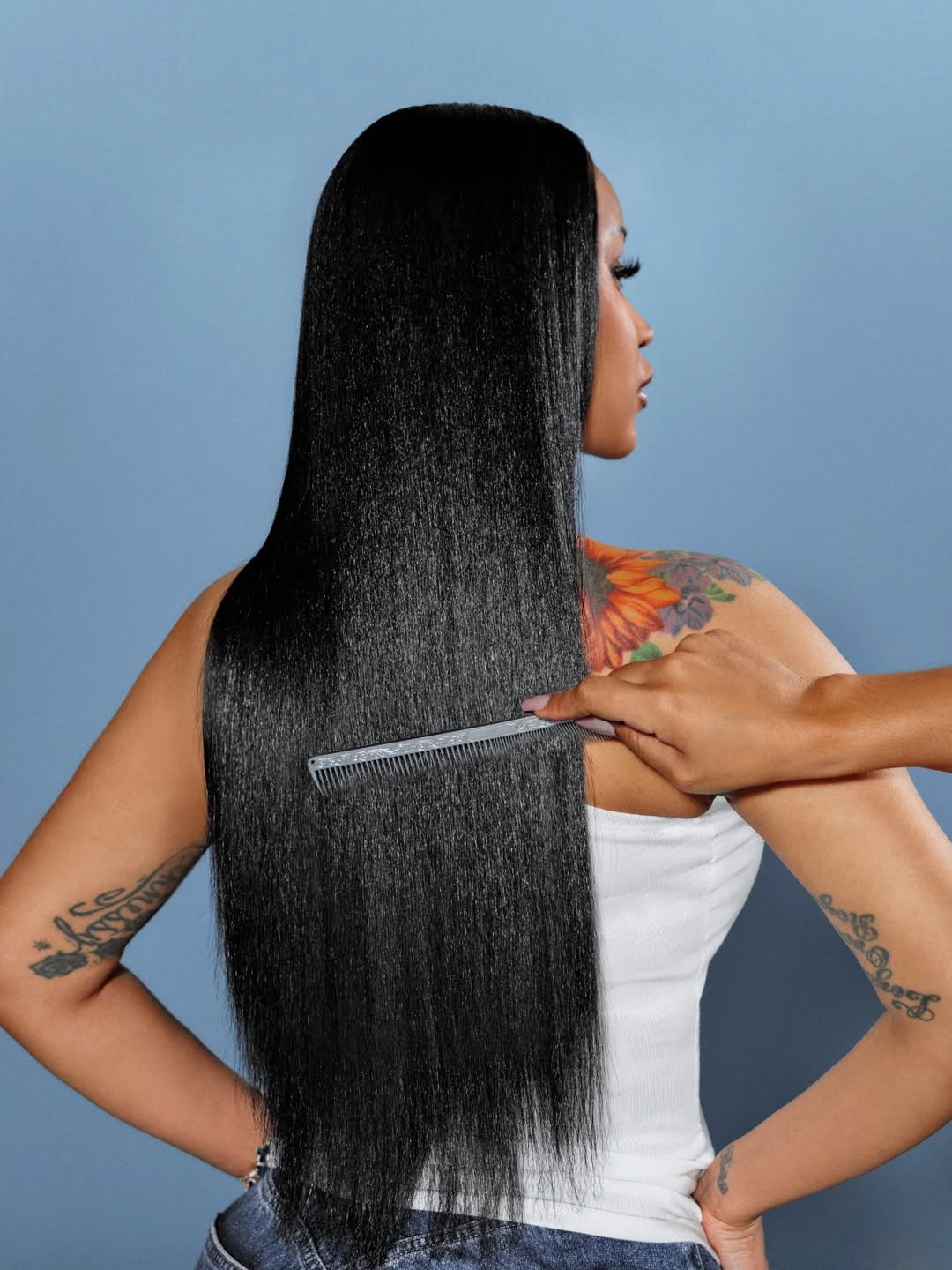
Getting ready for something special has its own kind of ritual. There’s the outfit you’ve been planning, the makeup that takes a little extra time, and if you’re wearing clip-ins—those few minutes at the mirror that pull everything together.

Clip-in extensions are made for these moments. Weddings, date nights, work events, that dinner where you want to feel like the best version of yourself. They’re not meant to live in your hair every day—they’re the finishing touch when you’re getting done up and want a little more length, volume, or polish than your natural hair can give you right now. The beauty of clip-ins is control: you decide exactly where the hair goes and tailor the look to what you need that night.

Here’s how to make them look completely seamless.

Create Your Base

Section your hair horizontally about an inch behind your hairline, creating a part from ear to ear. Clip the top section away. Mist a light texture spray where the clips will sit—this gives them grip without weight. For fine or thinning hair, twist two small sections, cross them in a V, and pin for extra anchor support.

Clip In Strategically

Snap clips flat along the part, starting with wider pieces in back and smaller ones near your temples. Keep them 1–2 cm from your hairline so they stay hidden but close enough to build volume where you need it. Place them where you see gaps or want more fullness.

Blend Naturally

Release your top section and gently brush over the wefts. Because Pro-Grade Remy Hair moves like your own, it blends effortlessly. For the most natural look, curl or wave your hair and extensions together—this creates one seamless texture.

Style and Go

Half-up, sleek ponytail, loose waves—style them however you’d style your own hair. They’re so weightless you’ll forget they’re there.

The Final Touch

That’s it. A few minutes and you’re done. Ready when you are—filling the gap between getting ready and feeling ready.

[product item=1]

Need more styling tips? Read these next:

The Ingredients Your Skin Has Been Missing – 100% PURE

0

Ceramides aren’t some buzzy new ingredient you need to “discover.” They’re actually something your skin already has and depends on every day.

Think of them as the glue that holds your skin barrier together, keeping moisture in and the outside world out. When ceramides are doing their job, skin feels balanced, comfortable, and resilient. But when they start to break down, a lot of familiar issues show up.

Dryness that won’t go away, sudden sensitivity, rough texture, or skin that just feels off. Many of these concerns don’t come from needing harsher treatments or more products. They often trace back to lipid loss from things like over-cleansing, stress, weather changes, or time. That’s why ceramides matter. They help your skin get back to its baseline instead of constantly fighting symptoms.

What Ceramides Are and Why Skin Needs Them

Ceramides are essential lipids naturally present in the skin, forming a critical part of the skin barrier. They account for nearly half of the lipids in the outermost layer and are fundamental to maintaining barrier integrity and function.

Their structural role is central.
Skin cells form the surface layer, while ceramides bind those cells together, creating a cohesive barrier. When ceramide levels are sufficient, this structure limits moisture loss and reduces permeability to irritants. When they decline, the barrier becomes compromised, leading to dehydration, sensitivity, and increased reactivity.

Ceramides support more than hydration.
They help protect the skin from ongoing environmental exposure, including pollution, temperature shifts, and UV-related stress. At the same time, they support recovery from daily micro-damage, allowing the skin to maintain comfort and resilience rather than remaining in a constant state of repair.

Barrier strength influences long-term skin quality.
Adequate ceramide levels improve moisture retention, which contributes to skin suppleness and smoothness over time. This reduces the appearance of fine lines linked to dehydration and helps preserve a balanced skin environment that is less prone to inflammation or breakouts.

They also determine how well skincare performs.
A stable barrier allows active ingredients to function effectively without overwhelming the skin. In this way, ceramides do not simply support skin health—they create the conditions that allow the entire routine to work as intended, resulting in skin that appears calm, resilient, and consistently healthy.

What Happens When Ceramides Are Depleted

When ceramides are low, the skin barrier starts to lose its strength and stability. Without enough ceramides, water escapes more easily, leading to persistent dryness and dehydration that no amount of moisturizer seems to fix.

Skin can feel rough, tight, or uneven, and fine lines may appear more noticeable because the barrier lacks flexibility. Even healthy-looking skin can become fragile and less resilient, making it harder to bounce back from daily stressors.

At the same time, sensitivity increases as irritants penetrate the weakened barrier more easily. Redness, itching, and stinging can become common, and over time, breakouts and inflammation may also flare up.

This creates a cycle where skin feels constantly reactive rather than balanced. Many people mistake these issues for “problem skin,” when the real culprit is simply a compromised barrier that needs ceramide support to restore stability and comfort.

How Ceramides Support a Reset Routine

A reset routine is most effective when it allows the skin to recover from accumulated stress and reestablish its natural defenses. Ceramides play a central role in this process by strengthening the skin barrier at a structural level, supporting both stability and function.

Barrier repair is the starting point.
By replenishing essential lipids, ceramides help restore barrier cohesion, allowing the skin to retain moisture more efficiently and reduce unnecessary water loss. As the barrier strengthens, skin becomes better equipped to respond to environmental changes rather than reacting to them. This is particularly important after periods of over-exfoliation, seasonal disruption, or prolonged irritation, when the barrier has been compromised.

Recovery replaces reactivity.
With consistent ceramide support, skin is able to shift out of a constant repair state. Sensitivity decreases, hydration levels stabilize, and the skin’s response to daily stress becomes more measured. Instead of fluctuating between dryness and irritation, skin begins to maintain equilibrium.

Comfort and resilience improve over time.
Ceramides contribute to smoother texture, increased suppleness, and reduced tightness or flaking. As tolerance improves, skin is better able to handle routine cleansing, sun exposure, and active ingredients without discomfort. In this way, ceramides form the foundation of a reset routine that prioritizes long-term balance and visibly healthier skin.

A Barrier-First Routine With Ceramide Support

100% Pure builds routines around the idea that skin functions best when its natural barrier is protected, not constantly pushed. Instead of relying on harsh surfactants or aggressive actives, the brand focuses on nourishing, food-grade ingredients that work with the skin’s natural lipids. When every step is formulated to respect the skin barrier, the routine becomes cohesive rather than corrective — each product builds on the last, helping skin stay balanced and comfortable over time.

Cleanse: Protect and Refresh
Argan Oil Creamy Cleanser

Morning and evening cleansing should refresh without stripping. This creamy, oil-rich cleanser removes impurities while leaving essential lipids intact, so your barrier stays strong. When the skin isn’t stripped first, it holds hydration better and tolerates stress from the environment, helping ceramides maintain balance naturally. Cleansing should feel soothing, never tight or uncomfortable.

Treat: Strengthen and Support
Mushroom Peptides Firming Serum

This step isn’t about quick fixes. Lightweight peptide serums work with your skin’s natural structure, reinforcing firmness and resilience. Over time, they help skin respond better to daily stressors and maintain an even, calm appearance. Treating your skin this way is about building strength and confidence, not chasing instant results.

Moisturize: Seal and Nourish
Mushroom Peptide Moisturizer

A ceramide-rich moisturizer is the cornerstone of barrier support. It locks in hydration, reinforces the lipid barrier, and leaves skin feeling soft, protected, and comfortable all day. Hydration should feel light and breathable, never heavy or greasy. Proper moisturization helps skin stay even, resilient, and naturally radiant.

Weekly Brightening: Gentle Radiance Boost
Vitamin C Glow Max Bright Mask

Brightening should complement, not disrupt, the barrier. Used weekly, this gentle mask enhances clarity and refreshes dull skin while respecting the ceramide-supported barrier. Treating it as a ritual keeps skin balanced while giving a subtle radiance lift—no overexfoliation or irritation required.

Conclusion

Ceramides aren’t about quick fixes or instant results, they’re about consistent care and long-term repair. These essential lipids give your skin the support it needs to maintain balance, retain moisture, and recover from everyday stressors like cleansing, environmental changes, and even active ingredients.

Prioritizing ceramides helps your skin regulate itself naturally, rather than constantly reacting to dryness, sensitivity, or irritation. Instead of chasing stronger actives or temporary solutions that may disrupt the barrier, focusing on ceramides builds resilience from the inside out.

Over time, skin becomes calmer, more flexible, and better able to protect itself. With a ceramide-focused routine, you’re investing in a foundation that keeps your skin healthy, comfortable, and radiant for the long haul.

FAQ

Are ceramides good for all skin types?

Yes. Every skin type needs ceramides to keep the skin barrier healthy. Oily and acne-prone skin can actually become oilier when ceramides are depleted, because the skin overcompensates for dehydration. Restoring ceramides helps rebalance and calm the skin. Dry and sensitive skin depend on ceramides for comfort, reduced tightness, and protection. Even normal skin benefits, since ceramides help maintain stability and prevent future barrier issues.

Can ceramides replace facial oils?

Not quite. Ceramides repair and strengthen the skin barrier itself, while facial oils mainly help seal in moisture on the surface. Oils can add softness and comfort, but they don’t rebuild the barrier. Ceramides create the foundation, and oils can be used as an extra layer if needed.

How often should I use ceramide products?

Ceramides work best when used daily, ideally in both your morning and evening routine. Regular use helps strengthen the skin barrier, lock in hydration, and improve resilience over time. With consistent use, your skin becomes calmer, more comfortable, and better protected against everyday stressors.

Pat McGrath Labs Filed for Chapter 11 Bankruptcy

0

Pat McGrath Labs has filed for Chapter 11 bankruptcy. The brand was set to be sold at an asset sale on January 27; this sale has now been postponed. “Pat McGrath Labs announced that it has commenced a financial restructuring under Chapter 11 of the U.S. Bankruptcy Code,” the brand confirms in a statement issued to Allure. “The Company’s secured lender’s scheduled auction for Company assets has been postponed indefinitely.”

The brand, which was founded by legendary makeup artist Dame Pat McGrath, launched in 2015 with a multipurpose gold paint called Gold 001. After the initial success of Gold 001, the line grew to include everything from eye shadow palettes to bullet lipsticks to a “glass glow” face spray inspired by the viral doll skin McGrath created for a 2024 Maison Margiela runway show.

As noted by WWD, Pat McGrath Labs received $60 million in funding from the private equity investment firm Eurazeo Brands in 2018 and was valued at more than $1 billion at that time. In addition to its direct-to-consumer website, the brand was sold at Sephora and Ulta. In the past year alone, it has collaborated with franchises such as Bridgerton and Candy Crush on exclusive product lines and has been responsible for the beauty in many big pop culture moments, such as Taylor Swift’s glittery “Bejeweled” music-video glam. (Swift is also a rumored fan of the brand’s LiquiLust Legendary Matte Lipstick in Elson 4.)

“Everybody was on my case about [starting a brand] for a thousand years,” McGrath told Allure in 2021. “‘Where’s your brand? Where’s your brand?’ Then [with Instagram]I couldn’t avoid them. It was constant torment. Every morning I’d wake up and it was… ‘Where’s your brand, Mother?'” In addition to her work as a makeup artist, McGrath also signed on as creative director for La Beauté Louis Vuitton in 2025.

Chapter 11 bankruptcy is often used by businesses to help them reorganize, restructure, and get a handle on finances to fulfill debts. Pat McGrath Labs isn’t the only beauty brand to have filed Chapter 11; Revlon did so in 2022 and has since emerged. In 2024, Avon filed Chapter 11 to settle talc-based lawsuits, though the filing did not impact the United States branch of the business. Forma Brands, parent company of Morphe and r.e.m. beauty, filed for Chapter 11 in 2023 and exited a few months later, when r.e.m. founder Ariana Grande acquired the brand for around $15 million.

All this to say, the filing does not automatically spell the end of Pat McGrath Labs. For now, you can still purchase Pat McGrath Labs products on its website, Sephora, and Ulta. “During this process, the company will continue operations in the ordinary course of business while working to restructure its balance sheet and to forge a path to thrive,” reads the brand’s statement. “Pat McGrath Labs remains committed to its community, customers, partners, and stakeholders as it continues delivering its signature, high-quality products and culture-defining artistry and innovation.”


More beauty news:


Now, watch a derm discuss filler:

bareMinerals Dictionary: Mineral SPF

0

SPF? All year ’round.
Upgrade your winter suncare with Mineral protection (no white cast!).

If you think sunscreen is only necessary in the summer, think again. Using SPF in winter is just as important as wearing it during warmer months. UVA and UVB rays are present year-round, even on cloudy or snowy days. The difference? With bareMinerals, sun protection is already built into your makeup, making daily SPF effortless.

Siri, define Mineral SPF. Okay…

Provide broad-spectrum UV protection and protection from bacterial and oxidative stress.

Mineral SPF sunscreen works by sitting on the surface of skin to help reflect the sun’s rays. Unlike chemical SPF, mineral-based sunscreen uses zinc oxide and titanium dioxide, making it ideal for sensitive skin, acne-prone skin, and those looking for a more gentle form of protection. Best of all, bareMinerals Mineral SPF formulas are designed to blend seamlessly, leaving no white cast.

SPF? ALL YEAR ’ROUND

Because the sun still shines when it’s cold outside.

Snow can reflect up to 80 percent of UV rays, increasing exposure during winter months. That means daily SPF in winter is essential whether you’re outdoors or just heading out for the day. Incorporating mineral sunscreen makeup into your routine ensures consistent protection without adding an extra step.

Mineral SPF, Built Into Your Daily Makeup Routine

bareMinerals makes it easy to wear broad-spectrum mineral SPF every day with complexion products designed for real skin and real life.

MINERAL SPF 30

COMPLEXION RESCUE® TINTED MOISTURIZER

A fan-favorite for hydrated, healthy-looking skin. This tinted moisturizer with Mineral SPF 30 provides sheer-to-light coverage while protecting against UV exposure, making it ideal for dry or sensitive skin in winter.

MINERAL SPF 15

ORIGINAL LOOSE POWDER FOUNDATION

The iconic mineral powder foundation with SPF delivers buildable coverage with a natural finish. Lightweight and breathable, it offers sun protection without clogging pores.

MINERAL SPF 25

ORIGINAL MINERAL VEIL® SETTING POWDER

This sheer setting powder with SPF helps blur the look of pores, extend makeup wear, and add an extra layer of mineral sun protection to your routine.

MINERAL SPF 20

BAREPRO® 24HR WEAR MATTE LIQUID FOUNDATION

For long days and full coverage, this matte foundation with Mineral SPF 20 delivers 24-hour wear with a smooth, shine-free finish and built-in protection.

No White Cast. Just Real Protection.

One of the biggest concerns around mineral sunscreen is the appearance of a white cast. BareMinerals complexion makeup is available in a wide shade range, and our Mineral SPF formulas are expertly crafted to melt seamlessly into skin across many skin tones. The result? Mineral SPF makeup that looks natural, even, and flawless, proving that broad-spectrum sun protection can complement your complexion, not compete with it.

The Takeaway

SPF? All year ’round.
Whether it’s summer sun or winter chill, mineral SPF belongs in your everyday makeup routine. With bareMinerals, protecting your skin from UV exposure is simple, effective, and already built into the products you love.

Shop Now