*Links marked with asterisks are affiliate links, these help Ree with running costs of the blog
Worth £450
The Harrods Beauty Gift with Purchase for May 2026 is back and it’s really good! I have a full list of products that are in this year’s gift right here for you to check out. Enjoy!
What is in the Harrods Beauty Gift with Purchase 2026?
Harrods Beauty Gift with Purchase- Beauty Bag May 2026 Contents
Within the Harrods Beauty Bag 2026, here’s a brilliant mix of full size, deluxe and sample size products across amazing luxury brands like Elemis, Tatcha and Color Wow for to enjoy. The contents are as follows:
Sun of January Rosa Charmosa Cream (25ml, Travel Size)
Sun of January Cheirosa 68 (Travel Size)
Dolce & Gabbana Everfull XL Mascara 01 Total Black 36H Extreme Volume & Lift Mascara (Travel Size)
Augustinus Bader The Sunscreen SPF 50 (Deluxe Sample)
Philip Kingsley Elasticizer Deep-Conditioning Treatment (40ml, Full Size)
Marc Antoine Barrois The Possibles Set (Full Size)
myBlend Revitalizing Eye Care Concentrate (3ml, Travel Size)
Medic8 Deluxe Advanced Night Restore (Travel Size)
Dermalogica LuminFusion Voucher
How to claim the Harrods Beauty Gift with Purchase 2026.
So first off, all you need to do is spend £250 on beauty products at Harrods* to receive the GWP from Friday 15th May 2026. While stocks last.
You will need to be a MyBeauty by Harrods Rewards member.
How do I sign up to MyBeauty by Harrods Rewards
It’s easy to sign up. If you have not joined Harrods Rewards yet, you can sign up here.
This year’s Beauty Goody Bag from Harrods is available from Friday 15th May 2026. The promotion will be available while stocks last – hurry it will sell out fast!
When can you claim it
As I said, the full value of the Harrods Beauty Bag free gift is over £450 and to claim it, you need to spend a minimum of £250 on beauty HERE* from 15th May 2026.
Also, I know it’s early, but I am taking sign ups for news on this year’s Beauty Advent Calendars from Harrods. You can subscribe to my mailing list in this post: Harrods Beauty Advent Calendar 2026.
Hey there! Some links on this page are affiliate links which means that, if you choose to make a purchase, I may earn a small commission at no extra cost to you. I greatly appreciate your support 🙂
At this point, avoiding K Formula on Instagram is basically impossible.
One creator is aggressively brushing through half-damaged hair while dramatic music plays in the background. Another is holding up a five-minute timer like she’s diffusing a bomb. Someone else is standing under suspiciously good lighting whispering:
“Wait….why does my hair suddenly look expensive?”
And honestly?
After the 47th reel, I folded.
Because apparently this Indian haircare brand claims it can make your hair feel softer, smoother, shinier, and less emotionally unstable in just five minutes.
Naturally, I was skeptical.
The beauty industry has lied to me before. Many times. Some of us still haven’t recovered from the charcoal toothpaste era.
But K Formula kept appearing everywhere:
beauty creators
salon pages
“glass hair” reels
suspiciously convincing before-afters
comment sections filled with people typing:
“Okay but WHY does this actually work?”
So I finally decided to test the viral peptide-powered haircare brand myself.
And unfortunately for my bank account…..I get the hype now.
First, What Even Is K Formula?
K Formula is an Indian science-led haircare brand focused on molecular repair and peptide-powered haircare.
Which sounds intimidating until you realize the concept is actually pretty simple:
Instead of just coating your hair with oils and silicones that disappear emotionally after one wash, the brand focuses on helping damaged hair feel healthier using peptide and bond-repair technology.
Basically:
less “temporary shine”
more “your hair feels suspiciously better lately.”
They’re also heavily pushing the idea of the “skinification of haircare” which honestly explains why their ingredient lists read more like skincare products than traditional shampoos.
K Formula came in talking about:
peptides
molecular repair
protein structure
polypeptide chains
bond technology
Which made the internet collectively go:
“Wait….haircare can sound hot and scientific at the same time?”
Why Is Everyone Suddenly Obsessed With Peptides?
For years, peptides have quietly been the overachievers of skincare.
They’re chains of amino acids connected to proteins like collagen in skin and keratin in hair. In skincare, peptides became popular because they support repair over time without feeling harsh or aggressive.
Hair, meanwhile, is mostly keratin protein.
So peptide-powered haircare actually makes a lot of sense.
The goal is to help support weakened hair structure, improve softness, reduce roughness, and make damaged strands feel healthier over time.
Which explains why K Formula felt very different from the usual “instant smoothness” products I’ve tried before.
Because some products make your hair feel:
weirdly slippery
heavily coated
one gust of wind away from exposing the truth
This didn’t.
My hair just looked….calmer.
Like it had finally paid off its emotional debt.
The Products I Tested
I tried almost the full routine:
Peptide Shampoo
Peptide Conditioner
Hair Corrector
Molecular Repair Mask
And first of all:
the packaging?
Extremely “cool girl with a Dyson and boundary issues.”
Minimal. Clean. Expensive-looking.
The kind of products you leave visible in your bathroom on purpose.
My Hair Type (For Scientific Transparency)
Before we begin, here’s what my hair is dealing with:
naturally wavy
moderate frizz
dry ends
occasional heat damage
humidity intolerance
emotionally reactive scalp
history of bad life decisions during late-night online shopping
So basically:
very standard Indian hair.
The Shampoo Didn’t Destroy My Hair, Which Already Deserves An Award
Listen. Too many “repair shampoos” leave your hair feeling like: “Congratulations. Your damage has been removed alongside your personality.”
This didn’t.
The Peptide Shampoo cleaned my scalp properly without making my hair feel stripped afterward. My roots stayed fresh, but my lengths still felt soft while rinsing, which usually tells me a formula is gentler.
It also didn’t make my scalp greasy the next morning, which honestly eliminates half the shampoos currently available to humanity.
The texture felt lightweight, not overly creamy, and it lathered enough without turning my hair into hay.
Wash Two Is Where Things Got Interesting
The second wash is where this stopped feeling like normal haircare.
Not dramatically.
Not in a “Disney Princess transformation montage” way.
But enough for me to stand in front of the mirror squinting suspiciously.
My hair:
puffed up less
tangled less
dried smoother
looked shinier
behaved better overall
And the frizz looked…
quieter.
That’s genuinely the best way I can describe it.
The Conditioner Made My Hair Feel Rich
Some conditioners are:
too light to matter OR
so heavy your hair loses all ambition
This one sat perfectly in the middle.
It softened my hair immediately without flattening my waves completely. My hair still had movement instead of that overly coated “helmet hair” finish.
Detangling also became noticeably easier.
At one point my wide-tooth comb went through my hair so smoothly I briefly considered texting my ex to announce personal growth.
The Hair Corrector Is The Product Everyone Is Posting About
Okay.
This is the star.
If you’ve seen K Formula anywhere online, chances are you’ve already seen the Hair Corrector.
This product is responsible for approximately 84% of the reels currently haunting my algorithm.
It’s the treatment connected to the famous:
“5-Minute Hair Challenge.”
And I’ll admit something deeply embarrassing.
The first time I used it, I checked my hair under three different lights like a forensic investigator.
Because the difference was visible.
My hair looked:
smoother
shinier
less fluffy
more polished
significantly less “I survived humidity by force”
And what surprised me most was that the finish didn’t feel fake.
A lot of instant repair products rely heavily on thick silicones that make hair feel artificially smooth for approximately six business hours.
This felt lighter.
More believable.
Like my hair had simply become a better version of itself.
The Molecular Repair Mask Felt Like A Salon Appointment Without The Small Talk
You know that soft, swishy salon-hair feeling where your hair suddenly moves like it has healthcare?
That.
That’s the closest comparison.
The shine looked healthy instead of greasy, and my hair felt smoother for days afterward without becoming flat or oily.
If your hair currently feels tired, crunchy, stressed, or emotionally unavailable:
this mask deserves attention.
Did K Formula Completely Repair My Hair Forever?
No.
And honestly?
No product can permanently erase:
heat styling
rough brushing
hard water
stress
hormones
nutritional chaos
or the emotional consequences of getting curtain bangs during a breakdown
Haircare is maintenance. Not wizardry.
But did K Formula make my hair noticeably:
softer
shinier
smoother
less frizzy
easier to manage?
Absolutely.
Especially after styling. My hair looked better with less effort afterward, which honestly matters more in real life.
Is It Better Than K18 Or Olaplex?
K18 and Olaplex still dominate the global bond-repair conversation, especially for heavily bleached or severely damaged hair.
But K Formula feels exciting because it’s bringing that same molecular repair conversation into the Indian market in a more culturally relevant and accessible way.
And unlike some luxury repair systems that require financial planning and emotional resilience to maintain long-term…
…this feels realistic for consistent use.
Which matters.
A lot.
What I Didn’t Love
To keep this honest:
results are not “one wash miracle” dramatic
you need 2–3 washes to fully notice the difference
extremely damaged hair may still need salon repair
the shampoo quantity takes trial and error initially
But overall?
Very impressive.
Over To You: Why This Brand Suddenly Went Viral?
Haircare rarely goes viral unless people can physically see the difference quickly.
K Formula understood that. And built an entire brand around visible transformation.
Which is exactly why the internet ran with it.
But beyond the marketing, what genuinely stood out to me was this:
The products actually feel modern.
Not just aesthetically. Not just online. But in formulation philosophy too.
Indian haircare is clearly shifting away from:
“put oil and pray”
Toward:
ingredient-led formulations
science-backed claims
repair-focused routines
skincare-style thinking for hair
And K Formula feels like one of the first Indian brands successfully bringing that conversation into the mainstream.
After testing it myself, I completely understand why people keep posting those before-and-after videos.
Because the results are visible. The formulas feel premium. And your hair genuinely looks healthier.
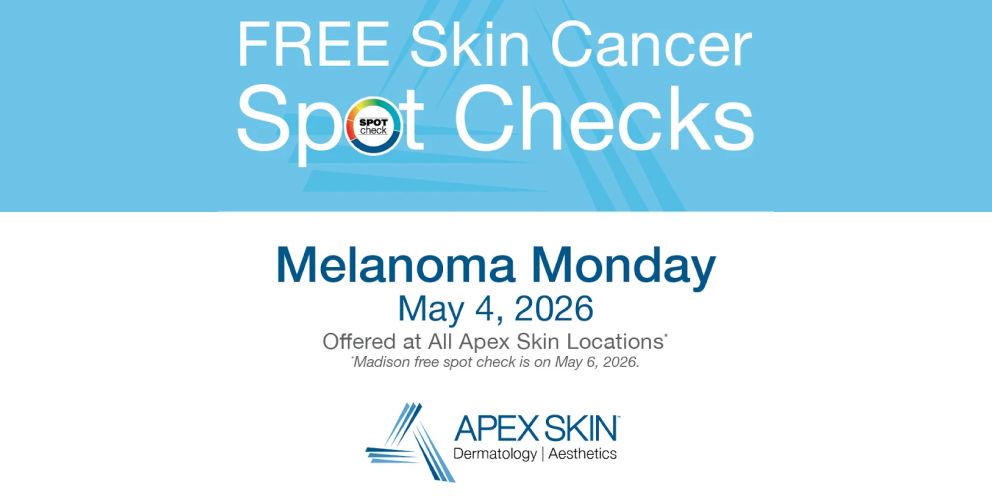
In recognition of Melanoma Monday, Apex Skin expanded access to free skin cancer screening and spot checks across its locations, making it easier for patients to take a proactive approach to their skin health.
This annual initiative reflects Apex Skin’s continued commitment to increasing access to care and encouraging early detection through convenient, community-focused screening opportunities.
Melanoma remains one of the most serious forms of skin cancerand early detection plays a critical role in improving outcomes.
In Ohio, melanoma rates are higher than the national average, with mortality reported up to 14% higher than the rest of the country. These trends reinforce the importance of routine melanoma screening and ongoing skin cancer prevention.
During Melanoma Monday events, Apex Skin providers perform a focused skin cancer check, evaluating moles, freckles, or other areas of concern for changes in size, shape, color, or texture.
These evaluations are quick, non-invasive, and designed to provide patients with peace of mind while identifying any areas that may require further diagnostic testing or a full skin exam.
Because skin cancer does not always present with pain or obvious symptoms, professional evaluation remains an important step in early detection.
By offering free spot checks across multiple locations, Apex Skin helps remove common barriers to care and makes it easier for patients to prioritize routine screenings.
For individuals searching for skin cancer screening near me, Apex Skin provides accessible, expert care across its 15 locations in Northeast Ohio—connecting patients with experienced providers and timely evaluations.
Noticing a new or changing spot—or simply overdue for a check? Taking a few minutes now could make a meaningful difference.
Apex Skin’s Spot Check program offers quick, focused evaluations designed to identify potential concerns early and connect you with next steps if needed.
The soulful singer-songwriter opens up about spiritual inspiration, creative ownership, healing through music, and embracing authenticity in every chapter of her evolution.
Photo Credit: Bonita Jalene.
Bonita Jalane isn’t just making music, she’s creating experiences rooted in healing, elevation, vulnerability, and soul. With a sound that effortlessly blends R&B, jazz, hip hop, and soul, the rising artist is stepping fully into her authenticity while inviting listeners into every chapter of her evolution. From spiritually guided studio sessions to directing her own visuals and embracing the transformative journey behind Kept Kissing FrogsBonita’s artistry is layered with purpose, passion, and fearless honesty. Whether she’s speaking through music or serving loc inspiration with intentional self-care routines, one thing is clear: Bonita Jalane is operating in a frequency all her own.
Mo Clark: “So High” feels deeply personal and spiritually elevated, how do you tap into those moments of divine inspiration, and what does that creative space look like for you?
Bonita: So High was one of those divine moments I can’t even fully explain, it honestly felt like I was channeling something bigger than me. It felt like the angels were speaking through me. The first verse came out almost like a freestyle, and then everything else just flowed. I had already created the hook with my producer, and I ended up writing the verses and bridge right there in the studio during a session I booked in LA. My creative space is very intentional but also very free. I like to set the vibe, light a candle, sit with myself, and just allow whatever I’m feeling to come through. A lot of my music comes from real experiences, but also from tapping into that spiritual place where I’m not overthinking, just feeling and creating. That’s when the magic happens.
Mo Clark: You’ve taken full creative control by directing your own visuals, how important is ownership in your artistry, and how does it shape the stories you choose to tell?
Bonita: Ownership is everything to me. It allows me to be honest and intentional with the stories I tell. When you have full creative control, you’re not filtering your truth, you’re presenting it exactly how it was meant to be received. Directing my own visuals gives me the freedom to bring my vision to life in a way that aligns with my message. My artistry is rooted in healing, growth, and real life experiences, so it’s important that every visual reflects that authentically. Ownership lets me stand fully in my voice and my purpose.
Mo Clark: Your journey in music spans over a decade, what defining moment shifted you from simply making music to truly owning your voice and narrative?
Bonita: I think the biggest shift came when I stopped creating for approval and started creating from truth. After going through real life experiences, heartbreak, growth, and healing, I realized my story had power. Viral was a turning point for me, and then creating Kept Kissing Frogs really solidified it. I wasn’t just making songs anymore, I was telling my story unapologetically. That’s when I stepped into owning my voice and my narrative fully.
Mo Clark: With your album Kept Kissing Frogs exploring love and self discovery, what lessons from your personal experiences were you most intentional about sharing?
Bonita: Kept Kissing Frogs is really about transformation. The biggest lesson I wanted to share is that every experience, good or bad, serves a purpose. Frogs for me stands for Forgive, Release, Overcome, and Grow. I wanted people to understand that even the heartbreak, the disappointment, the confusion, it’s all part of becoming who you’re meant to be. I was very intentional about showing the full journey, from the choices I made, to the pain I went through, to finally choosing myself. The message is to keep going until you love yourself fully.
Mo Clark: As you continue to evolve across genres like R&B; hip hop, jazz, and soul, how do you balance experimentation with staying true to who Bonita Jalane is as an artist?
Bonita: For me, it always comes back to feeling. No matter the genre, if it feels like me, it is me. I grew up loving different styles of music, so blending R&B;, jazz, hip hop, and soul is natural for me. But the core of who I am, my storytelling, my emotion, and my purpose, that never changes. As long as the message is real and the energy is authentic, I can explore freely without ever losing myself in the process.
Mo Clark: As a loc girlie, what are your go to products, and tips for maintaining?
Bonita: As a loc girlie, hydration and scalp care are everything for me. I love Bask and Lather products, they’ve been amazing for my scalp. I also used to go to Napstar in Atlanta and New York, and they have a really good oil that I still use. Lately, I’ve been using a lock oil from Beautiful Locs Studio, and it’s been keeping my scalp healthy and nourished. My stylist Bria at Beautiful Locs Studio also helps me maintain a healthy and clean scalp with treatments and detox, at least every 3 to 6 weeks.
Rose water is a must for me, it helps keep my locs hydrated in between my retwists. I also try not to over manipulate my hair and focus on keeping it moisturized and clean. Simple routine, but consistency is key
As her star continues to rise, Bonita Jalane proves that true artistry begins the moment you stop creating for validation and start creating from truth. Her music is more than entertainment — it’s reflection, release, healing, and growth wrapped into melodies that linger long after the song ends. With divine inspiration guiding her pen, ownership fueling her vision, and authenticity anchoring every genre she touches, Bonita is showing the world what it looks like to evolve unapologetically. And if So High and Kept Kissing Frogsare any indication of what’s ahead, this is only the beginning of an even greater elevation.
There was a moment at Australian Fashion Week 2025 where it became impossible to ignore – underwear had officially stepped out from beneath the outfit and into full view. Lace bodysuits worn as tops. Corsetry layered over shirts. Silk slips styled as dresses rather than hidden foundations.
And while it might sound like just another fleeting trend, it’s actually tapping into something much deeper about how we relate to our clothes, our bodies, and the unspoken rules we’ve been following for years.
In fact, you’re likely to be wearing regularly, if not right now, a garment that used to be classed as underwear, as outerwear, right now. The t-shirt started off its life as underwear. Jersey (stretch knit cotton) was only used as an underwear fabric for a long time until Coco Chanel brought it into fashion as outerwear. In 1917, Coco Chanel introduced the Breton shirt into her fashion collection, incorporating it into everyday wear.
But jersey fabrics as outerwear didn’t really take off as everyday wear until after the 1950s, when James Dean posed on his Harley Davidson in jeans and a white tee. Even then, the white tee, which was still considered to be underwear, was considered quite scandalous.
Underwear as Outerwear: What’s Really Going On?
At a surface level, the underwear-as-outerwear trend may feel bold, even provocative. Designers at Australian Fashion Week 2025 showcased lingerie-inspired pieces as everyday fashion, reframing items traditionally associated with intimacy into something visible and styled.
If you’ve lived long enough, you’ve seen it all before. The slip dress was a fashion trend popularised by Carolyn Bessette-Kennedy and Kate Moss in the late 1990s (and that era is back with us again).
Madonna wore see-through blouses showing off her underwear back in the 1980s. So it’s not really that daring (it’s hard for me to believe that it was 40 years ago).
But what’s interesting isn’t just the aesthetic shift – it’s the underlying mechanism driving it.
Clothing has always operated as a form of communication, whether we’re conscious of it or not. When something traditionally hidden becomes visible, it disrupts expectation. And when expectation is disrupted, attention increases. That’s the first layer.
But beneath that, there’s a deeper shift happening around ownership and self-expression. Underwear has historically been tied to external perception – designed to shape, smooth, and support the body to meet an ideal, hidden under clothes. We don’t share how much work it’s doing (think the shapewear granny pants in the original Bridget Jones’ Diary movie). Bringing it into outerwear reframes it from something corrective to something expressive. And that changes the psychological relationship entirely.
So why is 90s minimalism and the underwear as outerwear trend back in style? Some of the reasont can be attributed to the rise of GLP1s, the weight loss drugs that are changing how some women now look and the sizes they wear. The lean body is back in fashion, and the styles of Kate Moss and Carolyn Bessette-Kennedy fit their form (plus we’ve just done the 1980s, so the 1990s are the next in line.
Why This Trend Feels So Uncomfortable for Many Women
If your first reaction is hesitation rather than excitement, that’s not a failure of style confidence. It’s actually a very logical response to a clash between internalised rules and external messaging.
Most women over 40 have spent decades absorbing implicit guidelines about what is appropriate, flattering, and age-appropriate. These rules weren’t necessarily taught explicitly, but they were reinforced through media, workplaces, and social environments. So when a trend comes along that contradicts those rules, it creates cognitive dissonance.
And this is where a lot of wardrobe overwhelm actually begins. Not because there are too many clothes, but because there are too many conflicting signals about what those clothes are supposed to do.
On one hand, there’s a desire to stay current, relevant, and expressive. On the other hand, there’s a deeply ingrained instinct to avoid looking inappropriate or like you’re trying too hard. And if you haven’t got the GLP1 body, is this something you want to even consider?
The Real Question Isn’t “Should You Wear It?”
When trends like this emerge, the conversation often defaults to a yes-or-no answer. Should you wear it? Is it appropriate? Is it flattering? Should the concept of flattering even matter to you?
But those questions are actually too simplistic to be useful. Because they ignore the underlying variables that determine whether something works for you.
What matters far more is how a trend interacts with your personal style system – your colouring, your proportions, your personality, and your lifestyle. Without that context, any trend becomes either confusing or irrelevant.
This is why so many women feel like they’re constantly making the wrong choices. Not because they lack taste, but because they’ve never been given a framework to evaluate those choices. It’s the same pattern you see in why you keep wearing the same outfits – when decision-making feels uncertain, the brain defaults to what feels safe.
Reframing the Trend Through a Personal Lens
Rather than asking whether you should adopt underwear as outerwear, it’s more useful to ask what elements of the trend might align with you.
For example, the essence of this trend isn’t actually exposure; it’s softness, layering, and a shift in fabric language. Lace, silk, delicate textures, and structured corsetry all sit within a spectrum. You don’t have to go to the extreme end to engage with the idea.
This is where understanding how to make your current wardrobe more stylish becomes far more powerful than chasing new pieces. You might already have elements that echo this trend – a camisole that could be layered under a blazer, a slip dress that could be styled with knitwear, or a structured piece that adds definition.
And when you approach it this way, the trend stops being something you either adopt or reject. It becomes something you interpret.
The Role of Self-Trust in Style Choices
What this trend really highlights is how much style relies on self-trust. When the external rules become less clear or are deliberately disrupted, the only reliable reference point becomes your own judgement.
For many women, this is exactly where things feel shaky. Years of relying on external guidelines can erode confidence in personal decision-making. So when those guidelines disappear, it can feel like there’s nothing to replace them.
This is often the point where a more structured approach becomes valuable. Not to impose new rules, but to rebuild the underlying system that supports decision-making. It’s the kind of clarity that sits at the heart of programs like 7 Steps to Stylewhere the focus isn’t on trends at all, but on understanding what works for you and why.
Because once that system is in place, trends lose their power to confuse. They simply become options.
Expression Versus Expectation
There’s also a broader cultural layer to this trend that’s worth acknowledging. Underwear as outerwear challenges long-standing ideas about modesty, visibility, and who gets to be seen.
And while that can feel empowering for some, it can feel misaligned for others. Both responses are valid. Style isn’t about forcing yourself into expression that doesn’t feel authentic; instead, why not choose expression that feels congruent with who you are now?
This is particularly relevant when navigating changes in body, identity, or lifestyle. What felt right ten or twenty (or 40) years ago may no longer resonate, and trends can sometimes highlight that gap rather than bridge it.
Which is why personal style isn’t about keeping up. It’s about staying connected.
Where This Leaves You
Trends like underwear as outerwear tend to create strong reactions, but those reactions are often more revealing than the trend itself. They highlight where there’s uncertainty, where there’s resistance, and where there might be curiosity that hasn’t quite been explored yet.
And when you look at it through that lens, the value of the trend isn’t in whether you wear it. It’s in what it reveals about your style boundaries, comfort zones, and decision-making process.
Because ultimately, style isn’t about getting it right in the eyes of fashion. It’s about understanding why something feels right, or doesn’t, for you. And once you have that clarity, trends stop being something you need to navigate carefully. They simply become part of the landscape, rather than something that defines it.
Related Reading
Inside Out and Outside In Style – Mood Illustration and Mood Enhancement Dressing
Elevate Your Outfit: Small Upgrades That Add Instant Polish
Why Style isn’t Shallow and Why Improving Your Style Gives You Greater Confidence
Amber is transparent about the part of this journey that doesn’t get discussed enough: what comes after you reach your goal weight.
Recently she tried tapering off tirzepatide. The result was gaining 15 pounds. Now, she’s back on it and never looking back.
“I chose to be on it forever, and that’s okay.” For someone who spent decades internalizing every setback as a personal failure, that kind of peace with a long-term commitment is its own transformation. She frames it the way she would any chronic condition, not as a defeat, but as simply the reality of how her body works.
Day to day, her focus is protein and water, with strength training coming online as she works to preserve muscle mass. But what she keeps returning to is how different this feels from every previous attempt.
“I don’t have to think about it a lot now. It’s not that vicious cycle. It feels seamless.”
She’s also learned to trust fluctuations. For someone who spent decades terrified of the scale going up, that alone has been transformative.
What Apex Made Possible
Amber is an Apex employee, which means she came to this with more access and more context than most patients. But that familiarity is part of what makes her perspective valuable. She saw how the practice operated from the inside before she became a patient.
“I realized that everyone at Apex really cared,” she shares.
“Everybody needs to make revenue. It’s how companies stay in existence. But seeing from this end how they interact with patients, how they have conversations about what they want these programs to be… they don’t just want to bring in revenue. They want to see people feel better about themselves.”
What she values most about the Total Body program isn’t any single service. It’s the continuity. The ability to check in, ask questions, mention something that’s bothering her about the way something looks, and have someone who knows her full picture ready to respond.
“I have access to all of the providers. If I’m in for a regular checkup and I mention I don’t really like the way this is sitting, they’ve got advice to give me. Having a partner—that’s what I look at them as. It’s not me going it alone.”
For anyone who sees themselves in the earlier chapters of Amber’s story, she doesn’t want to oversell the path or undersell the struggle. She just wants them to hear what she wished someone had told her.
“Don’t internalize failure and just keep trying. Find a team to help you. We can’t do this on our own and realizing there are people out there who can help guide you to where you need to be. That’s everything.”
Amber’s story is one example of what the Apex SkinTotal Body program can look like with weight management, aesthetic treatments, and the kind of ongoing support that makes the difference between a result and a transformation.
I always knew I wanted my honeymoon to be an adventure. It had to be the type of immersive trip you only make once in a lifetime, a bit like getting married (well, hopefully). My husband and I didn’t want to spend the best part of two weeks doing nothing, even though this is what a majority of couples prefer after the years-long chaos of planning a wedding while still trying to function as a somewhat competent adult. But we wanted to make memories, and plenty of them. The ‘doing nothing’ could wait until we were back home.
We quickly settled on a combination of a safari and beach holiday, which predominantly take place across Africa and the Indian Ocean. As a freelance travel writer, I’d heard Botswana mentioned as the ultimate safari destination frequently over the years. Many tourists often overlook the remote, sparsely populated country for its southerly neighbour, South Africa. But in Botswana, you’re rewarded with secluded, uncrowded wilderness – in fact, on many of our game drives, it was just the two of us (more on this later). In the Okavango Delta, the largest inland delta in the world, the water attracts a dazzling variety of wildlife, from herds of elephants cooling off in the mud to leopards, lions and wild dogs stalking prey in the tall grass. Suffice to say, Botswana was a must.
For the ‘beach’ part of the itinerary, the most popular destinations to visit after Botswana are Mauritius, Mozambique and the Seychelles. My husband and I got engaged in Mauritius in April 2024, and as much as we loved it, we wanted to experience somewhere new. I’d been to the Seychelles years before on a work assignment, so we quickly settled on Mozambique. We also decided to add a few days in Zimbabwe, after realising the Delta’s proximity to Victoria Falls. When else were we going to be this close to the largest waterfall in the world?
But packing this all in to two weeks required a lot of planning. So, after seeking advice from Yellow Zebra Safaris, one of the leading African tour operators, we pulled together the below itinerary. If you’re thinking of doing a similar trip, bookmark this page and use the below as a guide. You won’t regret it – it really was the trip of a lifetime I hoped it would be.
Botswana
Day 1-3: Jao Concession
We began by flying from London to Johannesburg O.R. Tambo, before boarding our connecting flight to Maun, Botswana. Here, we were collected by a representative from Wilderness, a leading conservation and hospitality company with over 60 camps and lodges across eight African countries. After a 40-minute flight on their private charter airline, Wilderness Air, we arrived at our camp in the Jao Reserve, deep within the Delta’s Hunda Island.
With just three tents, this is probably the most intimate safari experience in the Delta. In fact, we were the only guests staying here, so each game drive was completely private, which was a real luxury. All tents have en suite bathrooms with private decks and outdoor showers overlooking the floodplains, while the meandering, wooden platforms make you feel as though you’re camping in a treehouse. The main dining area is shaded by a tree canopy, there’s a bar for sundowners offering panoramic views of the plains, and a swimming pool deck for cooling off and relaxing between drives.
But there are other plenty of other questions about exfoliation, and we are here to answer them for you.
Why should I exfoliate my skin?
Why do you need to exfoliate your skin? Well, you’re really just accelerating a natural process called desquamation, in which our skin moves older skin cells toward the outermost layers of the skin, and they eventually slough away, leaving behind fresher, smoother skin. Of course, your skin doesn’t really do this to keep you looking pretty. The real purpose of desquamation is to rid our skin of older cells, which are more likely to contain environmental pollutants, microorganisms, and damaged proteins. The skin, as you know by now, is a living exchange organ, and it needs to be in good shape to do its many jobs well.
The trouble is that our skin becomes much less effective at desquamation as we age: the matrix in which skin cells sit (like a biological glue that holds them together) becomes thicker and does not let go of older cells as easily. The result is dull skin with less of that healthy glow you had when you were in your teens. So, exfoliation is one way you can help your skin stay up to speed with its natural “freshening up” process, restoring your skin to a brighter, illuminated appearance. The trick, of course, is to exfoliate the right way, with the right frequency. If done too harshly or too often, you will take away too many layers of skin cells from the stratum corneum, and damage your skin’s barrier function. Over-exfoliated skin will appear red, irritated, blotchy, and conditions such as dermatitis, acne, and rosacea can become more visible. As with just about everything in life, moderation and balance are key. So, let’s talk about methods of exfoliation.
How do I exfoliate my skin?
There are several methods of exfoliation, and here we will focus on the ones you can do at home, rather than the more expensive dermatology office options, like microdermabrasion and chemical peels.
Mechanical Exfoliation
This involves using a textured item like a brush or a product with granules to remove dead skin cells on the surface. The amount of pressure or the size of the granules will depend on the type of skin you’re exfoliating. For example, you might try dry brushing the skin of your body every morning before showering, using a natural bristle brush, which would be much too harsh for your face. Or you could use a product like our Himalayan Body Buff in the shower, but you would never want to use salt granules for a facial scrub—your facial skin is too thin and sensitive for a salt scrub.
When it comes to the face, you need to use about 1/10th the pressure, and softer materials. The simplest method of facial exfoliation is to use a soft, damp washcloth on your face in very gentle circles. Our konjac sponge is another great option. It has a slightly smoother texture than a washcloth, making it safe for daily use. Alternatively, you can use products with very fine, mechanically-exfoliating ingredients, such as clay, botanical powders, oat or almond flour, super-fine shells designed for dermatologic use, or other ground grains. In our Detox Exfoliating Mask, the combination of clay, raw cacao powder, and organic walnut shells makes for a gentle mechanical exfoliation, with the added benefit of activated charcoal to pull pollutants from the skin cells that stay behind.
No matter what mechanical exfoliation method you use, light pressure will be the key to your success. You’re not scrubbing the kitchen counter—this is your skin! Elbows, legs, and upper arms can take moderate pressure, but the skin on your face should be treated very gently, using only as much pressure as is required to move the product around your face. If your face is super red after a treatment, you’re using too much pressure!
Chemical or Enzyme Exfoliation
Ingredients like alpha- and beta-hydroxy acids, lactic acid, and Vitamin A work to loosen dead skin cells and increase cell regeneration rates. Perhaps the best known of these treatments is Retin-A, which is a form of Vitamin A used to increase collagen synthesis and help reverse the effects of long-term UV exposure. Unfortunately, it is not recommended for super sensitive skin or for pregnant women. It can cause redness, extreme sun sensitivity, dryness, itching, peeling, and burning. But, if you’re willing to tough out the side effects, you will likely see some improvement in skin texture over time.
If, like me, your skin does not tolerate Retin-A, there are gentler options with little to no risk. For example, pumpkin and papaya are rich in alpha-hydroxy acids, as well as Vitamin A, C, and zinc, all of which can help exfoliate the skin, combat acne, and diminish hyperpigmentation. Tomato is full of Vitamin C and lycopene, a carotenoid with potent antioxidant benefits. Lactic acid, found in milk products, helps break down the matrix where old skin cells reside, allowing them to slough away more easily. Enzymes in grains like quinoa, amaranth, and rice can do the same, and provide a very silky texture when mixed with water, activating their enzyme activity.
When should I exfoliate my skin?
The basic answer is not too often! People tend toward overdoing it in the exfoliation department because it feels good, your skin feels softer afterwards, and you feel like you’ve taken an active role in improving your skin. But, as mentioned above, too much of this good thing is possible. A good place to start is once a week for the face and twice a week for the body. Pay attention to how your skin responds. If you’re red or irritated, you need to tone it down. If you don’t notice any difference, maybe you can increase the frequency slightly. Remember, the goal is to eliminate rough, dull skin cells that refract light unevenly and cause a less-than-luminous appearance, and to encourage cell regeneration deeper in the skin layers, all without leaving the skin raw or angry. It’s a beautiful balance when you strike it, so experiment and find out what works for your skin.
With love and a perfectly-exfoliated glow from us to you,
The information contained in this post is for educational interest only. This information is not intended to be used for diagnosis or treatment of any physical or mental illness, disease, or skin conditions.
What people want from lip filler today is very different from the trends that defined it a few years ago. Most patients today aren’t looking for lips that dominate the face, but rather better balance, softer definition, restored hydration, and subtle volume that still looks like them.
If you’re considering lip filler for the first time, or reconsidering it after seeing results that felt overdone, this guide will walk you through what lip filler actually does, how different techniques affect the final result, what pricing typically looks like, and what separates natural-looking enhancement from filler that feels obvious.
What Is Lip Filler?
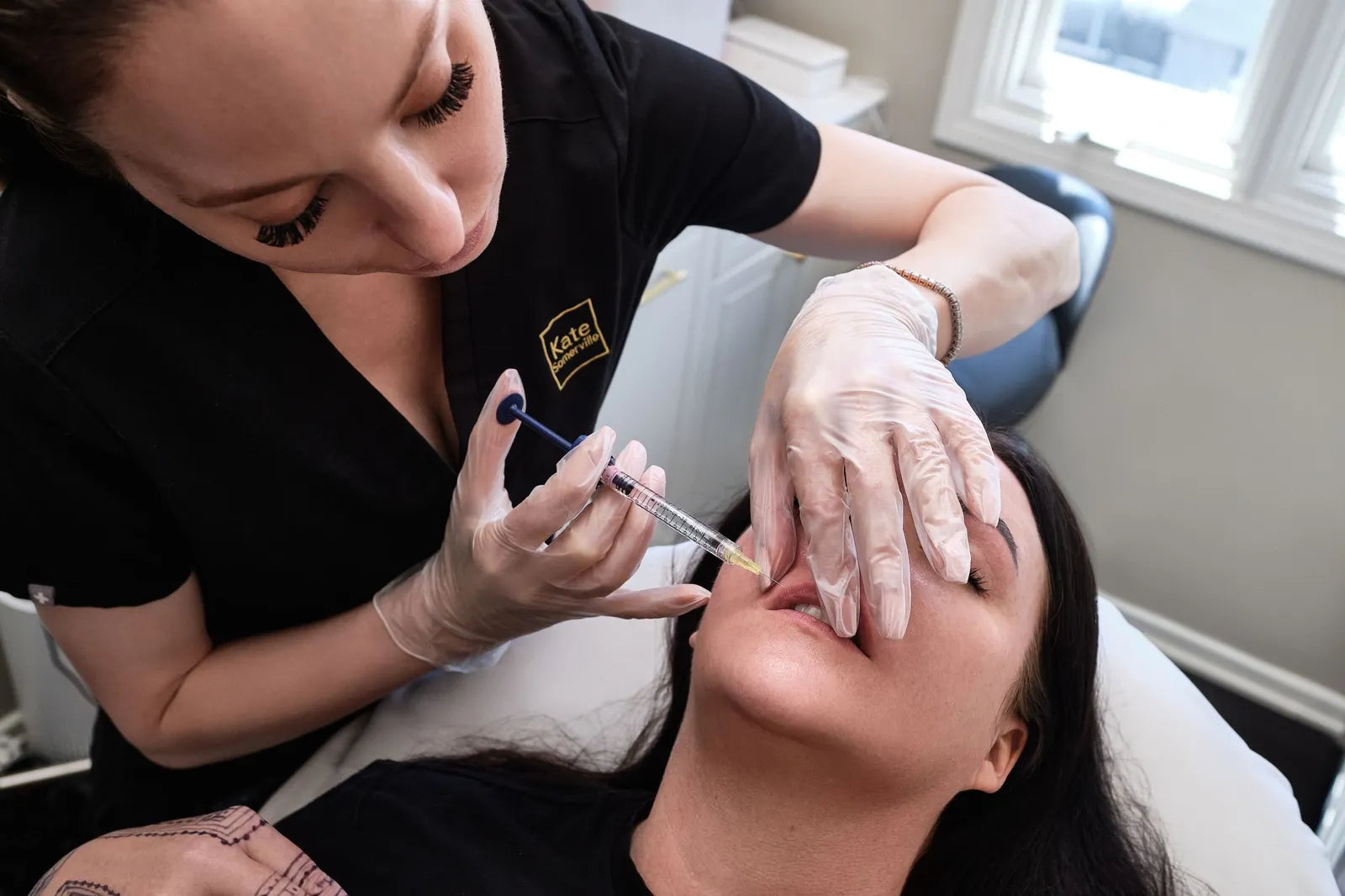
Lip filler is an injectable treatment used to add volume, shape, structure, and definition to the lips. Most lip fillers used today are made from hyaluronic acid, a substance your body naturally produces on its own, which is part of why the treatment is generally so well tolerated.
Hyaluronic acid fillers work by attracting and holding water within the tissue. That added hydration creates softness and volume without making the lips feel firm or unnatural when the treatment is done properly.
One of the reasons lip filler remains so popular is that it’s also reversible. An enzyme called hyaluronidase can dissolve hyaluronic acid filler relatively quickly if needed, making it one of the more flexible and forgiving injectable treatments available.
What filler cannot do is completely change the natural anatomy of your lips or fully correct significant asymmetry on its own. The best results come from understanding what lip filler is realistically capable of improving, and building a treatment plan around that rather than chasing a completely different lip shape altogether.
Types of Lip Filler
Not all hyaluronic acid fillers behave the same way, and the product your injector chooses can influence how the final result looks and feels.
The two most commonly used filler families for lips are Juvéderm and Restylane. Both are hyaluronic acid-based, both are well studied, and both include multiple formulations designed for different treatment goals.
The differences come down to things like texture, flexibility, cohesivity, and how the filler integrates within the tissue.
Juvéderm fillers generally have a smoother, softer consistency, which can create a fuller or more hydrated-looking result. Restylane formulations tend to be slightly firmer and more structured, which some injectors prefer when focusing on border definition, shape, or precise structural support.
Neither is universally better.
The right filler depends on your anatomy, lip shape, movement, desired outcome, and the technique of the injector using it. A skilled provider chooses the product based on the treatment plan, not based on trends or brand preference alone.
Lip Filler Techniques
Once the right filler is chosen, technique becomes the next major factor shaping the final result.
Classic lip filler focuses on balanced volume, softer borders, improved hydration, and subtle shape enhancement. When done well, the lips look fuller and more defined without looking obviously filled.
Russian lip filler approaches the lips differently.
Instead of creating more forward projection, the technique focuses on height, structure, and definition. Filler is placed in smaller, more precise deposits to create a flatter side profile, a sharper cupid’s bow, and a more sculpted result overall.
The effect is less pillowy and more structured, which is part of why the technique became so popular with patients looking for enhancement that still feels refined and natural.
At the same time, Russian lip filler is not automatically better, and it’s not the right fit for every lip shape.
The technique requires a high level of injector skill and a strong understanding of lip anatomy. Lip structure, tissue thickness, movement, and existing volume all influence whether someone is a good candidate for it.
Lip Flip vs. Lip Filler
These treatments are often grouped together, but they do very different things.
Lip filler adds volume, structure, and definition using hyaluronic acid filler. The result is more visible lip volume, along with changes to shape and projection depending on the technique used.
A lip flip works through muscle relaxation instead.
Using a small amount of Botox placed just above the upper lip, the treatment relaxes the orbicularis oris muscle slightly. That allows the upper lip to roll outward a bit more, creating the appearance of a fuller upper lip without actually adding volume.
The effect is subtle. Most patients notice:
Slightly more upper lip show,
a softer upper lip border,
and less disappearing of the upper lip when smiling.
A lip flip is not a replacement for filler. It’s a different treatment designed for a different outcome.
It tends to work best for patients who want a very subtle enhancement, who feel their upper lip disappears when they smile, or who want to ease into lip enhancement before committing to filler.
The two treatments can also be combined. Filler can create structure and volume, while a lip flip can refine the upper lip border and improve lip show.
How Much Does Lip Filler Cost?
Lip filler is typically priced per syringe. Nationally, most treatments fall somewhere between $600 and $1,200 per syringe. You can see the details of lip filler pricing at the Kate Somerville Clinic here.
Most first-time patients start with one syringe, which is usually enough to create noticeable but natural-looking improvement in shape, hydration, and definition. Patients with naturally thinner lips or those looking for more structural enhancement may require additional filler over time.
Several factors influence pricing.
Location plays a role. Clinics in markets like Los Angeles, New York City, and Miami generally price higher than national averages, in part because demand for experienced injectors is significantly more competitive.
The injector plays a major role in pricing as well. Experience, anatomical knowledge, aesthetic judgment, and injection technique all influence outcomes, and pricing often reflects that level of expertise.
The filler itself can also affect cost. Different hyaluronic acid formulations are designed to behave differently within the lips, and some products carry higher price points than others depending on their structure and intended use.
Most clinics also offer financing options for patients who prefer to spread treatment costs out over time.
What to Expect Before, During, and After Lip Filler
Kate Somerville Clinic lip filler before and after. Results shown immediately after treatment with early swelling still present. Most patients see final results settle around the two-week mark. Individual results vary based on anatomy, technique, and amount of filler used.
Before
Every lip filler treatment begins with a consultation. Your injector should assess your lip anatomy, facial proportions, movement, and skin quality before deciding on product, placement, or technique.
Most patients are also advised to avoid blood-thinning substances like aspirin, ibuprofen, fish oil, and alcohol for several days beforehand to help minimize bruising and swelling.
During
A topical numbing cream is typically applied before treatment, and most modern fillers also contain lidocaine to make the process more comfortable as the injections are performed.
The appointment itself usually takes about 30 to 45 minutes. Most patients describe the treatment as uncomfortable in certain areas, but very manageable overall.
After
Swelling is completely normal, and it’s often more significant than first-time patients expect. It usually peaks within the first 24 to 48 hours after treatment.
This is important: swollen lips are not the final result.
Lip filler almost always looks more dramatic during the first few days than it will once the swelling settles and the filler integrates into the tissue. Around the two-week mark is when patients are typically seeing something much closer to the final result.
Bruising is also possible and tends to be more common in the lips than in other treatment areas because the tissue is highly vascular. Most bruising resolves within about a week.
How Long Does Lip Filler Last?
Most hyaluronic acid lip fillers last somewhere between six and twelve monthsthough longevity varies more from patient to patient than many people expect.
The lips are a high-movement area. Talking, eating, drinking, and facial expression all contribute to filler breaking down faster compared to more static areas of the face. Your metabolism also plays a role, which is why some patients naturally process filler more quickly than others.
Technique matters too. Filler placed too superficially often dissolves faster and can look less natural over time. Proper placement within the tissue helps create a result that not only looks better, but tends to last longer as well.
Many patients also find that maintenance appointments produce the most consistent long-term results. Rather than waiting for filler to disappear completely, smaller touch-ups over time often maintain shape and definition more naturally and typically require less product overall.
Frequently Asked Questions
How much filler do I need for my lips?
Most first-time patients start with one syringe. When placed properly, that’s usually enough to create noticeable improvement in shape, hydration, and definition without looking overfilled.
The right amount ultimately depends on your anatomy, lip structure, and the type of result you want to achieve.
Is lip filler painful?
Most patients find lip filler very manageable. A topical numbing cream is applied beforehand, and most modern fillers also contain lidocaine to reduce discomfort during treatment.
The injections themselves are quick, with most patients rating the discomfort around a 3 or 4 out of 10.
Can lip filler be reversed?
Yes. Hyaluronic acid filler can be dissolved using hyaluronidase, an enzyme that breaks down the filler relatively quickly if needed.
That reversibility is one of the reasons hyaluronic acid fillers remain the standard for lip enhancement.
What’s the difference between Russian lip filler and traditional lip filler?
Russian lip filler focuses more on vertical height, structure, and cupid’s bow definition, while traditional techniques typically create softer overall volume and projection.
Neither approach is universally better. The right technique depends on your anatomy and the result you want your lips to have both at rest and in motion.
How do I avoid the overfilled look?
Natural-looking filler usually comes down to restraint, proper technique, and long-term planning.
The patients with the most balanced results are often the ones who start conservatively, build gradually if needed, and work with an injector who understands proportion rather than simply adding volume.
In many cases, the overfilled look happens from repeatedly adding filler over time without reassessing overall balance.
Can I combine a lip flip with lip filler?
Yes, and for the right patient, the combination can work very well.
Lip filler adds structure and volume, while a lip flip slightly relaxes the muscle above the upper lip to improve lip show and soften the upper border. Together, they can create a more refined overall result when used appropriately for your anatomy.
Natural-Looking Lip Filler Starts With the Right Approach
The most natural lip filler rarely looks like filler at all. It looks like balance, softness, structure, and features that move more harmoniously together.
At Kate Somerville Clinic on Melrose Place, lip filler is approached with a clinical, anatomy-driven philosophy designed to create enhancement that feels balanced, refined, and natural to your features.
THE WHAT? ASICS has launched a new global campaign called “Get The Glow,” promoting movement as a natural way to support wellbeing and achieve a post-exercise glow.
THE DETAILS The campaign features unfiltered post-workout images of individuals and ASICS athletes captured after activities such as running, walking and tennis. ASICS said the initiative aims to challenge beauty standards driven by filters, skincare routines and social media pressure by highlighting the visible effects of exercise on mood and confidence. The company cited research showing that just 15 minutes of movement can positively impact mental wellbeing. The campaign launches amid growing consumer interest in “glow” beauty trends, with ASICS noting increases in online searches and social media conversations around glowing skin. Tennis player Zeynep Sönmez is among the athletes supporting the initiative, which positions movement as an accessible alternative to complex beauty routines.
THE WHY? The campaign reflects the growing overlap between beauty, wellness and mental health, while reinforcing ASICS’ long-standing brand message around the connection between physical activity and emotional wellbeing.