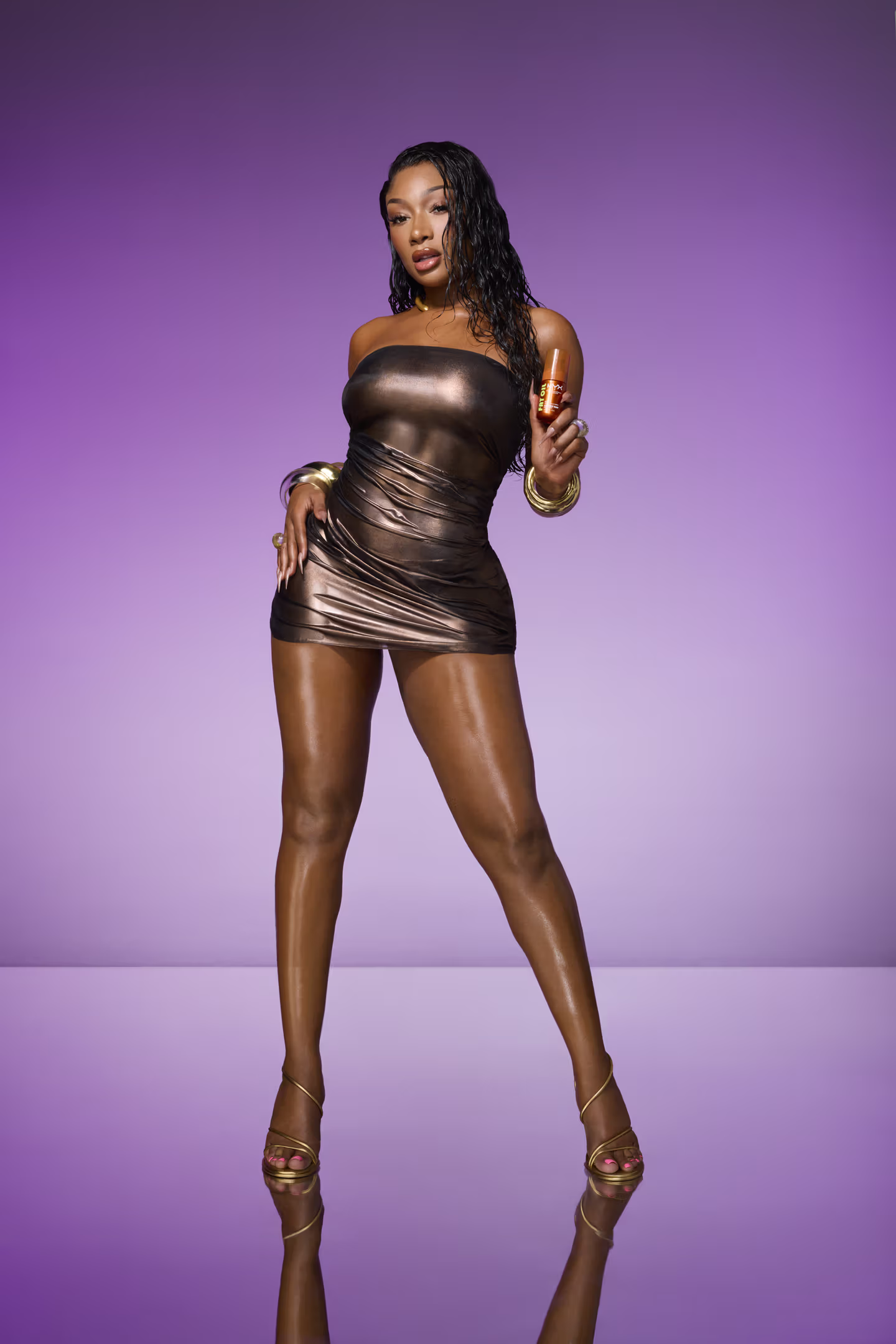
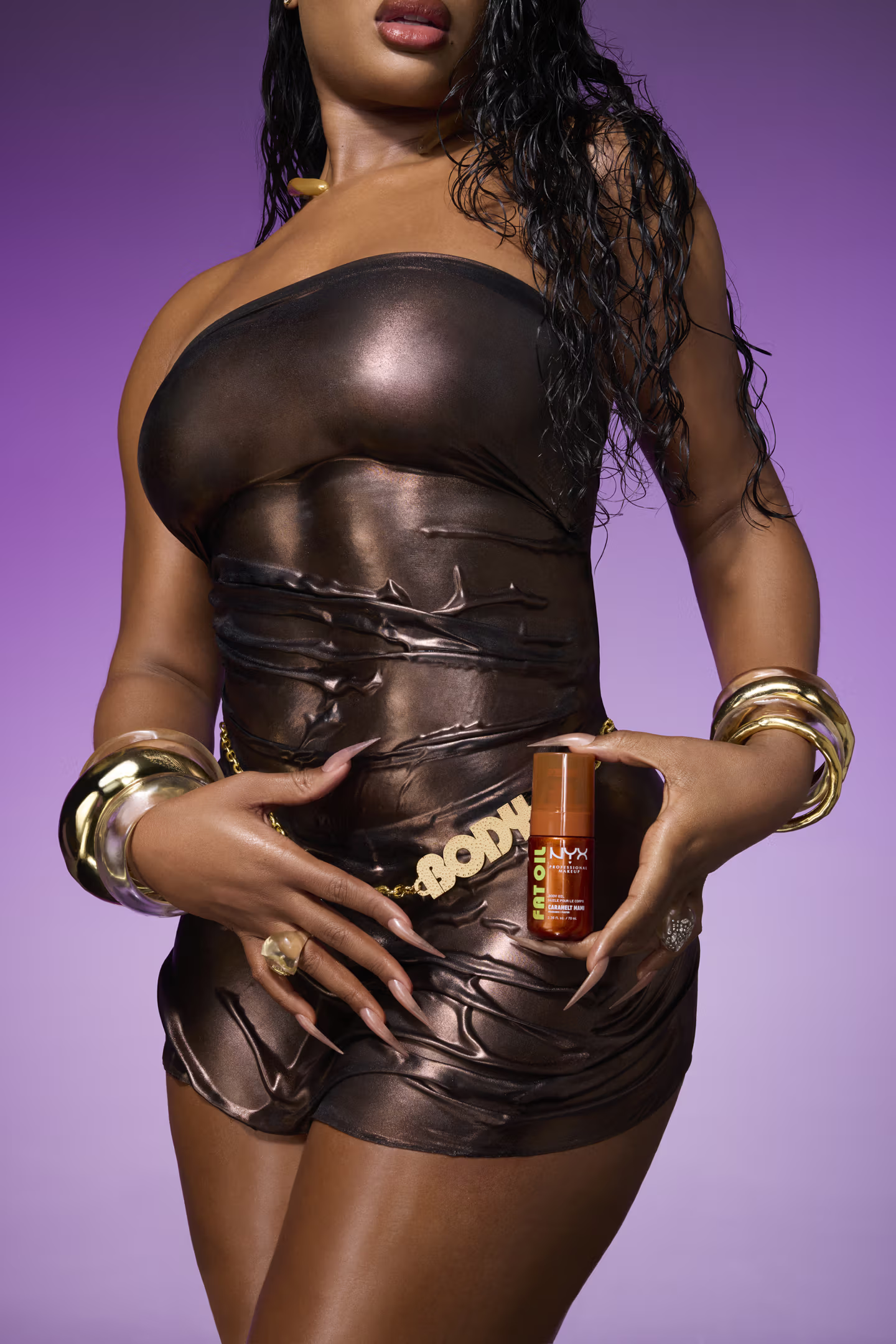
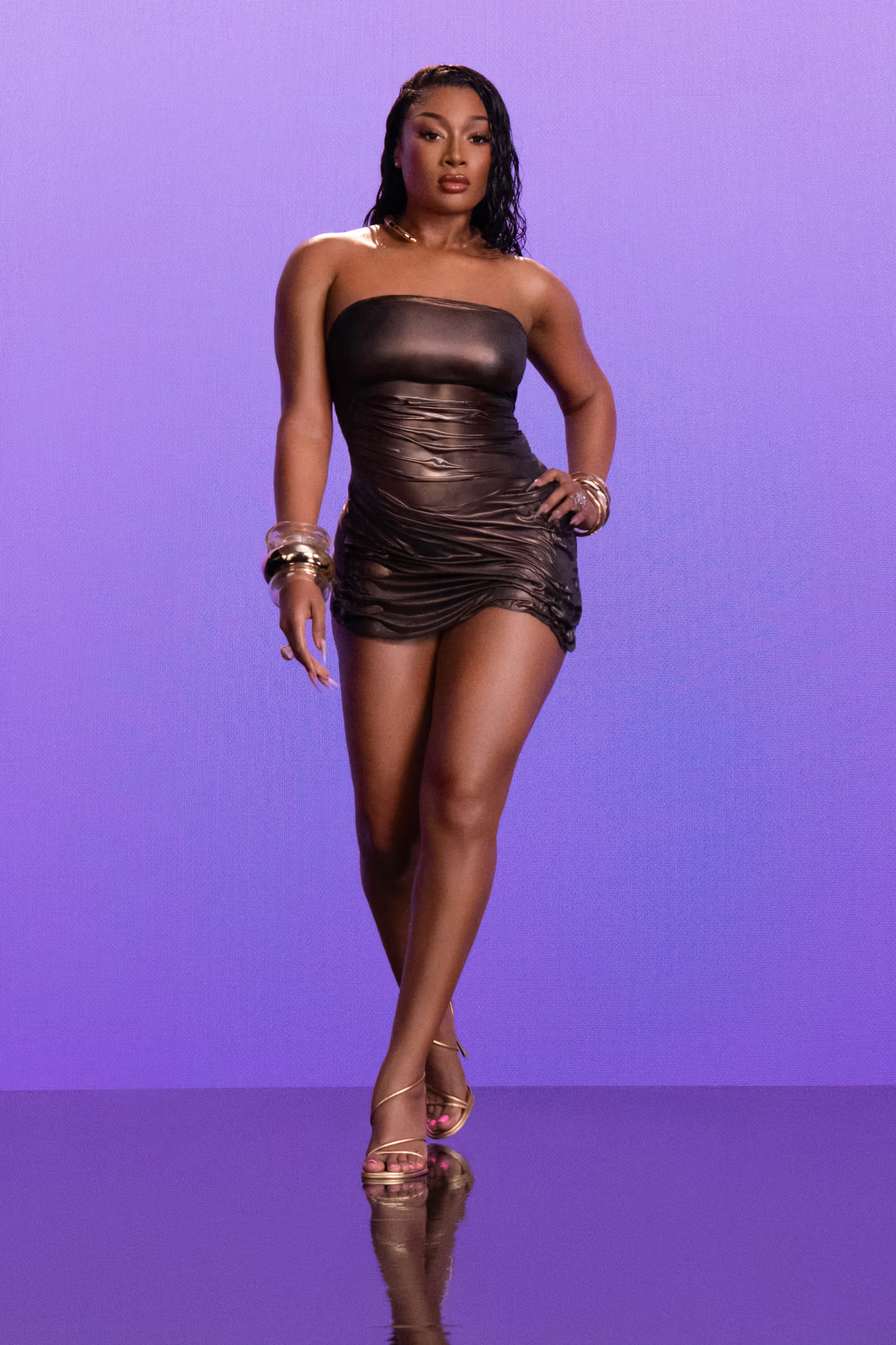
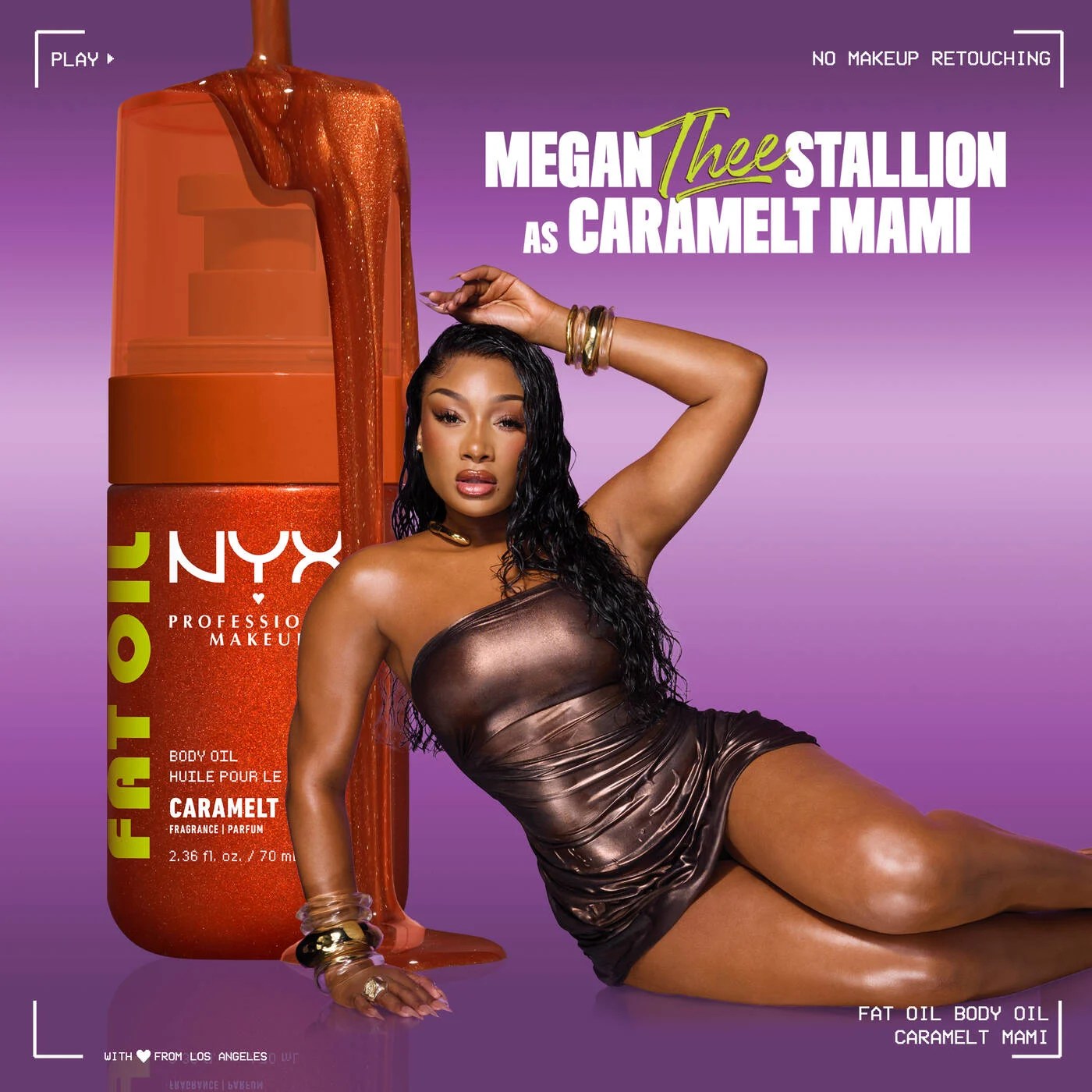
Girl, get your vanity spaces ready because the captain of the Hot Girls is officially delivering the ultimate recipe for a flawless radiance! The beautiful Megan Thee Stallion has teamed up with the beauty geniuses at NYX Cosmetics to drop the absolute holy grail of body care, and your skin is about to thank you. The highly anticipated NYX Megan Thee Stallion Body Oil in the shade Caramelt Mami has finally arrived to give you that iconic, universally flattering bronzed and glossy finish with the perfect touch of shimmer. Pumping out up to twenty four hours of pure hydration, this magical lightweight formula uses avocado oil and vitamin E to deeply nourish and protect your skin barrier with absolutely zero greasy or sticky residue left behind.
Beyond giving you a radiant complexion that looks incredible in every single light, this vegan and cruelty-free essential smells like an absolute tropical dream. The seductive gourmand fragrance opens up with top notes of crisp apple, brown sugar, and almond blossom before melting into a rich heart of jasmine, pistachio cream, and sweet caramel swirl. As it settles into your skin, you are left with a warm, cozy base of soft cedarwood, liquid amber, and edenolide that will have you smelling completely irresistible all day long. Head over to the official link at to secure your bottle immediately because this drop is guaranteed to sell out fast!
I have been using and loving clip in hair extensions to add length and volume to my fine hair.
After trying so many hair extensions the last 20 years as a hair stylist, I’ve figured out what I really liked and what I didn’t like. I realized I actually preferred clip in hair extensions the most! There versatility and ease of use are just a couple reasons why. In this blog post I’m sharing my favorite clip in hair extensions with you.
*Affiliate Disclosure: I do have affiliate links in this blog post. If you purchase something from my link, I will receive a small commission from the sale. This comes at no cost to you, but is paid by the company. I do not take becoming an affiliate with any company lightly. If I am, it’s because I believe in the company and their product.
I have tested both clip in and sewn in hair extensions – there are definitely pros and cons to each.
What are clip in hair extensions?
Clip in hair extensions are one of the easiest ways to add instant length, fullness, and volume to your hair. They attach with small clips that easily secure into your natural hair and can be put in or taken out in just minutes. I especially love them for adding extra fullness for everyday wear or for special events when you want a little extra glam!
Clip In vs Sew In Extensions
Clip in hair extensions are so much nicer overall than sewn in hair extensions. I prefer them because you don’t have to wash your hair with your extensions in- a huge plus! Washing your hair with sewn in hair extensions is such a pain! It’s a lot of weight that is on your head when wet and you always have to blow dry your hair because the extensions can start to smell or get musty if you let them air dry. I also like that I don’t have to sleep in clip in hair extensions. You can just take them out at night. Sewn in hair extensions always were harder to sleep in. It wasn’t that comfortable. They are also a more budget friendly option overall compared to sewn in hair extensions. I also feel like it’s better for my hair. I don’t worry about losing hair or breakage with clip in hair extensions.
Check out my experience with sew in extensions here!
Who are clip in hair extensions best for?
For anyone wanting to add length, thickness or volume to their hair without the commitment of sewn in hair extensions.
I have really liked the Luxy hair extensions!
Pros Of Clip In Hair Extensions
You don’t have to wash your hair with hair extensions in.
You can change up the style and do long one day and just more volume the next
You don’t have to sleep with them in your hair.
They’re more budget friendly.
Easy to pop in the hair.
Length without having to wait for hair to grow out
No salon commitment
Gives your scalp a break since you can remove them at the end of the day
Good option for testing hair extensions before fully committing
Cons Of Clip In Hair Extensions
Have to put them in everytime
Need to blend them more than sewn in
Harder to do intense workouts with them in
How To Apply Clip In Hair Extensions
Applying clip in hair extensions can feel intimidating at first, but once you get the hang of it, it becomes so easy! The key to making clip in extensions look natural is all in the placement and blending. I am sharing a few simple tricks that help them stay secure, blend seamlessly, and look like your real hair.
Tips For A Natural Look
You want to first part your hair all the way around your head – leaving enough hair on top to cover your hair extensions. I like to use a foiling comb or a rat tail comb to really get clean lines. Luxy also sells a kit that has the foiling comb, clips and teasing brush all together and comes in a cute bag. Check it out here.
Next, clip up all the hair on top and apply your hair extensions. If I’m doing a full set, I apply my larger 4 wefts in the back first. Then I position the next 4 wefts right on top of the weft I just put in my hair. I find it gives it more staying power doing it this way. I line it up to be right underneath the seam of the first weft. Then I apply my wefts to the side of my head. Doing the same thing to the sides where I apply a weft on top of another once it’s on my head. Then I’ll take down my hair and see if I need to add any smaller 1 wefts anywhere.
Once I’m done applying the clip in hair extensions, I then start to curl my hair. I found curling after I apply the wefts works best for me. Some people prefer to curl their natural hair first, then apply the hair extensions. Once I’m done curling, then I take a teasing brush and tease the top part of my hair all around the sides and my crown, then I brush it out. This helps to hide any clips and really blend everything well. I also will brush my hair with the extensions after I curl to blend it all together. For the most natural look I recommend curling your hair. It looks more seamless, than straightening.
Video Tutorial of How To Apply Clip In Hair Extensions
How To Care For Clip In Hair Extensions
You want to brush your hair extensions before and after you wear them. This ensures you don’t get tangles in them and blend better with your hair.
Shampoo your extensions every 15-30 wears. I found I can get by with less even as long as I take care of them after each wear. Use a gentle shampoo and use conditioner on the mid-shaft down to the ends.
Lay them flat to dry on a towel. If you feel like they are getting dry on the ends you can do a deeper conditioner on them. You can blow dry but use a lower heat setting on blow dryer. I also recommend using a heat protectant.
It’s ok to use hot tools but make sure it’s not on the highest heat setting.
Brush before storing them on a hair extension hanger, silk bag or box.
Are clip in extensions damaging?
They are actually the least damaging extensions out there because you can easily remove them. So you aren’t sleeping in them, or having to shampoo your hair wearing them.
Thinning Hair Fill Ins from Luxy Hair Extensions
These are the best hair extensions for thinning hair. They come with 6 wefts. 4- 1 wefts and 2-2 wefts. The thinning hair fill-ins are more for adding volume to the sides of the hair and front. It’s subtle but still makes a difference.
Product Details
Type- Seamless Clip Ins
Number of Wefts- 10 wefts
Shades- 36 shades
Lengths- 12 in., 16 in., 20 in. and 24 in.
What I Liked
I liked that my hair looked thicker overall and longer. I was able to braid my hair, put it in a ponytail, it just looked cuter all around!
What I Didn’t Like
There really isn’t anything I didn’t like about them. I’ve had clip in hair extensions before so I knew what to expect mostly and I haven’t been disappointed!
How I Tested Clip In Hair Extensions
As a stylist I tested the clip in hair extensions from Luxy with a few criteria. The first was making sure the color matched with my natural hair color and it did! I was so impressed with it- even my family was shocked how it looked just like my natural hair color.
The second criteria was ease of application, which again I was impressed with. I watched a video and and it really helped me know how to apply them and it didn’t feel hard.
The third criteria was durability, did they last throughout the day and not fall out of my head. Again, they were great! I didn’t feel self conscious wearing them around the whole day- they felt secure.
I also measured how well they looked throughout the day. I noticed my overall style to my hair lasted longer when wearing hair extensions then when I didn’t wear them.
They were also comfortable too. I didn’t feel the initial discomfort like I always would with sewn in hair extensions.
I love that I can style my hair differently when I have hair extensions in.
Frequently Asked Questions
How do you select the right shade of clip in hair extensions?
I took a picture of myself in natural lighting with my phone and then browsed the shades on the website and held up the phone to see what matched best. I got a perfect match the first time I did it! You can also consult Luxy’s “Text a Stylist” option where you can text one of their stylist and they’ll recommend the best hair extensions and color based on the information you give them.
How long should you wear clip in hair extensions?
Wearing them during the day for 12 hours is fine, but you don’t want to sleep in them. Taking them out gives your scalp a break and avoids breakage.
How many wefts do you need for clip in hair extensions?
It really depends on how much length and thickness you want overall. For just some fullness, 2-3 wefts, for some volume and length, 4-6 wefts, and for a major transformation, you’ll want 6-8 wefts or more.
Does the weight of the clip in extensions matter?
Yes, 80-120 grams if for lighter, natural volume. For more fullness and length and the most popular option you’re going to want 140-180 grams. If you’re wanting a full on glam look you’ll want 200+ grams but you’ll want thicker hair if using that much hair.
Final Thoughts on Clip On Hair Extensions
I am a huge fan of clip in hair extensions! They do the job but you don’t have to deal with all the extra hang ups that come with hair extensions that are more permanent. You can easily just take them out at the end of the day and not have to sleep with them or shampoo your hair with them in- best of both worlds! I love that I can give myself an instant hair makeover just by adding in some hair extensions. Whether I’m wanting to leave my hair down and add some thickness or length or create a fun long braid- hair extensions make all my hair dreams come true!
Have you tried out clip in hair extensions? Share your thoughts below!
If you liked this post, check out these past posts:
For most of my adult life I filed my skin under oily to combination and left it there. Then an aesthetician looked at my face during a facial and said, plainly, that my skin was dry. Not dehydrated. Dry. I had been wrong about my own face for years.
Moving to Madrid a year ago settled the argument for good. The dry heat here, particularly in summer, is not subtle about what it wants from your skin.
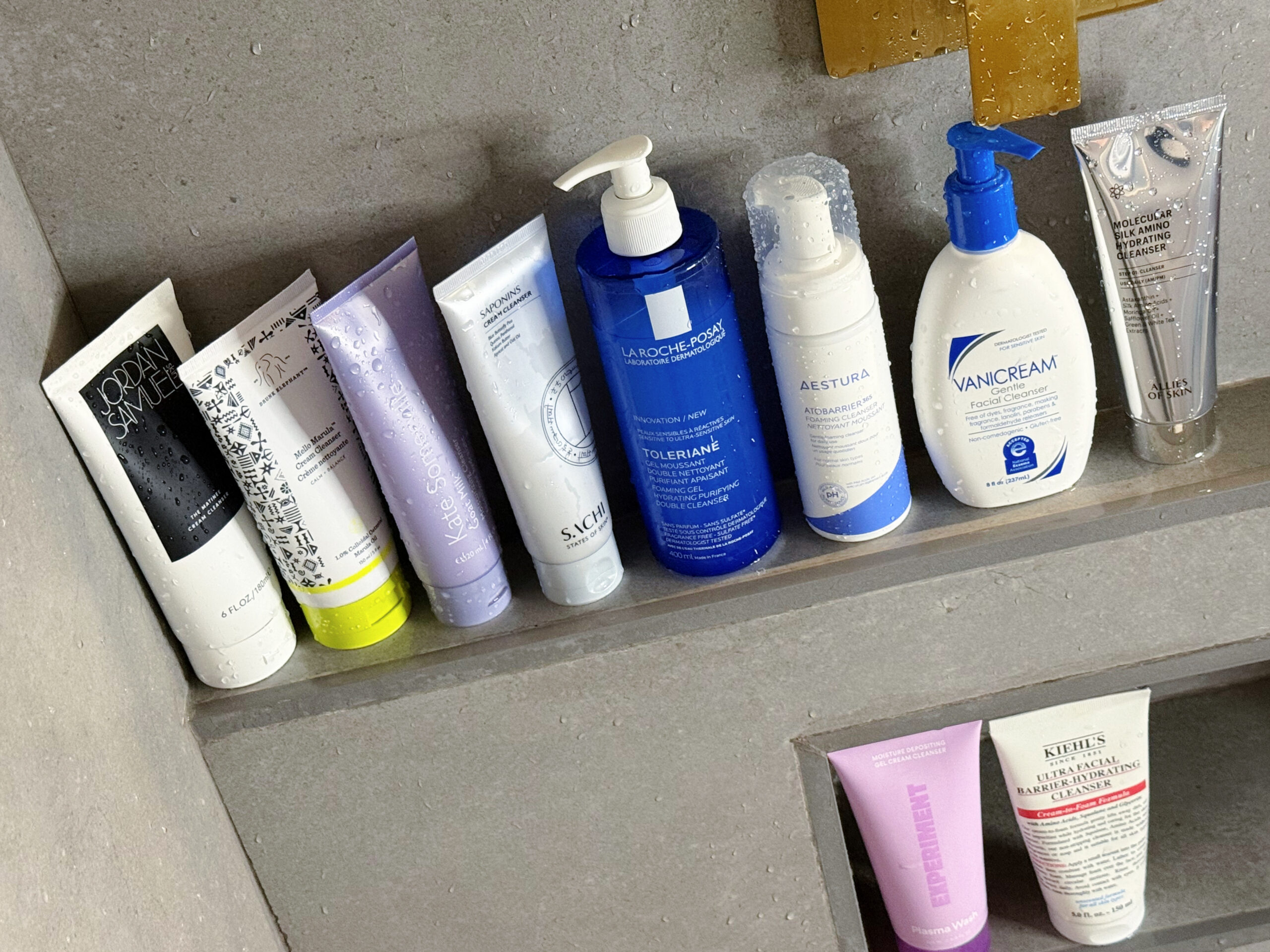
My cleanser preferences shifted accordingly. I still have real affection for a good cleansing gel and always will. But creamy formulas, cream-to-foam, lotion textures, that whole family, have taken over my bathroom shelf. Partly because my skin asked for it. Partly because I wash my face twice a day and a stripping cleanser at that frequency is a fast road to nowhere good.
The picks below work as a standalone morning cleanse and as step two in a double cleanse routine at night. If you are using an oil or balm first to break down SPF and makeup, these finish the job. The morning cleanse is non-negotiable for me. Whatever I put on my face the night before leaves a residue by morning, and skipping the wash almost guarantees pilling when you apply your daytime routine on top of it.
What Should a Face Cleanser for Dry Skin Actually Do?
If someone claims their cleanser lifts and firms their skin, they are either delusional or conveniently leaving out that they are being paid to say that. A cleanser has one job: to clean. Any extra claims are peripheral at best. Since a cleanser is a rinse-off step, it does not stay on your skin long enough to work miracles. Over time though, certain ingredients, enzymes, vitamin C, niacinamide, salicylic acid, can enhance your overall routine. But the baseline expectation is simple. It should clean your skin without stripping it, leave your barrier intact, and get out of the way of everything that comes after.
Here are the cleansers I keep coming back to:
Vanicream Gentle Facial Cleanser
Color me stunned. I have never enjoyed the most-recommended basic washes from Cetaphil and CeraVe, and I did not expect Vanicream to be any different. I was wrong. Yes, it looks a certain way. It is not trying to be anything other than what it is. But I am genuinely floored that Barbara Sturm has not figured out how to repackage it in her signature aesthetic and sell it at a 5000% markup. Coconut-derived surfactants and glycerin deliver a comfortably clean result even on the most sensitive skin, year round, at a price point that makes everything else on this list look expensive. Unless you are allergic to coconut, there is no reason not to own this.
$12.99 (8oz) at ulta.com and iHerb.com
Experiment The Plasma Wash
Many glycerin-forward cleansers solve the hydration problem and create a new one: they either feel slimy or refuse to rinse clean. Experiment gets the balance right. The Plasma Wash is fragrance-free, built around 15% glycerin, foams without drying, and rinses without residue. It also pulls off a genuine double cleanse in a single step, which at $22 is not something you expect. One of the more interesting affordable finds in this roundup.
$22 (150ml) at experiment.com and sephora.com
Aestura AtoBarrier 365 Cleansing Foam
This one is a K-beauty win. The AtoBarrier 365 Cleansing Foam is a self-foaming formula, meaning it pumps out already transformed into the fluffiest, most whimsical lather you will find in a cleanser at any price point. No gel, no cream, just an airy foam that feels like almost nothing on the skin and somehow works completely. I use two pumps on dry skin before stepping into the shower, which gives the ceramide complex, panthenol, and barrier-supporting ingredients a moment to do their work before rinsing. Fragrance-free, low pH, and gentle enough for the most reactive skin. A surprisingly serious formula dressed up in the lightest possible texture.
$21 (150ml) at sephora.com, YesStyle.com and Stylevana.com (use code SHOPBART for 10% off)
Kiehl’s Ultra Facial Barrier-Hydrating Cleanser
I have been using Kiehl’s for over twenty years and their cleansers have always been one of the brand’s strongest categories. This one is the current favorite. A cream-to-foam texture built around sodium cocoyl glycinate, an amino acid derived surfactant that is considerably gentler on the barrier than the sulfates you find in most foaming washes at this price point. Kaolin handles impurity removal, glycerin and squalane put moisture back in, and panthenol soothes as it rinses. The whole thing clears every trace of impurities without that tight, stripped feeling afterward.
$29 (150ml) at kiehls.com, sephora.com, boots.com and SpaceNK.com
Kate Somerville Goat Milk Cleanser
I would struggle picking a favorite Kate Somerville cleanser. The ExfoliKate formula remains my summer go-to. But the Goat Milk Cleanser occupies a different place entirely. Creamy, low-lather, and genuinely nourishing, it leaves skin soft and comfortable without any of the tightness you get from more aggressive formulas. Goat milk protein and honey extract soothe and hydrate as it cleans, and it removes tinted sunscreen without protest. The scent is a rich, milky warmth that will not appeal to everyone but I find it comforting rather than cloying. I also like mixing in a small amount of a powder exfoliant once a week for a gentle resurfacing pass without reaching for a separate product.
$46 (120ml) at sephora.com, ulta.com, lookfantastic.com, spacenk.com
Drunk Elephant Mello Marula Cream Cleanser
The Beste No. 9 never did much for me, which made me skeptical of Drunk Elephant cleansers generally. The Mello Marula changed that. Thick, creamy, and just foamy enough, it delivers a thorough cleanse without any of the stripping. Marula oil and 1% colloidal oatmeal make it particularly well suited to reactive or sensitive skin, and on days when unexpected redness shows up it visibly calms things down rather than aggravating them further. The scent is a faint warmth that reads as oatmeal without being overwhelming. A reliable, unglamorous workhorse of a cleanser in the best possible sense.
$36 (150ml) at drunkelephant.com,sephora.com,ulta.com,spacenk.com,andboots.com
Jordan Samuel The Matinee Cream Cleanser
You know you are in good hands when the ingredient list opens with aloe vera leaf juice. The Matinee is lush, creamy, and low-to-no-foaming, with a texture that is almost clay-like thanks to mineral-rich silt. Allantoin, sesame oil, cucumber, and green tea handle the soothing and hydrating work while the formula cleans thoroughly without disturbing the barrier. Completely fragrance-free and one of the more thoughtfully constructed formulas in the skincare space. My pore detox lite in a tube.
$40 (180ml) at jordansamuelskin.com and cultbeauty.com
Sachi Skin Saponins Cream Cleanser
Guided by Ayurvedic principles and grounded in science, Sachi built this creamy formula around saponins, a barrier-friendly compound that froths and cleanses without the aggressive action of conventional synthetic surfactants. The difference is noticeable. There is a light lather when combined with water, the soothing effect is visible in real time, and the whole experience feels closer to the cleansing step at a spa facial than anything you would expect from your bathroom sink. I reach for it most mornings.
€38 (120ml) at sachiskin.com
Allies of Skin Silk Amino Cleanser
I have a complicated history with fragrance-free cleansers. Most of them feel like doing homework. This one does not. The Allies of Skin Silk Amino Cleanser is a gel-cream hybrid that foams up just enough and leaves my skin in noticeably better shape than it found it. Four types of silk amino acids, astaxanthin from Hawaiian red algae, moringa and safflower oils. The formula was recently updated with a quadrupled silk amino concentration, though if you were expecting a dramatic before and after, the experience is reassuringly consistent. It works as a standalone morning wash and as step two in a double cleanse. A small amount goes further than expected. Use code BART for 20% off.
$41 (3.4oz), $80 (8.5oz) at us.allies.shop
La Roche-Posay Toleriane Foaming Gel Hydrating Purifying Cleanser
I have no idea why La Roche-Posay does not make this one universally available. It showed up as a new launch in Spain last year and has been in my rotation ever since. A gel-to-foam texture, fragrance-free, and gentle enough for the most sensitive skin, it is a different animal from the Toleriane Hydrating Gentle Cleanser that everyone already knows. That one is worth owning. This one is worth hunting down. In my experience it performs best when skin is dehydrated rather than truly dry, which is a useful distinction. It foams generously, removes tinted sunscreen completely, and leaves skin genuinely soft without any tightness. If you come across it, buy it.
£26.50 (400ml) at facethefuture.co.uk as well as boots.com
A note on what did not make the list. Not every cleanser I tested belongs here. The Ordinary Glucoside Foaming Cleanser was low-foaming, barely cleansing, and had a scent I could not get past. The Inkey List Gentle Cleanser was fine in the most damning sense of the word: inoffensive, unremarkable, and easy to forget. If you are drawn to either brand for their price point, both have products worth your time and money. Their cleansers are not among them. The ten picks above are the ones I actually reach for.
Also, I cannot recommend the Clean Skin Club disposable face towels enough. I borderline hoard them.
Affiliate disclosure: This post contains affiliate links. If you choose to purchase through them, I may earn a small commission at no extra cost to you.
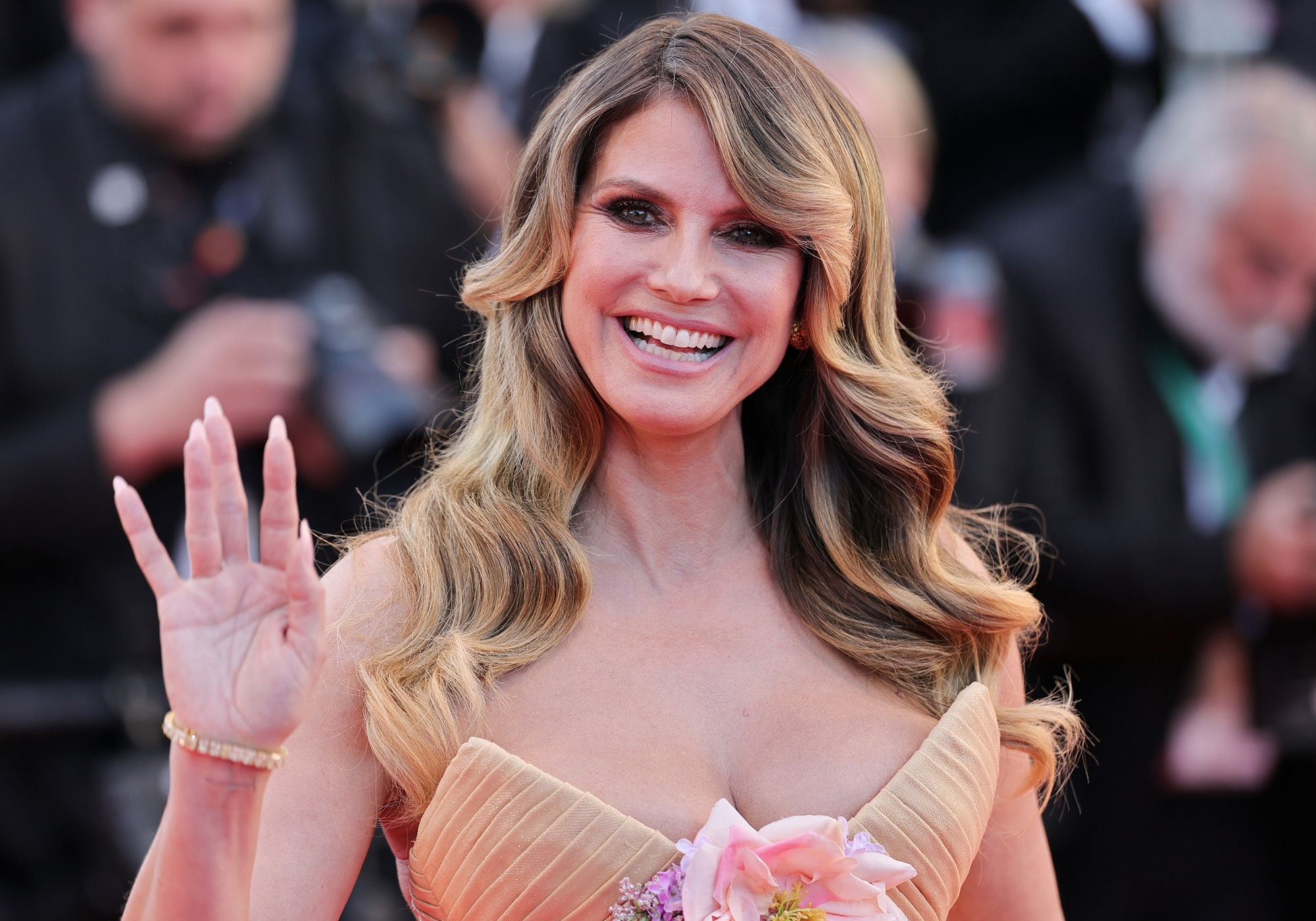
Every morning, somewhere in a sleek, steam-filled bathroom, one of the world’s most recognizable heads of hair gets its daily ritual—and it’s simpler than you’d expect.
In a May 2026 interview with The Strategist, supermodel Heidi Klum’s relationship with her famous lengths is surprisingly no-nonsense. “I have long hair, so I love to do a wet brush in the shower,” she shared, praising the Sheila Stotts Untangle Brush aka the Removal Brush ($39). (The brush’s name works as hard as the brush, apparently.)
Billed as the “original remover of tangles,” the durable plastic handle features a flexible rubber cushion and gentle metal bristles that detangle quickly. One of its signature designs aligns with Klum’s routine, as it also features an intentional drainage hole, making it ideal for shower use. “This brush has steel bristles, and I use it to get the product from my roots all the way to the ends of my hair,” she adds.
Dishing out another strand step we can actually do at home (no glam squad required), Klum went on to detail the next step of her routine: “I’ll put conditioner in my hair and then use this brush to help slide it through all the way. A lot of people are like, ‘Why do you do this? You know, because your roots might get greasy or whatever.’ But I’ve always done it this way.”
Despite the naysayers, Klum says the results are solid. “When I come out of the shower, my hair is smooth—it’s not knotted.” Smooth hair, no knots, $39—consider us sold. If it’s good enough for Heidi Klum’s hair, it’s good enough for ours.
Did you know that most of the most celebrated active ingredients in your skincare are actually derived from petrochemicals?
In this week’s eye-opening episode of Green Beauty Conversations, Formula Botanica CEO and podcast host Lorraine Dallmeier uncovers the uncomfortable truth about fossil fuels in skincare and how deeply embedded they are in the beauty industry.
For this episode, Lorraine is joined by Chris Valencius, Chief Marketing Officer of Evolved by Nature, an innovative biotech company transforming upcycled silk protein into high-performance ingredients designed to replace fossil fuel-derived actives in skincare.
Together, they explore how iconic actives like retinol, hyaluronic acid and ceramides rely on petrochemical-heavy supply chains, even if the final ingredient appears clean and effective. This conversation goes beyond surface-level formulation and dives into the environmental cost embedded deep within ingredient manufacturing.
This isn’t just about exposing a problem – it’s about exploring solutions. And the good news is that change is already happening. Biotechnology and upcycled silk proteins are opening up a new frontier of high-performance, sustainable ingredients designed to replace legacy chemistries and reshape the future of skincare.
If you’re a formulator, brand founder or skincare ingredient enthusiast, this is the conversation that will make you question the status quo – and rethink what “high-performance skincare” really means.
“There’s a whole universe of material inside natural resources. We just need to learn how to unlock it.” — Chris Valencius
In this episode with Chris Valencius, you will hear:
The hidden fossil fuel connection in skincare: Chris reveals that many iconic skincare actives are not inherently problematic themselves, but their supply chains rely heavily on petrochemicals. From solvents to energy-intensive manufacturing processes, the environmental cost is embedded long before the ingredient reaches your formulation.
Why legacy ingredients dominate the industry: Despite innovation elsewhere, skincare continues to rely on decades-old actives like retinol, ceramides and hyaluronic acid. Chris explains that this isn’t due to a lack of awareness, but a lack of viable alternatives that can match performance, scale and cost. This creates a cycle where formulators are stuck using the same tools year after year.
How silk proteins are transforming ingredient design: The conversation explores how upcycled silk cocoons are turned into bioactive peptides that interact with the skin’s natural processes. These ingredients don’t just mimic existing actives – they aim to improve on them by enhancing biological functions like col40972160lagen production and barrier repair.
The science behind next-generation actives: Chris walks through the rigorous R&D process, from identifying amino acid chains to clinical trials and benchmarking upcycled silk-based ingredients against traditional ingredients. This ensures that new biotech alternatives are not only sustainable but also demonstrably effective in real-world use.
Key takeouts include:
Sustainability goes beyond the final ingredient: One of the most important lessons from this episode is that sustainability cannot be judged by an ingredient’s label alone. Many widely accepted actives rely on petrochemical-heavy processes involving hazardous materials and significant energy use. This means the true environmental impact is hidden upstream in the supply chain.
Innovation requires viable alternatives, not just awareness: The industry’s reliance on fossil fuel-derived ingredients persists because alternatives have historically lacked scalability, affordability or proven efficacy. Chris highlights that real change only happens when new solutions meet all three criteria. Without this, even the most sustainability-minded brands struggle to move away from legacy ingredients.
Biotechnology offers a circular path forward: By using upcycled natural materials like silk and transforming them into high-performance peptides, biotechnology can create ingredients that are both effective and regenerative. This approach reduces reliance on fossil fuels while opening up new possibilities for formulation. It represents a shift from extraction to circular design.
Formulators are key drivers of change: While consumers influence trends, formulators ultimately decide which ingredients make it into products. The episode highlights how empowering formulators with better tools can unlock innovation across the industry. When given effective alternatives, formulators are often quick to adopt them.
Industry transformation follows a tipping-point curve: Change may feel slow now, but history shows that once adoption reaches critical mass, transformation accelerates rapidly. Chris compares this to other technological shifts, suggesting that the move away from fossil fuels in beauty could accelerate once momentum builds.
Meet our guest: Chris Valencius, Chief Marketing Officer of Evolved by Nature
Chris Valencius is a biotech marketing leader working at the intersection of science, strategy and brand creation.
As Chief Marketing Officer at Evolved by Nature, he leads the strategy and commercialisation of Activated Silk™ ingredients – peptide-based biomaterials used by global beauty brands to power next-generation products while advancing sustainability and circularity.
Before entering biotech, Chris spent over two decades at leading creative agencies, including Arnold Worldwide, TBWA\Chiat\Day and Goodby Silverstein & Partners, where he worked on global consumer brands.
Today, he specialises in translating complex biotechnology into compelling market opportunities, building global distribution networks, launching new ingredient categories, and helping brands and manufacturers rethink how advanced biomaterials can replace legacy chemistries.
Find out more about Chris and Evolved by Nature:
Related episodes:
Thank you for joining us for this episode of the Formula Botanica Green Beauty Conversations podcast. If you enjoyed listening, please share, subscribe and review this episode on Apple Podcasts, Spotify or Youtube so that more people can enjoy the show. Don’t forget to follow and connect with us on Facebook and Instagram.
FREE TRAINING
Learn how to become an Organic Skincare Formulator
Join over 100,000 other Formulators
By providing your details, you agree to receive additional educational & marketing emails from Formula Botanica, which further introduce our curriculum. Your data is never shared or sold. Read our Privacy Policy.
FREE TRAINING
How to become an Organic Skincare Entrepreneur
Join over 100,000 other Formulators
By providing your details, you agree to receive additional educational & marketing emails from Formula Botanica, which further introduce our curriculum. Your data is never shared or sold. Read our Privacy Policy.
FREE TRAINING
How to become an Organic Skincare Entrepreneur
Join over 100,000 other Formulators
By providing your details, you agree to receive additional educational & marketing emails from Formula Botanica, which further introduce our curriculum. Your data is never shared or sold. Read our Privacy Policy.
Lorraine Dallmeier is a Biologist, Chartered Environmentalist and the CEO of Formula Botanica, the award-winning online organic cosmetic science school. Read more about Lorraine and the Formula Botanica Team.
So far, 2026 has been a year of long-awaited comebacks. Hillary Duff hits the stage after 18 years, Ariana Grande after seven. Fans waited five years for Euphoria season three to air on HBO and two decades for TheDevil Wears Prada 2 to arrive in theaters this May. For makeup lovers, it’s felt like ages waiting for the return of Marc Jacobs Beautythe fashion designer’s beloved makeup brand that shuttered unexpectedly in 2021. News broke of the reboot last year, but it’s been a slow crawl to launch day. I’m not sure about you, but for us beauty editors, the press rollout has felt like 84 years of blind items, occasional red-carpet and runway spottings, and teasers of teasers of teasers.
They say patience is a virtue, and with Marc Jacobs Beauty finally arriving at Sephora on June 1, 2026 (and today on MarcJacobs.com)—I’m feeling particularly virtuous …and, eager to dig into how these products look, feel, and perform. For many beauty editors at Allurewe remember the initial launch fondly, some of us holding onto our Highliners and bottles of Dew Drops despite being fully aware of how expiration dates work.
Now, it’s important to note that Coty, the brand’s parent company, has been very adamant that this new Marc Jacobs Beauty has nothing to do with the original. As Allure contributor Marci Robin noted last week, the press release “would have you believe that the Marc Jacobs Beauty you’re about to meet is the first installment.” That being said, at the launch event in New York City, Jacobs admitted that “we looked at obviously what Marc Jacobs Beauty was before,” when rethinking this new iteration.
For those of us who coveted the brand in the 2010s, part of our excitement around the launch is powered by nostalgia—in my case, for the gel liner and the Omega Bronzer—and we couldn’t help but feel curious about how they compare. So in the name of beauty journalism, I asked my fellow Allure editors, regular contributors, and makeup artists who were fans of the OG Marc Jacobs Beauty—all who still own original items—to try out the new range and get their thoughts. But first, a little bit more about the collection in general.
Is the New Marc Jacobs Beauty the Same as the Original?
No. And I should reiterate that Coty—the same company that creates Marc Jacobs fragrances—promotes this as an entirely new line, completely separate from the original (which was owned by LVMH’s Kendo). “This is not a reissue of the original line; everything has been reimagined: the formulas, the textures, the performance,” a representative of the brand specified over email. And while the product names have a similar cheekiness to them (Gagged, Heart & Fast, Money Shot, to name a few), you won’t see reformulations of the old formulas. The packaging also looks completely different.
One similarity? A heavy focus on eye makeup, which seems to come directly from Jacobs’ personal preferences. When Allure interviewed him about the first Marc Jacobs Beauty launch in 2013, he told us, “I’ve always been very drawn to the eyes,” and it seems that still holds. “It’s the eyes for me,” he told preview guests earlier this month. “I think it’s the place where there’s the most opportunity for experimentation, for expression. It’s what I look at first when I see someone. So, I think the eyes just have all that possibility.”
What Products Are in the New Marc Jacobs Beauty Collection?
The initial June 1 drop introduces seven products, including the Flashes Mascara, available in black, brown, and blue; Drawn This Way Eyeliner, a waterproof gel formula that’s creamy as a kajal and comes in 21 colors and four finishes: matte, metallic, and “magical” (the latter includes glitter and duochromes); Born Star Eyeshadow, 14 individual powder shadows also broken up into matte, metallic, and magical textures; Joystick Blush Stick, a multi-use balms for lips and cheeks that comes in 10 shades; Legally Bronze Bronzer, a buildable powder bronzer in eight shades that range from fair to deep; Money Shot Highlighter Gelwhich comes in just one hue with pink and blue reflects; and finally, the Heart On Lipstick, a hybrid lipstick balm in 15 neutral, pink, red, purple, and “trendy” hues, like electric purple and Barbie pink.
Summer may not officially start for another few weeks, but we all know the summer vibes really begin in late May—early June at the latest. And there’s no better proof of that than the way people’s appearances start to subtly shift: more open-toed shoes, more breezy attire, beachier waves, and a heavier hand with the bronzer. And this summer, it seems one of the most prevalent ways to celebrate the season is with bold, pool-blue eye makeup, as recently and gorgeously demonstrated by Florence Pugh.
Hairstylist Faye Browne and makeup artist Lauren Buckley posted a collaborative Instagram carousel giving fans a behind-the-scenes look at how they dolled up Pugh for Harris Reed’s Ibiza birthday party. Browne gave her waves some summery, salty texture with Hair by Sam McKnight Sundaze Sea Spray by Sam McKnight and topped it off with a vibrant, turquoise Pucci scarf worn as a headband.
Photo: Faye Browne
That scarf seems to have served as the color inspiration for how Buckley approached the acclaimed actor’s eye makeup. After applying a matte, neutral base from the Makeup by Mario Master Mattes Eyeshadow Palette all over her lids and the tragically discontinued MAC Reflects in Transparent Teal in the inner corners, she applied a substantial swipe of Sephora Colorful Waterproof Eyeshadow & Eyeliner Multi-Stick in Baby Blue Matte.
By the time she was at college, saving money to order Melanie Mills Glow products from LA, the foundations of her approach were already in place: skin first always, then color placed where it would do the most to accentuate features. “Everything just naturally sits here anyway,” she says. “I practiced on myself first.” She developed the three-step process for blush: cream to map, powder to set, a final layer of translucent setting powder to build intensity. Her client roster speaks for itself: Raye, SZA, Viola Davis, Kelly Rowland, and Adut Akech, to name a few.
Her influence has reached further than she could have imagined. She describes watching a video recently of a young Black woman applying bold blush and crediting Esther with giving her the confidence to do so, after years of being told the look made her appear clownish. “She fully credited that to me,” Edeme says. “I just started crying.” The woman in the video had decided she liked it and kept doing it regardless of what anyone said. For Edeme, that’s the whole point.
Like Edeme, who moved from Nigeria to the UK when she was younger, I moved from Ghana to a city in the UK where my brother and I were the only Black kids in the school. I was made to feel ugly, and I didn’t fit in. When I started teaching myself makeup at 17, blush felt like a risk; something that would draw attention to a face I had already been told wasn’t good enough. I wore it tentatively at first, then with more conviction. Now, I’m proud to be known for my blush blindness.
Mine is the story of so many Black women, which perhaps explains why, when the controversy broke, so many of us rose up to defend her. Edeme’s influence on beauty culture has given us so much to protect.
There is a strange final stage to influence: when something you popularize becomes so well-known that it’s bigger than you. Edeme is careful to stress that influencers play an important role in introducing looks to new audiences, but her hope is that the industry becomes as quick to celebrate the artists who create as it is to celebrate those who spread. At the end of the day, recognition isn’t just a nicety. It’s how we make sure the people shaping beauty’s visual language are credited (and, ideally, compensated) for their work.
This week, many people have posted in support of Edeme, often without mentioning the ongoing discourse at all: Creators have been sharing videos of themselves “trying Painted by Esther’s iconic blush technique” and MAC Cosmetics published a shoot featuring Olandria wearing the brand’s blush alongside makeup tips from Edeme. Overall, Edeme does feel like the industry, including mainstream media outlets, have done a decent job in giving her her flowers. She adds, however, with characteristic directness: “I think they could do better.”
In the meantime, she’s getting on with it. “My mission before I leave this earth is to spread my gifts,” she says. She describes her goals for what’s next with the same unhurried confidence that seems to animate everything she does: workshops that feel like a party, complete with cocktails and a community of women learning together and lifting each other up. In time, she’d love a creative director role at a brand.
Big Glo is officially treating the entire internet like her personal runway! The Memphis rap queen took to social media to drop a series of jaw dropping photos that have our phones absolutely heating up from all the screenshots. Lounging across a plush charcoal grey velvet sofa, she served absolute feline perfection in a skin tight tortoise print jumpsuit that hugged every single curve beautifully. She paired the show stopping ensemble with a sky high honey blonde ponytail, a flawless soft glam makeup beat, and a tiny black quilted Chanel vanity bag perched right beside her.
Photo Credit: IG @glorillapimp
The absolute highlight of this viral Glorilla Fashion Drop came when she turned around to show off the back of the fit, revealing a stunning low cut design that put her legendary, intricate full back tattoos on display. Of course, she made sure to give us a peek at those iconic red bottom Christian Louboutin heels while striking her angles like a seasoned supermodel. It is so beautiful to watch her confidence skyrocket as she continues to elevate her style, proving that she can hold down the charts and the style world all at the exact same time. We are officially obsessed with this sleek era of Big Glo, and we are immediately hitting save for our next night out wardrobe inspiration!
If India’s Golden Triangle (New Delhi, Agra and Jaipur) are too fast-paced for you, why not visit the state of Kerala on the Malabar Coast? With an expanse of nearly 600 kilometres of coastline, not only is there an abundance of beautiful, palm-lined beaches to visit, there’s also its expansive backwaters, which you can tour via houseboat.
Most importantly (for winter sun-seekers, at any rate), in December, Kerala sees average temperatures of 23°C-31°C.
Cape Town, South Africa
Cape Town is a must-visit for any traveller, boasting sensational a food scene, beaches and, of course, views of Table Mountain.
Siegfried Layda/Getty Images
When visiting Cape Town in South Africa, you are surrounded by breathtaking natural beauty, including the jagged mountainscape, sun-drenched shoreline and abundant marine life (some of which you can see at the famed Two Oceans Aquarium).
But another draw for travellers is its sensational food scene. Known for its world-class seafood and steak, the city has a host of prestigious restaurants. Then there’s the wineries of the region, such as the Vergelegen wine estate and the Oldenburg vineyards, offering tours and wine pairings aplenty.
If you have time, the Garden Route, which runs between the town of Mossel Bay and Storms River, is also well worth it.
In terms of weather in December, Cape Town has highs of 25°C in the daytime.
Barbados, the Caribbean
Of all the Caribbean islands, Barbados is arguably the best all-rounder.