Home Blog Page 31

Jaw Slimming, TMJ Relief & Teeth Grinding – Kate Somerville US

0

Masseter Botox became popular for aesthetic reasons first. A slimmer jawline. Less facial heaviness through the lower face. Better balance and contour without surgery. But for many patients, the cosmetic improvement ends up being secondary.

They come in wanting a softer jawline and realize they’ve also stopped waking up with jaw tension. Headaches improve. Clenching decreases. Their face feels less tight by the end of the day.

That’s because the masseter muscle does more than shape the face. It’s one of the primary muscles involved in chewing and jaw clenching, and in patients who grind their teeth or carry chronic tension in the jaw, it can become significantly overdeveloped over time.

Masseter Botox, sometimes referred to as TMJ Botox, works by relaxing this muscle strategically. The result is both functional and aesthetic: reduced tension and grinding, along with a slimmer, more tapered lower face as the muscle gradually decreases in size.

If you’re considering masseter Botox for jaw slimming, teeth grinding, facial tension, or TMJ-related discomfort, this guide covers how the treatment works, what realistic results look like, and what to know before booking.

What Masseter Botox Actually Does

The masseter sits at the angle of the jaw and becomes active every time you clench, chew, grind, or tense your jaw. In some patients, the muscle becomes enlarged over time, either genetically or from chronic overuse. That bulk can widen the lower face, contribute to jaw tension, and place constant strain on the joint itself.

Masseter Botox works by placing injections directly into the muscle to reduce its activity. A less active masseter gradually decreases in size. And a muscle that isn’t constantly overworked stops generating the tension that drives grinding, soreness, and headaches.

It’s worth being clear about what the treatment doesn’t do: it doesn’t remove fat or tighten skin. The change in jaw appearance comes entirely from reducing muscle activity and bulk.

For jaw slimmingthe effect is gradual. Visible softening through the lower face typically becomes noticeable around the six to eight week mark, as the muscle slowly decreases in size. The best results look refined rather than dramatic, a jawline that appears slimmer and more balanced while still looking natural to your features. The treatment works best when lower face width is being created by muscle rather than bone structure or facial fat.

For TMJ relief, the change is more functional than visual. Chronic clenching and teeth grinding place constant strain on the jaw joint, contributing to morning soreness, tension headaches, tooth sensitivity, and facial fatigue. By reducing the muscular force driving that tension, masseter Botox interrupts the cycle. Most patients notice less jaw tightness on waking, fewer headaches, and reduced awareness of clenching throughout the day, usually within the first one to two weeks.

One important distinction: masseter Botox works differently than a night guard. A night guard protects teeth from grinding damage but doesn’t address the muscular tension behind the clenching. Many patients use both.

How Much Does Masseter Botox Cost?

Masseter Botox is priced by unit. Because the masseter is a larger and stronger muscle than areas like the forehead or crow’s feet, it requires more product, most patients need between 20 and 40 units per side depending on muscle size, strength, and treatment goal.

At Kate Somerville Clinic, Botox is priced at $16 per unit. Patients with stronger masseters from chronic clenching or grinding typically require higher dosing than those seeking more subtle cosmetic refinement. The right amount is determined at consultation by assessing the muscle at rest and while clenching.

Masseter Botox also requires precise placement and dosing strategy. The goal is to soften tension and refine the jawline without creating imbalance or affecting normal facial function, which is why injector experience matters as much as the product itself.

For patients interested in long-term maintenance, the DediKate Membership offers savings on treatments and injectable services over time.

What to Expect Before, During, and After

Before

Your provider will assess muscle size, clenching patterns, facial proportions, and whether your goals are primarily aesthetic, functional, or both. Avoid blood thinners — aspirin, ibuprofen, fish oil, and alcohol — for several days beforehand to minimize bruising.

During

The appointment takes 15 to 30 minutes. Your provider identifies the masseter by having you clench your jaw, then places a series of small injections directly into the muscle on each side. Most patients describe the sensation as brief pressure or a quick pinch.

After

There’s little to no downtime. Most patients return to normal activity immediately. Avoid strenuous exercise and excessive jaw activity — gum, tough foods, prolonged chewing — for the first 24 hours while the Botox settles.

TMJ relief typically begins within one to two weeks. Jaw slimming develops more slowly, with the most noticeable refinement appearing around the six to eight week mark.

How Long Does It Last?

Most masseter Botox treatments last three to six months, though longevity varies depending on muscle activity, metabolism, and treatment goal.

TMJ relief tends to arrive first and fade gradually as muscle activity returns. Jaw slimming can appear to last slightly longer because the visual change depends on gradual muscle reduction rather than the immediate relaxing effect alone; many patients see peak slimming around the two to three month mark.

Patients with very active masseters or severe bruxism often metabolize treatment faster. With consistent maintenance, many find that results last longer over time as the muscle becomes less dominant overall.

Frequently Asked Questions

How many units does masseter Botox require?

Most patients need 20 to 40 units per side depending on muscle size and treatment goal. Providers typically prefer to start conservatively and adjust at follow-up rather than over-treat immediately.

What do before and after results actually look like?

For jaw slimming, the lower face gradually appears softer and less square over several weeks, refined rather than obvious. For TMJ patients, the improvement is more functional: less morning soreness, fewer tension headaches, reduced jaw fatigue, and less awareness of clenching throughout the day.

Is masseter Botox the same as Brotox?

Brotox is simply a casual term for Botox in male patients. Masseter Botox is especially popular among men because it addresses jaw tension and lower-face heaviness without creating an overdone or feminized result. The treatment is the same, dosing and goals may differ slightly based on facial structure.

Can I exercise after masseter Botox?

Most providers recommend avoiding strenuous exercise for the first 24 hours, along with excessive chewing or jaw activity for the first couple of days while the Botox settles into the muscle.

Is masseter Botox safe long term?

Yes. The safety profile is well established. Repeated treatment does not permanently damage the muscle. Over time, many patients experience gradual reduction in muscle size, which is the intended outcome for both slimming and TMJ treatment. Normal chewing function is preserved because the muscle is relaxed, not disabled.

How is masseter Botox different from a night guard?

A night guard protects teeth from grinding damage but doesn’t address the muscular tension driving the clenching. Masseter Botox targets the muscle activity itself, which is why many patients use both rather than choosing one over the other.

A More Strategic Approach to Masseter Botox

The best masseter Botox results come from understanding facial structure, muscle activity, jaw movement, and how to balance functional relief with aesthetic outcome.

At Kate Somerville Clinic on Melrose Place, every consultation is tailored to your anatomy, your symptoms, and your goals, whether you’re seeking TMJ relief, jaw slimming, or both.

Book Your Masseter Botox Consultation

The Wella Company appoints Jing Ulrich to Board of Directors

0

THE WHAT? The Wella Company has appointed global financial executive Jing Ulrich as a non-executive director on its Board of Directors, strengthening the company’s leadership as it pursues its next phase of growth.

THE DETAILS Ulrich brings more than 30 years of international financial services and board-level experience, including 21 years in senior leadership roles at J.P. Morgan, where she most recently served as Vice Chair of Investment Banking. She currently sits on the boards of adidas and Swarovski International Holding and serves on the advisory committee of Rolls-Royce Motor Cars. Her previous board and advisory roles include Ermenegildo Zegna, GlaxoSmithKline, Bosch, CapitaLand and L Catterton Asia. Throughout her career, Ulrich has advised companies, investors and sovereign wealth funds on capital markets, mergers and acquisitions, strategic growth initiatives and international expansion.

THE WHY? The appointment is intended to strengthen Wella’s board with expertise in global business strategy, consumer and luxury markets, corporate finance and international growth, supporting the company’s ambitions across its hair, nail and beauty technology portfolio.

Source: businesswire

7 Ways to Wear Smooth Fabrics When You Suit Textured Fabrics — Inside Out Style

0

twitterpinterestlinkedinmail

A lovely reader recently wrote to me with the following conundrum: “I have smooth, wavy hair, with textured skin and have read your post about how to wear texture when you’re naturally smooth, but as I’m the opposite, I wanted some tips on how to wear smooth fabrics when you’re textured.”

Ways to Add Smoothness to Your Outfits When You Are Textured

If this sounds like you, either your hair is coarser, wavier, curlier, or more textured in its cut, or your skin is no longer as smooth as it was as a child. How do you wear smooth fabrics without that contrast between fabric and person becoming the loudest thing in the room?

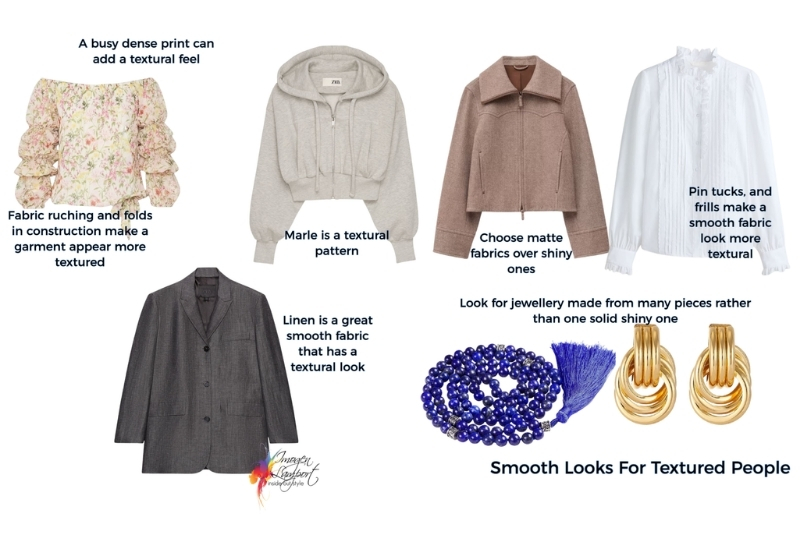
1. Wear Busy or Dense Prints and Patterns

Print and pattern break up a surface.  Just like the waves of your hair or expression lines earned by years of wisdom, break up the smoother surface of your features.

Think animal prints, florals, paisley, abstract prints, digital prints – the choices are endless. The style of prints and patterns is very much a personal preference.   If you’re more feminine, you may prefer a floral, polka dot, or paisley.  Relaxed and casual may like a horizontal stripe or check.  Creative, think wearable art, whimsical or abstract prints.  Love some drama?  Add some animal print.

The style of print may also relate to your colouring.  High value contrast prints (light and dark) will suit those with darker hair and lighter skin, whilst lower value contrast prints suit those who have more similar depth of hair, eyes and skin.  I’ve got lots of tips on choosing prints to suit your contrast here.

busy dense prints give the illusion of texture (1)

Scale matters too. Larger prints suit taller or more generously scaled women. Smaller, denser prints work better for petite or finer-boned frames. Getting the scale wrong is the most common print mistake, and it’s an easy fix once you know about it.

2. Wear Textural Prints

This is a clever workaround: a fabric that looks textured even when it isn’t.

Marle knits are created from a variegated yarn, which changes colour, most typically seen in sportswear – think that grey sportswear fabric you’ll see in so many track pants and sweatshirts. Even though the surface of the fabric is smooth, the appearance is of a texture.

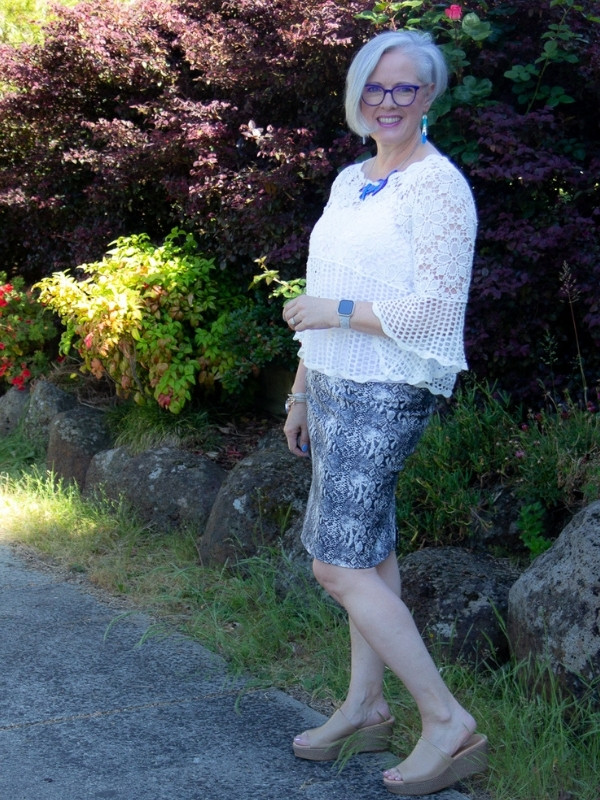
Snakeskin prints are also another great version of a textural print.

Snakeskin is a textural print

Burnout fabrics work similarly. The pattern is created by dissolving parts of the weave, leaving a sheer and opaque contrast that gives a textural impression without the actual physical bulk.

3. Avoid Smooth, Shiny Fabrics

Not all smooth fabrics are equally tricky. A heavy crepe and a liquid satin are both technically smooth, but they behave completely differently on a textured person.

The problem with shiny fabrics is that they reflect light, which amplifies the contrast between the fabric’s smooth surface and your textured skin or hair. A smooth-matte-heavy fabric (crepe, ponte, most wools and cottons) is far more forgiving than a smooth-shiny-light one (satin, charmeuse, tissue-weight silk).

Choose matte over shiny wherever you can. Your skin will thank you by not being the first thing anyone notices.

7 Ways to Wear Smooth Fabrics When You Suit Textured Fabrics — Inside Out Style4. Use Colour to Bridge the Gap

This one surprises people. Colour itself can do a lot of the heavy lifting.

When the colour of your outfit is close to your own colouring, whether your skin tone, your hair, or both, the contrast between you and a smooth fabric reduces. There’s less visual “jump” between the texture of you and the smoothness of what you’re wearing. This is the camouflage principle, and it’s quietly very powerful.

Colour blocking and tonal dressing with slight variation also create visual interest that distracts the eye from the smoothness of the fabric. A smoothly busy outfit, if you will.
5. Layer Smooth and Textured Pieces Together

You don’t have to choose one or the other. Layering is one of the most effective strategies for a textured person because it creates complexity at the edges and transitions between garments.

A linen jacket over a smooth blouse. A denim shirt under a fine-knit jumper. A bouclé cardigan over a silk camisole. The eye reads the overall outfit as textured, even when individual pieces are not. The transitions between layers do all the work.

6. Look for Textural Details in the Construction

If the fabric itself is smooth, let the construction add the texture.

Frills, gathering, pin tucks, smocking, ruching, and pleats all introduce visual interest to a smooth surface. They create shadow and dimension without adding a different fabric. A plain cotton poplin shirt with ruching at the yoke is a completely different proposition to a plain, undetailed one.

gathers and frills give the illusion of texture

Gathers and frills give the illusion of texture

7. Focus on the Zone Near Your Face

This is the most important zone for a textured person, and the one most often overlooked.

Your face is where your skin texture is most visible. So what you put near your face matters most. A smooth, unbroken expanse of fabric running all the way up to your chin draws the eye straight to the contrast.

Textured accessories do an enormous amount of work here. A scarf in a woven or crinkled fabric, a necklace with interesting beads or irregular shapes, earrings with dimension, a collar in bouclé or a soft cowl neck, even braided or woven bag handles, all create a visual bridge between you and the smoother fabric of your outfit. The transition stops being abrupt.

Suede, unpolished leather, brushed metals, and woven bags all add texture near the body without requiring you to change what you’re wearing. Patent leather and highly polished metal do the opposite, so it’s worth being mindful of finish in your accessories as much as your clothes.

The underlying principle across all of this is the same: you’re creating visual harmony between your natural texture and the smoothness of you

Want More Tips to Improve Your Style?

7 Steps to Style gives you the complete style education you need to choose all the elements of clothing, colouring (including a personal colour analysis) and accessories that work with your individual personality and features. Find out more here.

7 Ways to Wear Smooth Fabrics When You Suit Textured Fabrics

Facebooktwitterpinterestlinkedinmail

Knee-high Boots For Summer? It Doesn’t Get Chicer Than That

0

I can already hear you asking: Is it really knee-high boot weather? My answer is a definitive yes, because any weather can be perfect knee-high boots, as long as you’re wearing the right outfit.

As seasons change, so do our core wardrobe staples. And while it’s safe to say putting your puffer jacket to the back of the wardrobe is a smart move, there are certain winter pieces that can work surprisingly well with your summer wardrobe – knee-high boots are one of those. But who do you style them for summer? Well, it’s all about embracing the contrast and staying away from clichés.

A far cry from pumpkin spice latte-adjacent outfits featuring skinny jeans and leggings tucked into the boots, their look for summer 2026 unearths ideas that feel more unexpected. A scroll through street style photos from the past few weeks reveals a whole array of styling options that bring out different sides of knee-high boots, appropriate for the unpredictable summer weather. Yes, they can amp up a midi skirt to look youthful, or they can make a mini dress feel more chill and appropriate for daytime.

Valentina Frugiuele

Image may contain Clothing Coat Jacket Footwear Shoe Person Adult Accessories Belt Bag Handbag and High Heel

Christian Vierig

There are also quite a lot of myths around knee-high boots and the way they frame their wearer’s legs. People tend to claim they aren’t the most flattering boot height but, when styled with the right pieces, they can indeed create visual harmony via bold proportions. Pair them with a pair of culottes or long jorts and they add a sense of playfulness. In fact, we’re here to claim that knee-high boots can work with any bottom, trousers to jeans, mini, midi or even maxi skirts, and beyond. They will also play well with socks and hosiery poking out of the shaft, introducing a layer that offers comfort but doesn’t overwhelm the silhouette.

Whether your personal style leans more preppy, sporty, classic, or anything in between, there are endless iterations of knee-high boot styles that fit the latest fashion trends and offer a new take on your existing summer wardrobe.

Ahead, find seven outfit ideas and get inspired on how to wear knee-high boots this summer, plus additional styling tips and tricks to achieve the looks for yourself using items in your closet.


1. With a mini dress

Image may contain Molly Ephraim Blazer Clothing Coat Jacket Dress Footwear Shoe Sleeve Long Sleeve and Skirt

Valentina Frugiuele

Ingredient Spotlight: Betaine – Woohoo Body

0


style=”;”
/>

Move over hyaluronic acid. Step aside glycerin. Today we’re shining a spotlight on one of the hardest-working ingredients hiding in some of your favourite Woohoo products: Betaine.

Betaine is a naturally occurring amino acid derivative found in sugar beet, spinach and other plants. But don’t let its humble origins fool you. This unsung hero is one of the beauty world’s most impressive multitaskers, supporting hydration, smoother-looking skin, softer-feeling hair and a healthy-looking skin barrier overall.

Here’s why your skin and hair will be obsessed with it:

It helps keep skin hydrated

Betaine is a naturally occurring component of your skin’s Natural Moisturising Factor (NMF), a collection of substances that help your skin maintain healthy hydration levels. As an osmolyte (not to be confused with a Star Wars character), Betaine draws moisture in and helps it stay where it’s needed, so your skin can look plumper, softer and less like a sad little cracker. Unlike heavier ingredients that sit on top of the skin, Betaine helps hydrate the skin’s upper layers without leaving behind a greasy or coated feeling.

It helps support a healthy-looking skin barrier

Your skin barrier has one very important job: keeping moisture in and environmental stressors out.

Research suggests Betaine may help support skin barrier function by helping skin maintain healthy water balance. Your skin barrier works best when skin cells are well supported and sitting snugly together. When everything is functioning as it should, moisture is less likely to escape and skin is better equipped to cope with everyday stressors like weather, air conditioning, over-cleansing and pollution.

It helps skin look more youthful

Here’s the thing about healthy, hydrated skin: it tends to look better too. When moisture levels are supported, skin often appears smoother, radiant and more youthful. Fine lines caused by dehydration can appear softer, while rough or tight-feeling skin tends to feel more comfortable.

No, Betaine won’t make you look like a teenager again (and honestly, who wants to relive those years?), but by helping skin stay hydrated, it can support a more rested-looking complexion.

Fun fact: one of Betaine’s lesser-known talents is improving the feel of skincare formulas themselves. It helps reduce tackiness and greasiness, giving products a silky, lightweight finish on the skin. Which means you get the hydrating benefits without feeling like you’ve dunked your face in cooking oil.

It helps support stronger-feeling, healthier-looking hair

Hair is made primarily of a protein called keratin, which gives each strand its structure, strength and elasticity. One of Betaine’s unique qualities is its natural affinity for keratin, meaning it interacts particularly well with the proteins that make up your hair. Studies have also detected measurable levels of Betaine in human hair and explored the possibility of adding Betaine back to the fibre through cosmetic products such as shampoos. In a nutshell, it can help hair feel softer, smoother and full of vitality, without weighing it down.

It helps tame frizz and improve manageability

If your hair has a habit of frizzing up like a mad scientist, Betaine may become your new best mate. Betaine works as a lightweight conditioning ingredient, helping to smooth the outer layer of the hair, known as the cuticle. When the cuticle lies flatter, hair generally feels smoother, looks shinier and is less prone to frizz and flyaways. It can also help reduce static and improve both wet and dry combing, making knots and tangles easier to manage. Less wrestling with your hairbrush, more good hair days.

It helps hair hold onto moisture

Just like it does for skin, Betaine helps support healthy moisture levels in the hair. As a humectant, it attracts and retains hydration, helping strands feel softer, smoother and more conditioned. This is especially helpful for hair exposed to heat styling, colouring, harsh weather or regular washing that needs an extra dose of nourishment.

Where you’ll find Betaine in Woohoo

If you’re keen to experience this little hydration hero for yourself, you’ll find Betaine working its magic in:

Betaine might not have the celebrity status of some skincare ingredients, but it’s one of the most over-achieving performers in the beauty world.

Hydration. Barrier support. Smoother-looking skin. Softer-feeling hair. Less frizz. More manageability… the list goes on.

That’s a lot of boxes ticked for one humble ingredient that started life in a sugar beet.

Not bad, Betaine. Not bad at all.

SHOP BETAINE-POWERED FAVOURITES

Refy Water Bronzer + Blush Review

0

Refy launched new cheek products with one of the most innovative formulas I’ve tried this year. I was able to get an early preview of this a month ago and am thrilled I can finally share this!

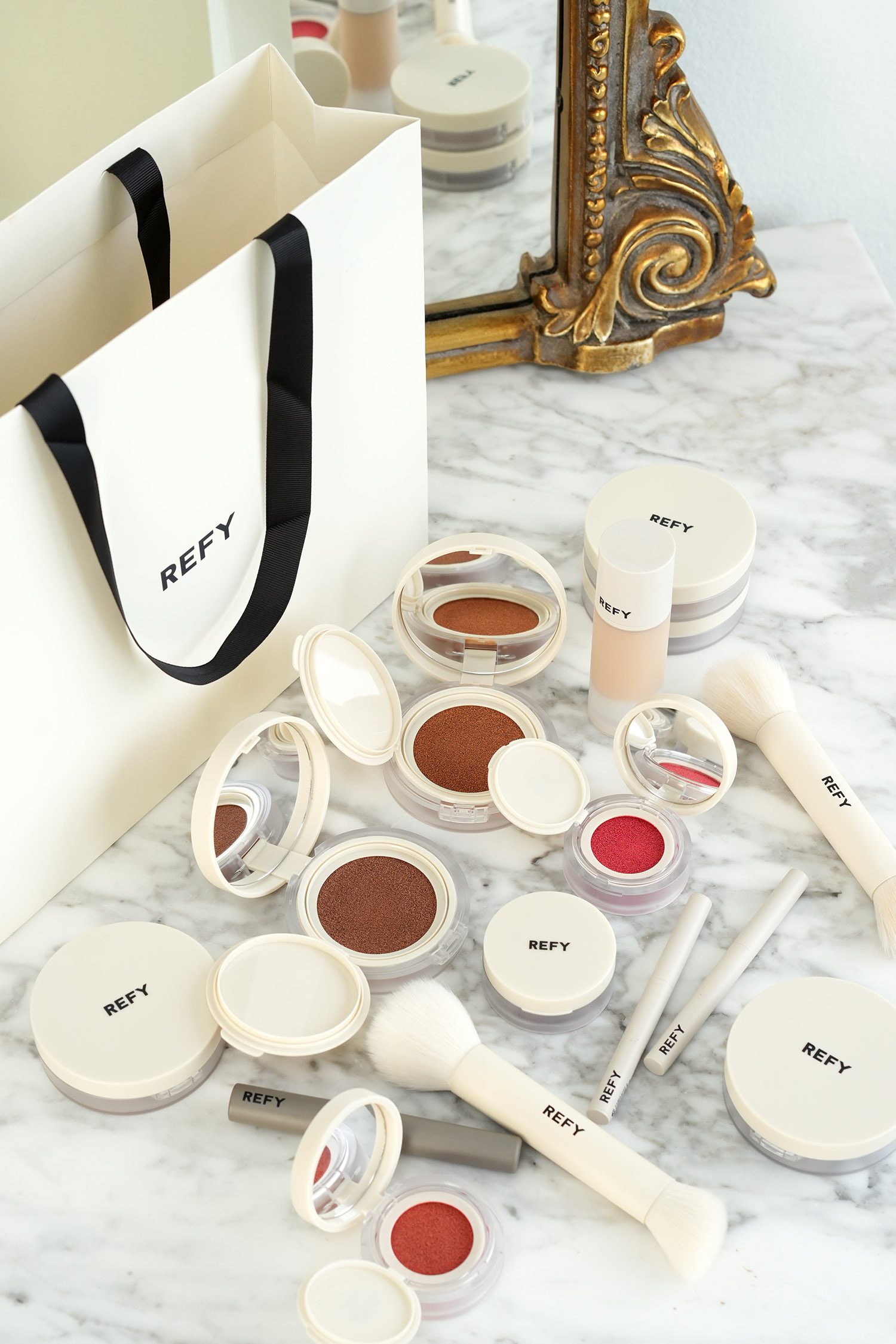
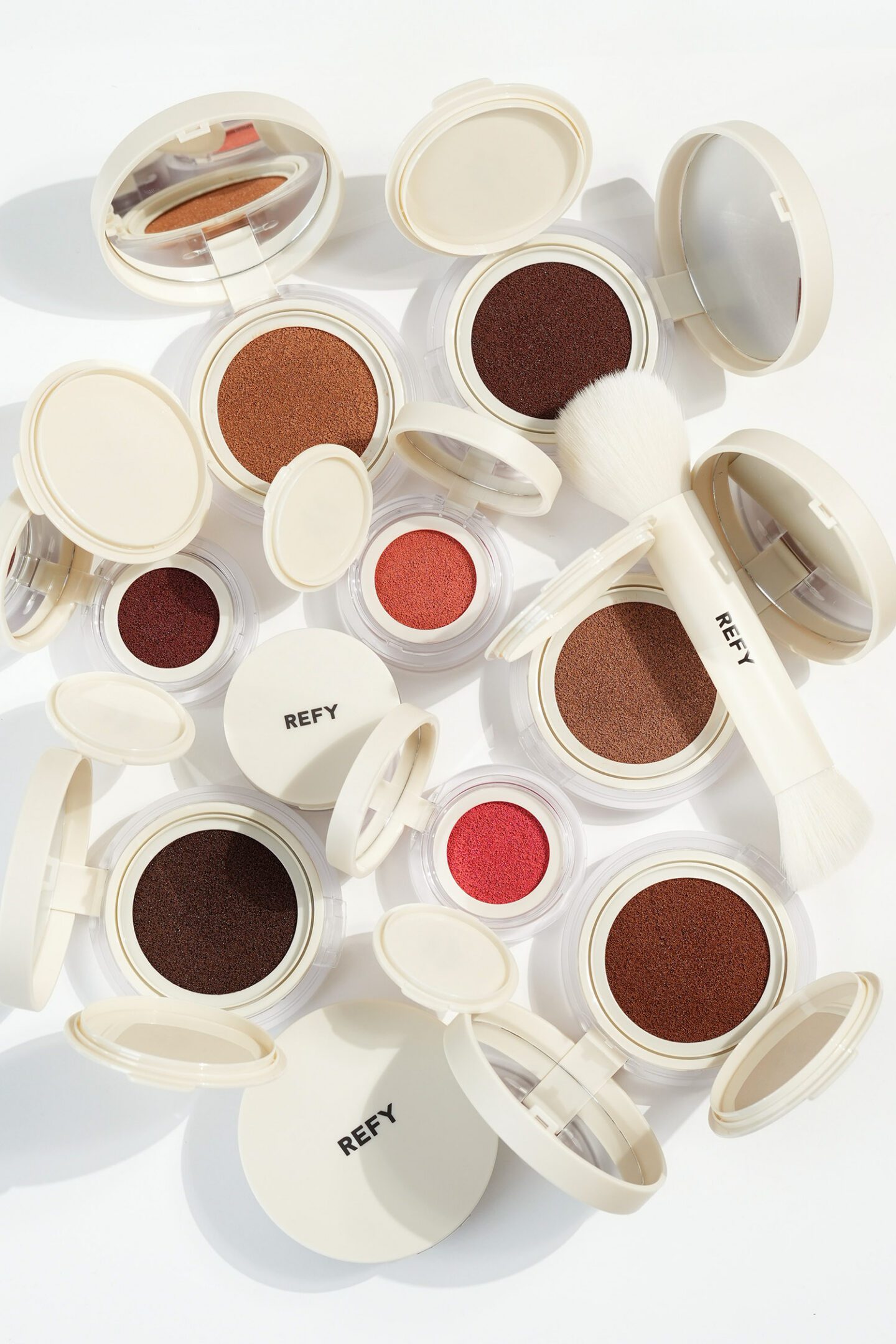
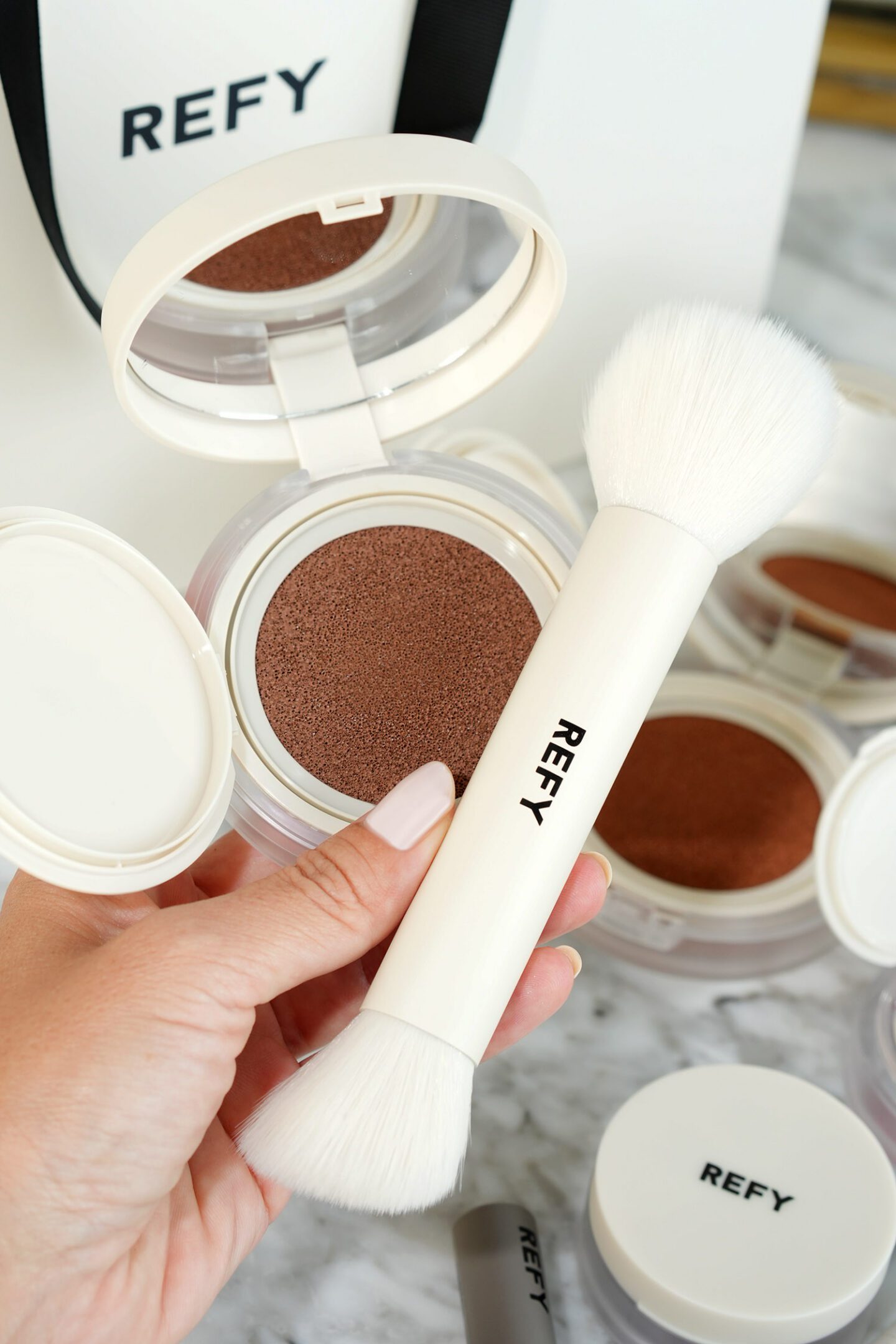
They just dropped their new Water Bronzer ($30) and Water Blush ($24) in a cushion format which I feel is a completely different take on blush and bronzer compared to anything currently in my collection. They also created their Duo Brush 2.0 for Liquid Blush and Bronzer ($26) to go with this launch.

Refy Water Bronzer + Blush Review

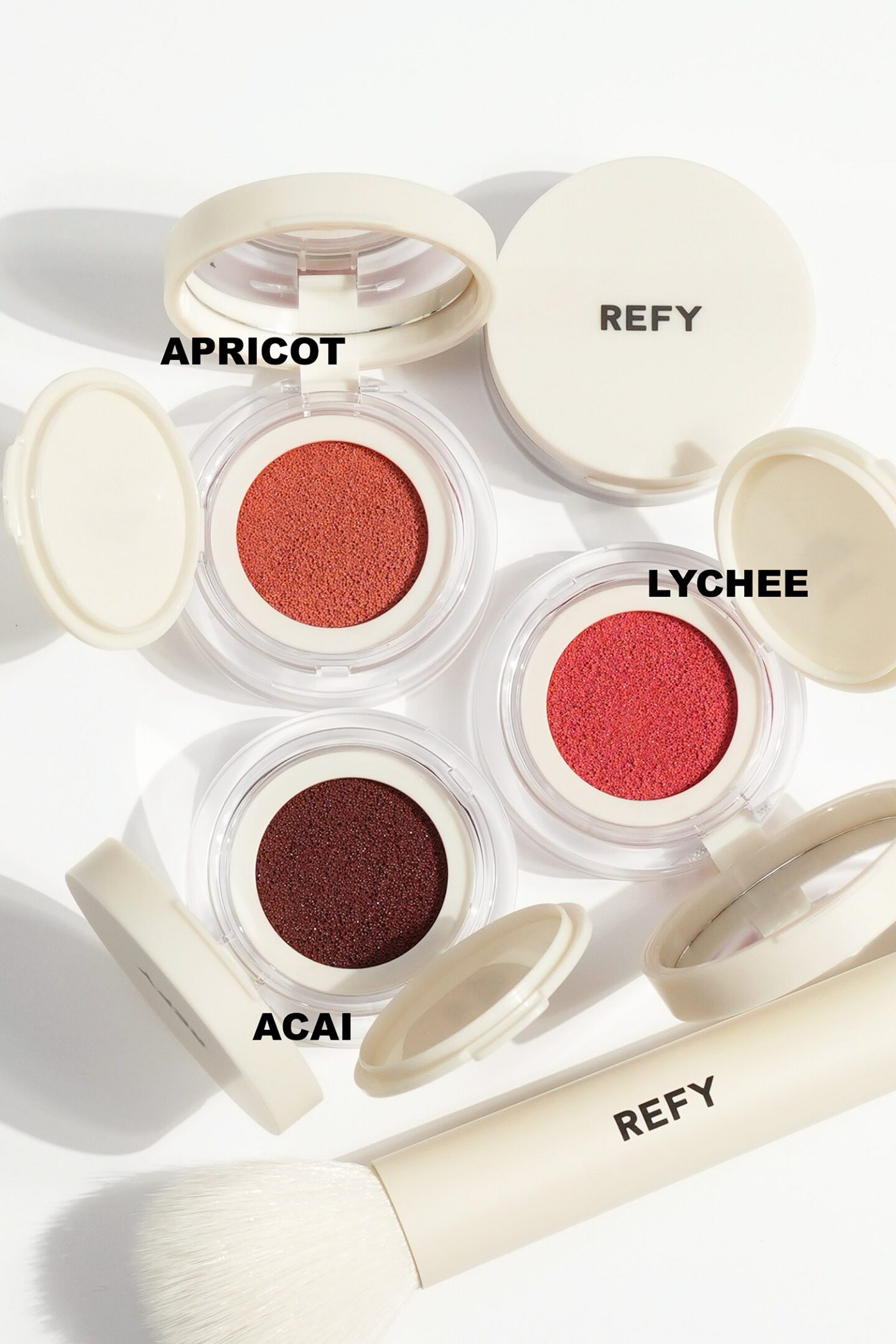
Inspired by K-beauty cushion technology and made in South Korea, these formulas are housed in a cushion compact that delivers sheer yet buildable color with a fresh, skin-like finish. These are water-infused color cushions suspended in a sponge which actually makes it easier to apply compared to a pump dispenser format.

I think the tones are beautiful. I hope they will expand the shade range to more blush colors eventually because the colors are all so stunning.

Refy Water Bronzer and Brush Duo

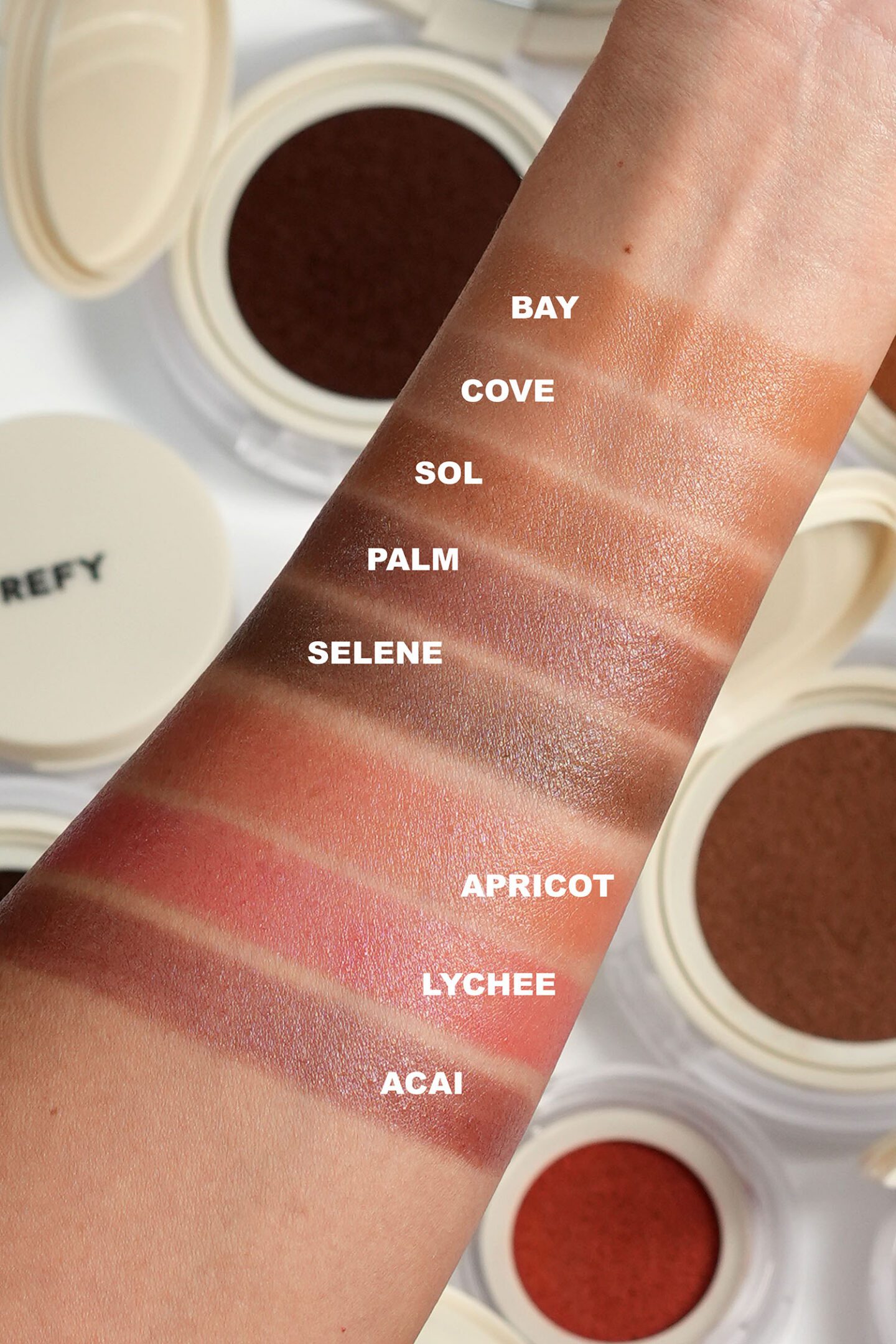
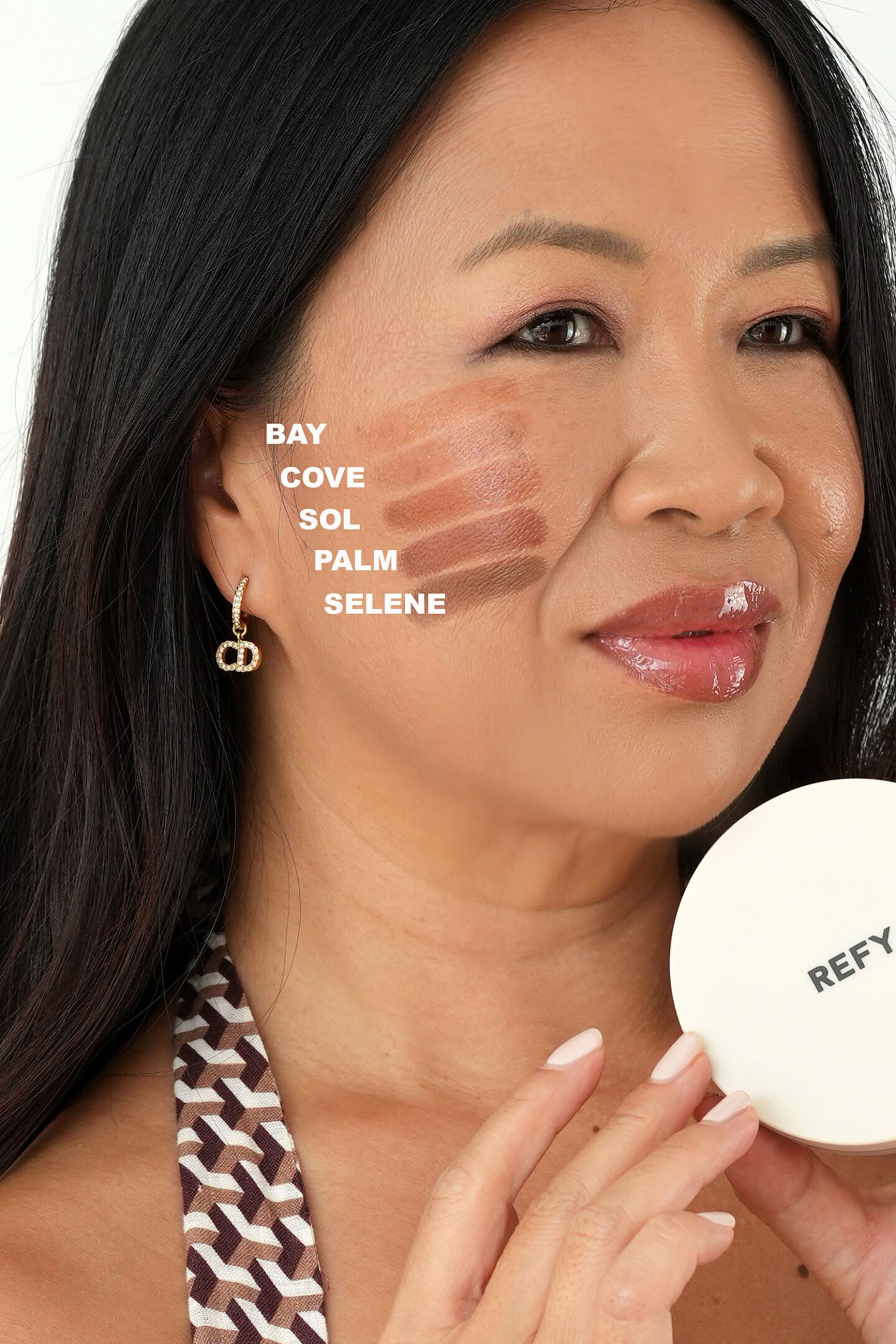
Here’s a look all the shades swatched:

Refy Water Bronzer + Blush Review

Water Bronzer

These days, it’s rare for a new bronzer formula to genuinely excite me. So many of you ask for bronzer recommendations over the years and until recently, there haven’t been many that truly stood out to me. For the longest time I relied on my tried and true from Chanel (which I still love, but unfortunately was discontinued). This year, however, a few brands have introduced formulas that feel genuinely innovative.

Refy Water Bronzer

Refy Water Bronzer

I particularly loved the recent bronzer launches from Dior and Westman Atelier. Both brought something unique to a category that can often feel oversaturated. The Dior formula impresses me with its exceptional wear time, while the Westman Atelier bronzer has one of the best dry-downs I’ve experienced in a cream formula.

The new Refy Water Bronzer is another launch that has earned a spot on that short list. The formula feels fresh and different from what’s currently on the market, and the finish it creates on the skin is absolutely beautiful.

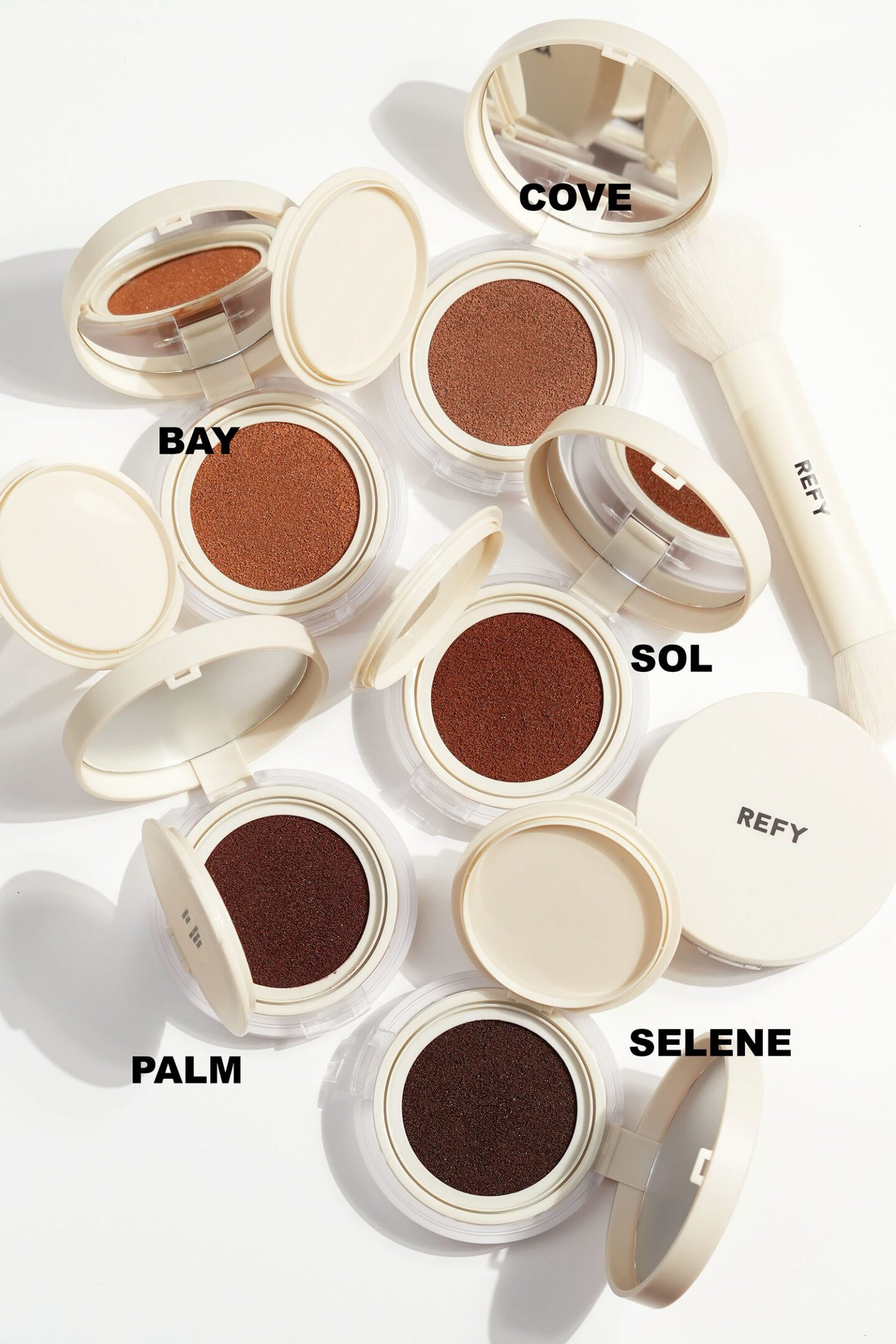
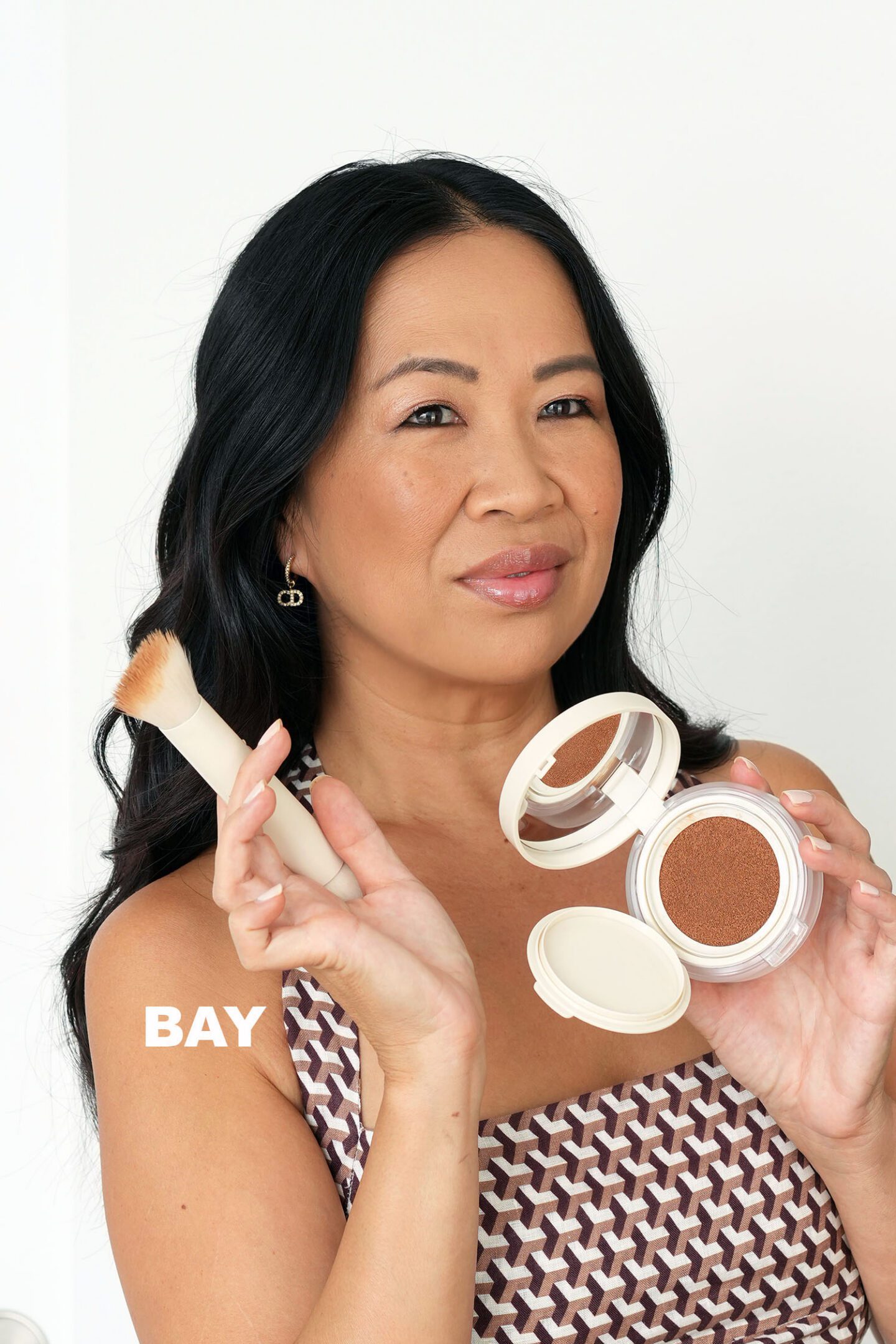
  • Bay is a light warmer golden bronze
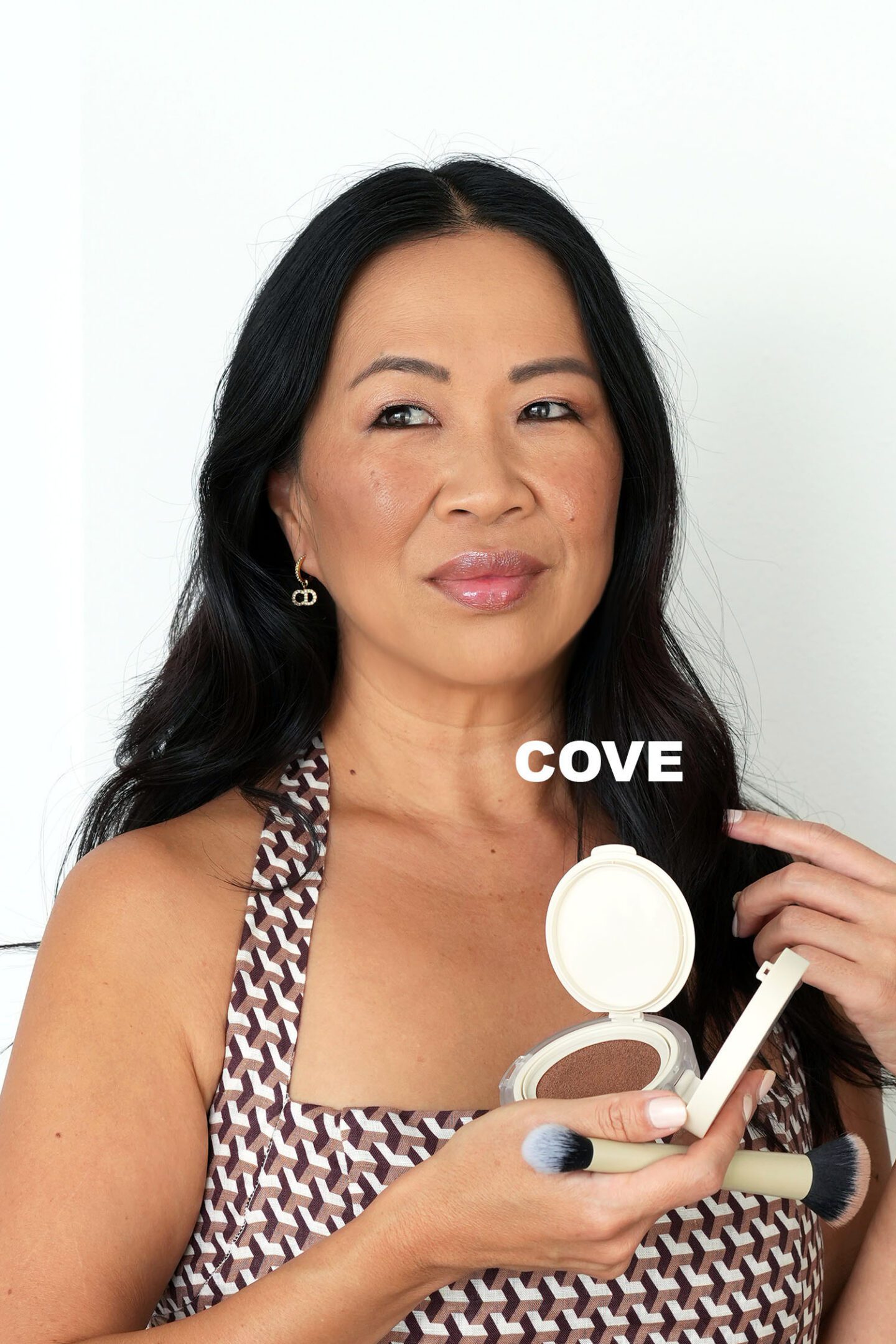
  • Cove is a cool neutral bronze
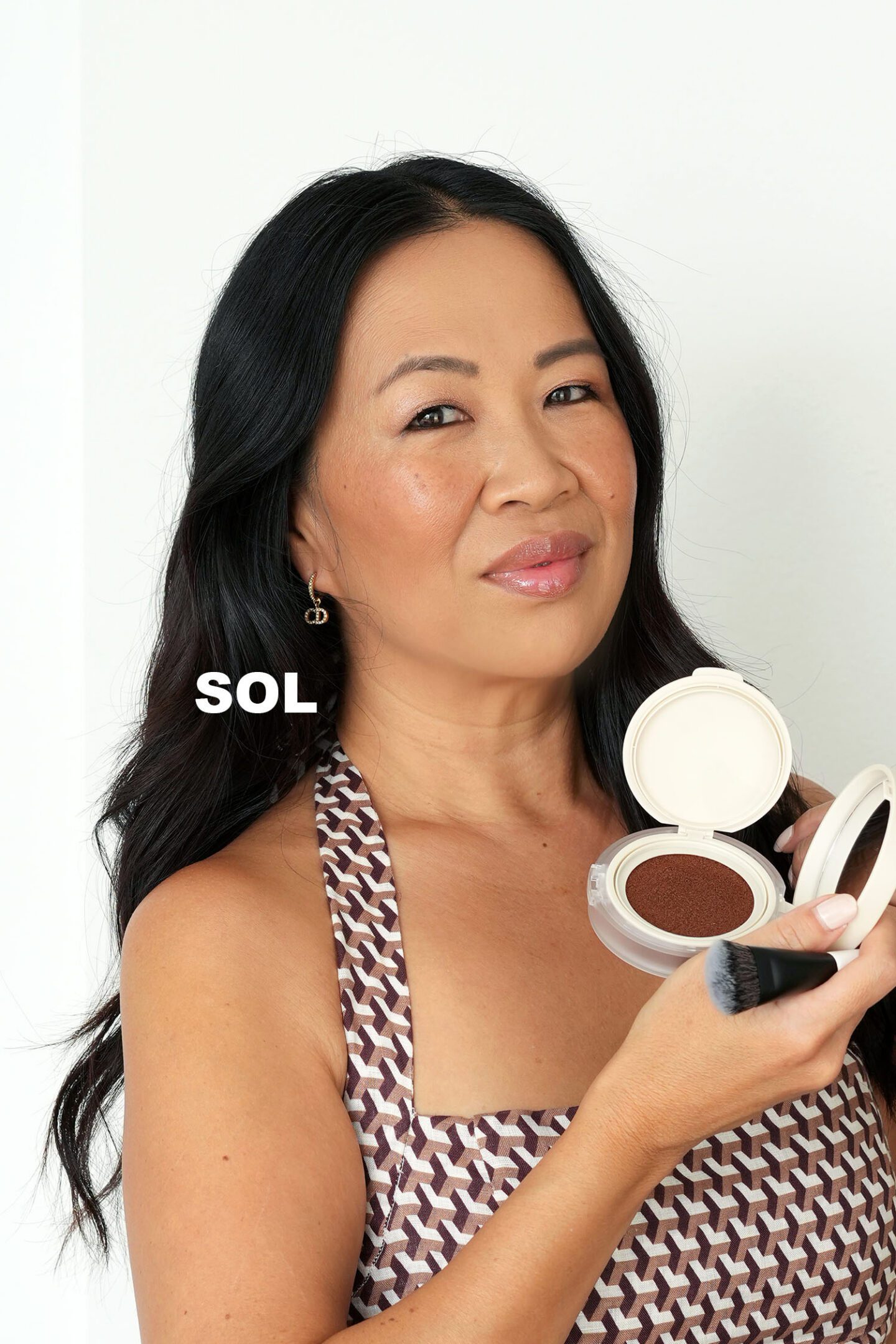
  • Sol is a reddish bronze
  • Palm is a deep bronze
  • Selene is the deepest bronze

Refy Water Bronzer Bay

Refy Water Bronzer Cove

Refy Water Bronzer Sol

I can pull off the lightest 3 shades. I think my favorite is probably Cove even though it pulls more neutral-cool on me. I also really love the other two. Bay is the perfect golden bronze and Cove gives that slightly sunburnt bronzed glow.

Water Blush

Refy Water Blush

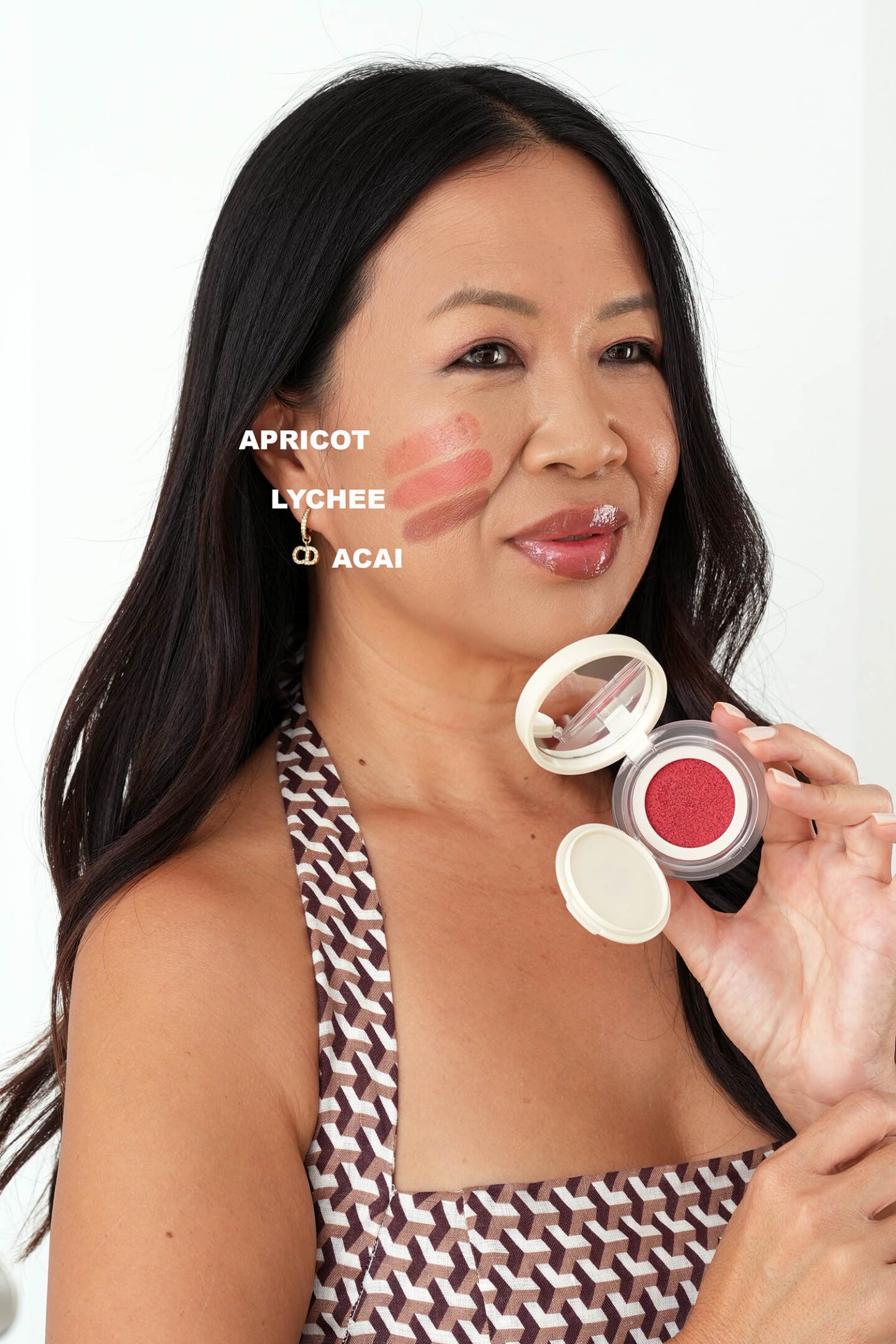
Refy Water Blush swatches

The Water Blush shades surprised me because given the intensity of color you see in the compact, they really apply a lot sheerer on the cheeks. You can layer for more pigment but I am really loving how they’re almost like water colors for the cheeks.

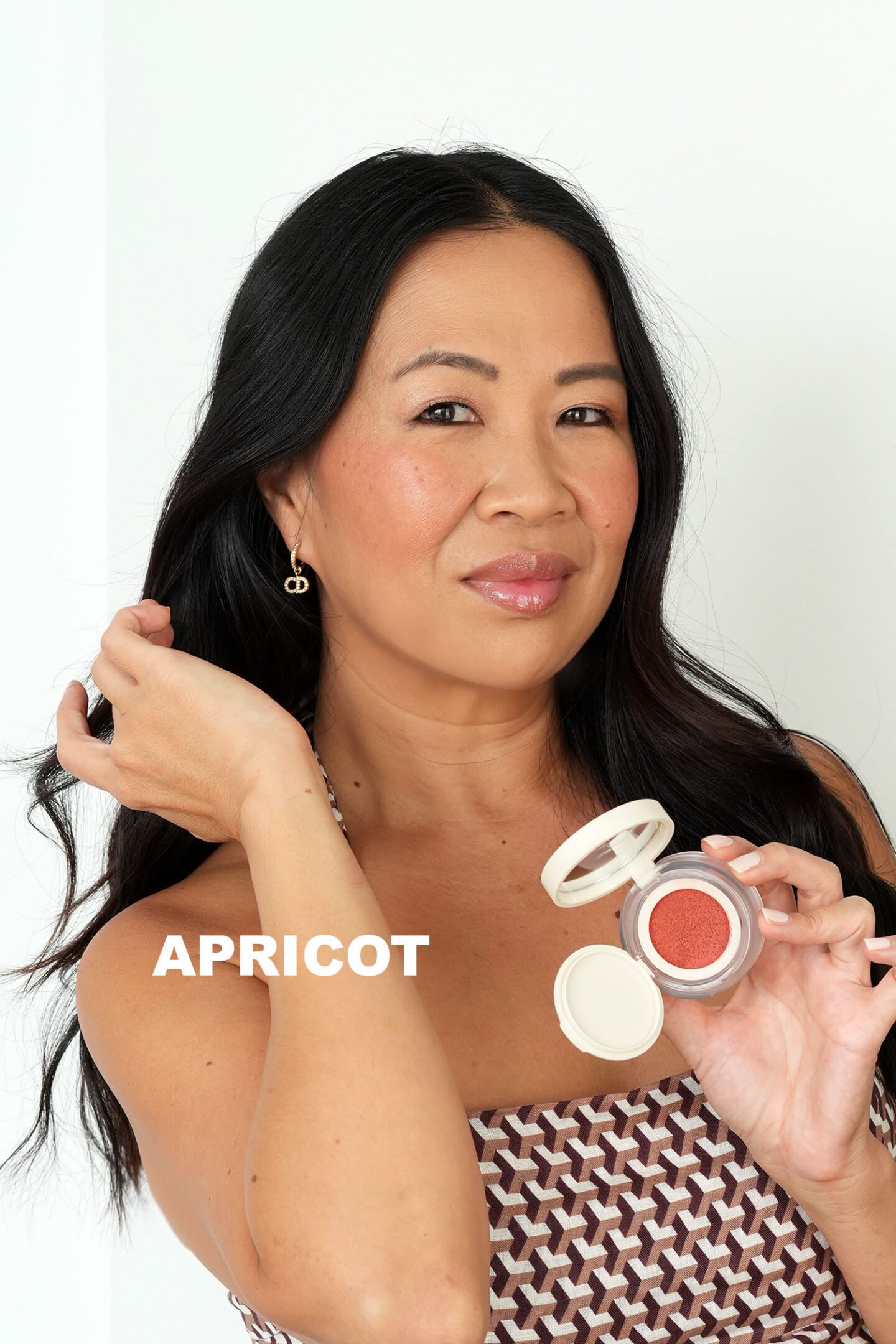
  • Apricot is a light peach
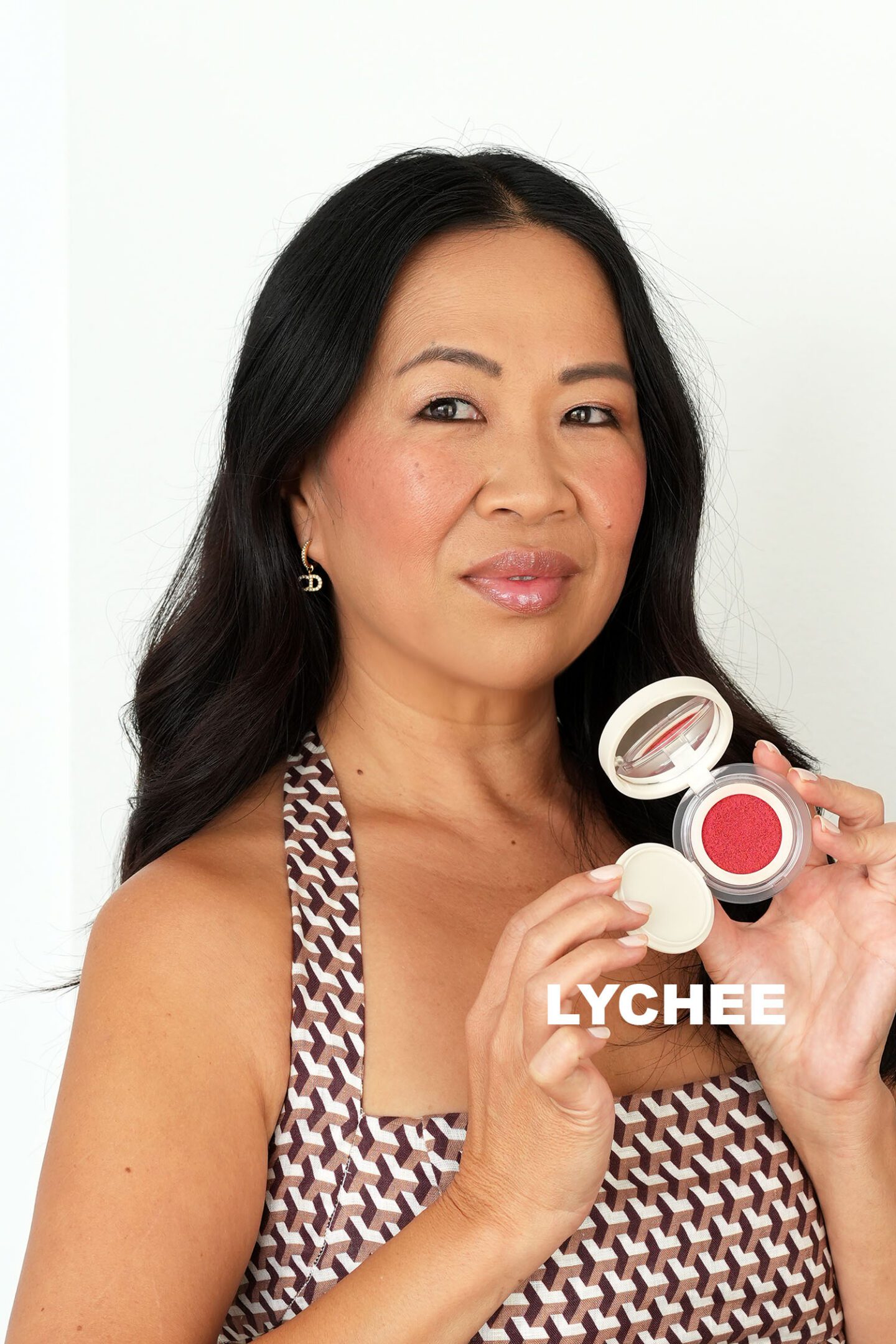
  • Lychee is a vibrant healthy pink
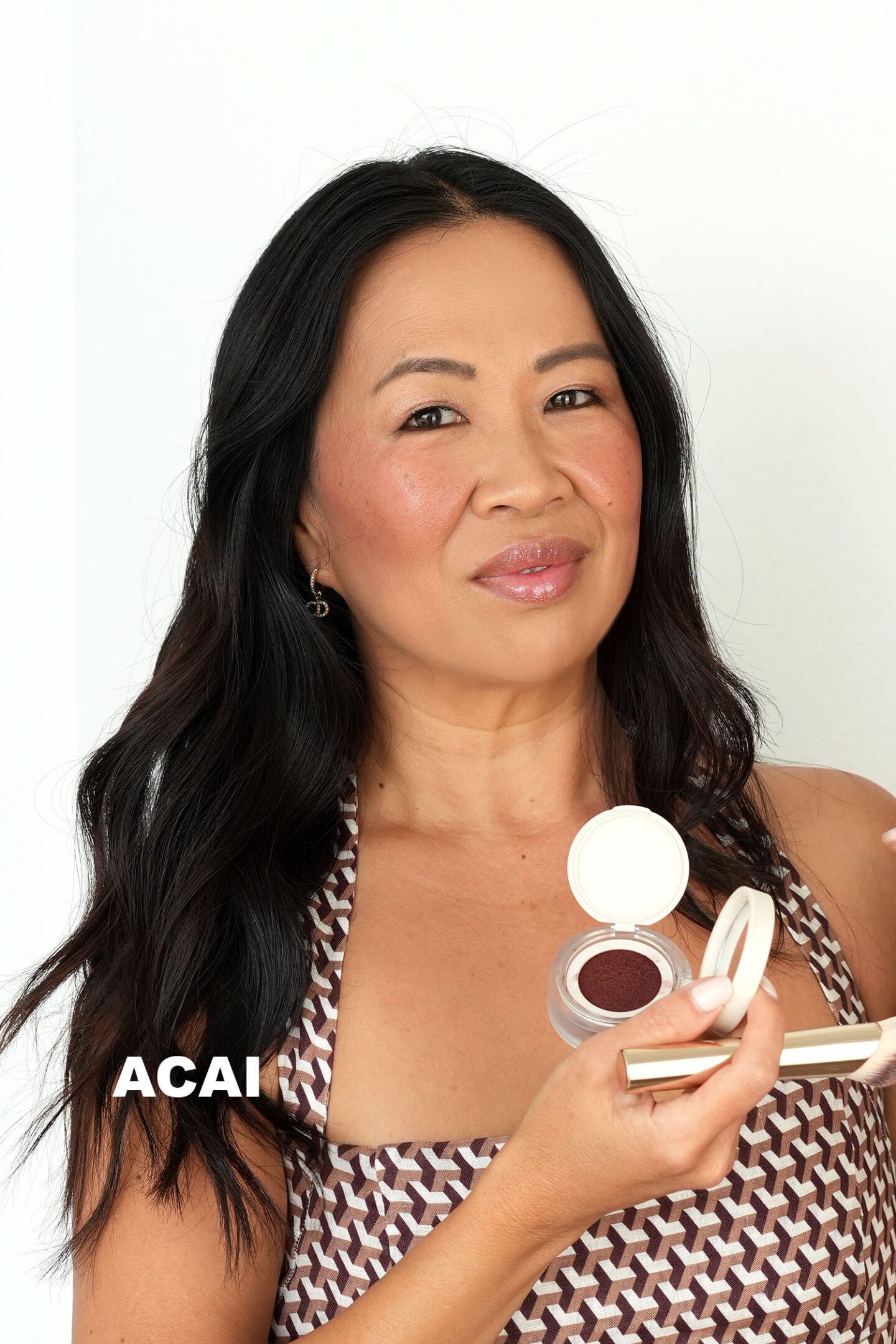
  • Acai is a perfect berry

Refy Water Blush Apricot

Refy Water Blush Lychee

Refy Water Blush Acai

I am really surprised how easy these are to control. The color melts into the skin and can be layered from a subtle wash to something more sculpted and vibrant. The new Refy Duo Brush 02 is also incredible and makes application a breeze although I do think you can use anything from your current stash to apply the products. I would definitely recommend using a clean brush though so you don’t contaminate the compact sponge with other colors.

Skin Base

Refy Skin Base 170N

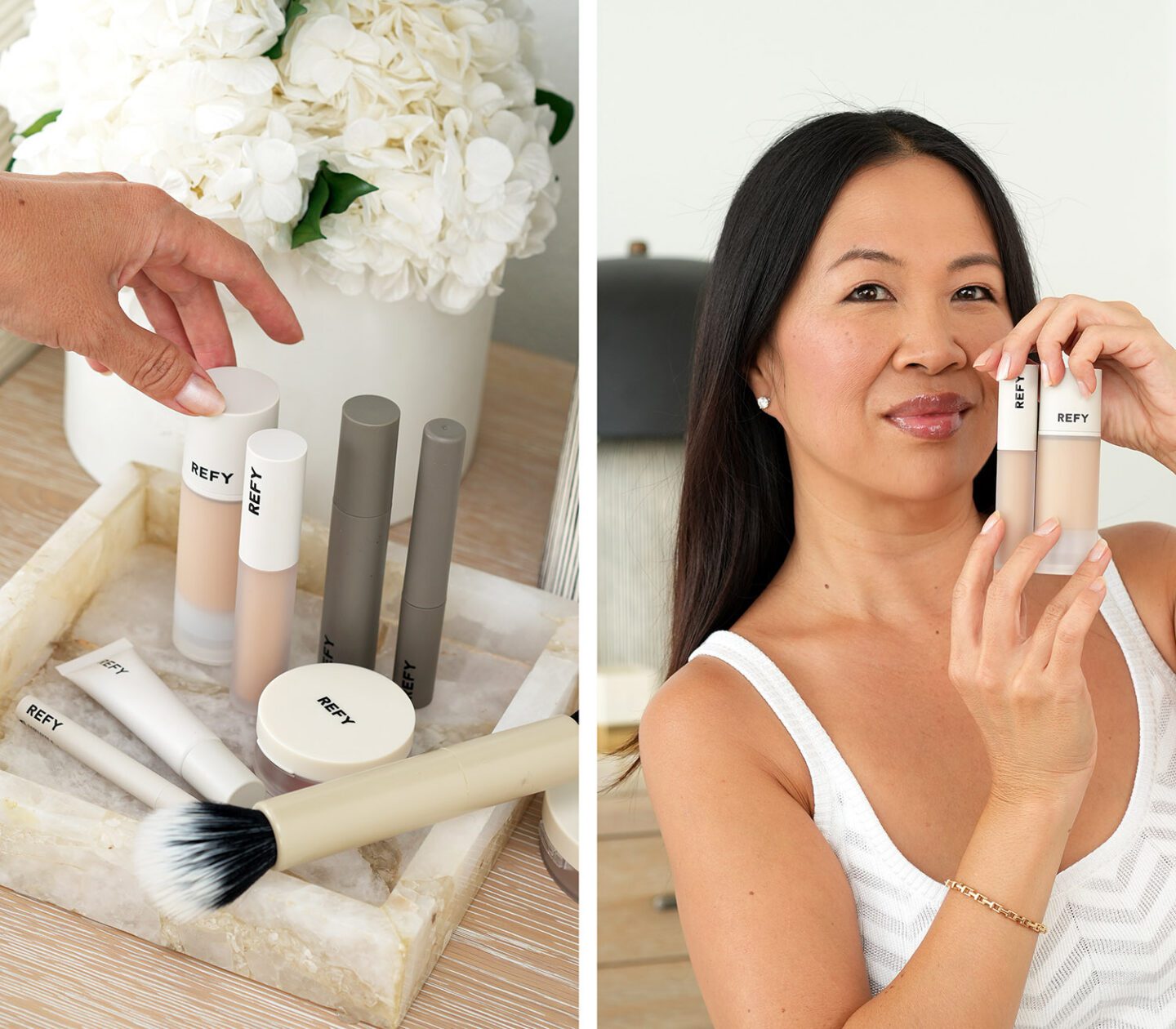
I also wanted to share a quick mention of the Refy Skin Base ($40). A number of you were very excited about this as it’s a gel skin tint. I tried the shade 170N and I have it in action here. It’s a very sheer natural looking skin tint. There is noticeable coverage but it’s a barely there kind of finish. It’s a gel but it has a balmy feel to me. It has a thicker feel compared to some other skin tints like the one from Lisa Eldridge or Summer Fridays. This one blends best with a sponge for me. Since the coverage is so natural looking you will most likely also need some concealer and if you have combination skin or live in a warm humid area you will 100% need to set with a powder.

I give it am 8.5 out of 10 stars. It’s an excellent product for a skin tint, but I prefer something with a little more coverage like the It Cosmetics CC+ Nude Glow or even the Hourglass Veil Hydrating Skin Tint.

You can find the new Refy launches at Sephora and also at Refy Beauty.

Water collection gifted for review. Skin Base purchased.

How To Breathe Right (Because Hundreds Of Us Are Googling It)

0

The phrase goes: it’s as easy as breathing, but um, I’m in my thirties and I still don’t think I’ve correctly mastered how to breathe? It sounds silly, but I’ve noticed myself catching my breath when I’m literally sitting still. I’ll launch into a deep sigh while typing at my desk and realise I’ve forgotten to inhale for the past two minutes. And, if I’m lucky enough to book in for a massage and the therapist instructs me to take three deep breaths, I find myself performing while wondering, “how long should I breathe in for? How long should I breathe out????”

I remember a music lesson in high school where the teacher instructed us to focus on our diaphragm while breathing, filling our stomachs with air as we breath in, then releasing it as we breathe out. It was the first time I clocked that when I breathe “in” I suck my stomach in to match. Whoops. It’s a miracle I’ve made it this far on shallow breaths and vibes, but it turns out I’m not the only one. According to Google search, hundreds of us are looking for “how to breathe” each month. And, we could be missing out on a higher level of health and zen, since functional breathing can boost sleep and decrease stress.

I spoke to breathwork practitioner, Rob Rea (who has guided a range of clients form sportsmen, to artists and CEOs to optimised breathing) to find out more about how to make the most of out every breath.

Can you “breathe wrong” and if so, what does this look like?

“Let’s stay away from right or wrong and move towards efficient and inefficient,” says Rob. “Many people develop dysfunctional breathing patterns without realising it,” he says, adding “breathing is something we do automatically, but stress, anxiety, poor posture, lack of movement, and modern lifestyles and emotion can all disrupt healthy breathing mechanics over time.”

Some common signs of inefficient breathing include:

  • Breathing through the mouth rather than the nose
  • Shallow breathing into the chest instead of the diaphragm
  • Frequent sighing or yawning
  • Feeling breathless easily
  • Tightness in the neck or shoulders
  • Feeling anxious, fatigued, or unable to fully relax
  • Waking up tired despite getting enough sleep

But just as under-breathing can leave you breathless, big gulps of breath can be just as inefficient. “People who are ‘over-breathing’ take in too much air too quickly, which can disrupt carbon dioxide balance and activate the body’s stress response,” notes Rob.

How can I check if I’m breathing right?

“A simple way to check is to notice where your breath is moving,” says Rob. Ideally, breathing should be:

  • Quiet
  • Gentle
  • Mostly through the nose
  • Led by the diaphragm, meaning the lower ribs and abdomen subtly expand as you inhale

You can also ask yourself:

  • Am I breathing through my mouth at rest?
  • Do my shoulders lift when I inhale?
  • Am I breathing rapidly even when relaxed?
  • Can I comfortably take slow, controlled breaths?

United States: FDA authorizes new UV filter, a first in 20 years

0

For the first time in twenty years, the FDA has just added a new ingredient to its list of active ingredients authorized in over-the-counter (OTC) sun protection products. THE bémotrizinol (or BEMT) can now be used to formulate sunscreens sold in the United States.

Also known as PARSOL Shield [1]bemotrizinol is a chemical UV filter widely used in sunscreens in Asia and Europe. This is the first active ingredient added to the US over-the-counter sunscreen product monograph since the late 1990s.

The final decision comes seven months after the FDA published a first draft order on December 11, 2025.

“This is precisely the type of progress we can make by modernizing our procedures and applying rigorous science to our regulatory decisions,” underlines the Dr. Mike Davis, Acting Director of the FDA’s Center for Drug Evaluation and Research (CDER). “The FDA is committed to ensuring American consumers have access to the most effective and safe treatments, especially when it comes to over-the-counter products like sunscreen.”

Broad spectrum UV filter

Bemotrizinol is a broad-spectrum UV filter that protects against ultraviolet A and B rays. Tests have demonstrated its low skin absorption.

According to dsm-firmenich, which manufactures and markets bemotrizinol under the PARSOL Shield brand, clinical studies “conducted with nearly 500 participants representative of the diversity of the American population demonstrated exceptional UV effectiveness, excellent tolerance and an excellent safety profile” for this UV filter.

“The FDA’s approval of PARSOL Shield represents a major breakthrough for sun protection in the United States. It builds on years of scientific leadership and regulatory excellence, while helping to fill a persistent innovation gap in the market. After more than twenty years, this new active ingredient finally delivers what our customers have been waiting for. It enables sunscreen manufacturers to develop next-generation, globally deployable solutions that improve the consumer experience,” comments Parand Salmassinia, president of the Beauty & Care division of dsm-firmenich.

Already approved in many parts of the world, bemotrizinol offers sunscreen formulators in the United States new opportunities to create lightweight sunscreens with strong photostability.

The Personal Care Products Council (PCPC)the trade organization representing the beauty and personal care industry in the United States, has welcomed the FDA’s addition of bemotrizinol (BEMT) to its list of “generally recognized as safe and effective” (GRASE) UV filters.

“BEMT is a broad-spectrum, photostable UV filter that provides effective protection against harmful UV rays and has been used safely around the world for years. Expanding access to innovative sunscreen ingredients is a crucial step to modernizing the U.S. sunscreen market, providing more consumer choice and preventing skin cancer,” it says.

For its part, theEnvironmental Working Groupan association campaigning for stricter regulation of sun protection products, welcomes the FDA’s decision, emphasizing that bemotrizinol offers better protection against UVA.

“This is a great day for American consumers and all those who have fought for more sun protection options and close the UVA protection gap in the United States,” said David Andrews, scientific director of the organization, in a press release.

5 Best Setting Sprays For Oily Skin To Lock Makeup In Place

0

Why I loved it: “If you love a matte base, this is the setting spray for you. Promising shine control for oily and combination complexions, what initially seems like a fairly wet spray settles into a perfect soft focus matte finish seconds later. That’s most likely down to the ‘pore-blurring microspheres’ in the formula, working alongside other skincare biggies like niacinamide and bakuchiol.

Straight after applying makeup and setting spray.

Image may contain Brown Hair Hair Person Adult Body Part Face Head Neck Accessories Jewelry and Necklace

After wearing my makeup and setting spray for five hours.

“There is chance I have a slightly faulty bottle, but the one more negative thing I would level at this setting spray is that the dispensation is closer to water pistol than ultra-fine mister. However, once you’ve doused your face, it settles quickly for that soft matte finish. If I put lots and lots of this on, I can end up with the tiniest bit of patchiness on any dry areas when my skin is playing more towards combination than oily – but you have to look far more closely at my skin than almost everybody is getting and it’s really not that noticeable.

“The main need-to-know is that the results were so good that when they’d settled, I did a bit of a double take in the mirror.”


Your Setting Spray for Oily Skin FAQs, Answered:


Do I need a setting spray if I have oily skin?

It definitely makes sense to call on the setting powers of these makeup sprays when you have oily skin. “Settings sprays are brilliant for all skin types, but particularly oily skins because they contain oil absorbing ingredients, soaking up the excess oil and leaving the skin looking natural or matte,” says Parmar. “They lock makeup in, smooth the skin and increase makeup longevity. There are different finishes from different brands from matte to dewy to suit all skin tones.”

READ MORE: The very best primers for oily skin, tried and tested.


Is a matte or dewy setting spray better for oily skin?

This really depends on the finish you’re after. If you want to keep a matte finish to your look, then it makes sense to reach for a mattifying spray – like Milk Makeup or Charlotte Tilbury’s matte formulas. Other setting sprays are likely to create a natural finish with a little glow. While it’s not a hard rule, bear in mind that those marketed as creating a dewy finish have often been formulated with dry-to-balanced skin types in mind and are designed to add lots of glow, something that may then be supercharged by oily skin.

READ MORE: My honest verdict on the best sunscreens for oily skin.


How to apply setting spray to oily skin

Gently shake your setting spray before spritzing to ensure the formula is well-mixed. Hold it 15–30cm from your face and spray in sweeping motions to evenly cover your makeup in a light layer. Leave to settle.

Using your spray as a final “setting” step in this easy is the method we know well, but sometimes applying a light layer before your makeup, and between layers, too, can create a more cohesive setting effect.

“On oilier skins, I sometimes use a light layer (a huge emphasis on light mist) before makeup as part of prep because it can help create a more balanced base and improve longevity,” says Caldognetto. “Then I’ll use another layer at the end to melt the products together and lock everything in place.” This, she notes, is less about fixing and more about creating flexible layers that will wear well through the day. “These thin layers of product are what gives the best kind of longevity. Let it fully set before touching your skin,” she continues. “Avoid heavy layers of setting spray, as it will have the opposite effect and potentially break your makeup down.”

“I use a setting spray as a ‘moisture sandwich’ at the beginning, in the middle and at the end after powdering,” says Parmar. “This ensures that skin is set, any powder is melted down perfectly and the skin still looks like skin. I also love a setting spray for an inbetween set and refresh on skin. It melts down any cakey makeup without having to start from scratch.” Some of Parmar’s other top tips? Using on your concealer brush to set concealer, or a spoolie to keep brows in place.


My final verdict:

It sounds like such a cop out, but it’s hard to pick one clear frontrunner from my top five. While Charlotte Tilbury and Urban Decay have been favourites of mine for years – and will continue to be – I can see why the ONE/SIZE spray has makeup artists hooked. My base felt comfortable all through the day without going patchy or creasing at all, so it’s going to be used up right to the last spritz. Makeup by Mario’s also gets a shout out as it really helped my blush stand the test of time. Any of these will serve you well in summer.


CeraVe Makeup Removing Cleanser Balm Review

0

*Links marked with asterisks are affiliate links, these help Ree with running costs of the blog

Priced at

(currently on offer for £10.86)

CeraVe Makeup Removing Cleanser Balm Review. Is It Worth Buying?

If you’ve been reading here for a while, you’ll know that cleansing balms are one of my favourite ways to remove makeup. So when I spotted the CeraVe Makeup Removing Cleanser Balm, I was immediately interested.

I already really like CeraVe as a brand because it focuses on simple, effective skincare without lots of unnecessary extras, and I was curious to see how its cleansing balm would compare to some of the much more expensive options in my collection.

I’ve been testing it out for a few weeks now, and here’s everything you need to know.

In This Review

  • Is CeraVe Makeup Removing Cleanser Balm any good?
  • Does it remove waterproof makeup?
  • CeraVe Cleansing Balm vs Elemis
  • Ingredients and benefits
  • Who should buy it?
  • Before and after results
  • My final verdict

What is CeraVe Makeup Removing Cleanser Balm?

What is CeraVe Makeup Removing Cleanser Balm?

The CeraVe Makeup Removing Cleanser Balm is a fragrance-free cleansing balm designed to remove makeup, SPF, excess oil and daily impurities while helping to support the skin barrier.

It’s formulated with three essential ceramides and jojoba oil, and is suitable for all skin types, including sensitive skin.

Unlike many cleansing balms that focus on creating a luxurious spa-like experience, this feels very much like a practical, results-driven product. It’s designed to cleanse effectively whilst being gentle on the skin, and that’s exactly what it does.

Key Ingredients

One of the things I like most about CeraVe products is that they focus on ingredients that support the skin barrier rather than lots of fragrance or unnecessary additions.

The standout ingredients here are:

Three Essential Ceramides

Ceramides help support and maintain the skin’s natural barrier, which is particularly important if you’re prone to dryness or sensitivity.

Jojoba Oil

Jojoba oil helps soften and nourish the skin whilst assisting with the removal of makeup and impurities.

Fragrance-Free Formula

The entire formula is fragrance-free, making it suitable for those who prefer to avoid added fragrance in their skincare.

My Review

My Review of CeraVe Makeup Removing Cleanser Balm

First Impressions

One of the first things I noticed was the packaging. I really like the compact little pot. It’s lightweight, easy to store and feels perfect for travelling. So many cleansing balms come in large tubs that aren’t particularly convenient to pack, whereas this feels much more practical.

The price point also immediately appealed to me. Most of the cleansing balms I use regularly sit in the premium or luxury category, so it was refreshing to see a budget-friendly option from a brand I already trust.

Texture and Application

If you’re expecting something similar to the Elemis Pro-Collagen Cleansing Balm, you’ll be surprised. This is a much firmer balm.

It’s not the soft, buttery texture that you can effortlessly scoop out with your fingertips. Instead, it’s quite solid and you almost need to scrape or break it up slightly as you pick it up from the pot.

That said, once it comes into contact with the skin, it melts down beautifully. The balm transforms into a lightweight silky oil that glides across the face with ease. It feels smooth, comfortable and gives plenty of slip for a good facial massage without feeling heavy or greasy.

It actually feels much more elegant on the skin than I expected.

How Well Does It Remove Makeup?

This is where the CeraVe Makeup Removing Cleansing Balm really impressed me.

Some cleansing balms seem to dilute very quickly when water is added. This keeps it’s balmy texture and you can see the makeup suspended in the milky phase, and I found I found makeup broke down and lifts away incredibly quickly.

Foundation, concealer, SPF and general daily grime all seem to dissolve almost instantly, making the cleansing process feel effortless.

I tend to massage it onto dry skin as my first cleanse and then remove it with a warm damp face cloth. Afterwards, my skin feels clean, soft and comfortable, without any feeling of tightness or dryness.

For me, this is exactly what a cleansing balm should do.

The One Thing I Don’t Love

The smell. Now, I appreciate that this is a fragrance-free product, and generally speaking that’s a positive thing. However, because there is no fragrance masking the raw ingredients, you are left with the natural scent of the formula itself.

And honestly, I don’t particularly enjoy it. To me, it smells quite plasticky and quite ‘chemical’. It’s difficult to describe exactly, but it’s not the kind of scent that makes you want to linger over your cleansing routine.

In fact, I’d probably say it’s the strongest-smelling fragrance-free CeraVe product I’ve tried. The good news is that the scent disappears as soon as you’ve rinsed it away, and it doesn’t affect performance at all.

However, if you’re someone who loves cleansing balms because of the sensory experience, this probably won’t be for you. Products like Elemis Pro-Collagen Cleansing Balm or Perricone MD’s cleansing balms feel luxurious partly because of their beautiful aromas. This doesn’t offer that same experience.

This is much more about functionality than indulgence.

In fact, the smell is the reason this won’t be joining the products in my Best Cleansers edit. I think it’s a really good cleanser and I’d happily recommend it, but when I’m choosing my absolute favourites, the overall experience matters just as much as the results. If the scent was a little more pleasant, this would probably be a different story.

CeraVe Cleanser Balm vs Elemis Pro-Collagen Cleansing Balm

I can imagine a lot of people wondering how this compares to Elemis because it’s one of the most popular cleansing balms on the market.

The biggest difference is the overall experience. Elemis feels luxurious from start to finish. The texture is softer, the scent is gorgeous and using it feels like a mini spa treatment.

CeraVe feels much more straightforward. The texture is firmer, the scent isn’t particularly pleasant and the focus is entirely on effective cleansing and skin barrier support.

When it comes to actually removing makeup, however, I don’t think there’s a huge gap between them. The Elemis balm definitely wins on experience, but the CeraVe balm performs exceptionally well considering the difference in price.

Who Is It Best For?

I think this cleansing balm is particularly well suited to:

  • Anyone looking for an affordable cleansing balm
  • Sensitive skin types
  • Fans of fragrance-free skincare
  • Those who prioritise performance over luxury
  • Frequent travellers who want a compact cleansing product
  • Anyone looking for an effective first cleanse

If you’re buying a cleansing balm purely for the ritual and sensory experience, there are better options available.

If you’re buying it to remove makeup effectively whilst supporting your skin barrier, it’s an excellent choice.

Is CeraVe Makeup Removing Cleanser Balm Worth It?

Yes, I think it is. What impressed me most was how quickly and effectively it breaks down makeup whilst still feeling gentle and hydrating on the skin.

The smell isn’t great and I think that’s something potential buyers should be aware of, but for me it isn’t enough to outweigh the positives. It performs extremely well, contains skin-friendly ingredients and comes at a very accessible price point.

Final Verdict

The CeraVe Makeup Removing Cleanser Balm isn’t the most luxurious cleansing balm I’ve ever used, but it might be one of the most practical.

It removes makeup quickly, feels lovely on the skin once melted down, leaves skin soft and comfortable and offers excellent value for money. Would I choose it over Elemis when I’m in the mood for a spa-like cleansing experience? No.

Would I happily reach for it when I want an effective, affordable and fragrance-free cleansing balm that gets the job done? Absolutely. If you can overlook the plasticky scent, I think this is a really solid addition to the CeraVe range and one that’s well worth considering.

Where to buy it

The CeraVe Makeup Removing Cleanser Balm is £14 for 36g and available now via the link below (currently on offer for £10.86).