Home Blog Page 224

5 Easy Ways To Make Soap Curls + Roses

0

I’ll be honest, I love making melt and pour soap, but sometimes the process can feel a little repetitive. Melt, pour, wait, unmold, repeat. So I started looking for ways to add a little something extra to my bars without making the process feel fussy. And that’s when I discovered soap curls.

Soap curls are thin slivers of soap that you peel or shave from a larger block. They naturally roll into these delicate, ribbon-like shapes that can be used as decoration, like on these gift box soaps.

Let ’em harden and they have this crunchy texture that feels like a gentle, satisfying scrub when you use them. If you’re into ASMR, the sound and feel of them is surprisingly relaxing, too.

You can also embed soap curls into soap loaf molds for a really beautiful, layered effect. It’s an easy way to make your soaps look more professional and artisan without a ton of extra effort.

So if you’re ready to add a little texture and visual interest to your melt and pour projects, let’s start with the basics.

Curling Tools

  • Vegetable peeler — This is one of the best tools for making thin, delicate curls roughly ½” – 1″ wide. It gives you nice control and creates those pretty ribbon shapes.
  • Y-shaped peeler — If you want slightly thicker curls with a bit more texture, a Y peeler is perfect. It shaves off wide, thick ribbons that can be turned into roses or embedded into soap bars.
  • Sharp knife — Use this if you want straight, wide, rustic-looking curls that you shape by hand.
  • Clay trimming tools — These are great for making small, wabi sabi curls. They give you more control for creating organic-looking ribbons that have a really pretty imperfect feel.
  • Citrus zester — This creates lots of small, thin curls. It’s perfect if you want a more delicate, confetti-like look from fine, festive ribbons.

Soap Making Supplies

These supplies are pretty standard to all melt and pour soap projects. The only one you may not have seen pop up before is glycerin, but the rest are things you should have in your soap making toolkit already.

  • Melt and pour soap base — Technically, you can use clear or white, depending on the look you’re going for. Clear bases work great if you want translucent, glassy curls, while white bases give you a more opaque, classic soap look. In my experience clear base is bit “stretchier” and gives you more curl than white soap base, thanks to the extra glycerin. But if you’re dead set on using white soap, I have a fix for it’s lack of stretch (see below).
  • Vegetable glycerin — This is the secret ingredient for making your soap more bendable and easier to curl. If you’re using white soap base, extra glycerin is a must for getting those pliable curls that hold their shape. Either, you can add a tablespoon or two of liquid glycerin to white soap base. Or you can mix clear (glycerin) soap base with white soap base and get the same affect.
  • Mica or liquid soap colorants — These are optional, but they’re a fun way to add color to your curls. I like using mica for a shimmery effect, but liquid colorants work just as well if you want solid, vibrant colors.
  • Fragrance or essential oils — Also optional, but adding a scent elevates your soap ever so slightly. Just make sure to use skin-safe fragrance oils or essential oils.
  • Microwave-safe bowl or measuring cup — You’ll need this for melting and pouring your soap base. A glass measuring cup with a pour spout makes things easier, but any microwave-safe container will work.
  • Spray bottle with rubbing alcohol — This helps eliminate air bubbles on the surface of your soap and can also be used to help curls stick to the top of a soap loaf if you’re using them as decoration.

Methods for Making Soap Curls

Here’s a high-level tutorial on the different ways to make soap curls. The method you choose depends on the tools you have and the look you’re going for. If you’d like more detailed instructions for working with soap base, check out our Complete Guide to Using Melt-and-Pour-Soap.

Prepare the Soap

  1. Start by cutting your soap base into manageable chunks so it melts evenly. You don’t want to put big blocks in the microwave, because they’ll heat unevenly and can scorch in some spots. Note: for this project, I used a 50-50 blend of white soap base and glycerin soap base. If using white base, make sure to add glycerin in some form or another, either by adding 1-2 tablespoons of liquid glycerin or by blending with clear soap base.
  2. Melt the soap in the microwave in short 20-30 second bursts. Stir it frequently to make sure you get a smooth, even consistency.
  3. If you’re using essential oils or mica for color, mix them in while the soap is still warm.
  4. Pour the soap into a silicone mold (the temperature of the melted soap base doesn’t matter here) and let cool. For smaller curls, I recommend using small, single cavity molds, which keep the curls from getting too long and breaking. For big, thick curls, you’ll need to use a loaf mold instead. If you’re not sure, just refer to the method instructions below.

How To Make Soap Curls Using Tools

1. Vegetable Peeler

Pour soap into a single cavity mold and let cool. Once your soap is unmolded and fully cooled, hold the block firmly in one hand. If it’s slippery from the glycerin, use a paper towel for a better grip. Run the peeler along the long, flat side of the block.

Let the soap naturally curl as you peel. If it doesn’t curl on its own, use your fingers to gently shape it into a ribbon while it’s still flexible.

Be careful! The thin curls can be fragile, especially if your soap is on the harder side.

2. Citrus Zester

Create a small bar of soap using a single-cavity mold. Drag the citrus zester lightly across the wide, flat side of a soap block. This creates lots of small, delicate curls that look almost like confetti. It’s a great option if you want a more subtle, layered effect.

3. Clay Trimming Tools

Pull the tool lightly across the flat face of a bar of soap. The curls will have an imperfect, organic look that I think looks really nice.

To keep creating clean curls, use a knife to cut the tattered soap off the bar and create a flat surface to work from. This prevents the curls from getting messy or uneven.

4. Y Shaped Peeler

Instead of creating a small block of soap, pour roughly 1 inch of melted soap into the bottom of a loaf soap mold. Let it cool completely.

Cut the cooled soap into 2 inch wide strips that’ll fit your Y peeler. Then run the peeler across the soap in smooth, even strokes to create thicker strips that you can form into curls using your hands.

5. Make Soap Curls by Hand – The Thin Pour Method

Pour a thin (approximately ⅛ – 1/16 of an inch) layer of soap into a loaf mold. Let it sit for 5-10 minutes to set partially. The timing depends on how thick your layer is, but you want it firm enough to handle without breaking.

Remove the layer from the mold and cut into 1-2″ wide strips. Then roll or curl it by hand while it’s still pliable. Allow the curls to set and firm up a bit more before using in soaps.

Ways to Use Soap Curls

Once you’ve mastered the basics of making soap curls, the fun part is figuring out how to use them. There are so many ways to get creative with these little ribbons, and honestly, experimenting is half the fun.

1. ASMR “crunchy soap”

If you’re more into the sensory side of soap making, you can decorate the tops of your bars with lots of curls to create that satisfying, crunchy texture. The sound and feel of peeling and using these soaps is oddly relaxing.

2. Embedding them in soap loaves

One technique I love is using the Pour-Thin method to create a long sheet of soap, then rolling it long-ways (like a Fruit Roll-Up) to make a tube-like curl. You can embed this inside a loaf soap mold for a really stunning cross-section when you cut the bars. For more tips on embedding shapes in soap, check out this post.

3. Mix and match for unique effects

Try mixing colors for a confetti look, or vary the curl thickness to add dimension. You can also combine soap curls with shredded soap for even more texture. Embedding curls in transparent soap creates a really cool, suspended look, while white soap gives you a more classic, layered look.

4. Making soap roses and floral designs

After making curls with either a vegetable peeler or cheese planer, you can roll them in a way that looks like roses. It takes some practice, but the results are gorgeous and perfect for special occasion soaps or gifts.

I’ve found that thicker curls (like those made with a cheese planer) creates better roses because the soap has enough thickness to stand up and look like petals.

5. Soap Curl Gift Soap

Gift box soap with soap curls as bowsGift box soap with soap curls as bows

These festive gift box soaps look like tiny wrapped presents, complete with overlapping gold ribbons and soap curl bows on top. And since they’re made with melt and pour soap, they make perfect last-minute holiday gifts.

Soap Curl Troubleshooting

Making soap curls can take a little practice, so don’t feel bad if your first batch doesn’t turn out perfectly. Here are some common challenges and how to fix ’em.

Cracked curls — If your curls are cracking or breaking as you make them, try adding 1-2 tablespoons of liquid glycerin to the melted soap. This increases flexibility and makes the soap easier to work with.

Air bubbles inside curls or embeds — Air can get trapped when you’re embedding curls into a soap loaf. To fix this, embed them at an angle so any trapped air has a chance to escape as the soap sets. Also make sure to spray the soap both before and just after pouring it.

Curls falling apart — If your curls are fragile and falling apart after you’ve made them, lightly spritz them with rubbing alcohol. This helps set them and keeps their shape intact.

Curls melting when embedding or pouring over — This happens when the soap you’re pouring is too hot. Make sure your over-pour soap is at a lower temperature (around 140°F or below is best). This way, it won’t melt the curls when it makes contact.

Uneven or floppy curls — If your curls aren’t holding their shape or they look messy, try using a sharper peeler, creating a thicker curl or working with firmer soap. You can also play around with adding a bit of glycerin to the base or adjusting your peel technique to get cleaner, more consistent ribbons.

FAQ

Can I use any melt and pour soap base?

Not all bases are created equal when it comes to soap curls. Bases that are too soft can end up mushy and won’t hold their shape. On the flip side, bases that are too hard may not curl nicely and could crack or break instead. You may need to try out several different soap brands or types to find one with a good balance between firmness and flexibility.

Do I have to use glycerin in the pour-thin method?

Glycerin helps make the soap more pliable and helps your curls hold their shape, especially when working with thinner curls. But it’s optional depending on your base. Some melt and pour soaps are already pretty flexible, so you might not need it at all. You made need to test a soap base and see how well it holds up.

Can I fragrance or color the curls?

Yes! You can add fragrance and color while the soap is melted. Just make sure everything is mixed well before pouring into your molds.

How long should I dry curls for ASMR?

If you’re going for that crunchy, satisfying ASMR texture, use thin curls and let them dry for about 5 weeks in a well-ventilated space. This gives them time to harden up and develop that crispy feel.

Can I curl cold process soap too?

Yes, cold process soap can work for curls once it’s fully cured and hardened.

0

5 Simple Ways to Get Ahead of Holiday Stress Right Now

0

The holiday season is meant to be about cheer and togetherness—at least that’s the idea. In practice, all of the gifts, travel plans, and family reunions you look forward to can also be the very things that make the stretch between Thanksgiving and New Year’s so overwhelmingly chaotic.

Even the most festive people can feel weighed down this time of year, and there are plenty of reasons why—the financial strain from buying presents; the social pressure of interacting with coworkers, friends, family; and the endless to-dos that make the holidays magical. On top of that, this season can be a painful reminder of the people we’ve lost or grown apart from—and for anyone traveling home, it can mean being thrust back into old identities and dynamics we thought we’d left behind.

While it’s totally normal to feel exhausted and anxious, the good news is that there are ways to get ahead of it and take care of your mental health. Here are a few expert-recommended strategies to guarantee a less stressful, more enjoyable holiday season.

1. Lower your perfectionist expectations.

It’s easy to get wrapped up in the idea of the perfect holiday celebration. But you don’t need to buy everyone the “best” or most expensive gift, decorate every last inch of your house, or bake an Instagram-bait pumpkin pie to have a memorable time.

Things can and will go wrong, no matter how seasoned a holiday host you may be. So instead of being quick to judge your shortcomings or spiraling over minor inconveniences, “give yourself the grace to not have everything be perfect,” Catherine Mogil, PsyD, a psychologist and associate clinical professor at UCLA’s Semel Institute for Neuroscience and Human Behavior, tells SELF.

A bit of self-compassion can go a long way: Not only can it make us more resilient in times of stress and more optimistic about perceived failures, but it can also provide the much-needed perspective shift to help you focus way less on what goes wrong and more on the positives—like how incredible it is to finally be reunited with friends and family again even though your flight got delayed, or, perhaps, how ridiculously fun it was to bake cornbread with your cousin, even if it tasted like dirt.

2. Maintain some of your routines.

Humans thrive off of routines. Consistent, healthy habits—like regularly eating well, exercising, and getting enough sleep—combat stress, improve our mental health, and make our lives feel more meaningful, research suggests. During the holidays, however, you’re probably eating and drinking more than you usually do, which can throw off your biological clock (a.k.a. sleep-wake cycle), and all sorts of other vital body functions.

The Best Anti-Aging Skin Care Routine By Experts

0

You may not know it, but your skin is something of a hero to your body. As you go through your life, your skin is exposed to various dangers—harsh UV rays, external irritants, unhealthy air—that your skin is charged with protecting the rest of you from.

In return, it only makes sense that we do our best to keep our aging skin or mature skin looking clear, bright, and overall healthy.

With a daily, dedicated anti-aging skin care regimen, your skin can better withstand all that comes at it. Whether you’re in your thirties or your seventies, going through the steps to properly care for your complexion—day in and day out—can lead to strengthened, supported skin from the inside out.

Our Skin Health Experts have curated an easy-to-follow anti-aging skin care routine for anyone looking to protect against daily wear-and-tear, no matter your stage of life.

The Essentials: Day and Night

What causes forehead wrinkles and fine lines on our face? There’s many variables like genetics, skin type, unhealthy habits, and more that can accelerate skin aging. That’s why it’s important to have a solid anti-aging skin care routine to treat and prevent. Some skin care steps are so important, you need them both at the start and end of your day. Start with these products in both your daytime and nighttime routines.

#1 Cleanser

A work of art always starts with a blank canvas. Make sure to prep your skin by first removing any buildup of oil, dirt, or makeup with a gentle facial cleanser. When it comes to anti-aging skin care routines, we’ll emphasize the importance of gentle products: they shouldn’t dry out your skin, and preserving hydration is crucial in visibly improving the appearance of wrinkles.

#2 Toner

While toners are usually suggested for acne-prone skin, many toners are jam-packed with nutrients to sustain bright, firm skin. Right after cleansing, try using a toner that includes the ingredients like niacinamide, glycerin, and hyaluronic acid. These replenish the skin and promote skin cell renewal, promoting a youthful, plump glow.

#3 Moisturizer

If there’s one tip to take away from this article, it’s this: hydrate, hydrate, hydrate.

Make sure you’re following your toner with a moisturizing cream that refreshes and nourishes your skin, as this can encourage proper hydration, repair the skin barrier, and skin elasticity. For the morning, we recommend a lighter, water-based moisturizer, like the HydraKate™️Recharging Water Cream, while richer moisturizers should soak in while you sleep.

Steps to Boost Your Morning Routine

Like the coffee that helps you to shake off sleep each day, some steps of an anti-aging skin care regimen are best to use in the morning. Add on these products after the skin care essentials to wake your skin up and be ready to face the sun.

#4 Sunscreen

Sun damage remains the leading cause for premature aging. There’s nothing more important than sunscreen in preventing signs of aging. Sunscreen protects us from more than just sunburn; it also shields our skin from skin cancer, UV damage, dark spots, and—that’s right—premature aging. It can also help minimize the appearance of uneven skin tone and age spots.

Apply at least a three-fingers-length’s worth of sunscreen to your face and neck after your moisturizer to help guard your skin from the sun damage. Also, reduce your sun exposure by wearing clothes that cover your skin or using an umbrella with UV protection.

#5 Serum

In only a few drops, a good skin serum can give your skin a bright morning boost. Since serums are made to be lightweight (while still packing a punch of beneficial active ingredients), they’re perfect for layering between moisturizer and makeup. All the nourishment, none of the bulk. Some of the most common skin serums contain active ingredients like vitamin E, vitamin A, vitamin C, and hyaluronic acid to hydrate and balance the skin. For morning-time serums, look out for hyaluronic-acid-forward products. Try the HydraKate™️ Recharging Serum for one that specially combats dullness and dehydration.

Additions for an Ideal Evening Routine

Nighttime skin care usually features products that are richer, heavier, and more intensive. As we sleep, they get the chance to penetrate your pores more deeply and thus offer more robust effects.

Consider introducing these products to your evening skin care routine for maximum skin rejuvenation.

#6 Retinol

These days, no anti-aging skin care routine is complete without a retinol. Derived from vitamin A, this product can penetrate deep into your skin to boost collagen production, increase skin cell turnover, reduce the look of dark spots and age spots, and visibly improve the appearance of wrinkles. It can also brighten dark under eye circles if used correctly.

Adding a retinol like the DermalQuench Liquid Lift® +Retinol to your evening routine is ideal, as it will have more time to soak in while you rest. In addition, it’s best to apply a retinol at night—and follow with sunscreen in the morning—as retinols can make your skin more sensitive to the sun.

A Tip from our Skin Health Experts: Retinol is a fairly strong active ingredient. You should visit a board-certified dermatologist or skin health expert to determine if retinol is the right solution for your skin concerns. If you have dry skin, sensitive skin or acne-prone skin, introduce the retinol in your skincare routine slowly, so your skin gets used to it. That way, you’d know if it is compatible with your skin or not. Retinol is an effective anti-aging ingredient when used correctly under the supervision of a skin care expert.

#7 Lip mask

Perhaps you haven’t considered it before, but your lips deserve some attention during your skin care routine, too. If you’re already working hard to keep your skin looking young, you’d surely want your mouth to match.

Lip masks use butters, oils, and creams that are thicker than any old pocket lip balm (and deliver far more powerful hydration), making them much more suited to nighttime use. The rich hydration of these masks can help prevent lip wrinkles, dryness, and dullness.

Nourish and Support Your Aging Skin with Kate Somerville

In the rush of the day-to-day, it can be easy to shirk some or all skin care in your hygiene and cosmetic routines. But preventative-aging skin care starts and ends with daily, consistent skin care with products that make it easy to build—and stick to—a nourishing, anti-aging skin care regimen.

That’s where Kate Somerville comes in.

Our team of Skin Health Experts designs high-impact, ultra-beneficial skin care products for whatever step of life (or routine) you’re in. We’ve got you covered, from serums to sunscreens to a HydraKate product line dedicated especially to replenishing moisture (remember: hydrate, hydrate, hydrate). Our skin care helps you target anti-aging at the root—fighting sun damage, dehydration, and other dermal threats.

No matter the maturity of your skin, it can be healthy, happy, and dazzling with Kate Somerville.

Sources:

Penn Medicine. The Truth About Wrinkles. https://www.pennmedicine.org/updates/blogs/health-and-wellness/2022/march/the-truth-about-wrinkles

Clinical, Cosmetic, and Investigative Dermatology. The 24-hour skin hydration and barrier function effects of a hyaluronic 1%, glycerin 5%, and Centella asiatica stem cells extract moisturizing fluid: an intra-subject, randomized, assessor-blinded study. https://www.ncbi.nlm.nih.gov/pmc/articles/PMC5560567/

Journal of Cosmetic Dermatology. A comparative study of the effects of retinol and retinoic acid on histological, molecular, and clinical properties of human skin. https://onlinelibrary.wiley.com/doi/full/10.1111/jocd.12193

Clinical Medicine & Research. The Role of Moisturizers in Addressing Various Kinds of Dermatitis: A Review. https://www.ncbi.nlm.nih.gov/pmc/articles/PMC5849435/

Advanced Pharmaceutical Bulletin. Anti-aging and Sunscreens: Paradigm Shift in Cosmetics. https://www.ncbi.nlm.nih.gov/pmc/articles/PMC6773941/

Dermatologist Advice for Winter Skin

0

Holiday cheer is great. Holiday skin? Not always. One weekend of salty snacks, sugary treats, late nights, cold air, travel, and—you guessed it—stress—and suddenly you’re dealing with dry skin, dull skin, stress acne, irritation, or a cranky, damaged skin barrier. Sensitive skin especially tends to tap out this time of year.

Everybody has a favorite holiday treat—some sugary, some salty, all delicious. But when festive snacking ramps up, your skin often notices first. Too much of a good thing can leave you dealing with dry skin, dull skin, or an already sensitive skin barrier feeling extra cranky.

“Most holiday foods are either sugary or salty,” says Holzinger. “Eating these foods in large quantities can definitely impact your skin. Sugar tends to trigger inflammation and oil production, leading to acne breakouts and worsening of chronic skin conditions. High sugar intake can also reduce the skin’s ability to repair itself from wounds. Excess salt contributes to dehydration, dryness, and tightness—this is most noticeable in the under-eye area. Salt also causes the skin to look and feel much more swollen and puffy. During this time of year, I often see patients with flares of acne, eczemaand psoriasis.”

Late-night holiday parties, travel, family visiting from out of town, and on and on… the holidays are sure to bring a rise in erratic schedules and a decrease in high-quality sleep. Over the past few years, more and more science has revealed just how crucial good sleep is for every aspect of our health, including skin health. One of the key aspects of sleep is that it restores and repairs damaged tissues overnight, including skin cells. This is why too little sleep can hurt your skin.

“If your sleep is lacking, your skin will most likely appear dull, pale, and less radiant,” explains Holzinger. “Sleep deprivation also raises cortisol, which can weaken your skin barrier and lead to dry skin and flakiness. Dark circles and puffiness under the eyes are more noticeable due to fluid retention, and stress acne can also flare up if you’re not getting your sleep.”

As if lack of sleep weren’t enough, holiday stress tends to pile on—fast. And your skin definitely notices. “When you are stressed, your body releases excess amounts of cortisol,” explains Holzinger. “Cortisol leads to excess inflammation, which worsens skin conditions such as rosacea, psoriasis, eczema, and acne. Sudden breakouts and increased acne flares are often seen during this time of year.” Elevated cortisol levels also spike oil production. 50 million people struggle with acne in the United States, so if stress acne is a problem for you, you are definitely not alone.

Holiday cocktails are fun—but alcohol dries out your skin fast, leaving a weakened skin barrier in its wake. It expands the blood vessels, stripping the skin of moisture. This can exacerbate dull skin and cause redness, worsening rosacea and other varieties of sensitive skin.

“Alcohol depletes your body of water and electrolytes,” explains Holzinger. “This leads to dry, tight skin. Dehydrated skin will appear dull, and fine lines and wrinkles will be more prominent. Too much alcohol depletes vitamin A, vitamin C, and zinc, which further depletes collagen. Less collagen means slower skin repair and increased skin sensitivity.”

This isn’t as much of a habit as a condition, but it’s a significant factor in causing dry skin, dull skinand aggravating sensitive skin, especially during the holidays.

“Even if you are moisturizing regularly, your skin can feel drier because cold winter air holds less moisture,” explains Holzinger. “When the air is dry and there is less humidity, your skin does not hold onto water like it does in the summer months. Furthermore, indoor heating also pulls moisture from your skin.”

As you phase out skincare products with harsh, irritating ingredients that can worsen sensitive, dry, and dull skin, Holzinger recommends replacing them with dermatologist-recommended winter skincare products that hydrate, soothe, rebalance, and brighten the skin instead. These are her favorites for fresh holiday skin:

If your skin still feels irritated, flaky, dull, or inflamed—even after simplifying your routine and making seasonal adjustments—you’re not alone. Holiday skin issues can be stubborn, and some conditions need more targeted support.

“If you are using a gentle cleanser and moisturizer and your skin is still excessively dry, I would recommend scheduling an appointment,” says Holzinger. “Sometimes, ‘dry skin’ is something more, like atopic dermatitis, seborrheic dermatitis, or psoriasis. Additionally, if your acne, rosacea, or other chronic skin condition is flaring, I recommend seeking professional evaluation.”

Apex Skin specializes in diagnosing and treating these concerns so you can get relief fast and protect your skin barrier long-term. And because the holiday season is hectic enough, we offer same-day appointments—so you don’t have to stress about finding time when your skin needs help now.

If your skin isn’t bouncing back, Apex Skin is here to help.

What is the Skin Barrier, & How Can I Tell If It’s Damaged

0

The importance of choosing the right cleanser and moisturizer

A common misconception is that the cleanser you use doesn’t matter, but Sonia reminds us why that isn’t always true.

“Knowing your skin type and your skin ‘lifestyle’ (how often you’ll wash your face, do you workout or sweat a lot) is key to choosing this ‘gentle cleanser’,” she says. “Using the wrong cleanser will lead to a broken skin barrier for some, and I am convinced a cleanser is the first step in a great skincare routine. If I am being 1000% honest, I think this is where most skin routines get into a trick bag, and then people wonder why their skin isn’t behaving when they’re using 3000 other skin care products.”

The Best Facial Cleanser for Dry Skin Types

If you have dry skin, you may do well with a cream or oil cleanser. You definitely don’t want to use anything foaming or gel since it may be too stripping on your skin. Dry skin already has a heightened level of sensitivity, so watch out for any added fragrance, too.

The Best Facial Cleanser for Oily Skin

If you have oily skin you may like the feel of a gel cleanser. Oily skin tones like the feel of clean skin, but we don’t want that “over-clean” either.

The Best Facial Cleanser for Sensitive Skin

If you’re sensitive, you may want to choose a cleanser that doesn’t strip the skin any more than it already is because sensitive skin usually has a degree of broken skin barrier. Avoid products with fragrance, and lightly pat the face dry.

As you see, a cleanser is more important than you think!

Using the Proper Moisturizer for Dehydrated Skin

Not using the proper moisturizer can cause dehydrated skin, too. Just like finding a good cleanser, finding the right moisturizer is critical. That’s why Sonia created her skincare line to work for all skin types and formulated products that work for every step of your skincare routine.

Her best selling Water Balm Skin Prep is a great moisturizer for all skin types and keeps your skin hydrated and supple for hours. The gel creme formula sinks in swiftly, evens out texture, brightens skin tone, and smooths imperfections. For those with dry skin, Water Oil Skin Prep is designed to give your skin the rich hydration it needs. She formulated both Water Balm & Water Oil to work well under makeup and to also be rich and hydrating enough to be used as a part of your nightly routine.

Paris Haute Couture Week 2025 Roundup – Iles Formula

0

The Balmed Beauty of Paris Hair at Fashion Week
By Wendy Iles

As the curtain falls on the recent Paris Couture Fashion Weekthe visual splendour of craftsmanship and imagination still lingers, not just in the garments, but in the hair. This season, designers leaned into a textured, sculpted aesthetic, and one particular hair finish dominated: balmed brilliance.

From weightless glassy sheens to sumptuous sculptural textures, this wasn’t about hair that tried to steal the show — it was about hair that belonged in the couture conversation, as essential to the artistry as the embroidery or drape. And it’s a look I know intimately — one we achieve time and again backstage using our hero product: the Iles Formula Intensive Hair + Body Balm.

The Iles Formula  Balm can be used on damp or dry hair; it’s the invisible architect behind many of the looks I create, including those seen on the world’s most exclusive runways.

A balm, yes. But also a whisper of control, a memory of texture, and the final touch of Parisian polish.


Here are the designers who embodied this elegant, balmed look to perfection:


IRIS VAN HERPEN

Hair by Hester Wernert


Known for her otherworldly, almost anatomical designs, Iris van Herpen presented hair as living sculpture. Strands were slicked, coiled, and layered with surgical precision — each model appearing as if emerging from water or air. The hair didn’t move. It shimmered. The look required discipline, definition, and moisture-locking hold — a balm was essential here.

CHANEL

Hair by Anthony Turner

At Chanel, the nod was to romanticism, but with a couture polish. Polished chignons, sleek side parts,  the hair has a quiet luxury feel. Nothing was flyaway or overly finished — just beautifully moisturised hair with natural control, as if a modern woman had done it herself… using the right product.

SCHIAPARELLI

Hair by Guido Palau

As always, Schiaparelli was bold, architectural, and imaginative. The hair mirrored this mood — bold sweeps, graphic lines, and high-gloss accents that anchored the surreal silhouettes. A balm, in this case, acted as a sculptor’s tool, giving the hair strength and shine without stiffness. I would suggest the Iles Formula Hair + Body Balm .

The ILES balm is more than a styling product; it’s a  sustainably sourced botanical with 2 key ingredients: Tuccma and Shea Butter. Not only does it deliver an exquisite, pliable texture, but it also nurtures your hair while doing so.

GEORGES HOBIACH

Hair by Laurent Phillippon

Hobeika’s romantic gowns were offset by hair that was minimal yet masterful. Think of soft waves pulled back with just enough hold, or sleek roots blending into textural ends. This kind of “undone luxury” depends on a balm that delivers hydration, memory, and finish, without residue.


The Takeaway
This Paris season was not about dry, overly styled hair. It was about hair that felt touched by intention — soft yet set, shaped but free. That look requires a product that can multitask: smoothing, taming, moisturising, and sculpting — that obeys one’s every command.


When You No Longer Recognise Yourself in the Mirror — Inside Out Style

0

twitterpinterestlinkedinmail

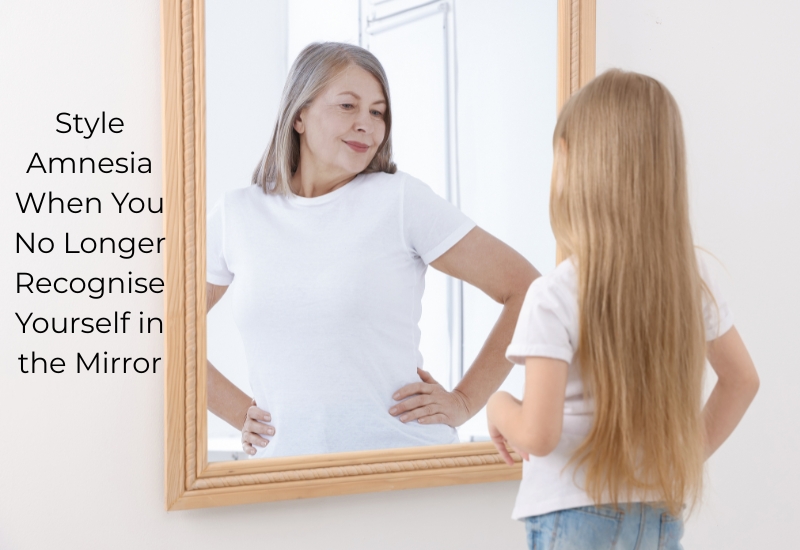
There comes a moment when the reflection looking back at you feels unfamiliar. The colours, the shapes, even the expression – they all belong to a version of you that doesn’t quite fit anymore. That’s style amnesia. It creeps in quietly during life’s big shifts, such as a career change, menopause, having kids or an empty nest. Change may blur your sense of self, yet it also offers the perfect invitation to rediscover who you are now.

Style amnesia occurs when your outer expression fails to keep pace with your inner evolution. It’s not vanity; it’s identity.

Our wardrobes are more than storage; they’re stories of who we’ve been. When life moves forward and our clothes remain stuck in the past, that disconnect feels jarring. You might find yourself reaching for the same “safe” pieces, avoiding mirrors, or second-guessing what once came naturally.

Here’s an example of style amnesia:

I will always remember a client sharing with me an experience she had.  Her typical work self-prescribed uniform was black pants and a black top.  Safe and work-appropriate, but not very interesting.  She was invited to a barbecue one weekend in spring, and thinking that the “black pants” outfit is always appropriate, that’s what she wore.  When she got there, the other women at the barbecue were all wearing dresses, florals, and a riot of colours.  This made my client feel completely out of place.  The black and safe uniform suddenly felt completely off-kilter and out of place.  She had gotten stuck in work mode for so long she forgot about what to wear to a relaxed social gathering.

Recognising style amnesia is the first step toward reclaiming confidence through self-expression.

1. Understanding Why Style Amnesia Happens

Style amnesia often follows major life transitions when the roles, routines, or identities that defined us begin to shift.

  • Career changes alter how we want to project authority and authenticity.
  • Menopause reshapes not only our bodies but also how we experience comfort and confidence.
  • Empty nests can leave space for reinvention but also uncertainty about who we’re dressing for.

These moments can leave us suspended between who we were and who we’re becoming. Your old style might no longer emotionally fit, even if it still physically fits. That’s not failure; it’s evolution.

2. Let Go of Outdated Versions of You

Before you rebuild, release.

Keep only what aligns with who you are today, not who you were ten years ago. Ask yourself:

  • Does this outfit still reflect my lifestyle?
  • Do I feel confident when I wear it?
  • Would I buy this now, knowing who I’ve become?
  • Would I rebuy this from a thrift store now?

Letting go isn’t just about decluttering; it’s about making emotional space for your next chapter.

3. Reconnect with Your Current Identity

When your old wardrobe no longer reflects you, it’s time to get curious about who you are now.

Ask:

  • What values feel most important to me in this season of life?
  • How do I want my clothes to make me feel?
  • What do I want my style to communicate – ease, creativity, authority, or joy?

Reclaiming your style starts with self-awareness. Think of it as meeting yourself again for the first time.

4. Rebuild from the Inside Out

Once you understand how you’ve changed, start rebuilding your wardrobe to reflect your new style.

Focus on:

  • Colour: Choose tones that enhance your current complexion and energy, not what worked decades ago.  You may need to get an update on your colour analysis if your hair colours has changed (or it was over 10 years ago that you had it done).
  • Silhouette: Adapt shapes that honour your present body, not punish it.  Your body will change with age, and sometimes we have to learn new guidelines on how to dress it.  That’s OK!  If you’re not sure what works for you now, my body shape calculator quiz is here to help and get you on your way!
  • Comfort and confidence: What does comfort mean to you? How about confidence, and what makes you feel that way? Getting both in every outfit is your aim.  It’s important to understand what comfort means to you – read my tips here

what makes you feel comfortable and confident

For me, I want clothes that move with me, that are physically comfortable, but also clothing that is an expression of my personality and makes me feel competent as well.  That’s why I love an interesting blazer (like the one above from one of my favourite Melbourne brands, Once Was) with a denim skirt and flat boots.  Easy and comfortable yet still smart and feels like me!

This is where practical meets personal – where your style begins to mirror your growth.

5. Redefine Style as Self-Expression, Not Obligation

You don’t need to “get your old style back.” You’re not going backwards. You’re building forward.

True style after transition isn’t about chasing trends or mimicking influencers. It’s about expressing your evolution. That might mean softer lines, stronger statements, or a touch of playfulness that was once felt to be out of reach.

When you dress in a way that reflects your current energy, you start to recognise yourself again.

6. Get Support in the Reinvention Process

Style reinvention doesn’t have to happen alone. Sometimes you need a roadmap to translate your transformation into your wardrobe.

My Midlife Style Reboot video masterclass (it’s free) offers a practical, empowering guide to rediscover your style after transition. It’s not about starting over; it’s about aligning your outer expression with who you are today.

Because when your wardrobe supports your growth, every mirror becomes a reflection of possibility.

KeyTakeaway

Style amnesia isn’t the end of your style story. It’s a pause before a new chapter. You haven’t lost your sense of style; you’ve outgrown the version that no longer fits. Your clothes are simply waiting to meet the woman you’ve become.

Further Reading

Finding Your Style at Any Age: A Guide to Dressing Sharp and Feeling Confident

How to Rediscover Your Style After Your Body Shape Has Changed

How Your Clothes Impact Your Confidence: Unveiling the Power of Personal Style

8 Ways to Use Fashion to Reflect Your Core Values

Style Amnesia When You No Longer Recognise Yourself in the Mirror

Facebooktwitterpinterestlinkedinmail

What Is Firming Cream: How It Works

0

Here at Juice Beauty, we believe in aging beautifully. Skincare is about supporting your skin as the years pass, not trying to erase signs of a life well-lived.

Today, we’re going to talk about one of these so-called anti-aging skincare products: firming cream. Instead of lifting sagging skin, think of this product as strengthening your skin from within.

In this guide, we’ll break down everything you need to know about firming cream: what it is, how it works, and how you can use it in your own skincare routine to age beautifully.

What Is Firming Cream?

Every skincare routine needs four key steps: cleanse, tone, treat, and moisturize. Firming cream is part of the third step, treat.

The treatment step of your skincare is what allows you to customize your routine to the specific needs and desires of your skin. By choosing a firming cream for this step, you choose the skin benefits that come with it.

The purpose of firming cream is to tighten and lift the surface of your skin. These skincare products are often made with ingredients rich in proteins to support the internal structure of your skin.

Firming cream can:

  1. Increase proteins like collagen and elastin in the skin
  2. Support a more hydrated skin barrier
  3. Minimize skin texture, including smoothing fine lines and wrinkles

By strengthing the inner layers of skin, you fuel your skin with everything it needs for a tight and taut complexion.

How Does Firming Cream Work?

The benefit of firming cream is obvious: smoother, more supple skin. However, to understand how a small dollop of lotion can produce such dramatic results, we have to talk a bit about biology.

In addition to your skin cells, the three layers of your skin also include lipids and proteins that help the organ function. Lipids are responsible for protecting your skin barrier, but proteins are what keep your skin strong.

There are two key structural proteins in your skin: collagen and elastin. Think of these proteins as support beams for your skin. They hold up your skin and prevent it from collapsing in on itself. However, your body naturally loses these proteins as you age, meaning your skin starts to lose its structure over the years.

This is where firming cream comes in.

Firming creams are made with nourishing ingredients that stimulate collagen and elastin production to combat this exact issue. With more of these structural proteins in the skin, your skin gets back its strength.

How To Support Your Aging Skin

The secret to smooth and supple skin at any age isn’t just firming cream alone. While this skincare product is a good way to start caring for your aging skin, don’t let it be the only step. To support and strengthen your skin, implement the benefits of firming cream in every step of your skincare routine.

Our Signal Peptides Regimen for Visibly Firmer & Ultra Hydrated Skin supports your skin from the inside out in every step of your skincare routine:

  • Stem Cellular 2-in-1 Cleanser washes away any lingering grime and refreshes your skin after a long day for a hydrated complexion that feels soft and supple. Powered by fruit stem cells, vitamin C, and resveratrol-rich grapeseed.

  • Signal Peptides Firming Balm & Mask transforms dry, cracked skin into a hydrated and supple complexion as an intense balm by day and a nourishing mask by night. Powered by a custom blend of sunflower-derived lipids, seabuckthorn, and our powerful rice peptides.

  • Signal Peptides Firming Eye Balm hydrates the delicate skin around your eyes for a lifted look and luxurious feel. Powered by rice peptides, pterostilbene-rich wild blueberries, and paracrass — a potent natural botanical clinically proven to smoothen skin and reduce crow’s feet wrinkles in just one use.

At Juice Beauty, all of our products start with our Bio70+ technology, which ensures that every product has a base of at least 70% organic ingredients. This creates the perfect, antioxidant-rich environment for our potent actives to get to work.

For Beautiful Skin, Age Beautifully

Age is nothing to be ashamed of. Wrinkles, fine lines, and age spots tell the world that you’ve lived a beautiful life. Instead of viewing anti-aging skincare as a way to erase the years from your skin, think of it as a way to support your skin after so many years well-lived.

Your aging skin deserves the best support skincare has to offer, including firming cream. By fueling the proteins and fibers that give structure to your skin, you give your skin all the ingredients it needs for a healthy, vibrant complexion.

Sources:

Anatomy of the Skin | Stanford Medicine Children’s Health

Collagen: What It Is, Types, Function & Benefits | Cleveland Clinic

Decreased Collagen Production in Chronologically Aged Skin | National Library of Medicine

Anti-Wrinkle Benefits of Peptides Complex Stimulating Skin Basement Membrane Proteins Expression | PMC

Best Retinol Serums For Anti-Ageing & All Skin Types

0

Image Credit @ Camilla Akrans for Elle France

Retinol serums have become a staple in many skincare routines, praised for their ability to address multiple skin concerns simultaneously. From fighting signs of aging to improving skin texture and clarity, these vitamin A derivatives have earned their place as a gold standard in skincare. But what exactly are retinol serums, what are their proven benefits, and what do we need to know about the proper application techniques?

THIS POST CONTAINS AFFILIATE LINKS

Image Credit @ Camilla Akrans for Elle France

What Are Retinol Serums?

Retinol serums are skincare products containing retinol, a derivative of vitamin A, that promotes skin cell turnover and collagen production. These serums work by increasing the rate at which skin cells regenerate, leading to improved skin texture, reduced appearance of fine lines and wrinkles, and a more even skin tone. Retinol also helps unclog pores, making it beneficial for those with acne-prone skin, too.

Is It Proven To Work?

Studies have shown the efficacy of retinol in improving overall skin condition. One study found that topical formulations containing 0.15% and 0.3% retinol significantly improved skin condition after 8 weeks of use. Participants experienced improvements in skin colour, hydration, and radiance, with a decrease in the number of wrinkles and skin discolouration, too.

Image Credit @ Camilla Akrans for Elle France

How Do You Apply It?

When it comes to applying retinol, it’s essential to start slowly and gradually increase usage. For beginners, it’s recommended to use a small amount (pea-sized) of a low-concentration retinol product once or twice a week, gradually working up to more frequent use as your skin adjusts. Always apply retinol to clean, dry skin in the evening, as it can increase skin sensitivity to sunlight. Follow these steps for optimal results:

  • Cleanse and dry your face thoroughly.
  • Apply a pea-sized amount of retinol serum to your face, focusing on areas of concern.
  • Gently massage the product into your skin until fully absorbed.
  • Follow with a moisturiser to minimise potential dryness or irritation.
  • In the morning, cleanse your face and apply a broad-spectrum sunscreen.

For those with sensitive skin, try the sandwich or buffering method: apply a layer of moisturiser, then the retinol serum, followed by another layer of moisturiser.


6 Best Retinol Serums

  1. MEDIK8 | Crystal Retinal 1
  2. SUNDAY RILEY | A+ High-Dose Retinoid Serum
  3. AUGUSTINE BADER | The Retinol Serum
  4. THE ORDINARY | Retinol Serum 0.2% in Squalane
  5. KIEHL’S SINCE 1851 | Micro-Dose Anti-Aging Retinol Serum With Ceramides And Peptide
  6. SKINCEUTICALS | Retinol 0.3

READ NEXT: Retinol: Everything You Need To Know | The Natural Retinol Alternative

© Wendy Rowe. All Rights Reserved.

This Is the Reason You Always Feel Sick During the Holidays

0

If it seems like you’re entering yet another holiday season feeling ill and rundown, it’s not all in your head. Doctors say the stress of the holiday season can raise the odds you’ll get sick.

That includes everything from viral illnesses to allergic reactions, Rita Kachru, MD, an allergist and immunologist at UCLA Health, tells SELF. If you feel a little frazzled over a pre-holiday work deadline, Dr. Kachru says you’re unlikely to end up getting sick from that alone. But if you’re constantly struggling with the onslaught the holiday season brings, you—and your immune system—could end up paying for it. Here’s why.

The stress-immunity connection is real.

When you’re stressed or in a pressure cooker situation, your body releases hormones like cortisol and adrenaline to help you get through the moment, Kara Wada, MD, an allergist and immunologist in Ohio, tells SELF. “That’s useful in short bursts,” she says. In fact, smaller bursts of stress can enhance your immune system and increase your protection against infection, Thomas Russo, MD, professor and chief of infectious disease at the University at Buffalo in New York, tells SELF.

But that’s what happens when you have a little stress here and there—chronic stress is a different story. “When we are stuck in survival mode, persistently elevated cortisol levels can disrupt the way immune cells communicate with each other, making your first-line defenses slower and less coordinated,” Dr. Wada says. “It can also weaken protective barriers in places like your nose, throat, lungs, skin, and gut—areas where your immune system works the hardest.”

Chronic stress can also raise the risk of more severe allergic reactions. “Allergens by definition are harmless, but our immune system looks at them as if they’re harmful and mounts a reaction,” Dr. Kachru says. “Chronic stress decreases your immune system’s ability to see if something is harmless or not.”

Chronic stress can also increase inflammation in the body while working against pathways that help to keep allergic reactions in check, Dr. Wada says. “That combination leaves your immune system more prone to making mistakes,” she says.

Because stress has the potential to interrupt sleep and sleep is crucial for your immune health, you can wind up in a bad cycle, per Dr. Wada. “More stress leads to worse sleep and subsequently, a less resilient immune system,” she says.

What does this look like?

There are a few things that can happen as the result of all those stress-induced immune changes. “People often notice they get sick more easily during times of prolonged stress—colds that linger for weeks on end, recurrent sinus infections, or a general feeling that your body just can’t catch a break,” Dr. Wada says.