When it comes to hair care, finding the perfect hairdryer can make all the difference. The Blex C1 hairdryer promises to transform your hair drying experience with its cutting-edge features and sleek design. But does it live up to the hype? In this review, we’ll dive deep into the Blex C1, exploring its key features, performance, and how it stacks up against the competition.
Design and Build Quality
The Blex C1 immediately stands out with its chic C-shaped design, a first in the industry. This unique shape isn’t just about aesthetics—it also enhances the dryer’s ergonomics, making it easier to handle and maneuver. Weighing in at just 346 grams (less than 0.8 pounds), the Blex C1 is lighter than a cappuccino, ensuring that even extended drying sessions won’t tire out your arm.
Available in two elegant colors—green and white—the Blex C1 is designed to appeal to those with a refined taste. Its compact and lightweight design makes it perfect for travel, fitting easily into your luggage without adding much weight.
Powerful Performance
The heart of the Blex C1 is its high-speed motor, which spins at an impressive 110,000 RPM. This motor propels air at a speed of 20 meters per second, significantly reducing drying time. Whether you have short, medium, or long hair, the Blex C1 can get the job done quickly:
Short hair: Dries in 40 seconds
Shoulder-length hair: Dries in 2 minutes
Medium-length hair: Dries in 5 minutes
This performance is complemented by the dryer’s 12 blow-drying experiences, allowing you to customize the airflow and temperature settings to match your hair type and styling needs.
Advanced Temperature Control
One of the standout features of the Blex C1 is its intelligent temperature control technology. Equipped with an NTC (Negative Temperature Coefficient) chip, the dryer detects the temperature 100 times per second, maintaining a constant heat of 122°F. This precision prevents overheating and minimizes the risk of heat damage, ensuring your hair remains healthy and vibrant.
Plasma Ion Technology
Frizz and flyaways can be a nightmare for anyone trying to achieve a sleek, polished look. The Blex C1 addresses this issue with its advanced plasma ion technology. By releasing 200 million plasma ions during the drying process, the dryer helps to smooth the hair cuticle, reducing frizz and enhancing shine. The result is a smooth, glossy finish that looks salon-perfect every time.
User-Friendly Features
The Blex C1 is designed with the user in mind, offering several convenient features that make it a joy to use:
Memory Function: The dryer remembers your last used settings, so you don’t have to adjust the settings every time you use it.
Smooth Nozzle: The included nozzle increases wind concentration, making it easier to achieve smoother hair.
Three Wind Speeds: Choose from low, medium, or high wind speeds to suit your hair type and styling preferences.
Safety and Durability
Safety is a top priority with the Blex C1. The dryer’s design ensures that the temperature remains safe for your hair and scalp, even during extended use. The NTC chip’s constant monitoring prevents the dryer from overheating, and the device’s lightweight build reduces the risk of dropping or mishandling.
In terms of durability, the Blex C1 is built to last. The high-speed motor and robust construction mean that you can expect years of reliable performance. Plus, with a 1-year warranty and a 30-day money-back guarantee, you can purchase the Blex C1 with confidence.
Comparing the Blex C1 with Other High-Speed Hairdryers
To help you make an informed decision, we’ve put together a comparison chart of the Blex C1 and other popular high-speed hairdryers on the market:
Final Verdict
The Blex C1 hairdryer is an exceptional choice for anyone looking for a high-performance, stylish, and affordable hairdryer. Its combination of powerful performance, advanced technology, and user-friendly design make it a standout in the crowded market of hairdryers. Whether you have fine, thick, curly, or straight hair, the Blex C1 promises to deliver salon-quality results in the comfort of your own home.
At just $99, the Blex C1 offers tremendous value for money, especially when compared to other high-speed hairdryers that can cost several times as much. With its sleek design, cutting-edge features, and commitment to hair health, the Blex C1 is poised to become a favorite among hair enthusiasts and professionals alike.
Ready to experience the Blex C1 difference? Visit BlexTech.com to learn more and order yours today!
New York Fashion Week: Not a huge amount to write home about, but a few details captured my attention…
Coach has hit its stride in recent seasons and I’m pleased for Stuart Vevers. He’s a nice guy and I think people conveniently forget that he elevated Loewe in the fashion space before Jonathan Anderson arrived. Anyway, at Coach SS26 (above and below) I liked the neck doodads – cute little pouches and pendants meant to symbolise sentimentality and New York mementos. Styled in combination with dishevelled, oversized silhouettes by appropriately youth-obsessed Olivier Rizzothey should help attract the next generation of Coach handbag-toting customers.
At Tory BurchSS26 (below) there was more sentimentality, with clothes resembling well-loved, favourite pieces, creased and crumpled, and accessorised with nostalgic trinkets, in particular beachy shell necklaces and earrings worn with drop-waist belted skirts and flapper-style dresses.
Totem (below) got my vote for its skin-baring necklines (for us short neck girlies – thank you), a fab flat-front white pant and a nonchalant new bag, the Clip – a black croc-embossed top-handle transmitting chaotic, city-girl energy. For the record, Totem bags are really nice and much better value than most It bags.
Finally, I think 90s minimalism may be giving way to preppy revivalism (yes, again).
The choice in fashion seems to be either nostalgia or basic b jeans and vest tops (if Biz Sherbert’s on-campus youth report is anything to go by) and since America is the home of polo shirts, baseball caps, chinos and boat totes, it’s totally unsurprising they want to elevate this heritage. We’ve already seen former Polo Ralph Lauren creative director Michael Rider’s first look at Celineearly peeks of Jonathan Anderson’s preppy-fied Diorand both Gap and J. Crew riding high again in public sentiment, while NYFW saw the runway relaunch of Ivy League haberdasher J.Press (a very literal iteration, complete with JFK Junior lookalike – below).
Should you need more preppy references, pick up a copy of Bruce Weber’s newly released monograph, My Education. Let’s hope the kids pick up on this look but put a more contemporary and subversive spin on it, otherwise I fear we’re stuck with Brandy Melville and ballet flats forever.
WORDS: Disneyrollergirl / Navaz Batliwalla IMAGES: Coach SS26 x 4; Tory Burch SS26 x 2; Totem SS26 x 5; J. Press NOTE: Most images are digitally enhanced. Some posts use affiliate links and PR samples. Please read my privacy and cookies policy here
CLICK HERE to get Disneyrollergirl blog posts straight to your inbox once a week CLICK HERE to buy my book, The New Garconne: How to be a Modern Gentlewoman CLICK HERE to buy my beauty book, Face Values: The New Beauty Rituals and Skincare
Disneyrollergirl Brands, Business of fashion, Design, Designers, Fashion shows, Menswear, News, TrendsBiz Sherbert, Brandy Melville, Celine, Dior, Gap, J Crew, J Press, Jonathan Anderson, Michael Rider, NYFW, preppy, Ralph Lauren, Tory Burch, trends
Peptides are all of the rage right now, especially when it comes to skincare but, sadly, most of the brands using them are not clean, full of other irritating ingredients that may be behind the irritations or redness your skin is experiencing. We offer our customer FREE custom skin care consultations and more and more, we are seeing our customers end up with red or irritated skin after using celebrity skincare brands like Rhode. While we get the hype, it’s hard to resist some of their items, they seem so amazing, the truth is, it’s not the best skin care line for those with truly reactive or sensitive skin. In the big picture, I do want to reassure you that it’s a decent brand for being clean, you can tell they tried to make it cleaner, however, to my standards, it still does not make the cut, here’s why!
What are Peptides!?
Peptides are tiny chains of amino acids, which are like the “building blocks” your skin uses to make proteins like collagen and elastin! These proteins are what keep our skin firm, smooth, and strong, but as we age, we make less of them. So, what’s a girl to do!? Well, using skincare with peptides helps to remind your skin to repair itself, to boost collagen, and to stay healthier, which can improve texture, reduce fine lines, and keep skin looking fresh and strong so, peptides are our friend.
Why We Avoid Rhode Skincare-
But, like most everything else, when it comes to skincare, not all “peptide creams” are created equal. While the Rhode Barrier Restore Cream peptide oisturizer does include effective actives like multiple peptides, niacinamide, and hyaluronic acid, it also contains ingredients that can be problematic for sensitive skin! Like most of their other products!
High levels of niacinamide can sometimes lead to redness or flushing in reactive skin types, and the inclusion of a lactic/glycolic acid copolymer, while great for mild resurfacing, can increase sensitivity if the skin barrier isn’t strong. Additionally, Rhode relies on synthetic stabilizers and preservatives like phenoxyethanol, polysorbate 60, and sorbic acid, which may trigger irritation for those prone to reactivity. I do not allow most of these ingredients in my store because of their irritating side effects!
Rhode Skincare Cleaner Dupes-
Rhode Pineapple Refresh swap for ➳ Good Flower Farm Cleanser or Agent Lactic Cleanser
Both cleansers are designed to gently cleanse, hydrate, and improve skin texture, but Agent’s formula is better for the skin’s health long-term! It uses lactic acid, a naturally derived exfoliant that works like an enzyme to dissolve dead skin cells gently without stripping, while also helping maintain the skin’s natural pH. Agent also relies on plant-based surfactants, aloe, peony extract, and natural preservatives, making it softer on the barrier, less irritating, and more nourishing than the Rhode formula that uses synthetic polymers and heavier cleansing agents.
Both cleansers are designed to gently clean, hydrate, and support the skin barrier, but they take very different approaches. The cleaner formula relies on plant-based surfactants, lavender water, aloe, peony extract, and natural preservatives instead of synthetic polymers and harsher cleansing agents. You get the same effective cleansing but with fewer irritants, safer preservatives, and more soothing botanicals, making the cleaner option better for sensitive and long-term skin health.
Both formulas aim to hydrate, soothe, and protect the skin barrier using humectants, antioxidants, and skin-repairing ingredients. However, the cleaner formula swaps out synthetics like phenoxyethanol, ethylhexylglycerin, and silicones for plant-based extracts, sea minerals, probiotics, and natural preservatives, making it gentler and safer for sensitive skin. You’re getting the same performance benefits but with cleaner, non-toxic ingredients that better support overall skin health! A no brainer swap to us!
Rhode Glazing Milk swap for ➳ Earth Harbor Ceramide Serum
Both formulas are designed to hydrate, plump, and strengthen the skin barrier with ceramides, beta-glucan, sterols, and emollients. However, our dupe achieves the same results using plant-derived ceramides, squalane, probiotics, rice lipids, and natural antioxidants while avoiding harsher synthetics like phenoxyethanol, PEGs, and chlorphenesin found in the Glazing Milk. You get equal barrier support and hydration, but the cleaner option nourishes skin with botanical actives and safer preservatives, making it better for long-term skin health!
Rhode Peptide Glazing Fluid swap for ➳ Om Organics Facial Elixir
Both formulas are designed to hydrate, smooth, and support skin health using humectants, peptides, and antioxidants. However, the Om Organics formula relies on botanical extracts, probiotics, tamarind seed polysaccharides, and collagen-supporting Tripeptide-29 while avoiding harsher synthetics like acrylates, PEG derivatives, and phenoxyethanol. You get the same plumping and firming benefits, but the cleaner option nourishes the skin barrier with plant-based actives, natural antioxidants, and gentle preservatives, making it better for sensitive and long-term skin health. Another no brainer!
Add all of these to your cart in one click, here!
What To Use Instead?
If you want to start using a peptide moisturizer, you are wise to! However, you will want to ensure you use a formula that is not only effective but gentle and non-toxic as well. My favorite swap for the Rhode moisturizer is the Henné Organics Peptide Face Cream as it combines gentle, naturally derived pea peptides with antioxidant-rich botanicals like watermelon, bilberry, avocado, jojoba, and apricot oils to deliver hydration, nourishment, and long-term support for firmness and elasticity! Frankincense and Michelia Alba flower oil then provide soothing benefits, helping to calm redness and strengthen the skin barrier, making it especially suitable for those prone to sensitivity. Instead of harsh, synthetic preservatives, Henné uses radish root ferment, which is gentler on the skin while maintaining the product’s stability. The result is a lightweight yet deeply hydrating cream that supports a healthy, glowing complexion without overloading the skin with harsh actives!
Best For-
We love reaching for the Henna Peptide Face Cream when we want a moisturizer that hydrates, repairs, and strengthens the skin while also soothing redness and irritation. It’s a perfect choice for daily use, especially for those with sensitive, dry, or reactive skin, yet still powerful enough for anyone looking to address fine lines and maintain long-term skin health. So, if you’re in need of a cleaner swap for your Rhode moisturizer or just want to give peptides a cream, we hope this blog was helpful!
Other Products That Use Peptides-
Want to check out all of the Organic Bunny approved products that use peptides?! Here are all of the options to consider!
Agent Nateur Holi (Bright) Resurface Glass Face Mask– We love the Holi (Bright) mask because it delivers a gentle yet effective resurfacing treatment, using lactic acid, hyaluronic acid, gentle peptides, and soothing aloe, all while hydrating, brightening, and calming the skin in one indulgent step! It reveals a radiant, glass-like glow without irritation, making it ideal for sensitive or inflamed skin in need of a hydration-first exfoliate. Our customers call this the Botox in a bottle because the results are so insane! A must.
Jack Henry Cleanse+ Hair Shampoo– Peptides for your hair and scalp? Yes, please! This ultra-nourishing shampoo stands out with its botanical-rich, sulfate-free formula, including honey, biotin, and pro-vitamin B5 to cleanse without stripping, balance the scalp’s microbiome, and leave hair feeling stronger, shinier, and healthy. Perfect for daily use and safe for all hair types, it feels luxurious while promoting lasting scalp wellness.
Om Organics Gotu Kola + Squalane Hyaluronic Nourishing Cream– We adore this cream for being deeply hydrating and repairing, with powerful actives like hyaluronic acid, squalane, and centella (Gotu Kola) that lock in moisture, soothe dryness, and support skin texture and fine lines, making it a must-have in drier climates or when skin needs extra calming and hydration. I use this year round, especially come Winter! It’s my go to, literally.
Henné Organics Peptide Face Cream– We adore this cream for its clean, plant-based formula packed with organic oils like watermelon seed, bilberry, avocado, and soothing botanicals like frankincense. It’s perfect for those looking for a nourishing moisturizer that boosts hydration, gently firms with pea peptides, and calms redness ideal for daily use on sensitive or reactive skin!
Earth Harbor Celestine Hydra-Peptide Serum– This lightweight serum is a hydration powerhouse, delivering sea-derived extracts, hyaluronic acid, and peptides for a plump, refined complexion. It’s fantastic for anyone wanting a glowing, dewy finish without heaviness, especially if you’re targeting dry patches, dullness, or subtle firmness.
Leaf People Peptide & Pearl Brightening Eye Gel– This featherlight eye gel glides on smoothly with camouflaging pearls, peptides, gotu kola, and hyaluronic acid to brighten, hydrate, and smooth under-eye skin. Perfect for those needing a fresh, bright look under makeup or for soothing tired eyes. Peptide eye cream? Yes, please!
Leaf People Peptide Eye Area Toner (Saffron & Green Tea)– Formulated with rare ingredients like saffron, baobab, and kigelia fruit extracts, plus peptides and hydrating hyaluronic acid, this toner visibly brightens, firms, and reduces puffiness around the delicate eye area. It’s a great start to an eye care routine for anyone seeking visible brightening and gentle support.
The Skinny Confidential Brow Peptide– This non-toxic brow serum uses nutrient-rich peptides and castor oil to condition, strengthen, and encourage thicker, fuller brow growth while gently sculpting in place. A win for anyone wanting stronger, more defined brows and it doubles as a nourishing overnight brow treatment.
These are just a few of the products we carry with peptides. Be sure to check out the entire peptide category here for all of our faves. Not sure which products are best for your skin goals?! Book a FREE consult with our team of holistic Estheticians today!
The best part is that updos are not just stylish. They are incredibly practical. Whether you prefer a snatched vibe or a sexily dishevelled finish, wearing your hair up is the easiest way to revive second or third day strands. Glossy waves look their best on freshly washed hair, but updos benefit from a little grit and natural texture. A spritz or two of dry shampoo will only help, adding hold, lift and longevity.
So whether you are rocking a carefree second day topknot, adding a touch of elegance with a classic ballerina bun or going for full drama with an intricate braided creation, an updo is always a good idea. It suits every length and every texture, from short to long and from curly to straight.
What are the best updo hairstyles for long hair?
“A sleek ponytail can create a polished and sophisticated look, perfect for weddings or formal events,” top hairstylist & colourist Rachel Selt tells us. “Adding some waves can soften the style and give it a romantic touch, while face-framing pieces can enhance your features beautifully. You can also play with the height of the ponytail, whether it’s low, mid, or high, depending on the vibe you want to achieve.”
What are the best updo hairstyles for short hair?
“For shorter hair, a waved half-up style with loose pieces can instantly elevate your look with a touch of glamour,” Rachels explains. “This hairstyle beautifully balances elegance and playfulness, allowing the waves to frame your face while keeping the hair off your neck. The soft, tousled waves add dimension and movement, making it a perfect choice for any special occasion. Plus, the loose pieces give it a relaxed yet chic vibe.”
What are the best updo hairstyles for thin hair?
“For thinner hair, a twisted sleek or loose bun is an excellent choice, as it offers both style and sophistication,” Rachel tells us. “By incorporating specific techniques, like adding extensions, you can effortlessly enhance the fullness and volume of your bun. A sleek twisted bun creates a polished look, while a loose bun adds a more boho look. Both styles can be customized to fit the occasion.”
This year’s Cannes Film Festival was a masterclass in timeless glamour and effortless beauty.
Some of my favourite styles—like Carla Bruni’s soft volume, Natalie Portman’s polished bun, and Halle Berry’s natural texture—are perfect examples of how red-carpet hair can be recreated using our four Iles Formula styling essentials. Whether you’re after sculpted shine, frizz control, or that elusive lived-in texture, Cannes 2025 proved that great hair is all about modern refinement and expert care.
Carla’s presence at Cannes 2025 was a testament to enduring style and grace, seamlessly blending classic beauty with contemporary fashion.
Carla’s hairstyle complemented her ensemble perfectly.She opted for a timeless, softly tousled blowout with subtle waves, exuding effortless sophistication.The style, with its natural volume and face-framing layers, harkened back to her ’90s supermodel days, adding a touch of nostalgic elegance to the evening.
To achieve this, look at the Iles Formula Finishing Serum, which would undoubtedly be the best choice. It delivers such a spectacular lustre, has memory hold, and never weighs hair down.
Natalie Portman – Dress: Dior / Hairstylist: Philippe Mensah
Jennifer Lawrence – Dress: Dior / Hairstylist: Gregory Russel
Photo by Lionel Hahn / Getty Images
Sleek and Balmed
The sleek, almost wet, high-shine looks have been highly featured across many red-carpet events for the last four seasons.
Both Natalie Portman and Jennifer Lawrence captivated audiences with their elegant updos, showcasing the timeless appeal of the sleek chignon.
Natalie Portman complemented her ensemble by wearing her hair in a sleek, centred low bun, reflecting her minimalist aesthetic and allowing the intricate details of her gown to take centre stage.
Jennifer Lawrence also opted for a sleek, easy-to-style braided top knot bun.
Both actresses demonstrated how the classic chignon can be adapted to reflect individual style—Portman’s understated elegance and Lawrence’s modern flair—making it a standout trend on the Cannes red carpet.
The ideal styling balm for these looks is the botanically sourced Iles Formula Intensive Hair & Body Balm. A mixture of organically sourced Shea and Tucumã Butter.
Dakota Johnson – Dress: Gucci / Hairstylist: Mark Townsend
Photo: Lionel Hahn/ Getty Images
Polished and Sensual
At the 2025 Cannes Film Festival, Dakota Johnson made a memorable debut with a hairstyle that elegantly blended classic sophistication and modern flair.For the event, Dakota collaborated with her longtime hairstylist Mark Townsend to create a half-up, half-down look that highlighted her signature curtain bangs and added a touch of glamour to the red carpet.
Both Mark and Dakota are avid supporters of Iles Formula, and they consistently seduce us with the Iles Formula Finishing Serum styles, a favourite product of theirs.
Toni Garn – Dress: Archival Redemption / Hairstylist: Ilham Mestour
Photos by Lionel Hahn/Getty Images
Boho Waves
At the 2025 Cannes Film Festival, natural waves emerged as a standout trend, with Halle Berry and Toni Garrn both embracing effortlessly chic hairstyles that celebrated texture and movement.
Halle Berry, serving as a jury member, debuted a voluminous, side-parted bob with soft waves that exuded modern sophistication.This chin-length cut, styled with a tousled finish, marked a departure from her previous sleek looks, highlighting her versatility and confidence. Hale’s wavy bob complemented her array of elegant ensembles throughout the festival, reinforcing her status as a style icon.
Toni Garrn also embraced the natural wave trend, opting for loose, flowing curls that framed her face beautifully.Her hairstyle added a touch of relaxed glamour to her red carpet appearances, perfectly balancing sophistication with a carefree vibe.
There is no better choice of product for curl than the Iles Formula Curl Revive, which promises hydrated curls with absolutely no crackle and crunch.
Both Berry and Garrn’s choices underscored a broader movement at Cannes 2025 toward embracing natural textures and understated elegance, proving that sometimes, simplicity makes the most striking statement.
It’s almost impossible to have a discussion about how to hydrate dry skin without mentioning hyaluronic acid. This hero humectant, often described as a “drink of water for the skin”, attracts and retains moisture, and can hold up to 1,000 times its weight in liquid. Put simply, it can transform skin from parched and dull to plump and glowing, just like that.
It’s no surprise, then, that it tops the ingredients lists of so many cult moisturisers, and makes up an entire category of its own it the form of hyaluronic acid serums. With the ability to provide both instant and longer-term hydration, it instantly gives your complexion a boost, as well as working deep in the skin for lasting benefits.
Plus, since it’s a substance the body produces on its own, hyaluronic acid tends to be well-tolerated, as well as playing nicely with other actives that might already be in your skincare routine. For those with dry skin, what’s not to love?
How does hyaluronic acid work?
“Hyaluronic acid is a great ingredient because it attracts and holds onto water, helping the skin feel plumper and more comfortable,” says Dr Anjali Mahto, consultant dermatologist and founder of Self London. “It works a bit like a sponge within the skin’s surface layers, keeping moisture where it’s needed most.”
And the benefits are both short-term and long-term. “Many hydrators either sit on the surface, or absorb too quickly to make a visible difference,” says Dr David Jack, an aesthetic doctor with clinics in London and Edinburgh. “Hyaluronic acid is unusual in that it can both comfort the surface immediately and improve hydration deeper within the skin.”
La Roche-Posay Hylu B5 Serum
Vichy Minéral 89 Daily Booster
How good is hyaluronic acid for dry skin?
The beauty of hyaluronic acid is that, since it’s biomimetic – as Dr Jack says, “our skin already knows what to do with it” – it is tolerated by almost all skin types, even sensitive.
“Unlike heavy emollients that can overwhelm oily or breakout-prone skin, hyaluronic acid delivers hydration without weight, greasiness or pore congestion,” he adds.
During the winter months, with their bracing winds and sub-zero temperatures, dry skin is likely to suffer further still, and even oilier skin types might find they experience parched skin in need of additional hydration.
“Cold air, central heating and harsh winds all pull moisture from the skin, leaving it tight and irritated,” says Dr Mahto. “Longer, hotter showers and over-cleansing can also compromise the skin barrier during winter.”
Those with very dry skin, or with a weakened skin barrier, will love hyaluronic acid’s ability to plump and hydrate, but will probably find it isn’t enough on its own. “It hydrates well, but it can’t replace the lipids that prevent transepidermal water loss [when water evaporates from the skin’s surface] in the first place,” says Dr Jack.
Laneige Water Bank Blue Hyaluronic Cream Moisturizer
Dr David Jack Skin Cushion Pro-Lipid Recovery Cream
For a mega moisture injection, look for formulas that combine hyaluronic acid for dry skin with richer occlusives, or ceramide-based creams – such as Laneige’s Water Bank Blue Hyaluronic Cream Moisturizer and Dr David Jack Skin Cushion Pro-Lipid Recovery Cream – or use a hyaluronic acid serum followed by a separate moisturiser to seal it in.
“Hyaluronic acid works beautifully with ceramides, glycerin and squalane, all of which help to reinforce the moisture barrier,” adds Dr Mahto.
How should a hyaluronic acid product fit into your skincare routine?
When adding a new ingredient into your skincare routine, it’s always important to consider how it will interact with the actives you already use. Thankfully, hyaluronic acid is pretty easygoing.
If there’s one thing you don’t want to endure, it’s the symptoms of norovirus, which also goes by the unfortunately apt moniker of “winter vomiting disease:” It triggers brutal GI upset for roughly one to three hellish days. Norovirus usually spikes in the depths of winter, as its nickname references, because the pathogen fares better at lower temperatures. And recent wastewater data reveals an earlier-than-usual surge, particularly in the Northeast and Midwest.
While CDC data suggests norovirus rates are still below their unusually high peak this time last year, there are a few reasons to be concerned. For one, 2024 brought a new variant of norovirus, GII.17, which has “an enhanced ability to bind to human intestinal cells,” making it better at evading any immunity from prior infections, Asif Noor, MD, chief of the division of pediatric infectious diseases at NYU Langone-Long Island, tells SELF. And experts suspect this beast of a variant could dominate again this year.
Norovirus is also extremely contagious, particularly the GII.17 variant, Dr. Noor adds. It spreads easily through contact with someone who’s infected—say, by caring for a sick person, or by sharing food or eating utensils with them. Plus, it’s an especially sturdy bug, with a strong shell that everyday cleaners can’t easily dissolve, allowing it to linger on surfaces for days (you’ll typically need bleach to kill it).
Read on to learn the most common norovirus symptoms to look out for, and when it’s time to check in with a doctor if you’re feeling trapped-in-the-bathroom sick.
1. Severe stomach cramping or pain
It’s easy to write off an upset stomach, but the abdominal cramping and pain typically caused by norovirus will be hard to ignore. It’ll generally start abruptly and tends to be severe, Dr. Noor says. Many people also experience uncomfortable nausea, per the CDC.
2. Diarrhea, vomiting, or both
Norovirus often causes persistent diarrhea and vomiting—sometimes both at the same time, Rabia A. De Latour, MD, gastroenterologist and assistant professor of medicine at NYU Langone, tells SELF. It’s the reason for norovirus’s other terrible nickname, the “two-bucket disease.” Per the CDC, it isn’t unusual to feel “extremely ill” and deal with diarrhea or vomiting multiple times a day. (That said, norovirus shouldn’t cause any blood in your poop.)
3. Body aches and other flu-like symptoms
It’s no coincidence that people often call norovirus the stomach flu. It can similarly trigger muscle aches, fatigue, and headaches. As with most infectious illnesses, when your immune system jumps into action to fight norovirus, your protective cells trigger inflammation, which can lead to whole-body soreness and make you feel completely wiped out.
4. Fever and chills
A low-grade fever—meaning your temperature is somewhere between 99.6 and 100.3 degrees Fahrenheit—is a common symptom of norovirus, as are the chills. Like muscle aches, a fever can be a sign that your body is fighting an infection, and it can make you feel clammy or sweaty.
5. Severe dehydration
Because norovirus can set off seemingly nonstop diarrhea and vomiting, it’s essential to be aware of your fluid intake once symptoms hit, Christopher Cao, MD, an assistant professor of gastroenterology at the Icahn School of Medicine at Mount Sinai in New York City, tells SELF: “One of the most frequent symptoms we see in patients is dehydration.” This, in turn, can lead to muscle cramps, headaches, dizziness or lightheadedness, dark-colored urine, dry mouth, exhaustion, or feeling confused.
When to see a doctor about norovirus symptoms
If you have any combo of the symptoms above and they don’t settle after 48 hours—or you just feel really unwell and can’t keep food or liquids down—it’s time to seek medical help, Dr. De Latour says. Getting in touch with a primary care doctor is a good place to start, whether they’re a provider you see regularly or one at an urgent care center.
Whether defending, restoring, or strengthening, in skincare there’s a lot of talk about the skin’s moisture barrier. Sometimes known as the skin’s protective barrier too, aside from its name being pretty self-explanatory, it’s not always that clear however why we need to pay so much attention to the moisture barrier. For example, how does it get damaged, what are the signs of damage, and why is protecting the skin barrier so important?
To answer all these questions and more, here’s everything you need to know about the skin’s moisture barrier.
What is your moisture barrier?
There are various layers to the skin, each serving a different purpose. Your moisture barrier, also known as your acid mantle or stratum corneum, provides critical protection for your skin. This layer acts as the first line of defense, keeping good things in and bad things out. Those bad things it keeps out include environmental stressors, bacteria, pollutants, and other irritants.
And the good things? That mainly includes hydration or moisture.
Here’s a not so fun fact, it’s estimated that more than 75% of the population suffers from dehydration. And, you guessed it, that means your skin’s moisture barrier is damaged. The good news is, you can restore it and at the same time, improve your skin’s hydration levels and get rid of that tight, dry feeling.
How to tell if your moisture barrier is compromised
When your moisture barrier is healthy, epidermal cells are packed tightly to prevent water loss. This is similar to the way mortar fills in the gaps between bricks. It’s much more difficult for anything to enter or exit the skin when there’s a solid line of defense blocking the road. The more it’s compromised, the more room there is in between your skin cells for moisture to escape and bacteria to enter. If your skin feels tight, itchy, or abnormally sensitive, your moisture barrier is likely damaged. A sure sign of a damaged acid mantle is when even your normal products cause sensitivity or reactions.
You may also have heard of a term known as inflammaging—inflammatory aging. Two of our least favorite things, this chronic inflammation is when the skin’s barrier is damaged, becoming vulnerable to infection from microorganisms, pollution, toxins, UVA/UVB rays, increased cortisol levels, and more. Basically, your skin is working harder to defend against stressors. And, over time, inflammation leads to sensitivity, irritation, redness, rosacea, acne, and rapid aging – fine lines, wrinkles, uneven skin texture.
How to prevent moisture barrier damage
Nothing disrupts your stratum corneum quite like over-exfoliation. We always recommend exfoliation as part of every skincare ritual, but it needs to be kept within a reasonable amount. Chemical and physical exfoliation can be incredibly effective, as are monthly peels too, but should be used within the recommended frequency.
Everyone’s skin is different, however, so make sure to listen to your skin and avoid exfoliation if you’re feeling extra sensitive. Reduce it for a while and see how that goes.
Another factor in damaged moisture barriers is winter or prolonged cold weather. Increase your moisturizer when the temps drop to help avoid dehydrated, dry skin. We promise, your skin will thank you.
How to repair your moisture barrier
If you notice that your skin is starting to show signs of a damaged moisture barrier, don’t stress, just try these easy steps.
Stop exfoliating (chemical and physical) and focus on repairing your skin.
Switch to gentle products that use emollients to not only strengthen the skin but also hydrate and seal in moisture. Some of our favorite picks include:
Bio-Renew EGF Drops: The vegan epidermal growth factor (EGF) and bio-active peptides in this anti-aging serum gets to work restoring and repairing skin’s barrier, ready for the hyaluronic acid to rehydrate and strengthen skin.
Bio-Renew EGF Cream: Supporting our best-selling EGF serum, this award-winning EGF moisturizer is clinically proven to brighten, hydrate, and reduce the appearance of fine lines and wrinkles. EGF is an effective barrier repair ingredient, and when paired with phyto-retinol and peptides it makes this a super restorative moisturizer for daily or post-procedure use.
HA-Revive Hyaluronic Drops: Next-level hyaluronic acid-powered hydrating serum, boosts moisture levels, while plumping and strengthening for refreshed, radiant skin.
HA-Revive Hyaluronic Mist: Created to deeply hydrate and help prevent water loss by reinforcing skin’s protective barrier. Use it to rehydrate throughout the day or to prep skin for serum and moisturizer.
Vita E Essential Cream: A true medium-weight moisturizer that helps strengthen damaged skin, while also calming irritation and redness.
Restorative Mask: A nutrient-rich mask that helps restore skin’s strength and elasticity with the use of antioxidants and other conditioning ingredients.
Be patient. Repairing your moisture barrier takes time. Remember you’re in a marathon, not a sprint, and the more gentle you are with your skin the faster you’ll see results.
Unsure whether you have dry or dehydrated skin? Find out more about both with our guide.
The Lip Bar Holiday Collection just entered the chat and it’s got beauty lovers everywhere rushing to add to cart. This year, The Lip Bar decided to bring the holiday glam with a special influencer collaboration and it’s giving bold, thoughtful, and fabulously festive.
Photo Credit: IG @TheLipBar
Each lip kit in this limited edition drop is created by one of three powerhouse beauty voices: Jeannette Reyes, De’arra Taylor, and Jenee Naylor. From soft everyday glam to head turning bolds, these lip kits are designed to meet your every holiday mood. And yes, they’re as stunning as you’d imagine.
Why The Lip Bar Holiday Collection Stands Out
This drop is about more than just lipstick. It’s about real creators shaping the beauty space in their own voice. The Lip Bar has always been committed to inclusivity, and this influencer collection keeps that same energy.
Each kit includes three full sized essentials — a lip liner, a matte liquid lipstick, and a gloss — curated with intention and personality. The shades are rich, flattering, vegan, and made to complement a wide range of skin tones, especially deeper complexions. Whether you love a full beat or a natural finish, there’s something in this collection for you.
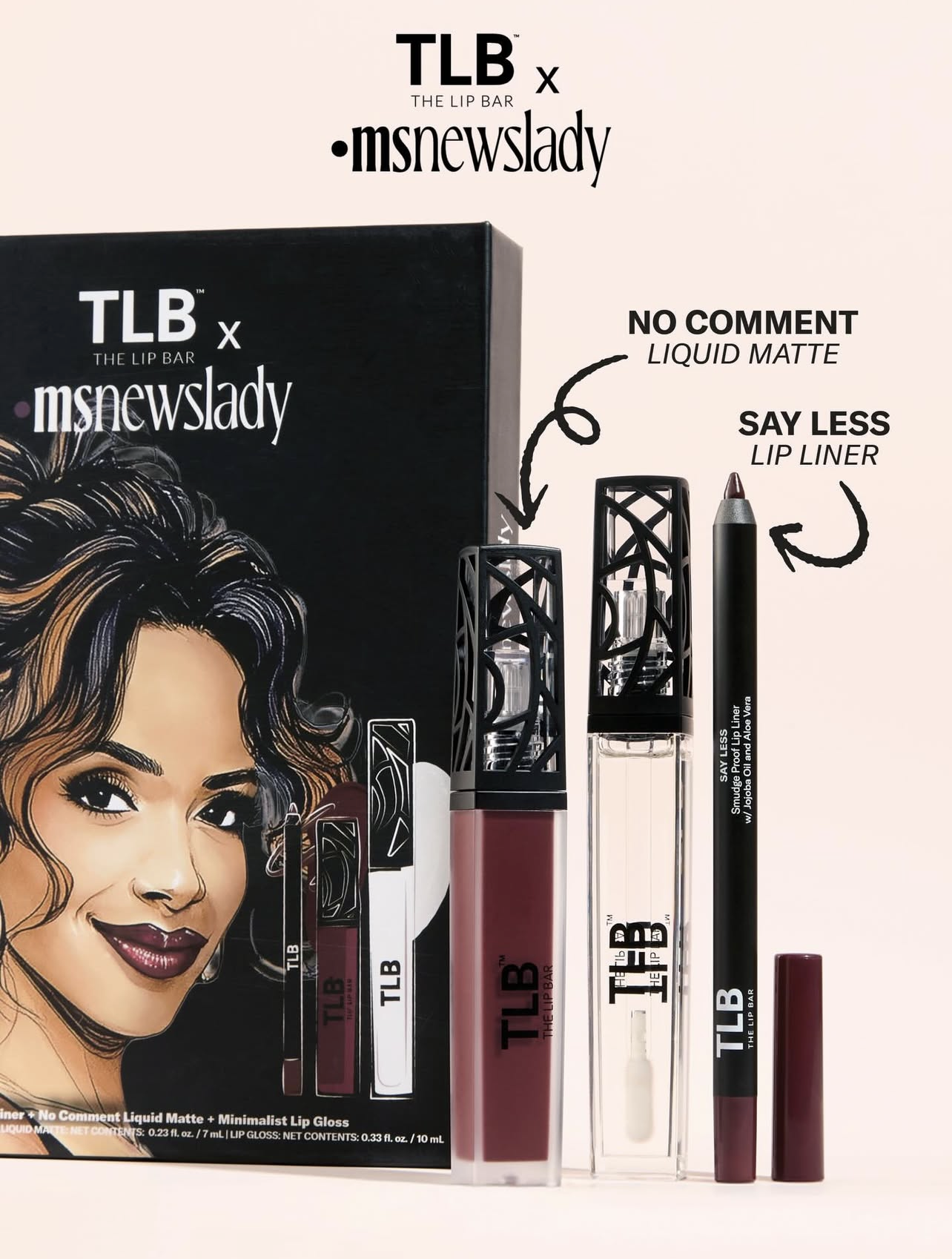
Jeannette Reyesknown as @msnewslady, is a journalist and content creator with a love for polished glam and a touch of drama. Her lip kit brings elegance with a twist.
Lip Liner:Say Less – a rich deep brown that glides effortlessly for perfect definition.
Liquid Matte Lipstick:No Comment – a deep wine that feels luxe and makes a bold statement.
Lip Gloss:Minimalist – a clear gloss for that high shine finish you can layer or wear solo.
This kit is giving boss beauty with a side of classic confidence.
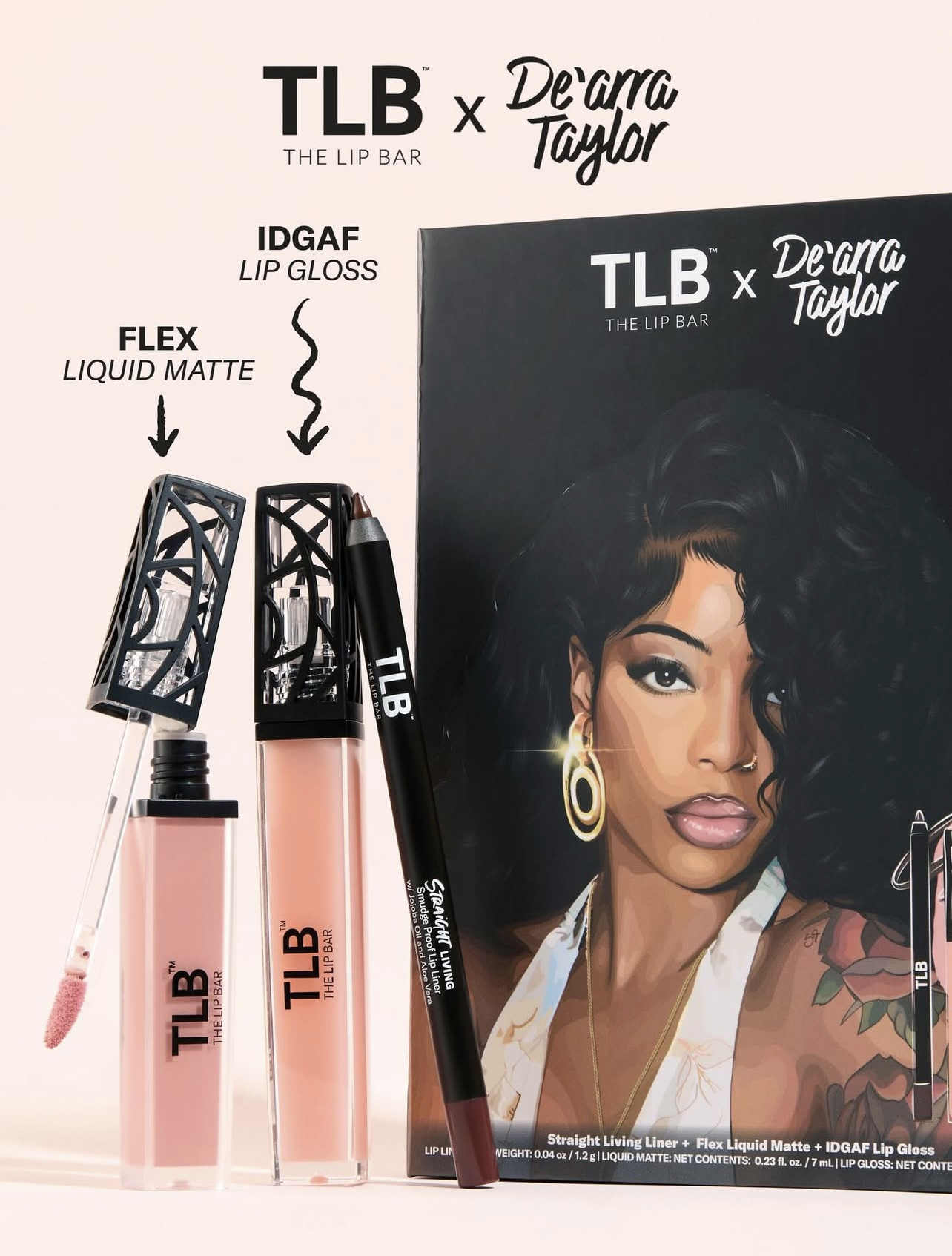
De’arra Taylorknown as @dearra, the ultimate trendsetter and digital icon, came through with a kit that reflects her playful yet put together aesthetic. Think soft glam with edge.
Lip Liner:Straight Livin – a versatile brown that works across skin tones.
Liquid Matte Lipstick:Flex – a soft neutral pink that pops without overpowering.
Lip Gloss:Idg – a creamy nude gloss with just enough attitude.
De’arra’s kit is perfect for everyday slay or dressing up a chill holiday fit.
Yeee Naylorknown as @janeetaylor, a fashion and beauty content queen, took inspiration from timeless glam with a modern Y2K twist. Her kit is giving throwback feels in the best way.
Lip Liner:Straight Livin – a repeat favorite for its versatility and richness.
Liquid Matte Lipstick:90s Fine – a warm brown nude that feels like a nostalgic hug.
Lip Gloss:Trophy Wife – a golden gloss with shimmer that instantly elevates any lip.
Jenee’s kit is the one you reach for when you want that glow up moment without trying too hard.
Whether you are shopping for yourself or wrapping up a surprise for a beauty loving bestie, The Lip Bar Holiday Collection has all the essentials in one little box of joy.
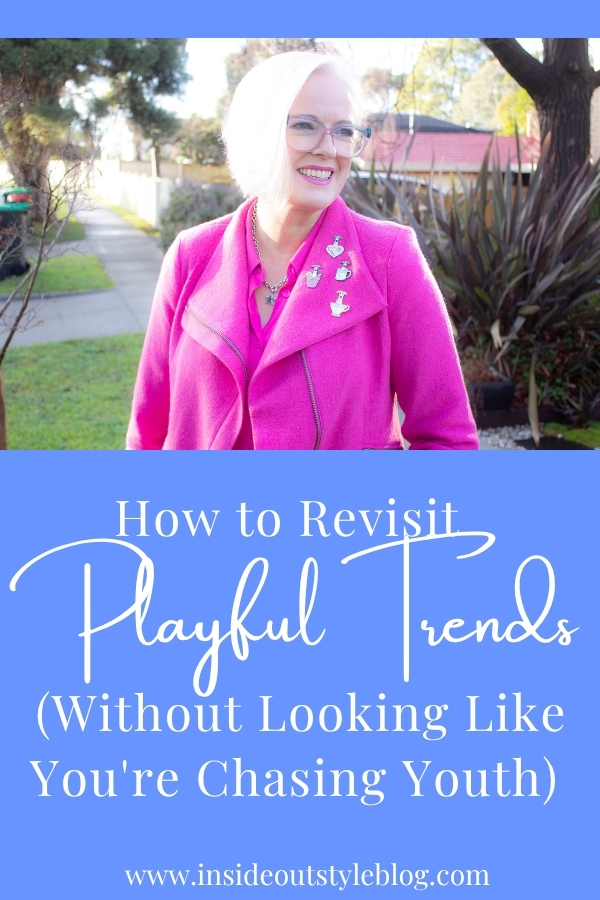
It’s absolutely possible to revisit playful trends as a wise woman without looking like you’re clinging to your twenties (or teens). In fact, embracing elements of fun in your outfits – whether that’s a touch of whimsy, a nostalgic accessory, or a pop of bold colour – can be an expression of confidence, not immaturity.
I’ll admit, there have been times I’ve hesitated to wear something I truly loved, worried it might seem “too much.” But then I’ve told myself to get over myself and that style is not just for the young and that it’s guidelines not rules and the fashion police will never come to take me away!
Style isn’t about age – it’s about alignment. You’re allowed to revisit playful trends. You’re allowed to love glitter sneakers, novelty earrings, or a touch of leopard print. The secret? Doing it with intention, not apology.
When you revisit playful trends with self-awareness and polish, you’re not chasing youth – you’re showcasing joy. Let’s explore how to do that with style integrity.
Playfulness ≠ Immaturity
There’s a big difference between dressing young and dressing with youthfulness. One tries to erase age. The other celebrates life and vitality.
I do pilates and yoga at a studio where the average age is under 30. Sure, I don’t rock a crop top like they do (nobody needs to see my stomach), but I’m always getting compliments on the colour of my activewear (cos I know what colours make me look good). When I’m attempting the “bird of paradise from side-angle pose” in yoga class, yes, I may fall over (and often do), but I’m giving it a red-hot go, and you know, it’s fun for me, never embarrassing and in fact sometimes I can even do it pretty well now with all the practice I’ve put in. No matter what you do in life, you want to add play to your life if you want to be happier. And if you’re not sure what a bird of paradise is – check out this short video!
As a wise woman, you’ve earned the right to express yourself however you please. But many of us hold back, fearing we’ll look like we’re trying too hard. Here’s the truth: when you revisit playful trends with personality and polish, you’re not regressing – you’re revealing.
Just think of Sarah Jessica Parker as Carrie Bradshaw in And Just Like That…. She wore tulle, bold prints, and sky-high heels with absolute confidence – not because she was trying to look younger, but because she knew her style DNA. That’s the kind of joyful, personality-driven fashion I’m talking about. She made playfulness her signature, and that’s what made her unforgettable.
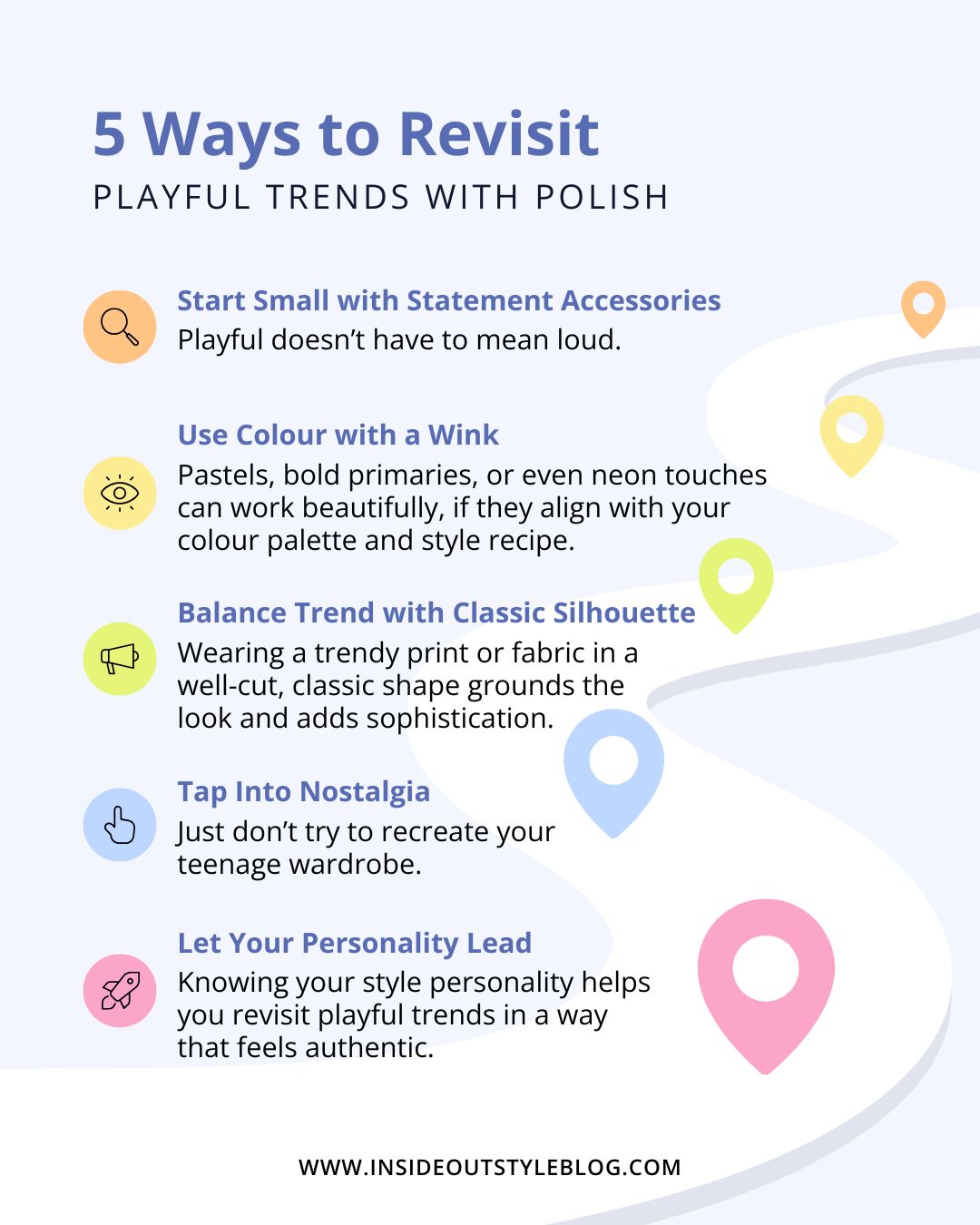
5 Ways to Revisit Playful Trends with Polish
1. Start Small with Statement Accessories
Playful doesn’t have to mean loud. A pair of floral sneakers, a bag shaped like a camera, or cherry-red glasses can say “I don’t take myself too seriously” while still looking intentional.
Start with:
Novelty earrings
Patterned scarves
Playful brooches
Graphic bags
Glasses frames in signature colours
I have a selection of fun, playful accessories, including the brooches below.
Erstwilder Peacock Brooch
Whippet brooches from Sass Artworks
Whippet brooches from Sass Artworks
Anyone who knows me personally knows that I’m crazy about my whippets, which is why I love my Sass Artworks whippet jewellery. They are fun and express me.
When you choose accessories that say something about you, these pieces add personality without overpowering your outfit.
2. Use Colour with a Wink
Pastels, bold primaries, or even neon touches can work beautifully—if they align with your colour palette and style recipe. A dopamine-dressing pop of colour says “I love life,” not “I wish I were 25.” Colour brings joy, and don’t you wamt more joy in your life? Avoid dressing head to toe in neutrals; instead, embrace your best colours.
Need to discover your ideal palette? My 7 Steps to Style program includes professional colour analysis to help you choose fun with strategy.
3. Balance Trend with Classic Silhouette
Wearing a trendy print or fabric in a well-cut, classic shape (like a blazer or shift dress) grounds the look and adds sophistication. The reverse works too: keep your colour palette classic but experiment with shape or styling.
Try this mix:
A tulle skirt with a crisp button-down
A sequin tee under a structured jacket
Converse with a tailored pant
It’s all about balance.
4. Tap Into Nostalgia Without Time Travel
Loving something that reminds you of the 80s or 90s? Great. Just don’t try to recreate your teenage wardrobe. Instead, borrow elements: a high-waisted jean, a touch of neon, a scrunchie in luxe velvet.
The rule: modernise one element. Keep the rest sleek and current.
5. Let Your Personality Lead
This is the most important rule. If you’re Classicyou might try subtle whimsy like a pearl necklace with a twist. If you’re Dramaticgo bold with shape or contrast. If you’re Creativewell—go wild. You set the tone.
Knowing your style personality helps you revisit playful trends in a way that feels authentic. You’ll never feel like you’re in costume.
Need help decoding your style personality? It’s a key component of my 7 Steps to Style journey.
Age Doesn’t Cancel Play
If your outfit makes you smile, sparks creativity, or helps you feel more you—that’s the only permission you need. When you revisit playful trends with self-awareness and style intelligence, you’re not chasing youth. You’re inviting your personality to the surface.
So yes, you can wear the rainbow sneakers. Just pair them with confidence.
Recommended Reading
What 2 Things You Should Wear to Bring More Joy Into Your Life
Forget Trends, Remember Fun! Unleash Your Inner Child with These Playful Outfit Ideas
How to Decide if a Fashion Trend is For You or To be Avoided
Are You Celebrating Versatility in Your Daily Looks? The Joy of Multi-Purpose Fashion












 Need to discover your ideal palette? My 7 Steps to Style program includes professional colour analysis to help you choose fun with strategy.
 Age Doesn’t Cancel Play