If you spent any time on TikTok over the past year, you likely saw a flood of DIY manicure videos. One look in particular has reached cult-classic status: layering two wildly popular OPI shades—Bubble Bath and Funny Bunny. At home or in the salon, nail lovers have been combining a coat of each to achieve the perfect milky pink. It’s sheer, goes with everything and feels endlessly chic. As fun as it is to DIY, though, mixing shades to get the balance just right does take extra time and effort. For spring 2026, OPI has taken that work off your hands with a new shade inspired by the trend: OPI’m a Bubble Bunny ($12).
Bubble Bath ($12) and Funny Bunny ($12) aren’t the only iconic shades getting a remix. The brand’s new launch, aptly named the OPIcons Collectioncelebrates OPI’s most recognizable polish colors by blending them into fresh takes. You may spot global bestsellers such as Lincoln Park After Dark ($12), Big Apple Red ($12), You Don’t Know Jacques! ($12) and more —all reimagined through unexpected shade pairings in the latest collection.
“When I first started exploring the world of nail color, I felt that it didn’t offer people anything personal or relevant to their lives, with basic colors and generic, one-size-fits-all names,” says OPI co-founder and brand ambassador Suzi Weiss-Fischmann. “But I’ve always had an unshakeable belief in the transformative power of color, especially as a vehicle to express freedom, joy and empowerment. I wanted our consumers to have the entire rainbow at their fingertips through OPI.”
The launch arrives as OPI celebrates 45 years in business. The new shades span soft pinks like rose and bright fuchsia, versatile neutrals like pale pink and greige and deeper hues, including lavender and burgundy. Shade names nod to the originals, and the collection includes 12 new shades in Nail Lacquer, GelColor Intelli-Gel System and Powder Perfection formulas (salon-only), plus 12 additional shades in Infinite Shine and 11 xPRESS/ON press-on sets.
“The OPIcons Collection is a celebration of this heritage,” Weiss-Fischmann continues. “Our name, logo, iconic bottle, incredible formulas and colorful contents have become a messenger of beauty and inspiration. I love hearing about the emotional connections our shades have forged, and with this collection, we’re turning to our most iconic hues to create new favorites.”
While you can still reach for classic shades like Funny Bunny and Lincoln Park After Dark—and wear them solo or mix them yourself—these new releases make experimenting with updated versions of OPI’s most beloved colors easier than ever.
Heart racing. Palms, clammy. Breath, shaky and sporadic. You’re probably well-acquainted with the body’s stress response, a.k.a. fight-or-flight, aptly nicknamed for what it has evolved over millennia to help us do in the face of a threat. The problem is, modern life is full of perceived threats, like, for instance, gridlock traffic or the 24-hour news barrage, that can keep your stress response always-on. But according to cardiologist Tara Narula, MD, it’s possible to dial it down by building a bit of resilience, or the ability to adapt well in the face of adversity and even grow from it.
That’s the concept of a resilience response, which Dr. Narula puts forth in her new book, The Healing Power of Resilience. Research has long shown that a constantly percolating stress response strains practically every body part, particularly your heart, which pumps harder and faster to ready you for action. “You likely can’t take away the stressors in your life,” Dr. Narula tells SELF. “But you can certainly change how you react to them, for the better.”
Dr. Narula was inspired to write the book after watching the benefits of resilience pan out time and again among her cardiac patients: Those who had greater mental fortitude—the ability to find emotional steadiness when faced with a traumatic event—fared better than those with less resilience who were hit with the same diagnosis. Read on to learn why honing a resilience response can protect your heart long-term, and how to do just that.
Headshot: ABC/HEIDI GUTMAN; Book cover: Adobe Stock/Simon & Schuster
How resilience helps keep your heart healthy for the long haul
Resilience benefits your heart by helping to shield it from the many detriments of stress. Operating frequently in stress mode can prompt a negative cascade that unfolds over time, Dr. Narula explains. First, it raises your heart rate and blood pressure, and floods your system with the stress hormones cortisol and adrenaline. Remember, all of these things are useful for fighting or fleeing in the short-term, but if your body hangs around in this state, your immune system kicks into overdrive, which can bubble up inflammation, and your liver pumps out more “bad” LDL cholesterol, all of which raises your risk of heart disease. Stress can even split apart plaque in your arteries, leading to heart attack, Dr. Narula adds.
And then there are the ways stress can put a wrench in your lifestyle habits, which can have negative consequences for your heart too. “When we’re under stress, we may be more likely to pick up a cigarette, drink alcohol, reach for comfort foods that perhaps aren’t so healthy, stop exercising and sit at home, and miss out on sleep,” Dr. Narula says.
For the girls who love a pink blush and lip moment, this one is for you.
There is something about pink makeup that feels romantic, playful, and effortlessly put together. Especially around Valentine’s Day, pink beauty is everywhere and honestly, we are not mad about it. From soft rosy cheeks to glossy pink lips, these are the kinds of products that make getting ready feel special, even on an ordinary day.
I curated a list of pink beauty favorites from my Sephora storefront featuring brands I genuinely love like YSL, Emi Jay, Charlotte Tilbury, and Summer Fridays. These are products that are trending right now and perfect for creating that dreamy pink vanity moment.
Pink Blush That Makes Your Skin Look Alive
Pink Lip Favorites That Feel Easy
Soft Fragrance With Sweet, Romantic Notes
Pretty Hair Accessories That Pull the Look Together
Playful, Girly Flower Knows Makeup
Here are even more picks for a rosy, Valentine’s Day vibe that you’ll love:
Why These Picks Work for Valentine’s Day
All of these products feel soft, romantic, and wearable. None of them are heavy or intimidating. They bring just enough color, shine, and personality to make your beauty routine feel elevated.
This is the kind of makeup you actually use. It makes you feel cute whether you’re headed out, taking photos, or just getting ready for yourself.
Shop all of my pink beauty favorites on Sephora
Affiliate Disclaimer:
Items marked with an asterisk were gifted. As always, all my reviews are my own. This post contains affiliate links. This means that I will make a commission on any purchase you make when you click on one of my links.
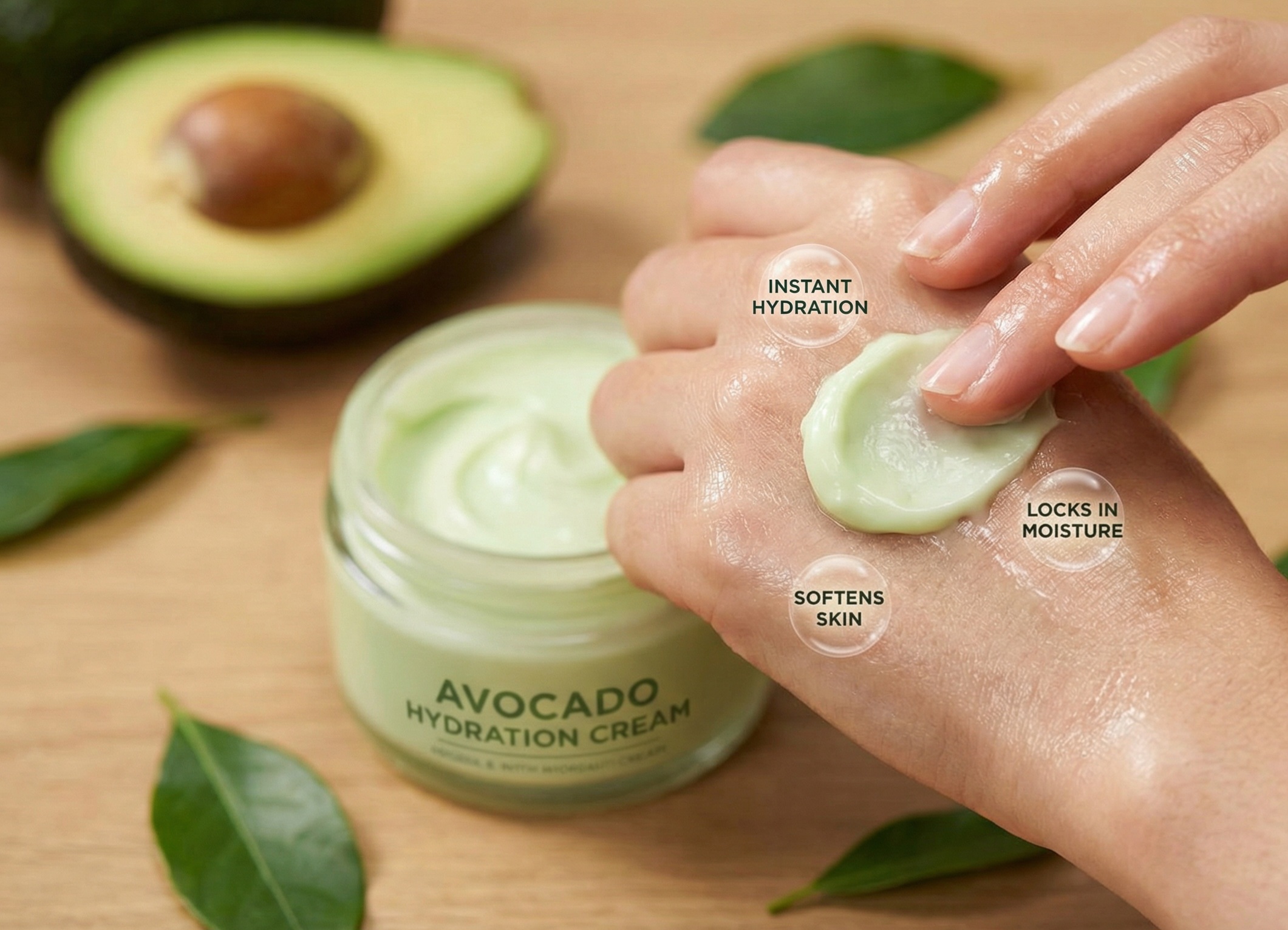
I’ve always believed that the most effective skincare ingredients are the ones that work with your skin’s biology, not against it. Avocado is one of those rare natural ingredients that delivers barrier-supportive benefits backed by research and rich, biologically active nutrients — especially for dry, sensitive, and aging skin.
Today I’ll break down exactly how avocado helps your skin, supported by external scientific evidence and clear guidance on how to use it in your routine.
What Makes Avocado Powerful for Your Skin Barrier?
Your skin barrier — the outer protective layer of your skin — is mainly composed of lipids, fatty acids, and ceramides. When this barrier is healthy, it keeps moisture in and irritants out. When it’s compromised, skin becomes dry, sensitive, reactive, and aged.
Avocado is uniquely rich in:
*Oleic acid (a monounsaturated fatty acid)
*Linoleic acid
*Vitamin E and carotenoids (potent antioxidants)
*Phytosterols (anti-inflammatory compounds)
These nutrients help strengthen the lipid layer, soothe inflammation, and support overall barrier function.
Research reviews have noted that formulations containing 3–20% avocado oil can improve skin elasticity, reduce inflammation, and provide photoprotective effects — all thanks to the synergy of fatty acids, vitamin E, and antioxidants in the oil itself.
Scientific Evidence: What Studies Say
While high-quality human clinical trials focused solely on avocado oil topicals are still growing, credible scientific research does support its benefits:
🔬 1. Improved Skin Structure & Inflammation
A narrative review found that avocado oil’s bioactive compounds — unsaturated fatty acids, vitamin E, and carotenoids — modulate oxidative and inflammatory responses in the skin, leading to improved skin elasticity and barrier health.
🔬 2. Collagen Support & Skin Repair
In animal studies, avocado oil and its unsaponifiable fractions were shown to increase soluble collagen content in skin tissue — an indicator of improved skin repair and structural integrity.
Even though this particular work is in animal models, it’s consistent with broader evidence suggesting avocado’s components help promote collagen synthesis and wound healing — key elements of a resilient skin barrier.
🔬 3. Antioxidant-Driven Anti-Aging
A scientific narrative review highlighted that incorporating avocado oil into skincare can support anti-aging by combating oxidative stress and protecting critical skin proteins such as collagen and elastin.
How Avocado Actually Helps the Skin Barrier
Here’s what avocado does on the skin:
🛡️ 1. Replenishes Lipids
The fatty acids in avocado help replenish the skin’s lipid layer, which slows moisture loss and restores barrier strength.
2. Deep Hydration
Avocado oil creates a occlusive layer on the skin, enhancing moisture retention — perfect for dry or flaky skin.
🌿3. Anti-Inflammatory Soothing
Rich in phytosterols and antioxidants, avocado can calm irritation and reduce redness, which is crucial if your barrier is compromised.
☀️ 4. Protection from Environmental
StressAntioxidants like vitamin E and carotenoids help shield the skin from oxidative stress caused by UV light and pollution — both of which can weaken the skin barrier over time.
Who Should Use Avocado in Their Skincare Routine?
Avocado-infused skincare is especially helpful if you have:
*Dry or dehydrated skin
*Sensitive or reactive skin
*A compromised skin barrier (due to over-exfoliation or environmental stress)
*Signs of aging (loss of elasticity, fine lines)
If your skin tends toward oily or acne-prone, choose lightweight formulations with avocado oil blended in — rather than pure oil — to avoid potential excess heaviness.
Best Ways to Use Avocado in Skincare
🔹 1. Moisturizers & Creams
Look for avocado oil in creams and lotions — this helps seal in hydration and supports barrier repair.
🔹 2. Serums & Balms
Barrier-supportive serums with avocado extract or oil add hydration without heaviness.
🔹 3. Masks
Weekly treatments with avocado oil mask formulas can significantly soothe dry, irritated skin.
🔹 4. Carrier for Active Ingredients
Avocado oil can improve penetration of other active ingredients like ceramides or antioxidants, making them more effective.
Avocado vs. Other Barrier-Boosting Ingredients
Avocado complements traditional barrier-repair ingredients like:
*Ceramides (structural lipids)
*Niacinamide (supports barrier function)
*Squalane (lightweight hydration)
Unlike ceramides alone, avocado delivers nutritional fatty acids and antioxidants — giving both structural repair and anti-aging support.
Safety & Patch Test Tips
Even natural oils can cause reactions in a small number of people:
*Do a patch test on your inner wrist before full-face use.
*If redness or irritation occurs, discontinue.
*For acne-prone skin, start with products where avocado oil is not the first ingredient.
FAQ
Is avocado oil good for sensitive skin?
Yes — avocado’s anti-inflammatory components help calm irritation and support barrier recovery when used in well-formulated products.
Can avocado oil clog pores?
Pure, heavy oil might feel too rich for some skin types. If you’re acne-prone, choose lighter blends.
How often should I use avocado skincare?
Daily use in your moisturizer or as a weekly mask works best to see barrier improvements.
🧠 External Scientific Resources
For deeper reading on avocado’s skin benefits:MDPI Review on Avocado Bioactives & Skin-Friendly Nutrients — highlights how fatty acids and antioxidants support barrier and elasticity.
MDPIPubMed Collagen Metabolism Study — shows avocado oil’s effect on skin collagen in preclinical research.
Following a competitor challenge brought by Henkel Corporation, the National Advertising Division (NAD) of BBB National Programs (NAD) provided mixed recommendations regarding Revlon’s marketing and advertising behind its ColorSilk hair color with Bond Repair Complex across the brand’s packaging, digital channels and third-party retail platforms.
While several claims were found to be supported, others were flagged for modification or discontinuation, underscoring how narrowly advertising language must track underlying evidence.
Bond repair and anti-breakage claims
According to NAD’s case decision, Revlon substantiated its claim that ColorSilk is made “with a Bond Repair Complex” through tensile strength testing and hair penetration studies tied to key ingredients. NAD “determined that Revlon’s evidence provided a reasonable basis for the claim that Revlon ColorSilk is made ‘with a Bond Repair Complex.”
NAD also reviewed competing anti-breakage studies submitted by Revlon and Henkel in connection with the “up to 98% less breakage” claim. While Henkel argued that differences between the results undermined Revlon’s data, NAD disagreed, finding “Revlon’s study was reliable and that the differences in results were not excessive.”
NAD further noted that variations could reasonably be attributed to differences in testing apparatus, combing protocols and other methodological factors, and ultimately found that Henkel did not demonstrate that Revlon’s testing was fundamentally flawed, allowing the claim to stand.
Inside-out repair claim goes too far
Where NAD drew a firm line was around Revlon’s claim that ColorSilk “repairs hair from the inside out.” In its decision, NAD found that this language conveys a strong message about the extent of hair repair that was not fully supported by the evidence, as the claim “conveys the message that the product produces significant if not complete repair of the hair fiber,” the organization wrote.
While Revlon demonstrated some level of cortex penetration by product ingredients, NAD said the evidence was not robust enough to support the broader implied message, and as a result, recommended that the claim be discontinued.
Testing context shapes smoother and silkier claims
Revlon’s “up to 94% smoother” and “up to 94% silkier” claims were supported by a wet-combing study showing a 94.9% reduction in combing force compared with untreated hair.
NAD found the study itself to be reliable. However, the decision focused on how consumers might interpret the claims when presented without qualification.
“NAD noted that in light of the imagery accompanying the claims, consumers could interpret unqualified claims as applying to dry hair,” the organization wrote, adding that Revlon had not submitted evidence to support dry-hair performance.
Therefore, NAD recommended that the claims be discontinued or modified to clearly communicate that the results are based on wet-hair testing, highlighting the role of context and visuals in determining consumer takeaway.
Voluntary revisions resolve shine and imagery concerns
During the proceeding, Revlon voluntarily revised its “9x shinier” claim to clarify that it is an “up to” claim and to disclose that testing was conducted on the Medium Brown shade, with results varying by shade.
NAD accepted those changes.
“NAD determined that the Revlon study reliably measured shine under consumer-relevant conditions,” the organization wrote, concluding that differences between the parties’ shine results could be attributed to testing variables.
NAD also evaluated implied claims conveyed by before-and-after photographs. Based on Revlon’s assurances regarding image authenticity and its commitment to add shade-related disclosures, NAD found the imagery to be supported.
Revlon further stated that it would update influencer content to include clear and conspicuous material connection disclosures. For compliance purposes, NAD said it will treat the modification as though it had been recommended.
In its advertiser statement included in the case decision, Revlon said it “agrees to comply with NAD’s recommendations.”
I got bangs! I vowed to become more of a hat person, adding a few dad caps and a Stetson to my wardrobe. Then, I ordered some inexpensive, pre-tied headscarves in hopes that I might look chic and not like I’m wearing a half-assed Little Steven Halloween costume. But sometimes you just want to look like you have more hair, period. I didn’t feel like a candidate for a full wig—and as a theatre nerd, I already know I don’t love wearing them—so when the concept of a topper was brought to my attention, I immediately leaned in.
Let’s be so for real right now: A topper is, for all intents and purposes, a toupee. That’s a very unglamorous way to put it, I know. Toupees are typically thought of as a solution for bald men, not women—and not a particularly believable solution either. They’ve been visual punchlines for as long as any of us can remember; if the mere mention of toupees made you think of Stan from The Golden Girls or the grandfather from Christmas Vacationyou’re not alone. But a topper, aside from its somewhat similar name, is aimed at those of us with longer hairstyles, and unlike a toupee’s typical adhesive, it clips on to the hair you already have.
“A topper is ideal for anyone experiencing medium to advanced thinning,” says Haven Whiteman, a hairstylist and extension specialist with Luxy Hair. The brand, best known for their clip-in and halo extensions, also makes human-hair Remy toppers in more than a dozen colors. “Unlike clip-in wefts, toppers are designed to add coverage and density across the top of the head, sides, and crown—areas where thinning is most noticeable.”
Picking a color is taking a pretty pricey gamble—a $200 one if you’re lucky enough to catch them on sale. (Some companies offer to match you based on a photo, while others let you order a swatch for a few bucks.) Even though I kind of knew what to expect when I received a few toppers to try gratis because of my job, I was still taken aback by how they kind of look like disembodied scalps, with a firm, mesh base hiding under the hair. But as weird as that is, I had to appreciate how realistic they look; I was especially impressed by the quality of the feel and nuanced color. But I wasn’t so sure it would look realistic on.
Although you can wear it right out of the box, Whiteman says human-hair toppers can be customized just like your own hair. I turned to my stylist, Billy Hannam at Anushka Spa & Salon in Palm Beach, to help me figure out how to make these toppers look like I’m… not wearing one. He’s been helping me shape my existing hair to seem as not-scant as possible, so I trusted him to transform them into a natural-looking part of my shaggy, layered style. After comparing three toppers, we spent my appointment focused on a dark brown, 12-inch long style with pre-cut bangs by Irresistible Me, a brand that also uses human hair for their toppers, extensions, and wigs. The color was an outrageously perfect match, and the bangs would make it easier to blend into my existing cut.
Moving to Spain did a lot of things to my skincare routine, but the biggest shift was sunscreen. Not in a “I learned to reapply more” way, but in a “why does everything suddenly feel better than what I was using before?” way.
La Roche-Posay’s UVAir SPF 50 was one of the first products that genuinely stopped me in my tracks. It was weightless, invisible, and somehow still felt reassuringly high-performance. The kind of sunscreen you forget you’re wearing five minutes after application, which is exactly why you actually use it every day. I stocked up during a buy-two-get-one sale. Then I did it again. I’m still working through my six-pack.
So when I saw that the same product name had finally launched in the US at Ulta, I was excited for about thirty seconds. Then I looked at the ingredient list.
And that’s where this post starts.
1. The EU Formula Is the One That Made Me a Convert
Let’s be very clear upfront. The European UVAir is the one that made me a believer. It is the version I use. It is the one I repurchased multiple times without hesitation. It is the one I wrote a full in-depth review about and recently revisited again when the new tinted variants launched.
This formula feels like a modern sunscreen should feel. Ultra-light, no residue, no stickiness, no mental friction around applying enough. It disappears into the skin but still gives you the psychological comfort of knowing you are wearing something serious.
It’s the rare product where the performance is so good that it resets the bar.
image via google.com
2. The US Formula Is a Different Product in Disguise
The version that just launched at Ulta is not that formula.
It uses a classic US filter system: Avobenzone, Homosalate, Octisalate, and Octocrylene. Yes, we are looking at the standard American sunscreen toolkit. It works. It is safe. It is what the FDA currently allows.
But it is not the same technology that made the European UVAir so special in the first place.
The EU version uses an entirely different filter stack that simply does not exist in the US regulatory system yet. That alone makes these two products fundamentally different, regardless of how similar the packaging looks.
Tinosorb S, Uvinul T 150, Uvinul A Plus, Avobenzone
Filter generation
Legacy FDA-approved
Modern EU-approved
UVA coverage
Broad spectrum
Broader, stronger long-UVA coverage
Photostability
Requires stabilizers
Inherently more stable
Regulatory market
United States
European Union
3. Texture and Wear Are Built on Different Philosophies
This is where the experience really diverges.
The US version is skincare-first. Creamy, hydrating, no alcohol, very familiar in feel. It behaves like a lightweight lotion. Comfortable, easy, and unlikely to offend anyone.
The EU version is performance-first. Alcohol denat., lightweight esters, and film-forming polymers create that fluid texture people rave about. It spreads instantly, sets quickly, and leaves behind almost no sensory footprint. You can layer it, reapply it, and forget about it entirely.
That difference in feel is not accidental. It is the result of two completely different formulation goals.
3.5 What Early US Reviews Are Already Saying
While I haven’t personally tried the US version yet, the early reviews is Ulta are already telling a very familiar story. Many users mention a shinier-than-expected finisha more noticeable sunscreen smelland a formula that doesn’t absorb as invisibly as they were hoping.
The common thread is that people do like how lightweight it feels on application, but the end result seems to land closer to “nice American sunscreen” than “barely-there fluid.”
If this sounds familiar, it’s because we’ve seen this exact pattern before with ISDIN’s Water Fusion. The European version was featherlight and borderline imperceptible. Sadly, the US version, reformulated with FDA-approved filters, ended up richer, slightly heavier, and nowhere near as elegant in wear.
Different filters. Different base. Different outcome.
It doesn’t mean the US UVAir is bad. It just means that expectations set by the European formula are unlikely to translate one-to-one.
For transparency, many of those early reviews are from users who received the product for free. I’ve purchased every La Roche-Posay sunscreen I’ve used with my own money. And the reason I’m so particular about this comparison is simple. Once you experience the European version, your baseline for what “lightweight” really means shifts permanently.
image via google.com
4. Packaging Changed Along With the Tinted Launch
The original European clear formula launched in a sharper-edged bottle with a twist cap. It felt sleek and almost technical, very much in line with classic French pharmacy design.
The newer packaging is more rounded, slightly bulkier, but technically smaller, and uses a pop-off cap. It feels more modern and a little more cosmetic.
In Europe, the original clear version is still available in the old packaging. The new tinted variants only come in the updated design. The US launch at Ulta highlights the new rounded bottle, even though the formula inside is not the same as the European original.
So visually, the US product looks like the modern EU one. Chemically, it is not.
5. The Bottom Line
These two products share a name, a brand, and a general category. That’s where the similarity ends.
The US UVAir is a solid American sunscreen. It is well-formulated within FDA limits and easy to wear.
The EU UVAir is a genuinely next-generation sunscreen. It uses more advanced filters, offers stronger long-UVA coverage, and delivers a texture that makes daily use effortless.
And the reason I stocked up six bottles deep in Spain is simple. The European formula is one of the very few sunscreens I have ever used that feels invisible enough to become automatic. No resistance. No mental negotiation. Just apply and move on with your day.
Once you experience that level of wearability, it becomes very hard to pretend all SPF 50s are created equal.
Where to Buy (Both US and EU)
The US formula is now at Ulta.com.
For EU variations that are far superior, check out lookfantastic.com and boots.com.
INCI side-by-side (US vs EU) for those interested
US INCII INCI
Affiliate disclosure: This post contains affiliate links. If you choose to shop through them, I may earn a small commission at no extra cost to you. I only recommend products I genuinely use, love, or would happily buy myself.
In honor of both today’s World Cancer Day and Black History Month, skin-care brand La Roche-Posay has announced a landmark partnership with the Oncology Nursing Society (ONS) to address a long-standing gap in how skin of color is represented in cancer care.
As of today, through a dedicated grant, La Roche-Posay will help fund the creation of the first-ever skin of color skin toxicity photo repository. This first-of-its-kind digital database is specifically designed for oncology nurses, giving them the resources they need to properly identify dermatological issues across all skin tones.
“When we looked at the data, it was a clear call to action for the brand,” says La Roche-Posay general manager Rachelle Mladjenovic. “Only a small fraction of medical materials had shown what these side effects look like on darker skin tones, and now with the integration of the Skin of Color Skin Toxicity Photo Repository within the ONS platform, we are proud to provide the best level of care for all cancer patients across all skin tones.”
Here’s why it matters: While an estimated 80 percent of oncology patients experience adverse skin effects during cancer treatment, only 4.5 percent of medical educational materials feature diverse skin tones. This is the case despite the fact that more than 40 percent of the U.S. population identifies as a person of color.
“The Oncology Nursing Society is committed to excellence in oncology nursing and the transformation of cancer care,” says Jessica Macintyre, Board of Directors President, ONS. “This partnership with La Roche-Posay enables ONS to address a significant educational gap by equipping clinicians with the largest, first-of-its-kind library focused on treatment-released skin toxicities, including those affecting skin of color.”
The result? Nurses will be able to use this information to provide more equitable care and ensure correct identification and treatment of skin concerns, regardless of the patient’s skin tone. “Strengthening early identification and intervention through this resource is essential to improving patient outcomes and ensuring every person impacted by cancer receives the highest standard of care,” says Macintyre.
Though long overlooked in patient care, this initiative between La Roche-Posay and ONS marks an important step in giving skin of color greater clinical visibility.
Many women also find it difficult to communicate their sexual needs with a partner, Graham says. With masturbation, “You can explore your own likes and dislikes and not worry what your partner thinks.”
How to embrace self-pleasure
While self-pleasure can benefit women during menopause, don’t feel like you have to do it if you’re not into it, Dr. Minkin says. But if you are interested and don’t masturbate regularly or haven’t in a while, here are some tips.
Address dryness and other GSM symptoms.
Dryness, itching, and changes to your vulva or vagina can make any sexual activity uncomfortable, Dr. Minkin says. “Trying to get the vagina moist and comfortable to think about some activity down there is a good idea, whether it’s going to be self-pleasure or partnered activities.”
One option is prescription vaginal estrogen cream, which can help relieve dryness, irritation, and pain during sex, she says. Over-the-counter vaginal moisturizers, including products with hyaluronic acid, and water- or silicone-based lubricants, are other options—however, these items won’t address the root of dryness, which is declining estrogen.
Try sex gadgets.
Whether it’s romance novels, pornography, fantasizing, or something else, Dr. Minkin suggests seeking out stimulating material to help you get in the mood—or try sex gadgets, like vibrators or dildos. She recommends MedAmour, a website that curates products with input from doctors and other sexual health experts.
“You might get some ideas for yourself, and you might get some gadgets that are fun for you,” Dr. Minkin says.
Go at your own pace.
Approach self-pleasure with mindfulness and curiosity, without self-judgment, Dr. Kelley says. “Look at it as more exploration, empowerment, getting to know your body, and exploring what feels good.”
Start slowly and don’t make orgasming your goal, Dr. Sophocles says. She recommends beginning with gentle “G-rated touching,” including your neck, inner arms, or breasts, which will heighten the pleasure centers of your brain. Progress to touching your inner things and around your genitals, and then finally, “you’re ready to touch the clitoris and the labia.”
Teenagers are busier than ever – according to Pew Research, for example, 61% of teens say they feel a lot of pressure to get good grades, which translates to longer hours spent studying both at school and at home. With more and more time spent on the move, teen skincare needs continue to evolve beyond traditional bathroom-based routines.
In response, some beauty brands are reassessing how product formats, formulations and packaging align with daily use. One such brand, teen-focused Prereq Care, has entered the market with a self-care line positioned around portability, multitasking use and sensitive-skin safety, developed in collaboration with 50 teens and pre-teens.
In this CosmeticsDesign Q&A, Lizna Kabani and Sana Mithani, co-founders of Prereq Care, discuss how direct consumer input influenced product design decisions, from leak-resistant packaging and mist delivery systems to ingredient selection, dermatologist testing and sustainability considerations for an on-the-go demographic.
CDU: What specific market gap did you identify that led you to develop a self‑care line “built for backpacks,” and how does this positioning differ from traditional teen skincare?
Kabani and Mithani: We initially assumed we’d launch the way most skincare brands do, with a cleanser and moisturizer. But once we started talking to preteens + teens, that idea fell apart almost immediately.
They told us they don’t have time for multi-step routines, and many don’t have consistent access to a sink during the day.
One 13-year-old told us she couldn’t run to the restroom to use a face product as a cleanser, if it required water. Refreshing in between classes was hard given the lack of time.
Another 15-year-old boy told us that while playing sports, he needs a quick whole body refresh, but can’t step away from his busy back-to-back day. That’s when we knew portability wasn’t a nice-to-have. It was essential.
Traditional teen skincare is designed for bathrooms and routines. We wanted to design Prereq for real life: products that multitask, travel easily, and can be used anywhere, anytime. “Built for backpacks, not bathrooms” became our guiding principle because it reflects how this generation actually moves through their day.
CDU: How did the co‑creation process with 50 teens and pre‑teens materially influence formulation, packaging, or product usability decisions, and can you share examples that changed the direction of development?
Kabani and Mithani: The co-creation process fundamentally shaped the brand. Teens and pre-teens were incredibly honest about what they’d actually use and what they wouldn’t.
We learned quickly that user experience is everything: if a product leaked, felt sticky, or took too many steps, it was an instant no. That feedback drove our decision to create fine, fast-absorbing mists, and to engineer packaging that could survive backpacks, lockers, and gym bags without leaking.
Even design choices came directly from the group, down to selecting the color red. We wanted this brand to feel like it was truly made with them, not for them.
Our group of 50 also shared their target price based on their budget, emphasized the importance of sustainability, and mentioned their sensitive skin, which led us to develop our Deo Multi-Mist with the National Eczema Seal to ensure it meets their needs.
CDU: Your formulas use biotech‑forward ingredients like Ectoin, sugarcane‑derived deodorizing agents, and glycolipids. What drove these ingredient choices, and what were the biggest formulation challenges in keeping products gentle yet effective for young skin?
Kabani and Mithani: We worked closely with our lab to describe the essential self-care that these kids really need, making their safety a priority and keeping the mists natural yet science-backed. Obsessively safe will always be in the Prereq DNA.
We had a long list of ingredients we refused to use and intentionally avoided trendy actives without long-term safety data for young, developing skin. That decision narrowed our options and extended development timelines, but it was essential.
CDU: Did designing products to be portable, leak‑proof multitasking mists require new manufacturing or stability considerations compared to traditional bathroom‑counter formats?
Kabani and Mithani: Absolutely. It took us a long time to find the perfect, sturdy, and durable packaging. Once we did, we put it through rough testing, tossing it around and dropping it just like kids would, then returned it to the factory to refine it for their use.
CDU: Sustainability is a core brand pillar. What informed your decisions around refillable formats and material selection, and how did you balance durability for on‑the‑go use with environmental goals?
Kabani and Mithani: Yes, sustainability is and always will be a core tenet of the brand! Our bottles are refillable, and finding the right packaging took time.
We wanted something that was not only more sustainable, but also durable enough to withstand backpacks, lockers, and daily life on the go. All credit for the decisions around sustainability and having packaging that supports an on-the-go life goes to our 50!
CDU: Both products have dermatologist approval and an NEA recognition. What testing protocols, skin‑safety criteria, or regulatory considerations were unique to creating skincare for a pre‑teen/teen demographic?
Kabani and Mithani: Our lab facilitated dermatologist-led testing, including supervised patch testing to evaluate skin tolerance and irritation.
We also brought on Dr. Tiffany Libby, a double board-certified dermatologist and Mohs surgeon, as a strategic advisor to ensure every formula was thoroughly vetted to be safe, effective, and grounded in science.
From the beginning, we knew we wanted to create a deodorizing product that could truly work for eczema-prone and sensitive skin. Many of the teens and pre-teens we surveyed shared that traditional deodorants caused burning, rashes, or discomfort.
With that in mind, we approached development with the National Eczema Association’s standards as our benchmark, working backward to formulate products that would meet the needs of highly sensitive skin while still delivering real efficacy.