Home Blog Page 123

Zola Ganzorigt Calls This OPI Shade the ‘Perfect Sheer Nude’

0

Celebrity manicurist Zola Ganzorigt practically wrote the book on viral nail looks. When she’s not dreaming up designs or new trends for her cool-girl clients (Hailey Bieber, Sabrina Carpenter and Kendall Jenner are just a few), she’s sharing tips for upgrading your manicure. Her latest Instagram post is a prime example. It doesn’t feature nail art, but it does showcase the perfect nude—or, as Ganzorigt calls it, “the ultimate clean girl nail.”

While delicate designs and trendy finishes are staples for the artist, she’s equally known for chic, natural manicures. Her latest set is a fresh take on the au naturel nail, created with OPI gel polish in the shade Put It In Airplane Mode. The semi-sheer formula has a light pink tint that mimics the look of natural nails. The result is elegant and as refined and dreamy as you’d expect from her catalogue of work.

The look debuted on her Instagram Stories before earning a permanent spot on her grid. In the clip, she builds the color with three thin coats on long oval nails, then finishes with a gel top coat. The layering technique gives the polish that sweet-spot finish—sheer but not transparent. In the caption, she calls the shade a “must have.”

If you’ve been following Ganzorigt—or her clients—you’ve likely spotted the hue before. Just weeks ahead of Valentine’s Day, she used the same OPI shade as the base for a heart-adorned manicure. Her affinity for barely-there, nude-leaning polishes runs deep, so when she labels one a staple, we take note.

Tempted to recreate the look? See below for the exact bottles she used.

OPI
GelColor Put it in Airplane Mode

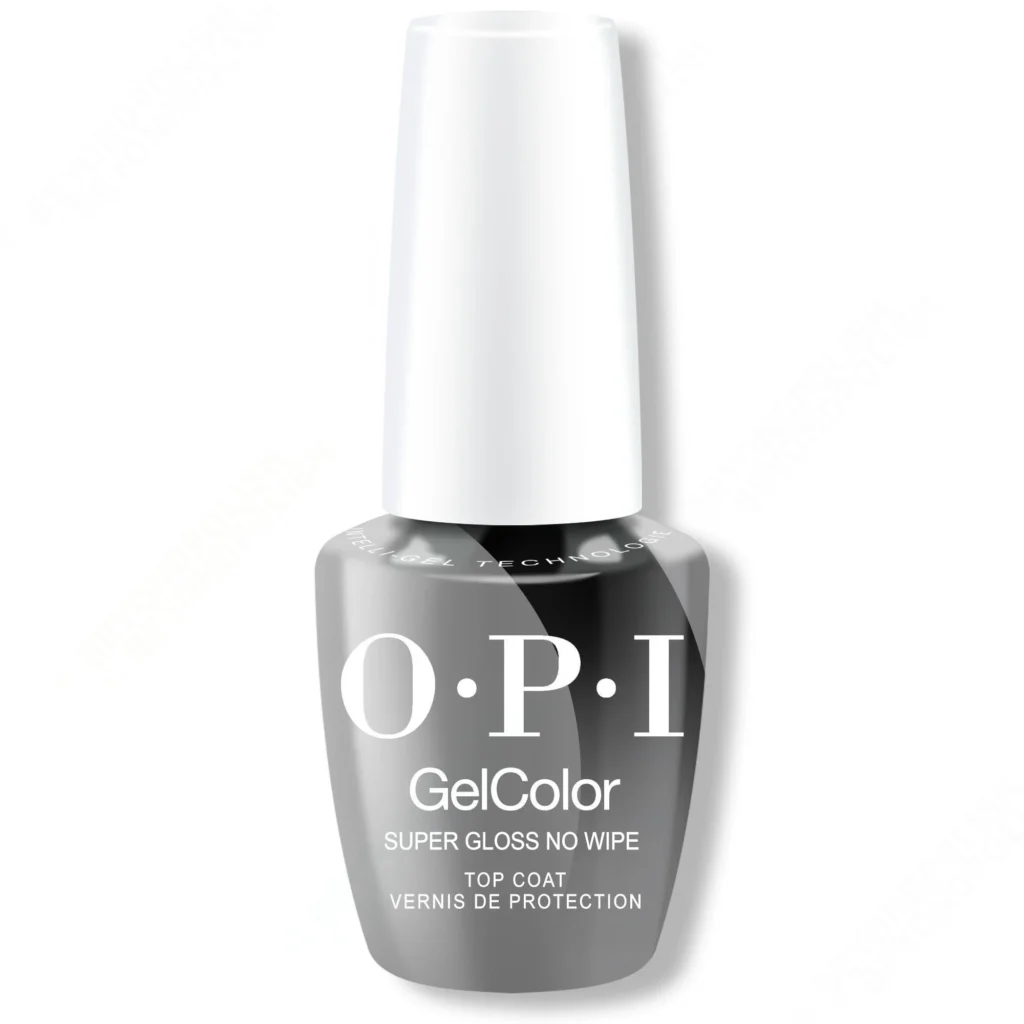
OPI GelColor Super Gloss No Wipe Top Coat
OPI
GelColor Super Gloss No Wipe Top Coat

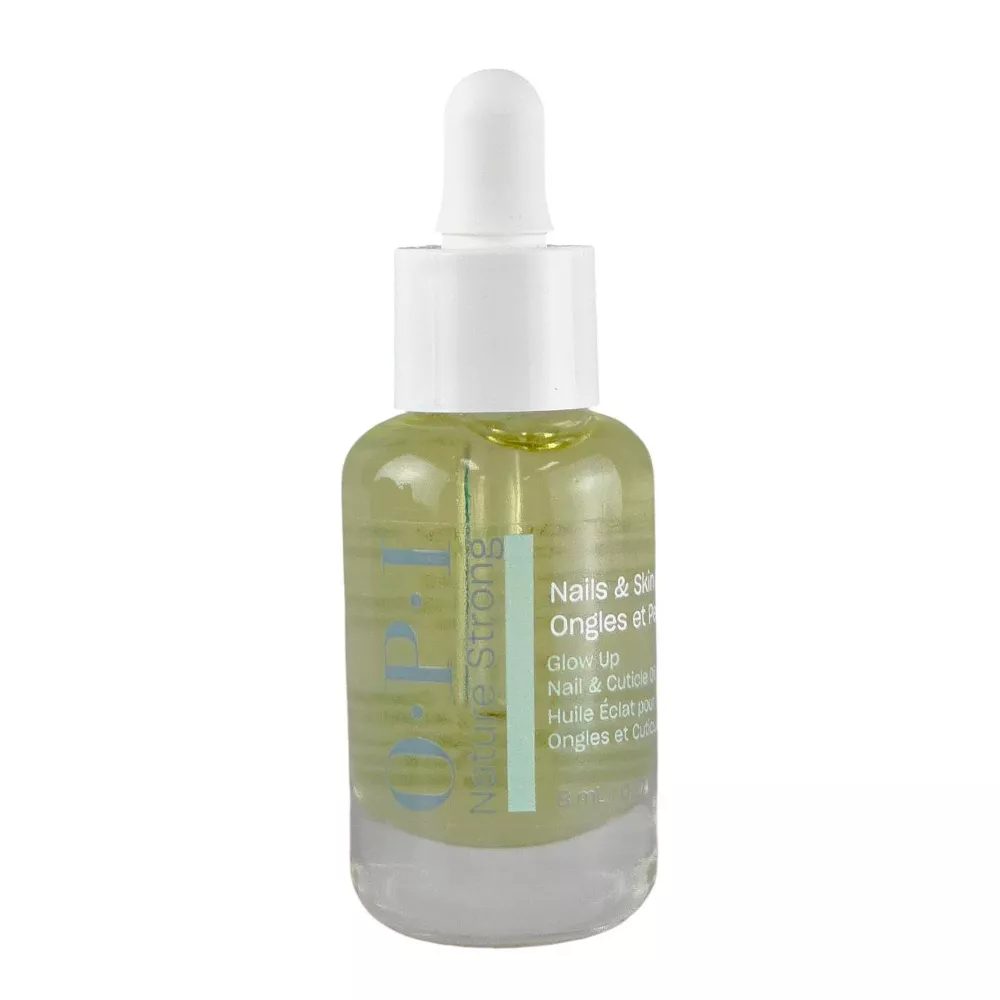
OPI Nature Strong Glow Up Nail & Cuticle Oil
OPI
Nature Strong Glow Up Nail & Cuticle Oil

A Surprising Workout to Help You Feel Calmer (It’s Not Yoga)

0

“I like to think of exercise as a bit of a buffer,” Hillary Ammon, PsyD, a clinical psychologist at the Center for Anxiety and Women’s Emotional Wellness, tells SELF. “In stressful situations, individuals who work out routinely may be slightly more resilient because their stress-related hormones and neurotransmitters may be positively impacted by exercise, meaning stress levels may not get quite as high.”

Working out can also give you a feeling of pride and accomplishment, Thea Gallagher, PsyD, clinical associate professor at NYU Langone Health and cohost of the Mind in View podcast, tells SELF. “We don’t know all the mechanisms behind it, but we do know that it typically makes us feel less anxious and depressed,” she says.

Doing things to support your physical health, like cardio, can also have a positive impact on your mind, Dr. Gallagher says. “For so long, exercise has been linked to shape and body image, but it’s actually good for mental health management,” she adds.

Consistent exercise can help lower your stress levels and improve your sleep too—and those can ultimately lower overall feelings of anxiety, Caitlin Mooney, MD, assistant professor in the department of sports medicine at Vanderbilt University Medical Center, tells SELF.

As for resiliency, Dr. Gallagher points out that exercise forces you to be a little mentally tougher. “Hard exercise is challenging and you have to push through,” she says. “You’re practicing resilience with exercise and that can make other things feel more manageable.”

Resiliency isn’t a fixed personality trait, Dr. Mooney says. “It’s influenced by trainable cognitive, behavioral, and biological factors,” she says. Meaning, even if you feel like you’re not the most resilient person out there, that can change over time.

Sports and exercise build resilience in a practical way, Dr. Mooney says. “They provide repeated opportunities to approach manageable challenges, tolerate discomfort, and build mastery through exposure, rather than reinforcing avoidance,” she says. “Training for something can also provide structure, identity, and meaning.”

How to put this to work for you

Everyone can benefit from the mental health perks of cardio, including those who tend to throttle high or who have conditions like generalized anxiety disorder, Dr. Gallagher says. Some people with anxiety prefer intense exercise, while others feel they get more out of gentler movements, Dr. Ammon says. “I’ve worked with some anxious clients who prefer high intensity workouts, as these types of workouts ‘turn off’ their thoughts and help them work the physical tension of anxiety out of their body,” she says. But others like slower-paced workouts. “A combo of both could be beneficial for the mind and the body,” Dr. Ammon says.

Your Complete Guide to Laser Skin Treatments at Apex Skin Aesthetics

0

Real Results: Breaking the Skincare Product Cycle

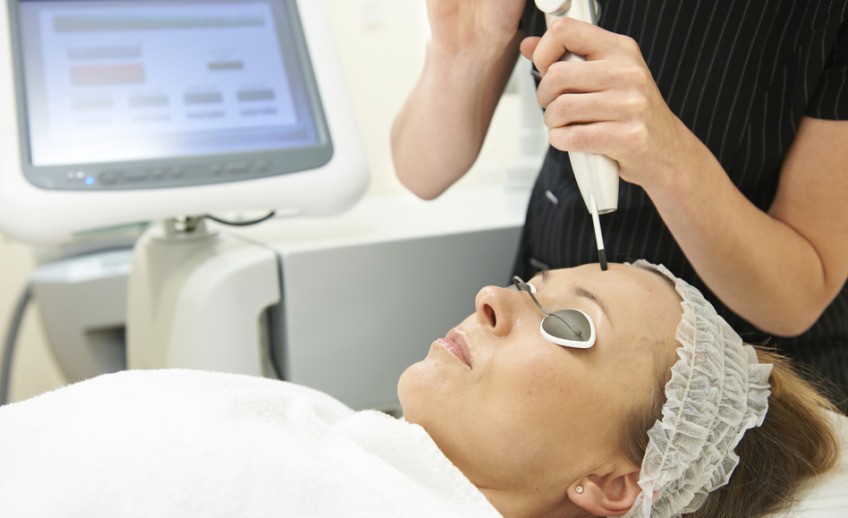
Dr. Moore shares the story of a patient who spent nearly five years and hundreds of dollars trying to correct facial redness with skincare products. She had type 1 rosacea but believed she simply had sensitive skin or adult acne.

The breakthrough came when Dr. Moore explained that her redness was caused by dilated blood vessels located deep in the dermis well beyond the reach of any topical skincare product. Her treatment plan included three VBeam sessions followed by a light chemical peel to improve texture.

The results were transformative. After her second treatment, the patient was able to stop wearing heavy foundation for the first time in years. By the end of her third session, the visible veins around her nose had disappeared and her chronic flushing had significantly improved.

“She realized that while she had been spending money on temporary topical solutions, the laser treatment addressed the root cause of her redness,” Dr. Moore noted. It’s a common revelation for rosacea patients who’ve been cycling through products without understanding that their condition requires vascular treatment, not just topical care.

Givaudan launches a precursor to a gourmet fruity fragrance for hair care

0

The specialist in perfumes and aromas is enriching its range of perfume precursors with the launch of Scentaurus PolyDouxa gourmet fruity note which offers a long-lasting trail of raspberry and sweet, powdery vanilla. According to Givaudan, this innovation opens up new creative perspectives for personal care products, including shampoos.

A perfume precursor is a low-odor molecule capable of releasing a perfume upon contact with a natural external trigger such as oxygen, light or ambient humidity, thus prolonging its diffusion over several days. Givaudan inaugurated this technology with the launch of Scentaurus Tonkarose in 2006. The range now includes six notes (Vanilla, Melrose, Tonkarose, Clean, Juicy and Berry), to which PolyDoux is now added.

Activated by oxygen, Scentaurus PolyDoux can be combined with other precursors from the exclusive Givaudan collection.

« This new discovery excels in its high adhesion to hair, releasing high-impact fragrances. Integrated into the creative process of Givaudan perfumers as a formulation tool, it allows the creation of tailor-made olfactory signatures which optimize the staying power of fragrances in shampoos, softeners and detergents. “, explain Agnes Bombrun, Ingredient Research Manager, Fragrance S&T at Givaudan.

Beyond hair applications, Scentaurus PolyDoux also addresses the growing market for cleaning sports and leisure clothing, particularly synthetic fabrics.

Low on Vitamin D Right Now? Your Calcium Could Be Down Too

0

Here in the northern hemisphere, winter famously contributes to widespread vitamin D deficiency as sunlight exposure decreases. The trend is “very marked in clinical practice,” Mary Gover, MD, an internal medicine doctor at Montefiore Einstein Advanced Care in New York City, tells SELF.

What you might not know, however, is that vitamin D isn’t the only critical nutrient that takes a dive this time of year: Calcium can also be impacted, according to Dr. Gover, and a drop in the bone-building mineral can potentially cause issues as well.

Because the full explanation is a little complicated, we’ll break it down step-by-step below. Here’s why wintertime calcium deficiency can happen, who is most likely to be affected, and what countermeasures you can take.

Why calcium levels can drop in the winter

Vitamin D plays an important role in regulating a number of essential minerals in your body, including magnesium, phosphorus—and calcium. Namely, “you need appropriate vitamin D levels to absorb calcium from your diet,” Dr. Gover says. Without it, you wouldn’t absorb enough in the gut—only around 10% to 15% of your calcium intake, compared to 30% or 40% otherwise.

Because low vitamin D is more common in the winter, low calcium is more likely in turn. Multiple studies have found that blood levels of 25(OH)D, the primary indicator of vitamin D status, are down in winter compared to other seasons. Studies have also found that calcium absorption declines as well, though the difference isn’t always statistically significant.

However, Dr. Gover has some words of reassurance: “The vast majority of the time when someone has low vitamin D, they don’t have low calcium as well,” she says. “You have to have a very low vitamin D level to have that downstream effect.”

Calcium deficiency, a.k.a. hypocalcemia, is defined as having blood levels of the mineral below 8.5 milligrams per deciliter (2.12 nanomoles per liter). While low vitamin D is a major cause, it’s not the only one: Other potential triggers include pancreatitis, kidney dysfunction, parathyroid issues, and certain medications (like the antibiotic rifampin, the antiseizure drugs phenytoin and phenobarbital, and steroids).

When to look out for calcium deficiency

So how low does your vitamin D have to be to qualify as “very low”? To pinpoint the vitamin D level at which calcium issues can arise, we need to explain how much vitamin D you need in the first place.

10 Ways to Organise and Store Your Shoe Collection — Inside Out Style

0

twitterpinterestlinkedinmail

Having an organised wardrobe makes getting dressed easier and faster.  It helps you create  more outfits from what you own (shopping your wardrobe) as it lets you see what you have more clearly and easily.

It’s not just the clothes that need to be organised and stored, it’s also your accessories too – from jewellery to shoes.

During our most recent Q&A Zoom session, one of my 7 Steps to Style members asked for tips on how she can keep her shoe collection easily accessible and organised, so she has an easier morning when choosing her complete outfit.

Here are some of my suggestions – because, like everything, this is personal and there is no one “right” way and what works for you may not work for everyone.

Discover Your Organising Style

Before deciding and investing in storage options, consider your personal preferences.  I love this quiz by Cas – the Clutterbug Queen – which helps you understand more about your organising preferences – take the What Clutterbug Am I Quiz here.

Before You Decide on Shoe Storage, Answer These

  1. How many pairs of shoes do you own?  There is no right number; I’ve seen everything from 3 pairs (not enough) to hundreds.
  2. What is your wardrobe space like? Is it a tiny cupboard with doors, or is it a whole dressing room with shelves?
  3. Do you prefer your items behind doors or in drawers, or do you prefer to see what you have out in the open and make a display of them?
  4. There are various boxes and holders you can choose from, and each has pros and cons depending on your space and preferences.
  5. Do you need distinctly different shoes for summer and winter?  If so, do you have the space to store them all in the same place, or do you need to rotate them for the season?

Storage Boxes and Containers

1. Shoe boxes with labels or pictures for easy identification

Stackable Shoe Boxes

Find on Amazon

Whether it’s the original box the shoes came in or stackable plastic boxes, if you are happy to take them out and put them away, this is a great way to store your shoes, as it keeps them free from dust as well as in a protected space.  That said, it can be finicky and fussy, and the boxes take up a lot of space.

2. Larger Storage boxes

This can be good, but be aware that if they are too deep, you will likely lose shoes at the bottom and forget you own them.  Ideally, I’d look for a box that is only 1 shoe layer deep, so that you can easily see what is in there.

Keep like shoes together – so flat sandals, sports shoes, pumps, ballet flats etc.  That way, if you’re looking for a particular style of shoe, you go to the category box and then decide from your selection.

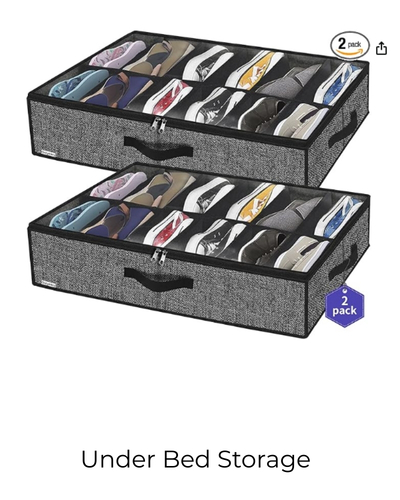
Under Bed Storage for shoes

Find on Amazon

If you are tight on space, larger boxes that slide under the bed may be a good option.  Or consider putting “off-season” shoes in boxes under the bed, making room for your current seasonal shoe needs in your closet.

3. Shoe Pockets

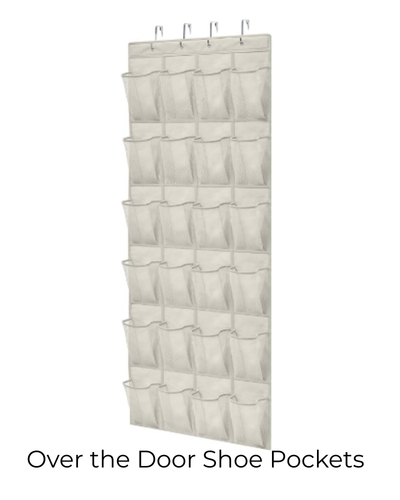
Over the Door Shoe Pockets

Find on Amazon

These hang over a door (or you could attach to a wall), and can be a good way to store shoes you reach for regularly, as they are easy to access.  Number of shoes is limited so better if you only have a smaller collection.

You can also get options that store more pairs – like these over the door shoe shelves.

Over the Door Shoe Shelves

Find on Amazon

4. Vertical Shoe Storage Boxes

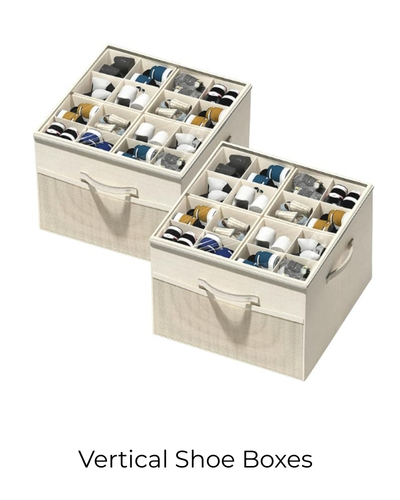
Vertical Shoe storage Boxes

Find on Amazon

These are designed to sit on the floor of your closet, but make it easier to manage your shoes and as they don’t have lids, simpler to access.

Shelves

5. Narrow Bookcase

Divided shoe shelves

Find on Amazon

This can be a great way to store and display shoes.  Best for those who like to easily see what they have.  You can then organise shelves by types and styles of shoes.

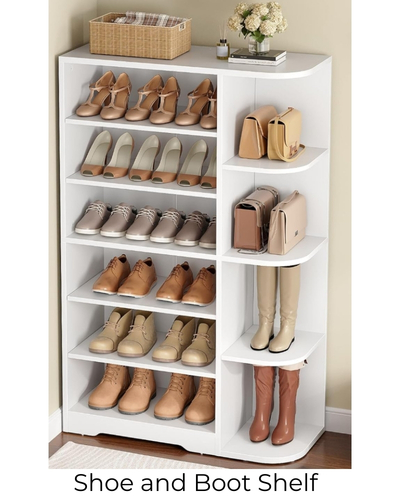
Shoe and boot shelf

Find on Amazon

Consider your shoe styles, you may want a shelf that includes space for knee-high boots too.

6. Entryway Shelves

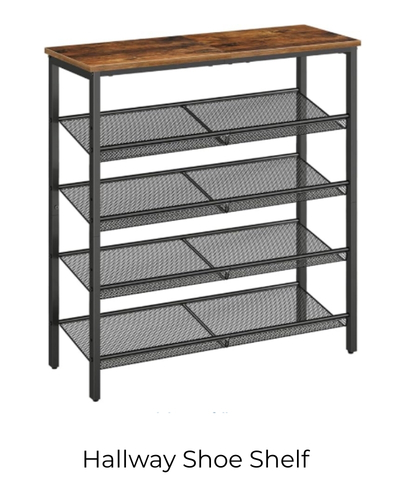
A shelf designed to sit in your entryway may also be an option if you’re happy to see your shoes.

Entry hallway shoe shelf

Find on Amazon

7. Pull out shelves

Wide shelves that may be 2-3 pairs deep are fine, if you can easily see and access your shoes.  But if it’s just a deep shelf and what’s at the back is forgotten, avoid this kind of shelf unless you want to use the back for off-season storage.

This is where pull-out shelves are great (I have them in my wardrobe – they come from Ikea) as they allow you to store more deeply into your wardrobe, yet access them with ease.

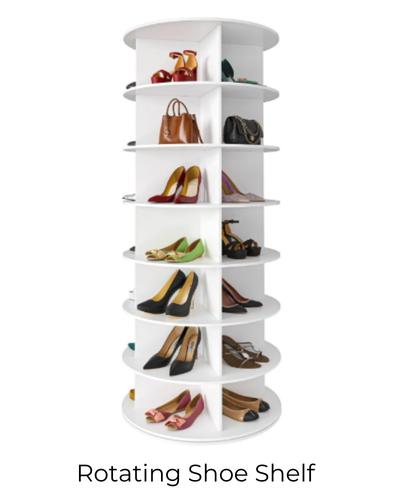
8. Rotating Shelves

Rotating Shoe Shelf

Find on Amazon

If you have a corner that’s got a little space and you’re happy to see your shoes, a rotating shoe rack tower may be a good choice.

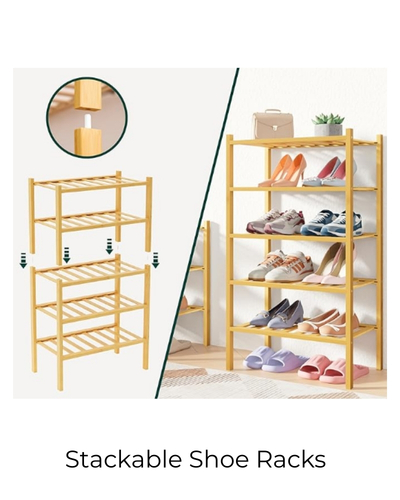
9. Shoes Shelves in a Cupboard

Stackable Shoe Racks

Find on Amazon

One of our storage options for shoes in our house is shoes shelves, that are one pair deep, inside a cupboard, so you don’t have to see them, but they are easy to put away and get out, but the mess is not visible.  I have something very similar in our front hall cupboard that holds the kids shoes and sneakers as well as my walking the dogs shoes for easy access.

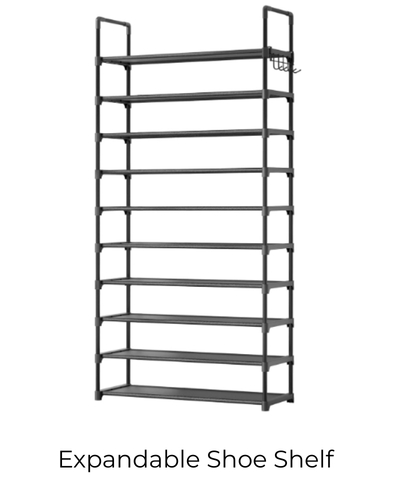
Expandable Shoe Shelf

Find on Amazon

Shoe Cabinets

If you hate to see shoes but want them out of the way, shoe cabinets are a possible option for you.

10. Flip Drawer Shoe Cabinets

These come in a huge range of styles, from simple to more decorative.

Shoe Cabinet

Find on Amazon

Some have flip drawers you stack your shoes into.  But there is a limit to how many pairs will fit.

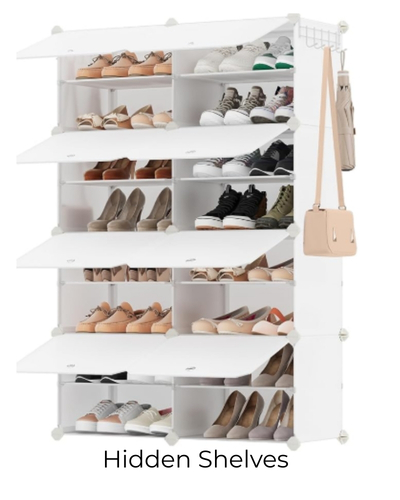
Hidden Shelves shoe storage

Find on Amazon

Others are just a cabinet with shelves inside.  But these are all great if you love to have everything out of sight.

I’m sure there are more options, but finding the right fit for you, your space, and your collection will help you get dressed in a stylish outfit every day.

how to organise and store your shoes

How to Set Yourself Up For Style Success

Closet Organisation Tips to Always Have the Perfect Outfit Ready

Closet Clutter Begone! Transform Your Wardrobe into an Organizational Haven

Facebooktwitterpinterestlinkedinmail

Facial Spa Treatments That Work for Glow, Acne, and Firming

0

Going to a facial spa should feel like you’re doing something smart for your skin, not gambling on a menu item that sounds fancy. The treatments that actually work are the ones that match what your skin needs right now, then support the barrier so results last.

Below is a straight guide to choosing facial spa treatments that deliver real changes in glow, congestion, texture, and firmness.

1. Start with your skin’s main goal

Before you book, decide what you want to improve when you look in the mirror:

  • Dullness and rough texture (skin looks tired, makeup sits unevenly)
  • Congestion and breakouts (clogged pores, bumps, blackheads)
  • Uneven tone and lingering marks (skin looks patchy even when calm)
  • Fine lines and loss of firmness (skin feels less lifted)
  • Redness and sensitivity (skin reacts easily, barrier feels fragile)


2. For instant smoothness and “your skin but better” glow

If your skin looks dull or feels rough, you want a facial spa treatment that refines the surface and brings back that clean, fresh reflection. The Magic Glow Facial is a strong choice when you want polish fast and a glow that looks natural.

Best for: dullness, rough texture, pre-event glow.

3. For breakouts, congestion, and the “city skin” reset

When pores feel blocked and your skin is stressed, a facial spa treatment needs to clear buildup and rebalance, not just hydrate over congestion. The Purifying Facial is the booking that makes sense when blackheads, bumps, and clogged pores are the main issue.

Best for: clogged pores, blackheads, breakout-prone skin.

At-home tip: After a purifying facial, keep your routine calm for 48 to 72 hours. Gentle cleanse, moisturize, sunscreen. Skip extra acids and scrubs so your skin can settle.

4. For firming, tightening, and a more lifted look

If you’re noticing softness around the jawline or you want your face to look more sculpted, you want treatments that support firmness. The Forever Facial is a smart facial spa option when your goal is tightening and a more lifted look over time.

Best for: loss of firmness, early lines, “tired” looking skin that needs lift.

5. For a high-impact glow plus anti-aging support

Sometimes you do not want “nice.” You want visible brightness, smoother texture, and a refreshed look that lasts beyond the first day. The Supernova is a great facial spa choice when you want your skin to look energized and refined.

If you’re booking in Los Angeles, use Supernova Facial LA.

Best for: dullness plus early signs of aging, uneven texture, pre-event refresh.

6. For texture, tone, and visible renewal

If your skin looks uneven even when it is calm, or you feel like your products are not sinking in well, you want a facial spa treatment focused on renewal. The Cellstory Facial is a strong option when your goal is smoother-looking texture and a more refined tone.

Best for: uneven texture, dull tone, roughness that keeps coming back.

7. For calming redness and supporting clearer-looking skin

Inflammation is a quiet reason skin looks worse. Redness, stressed breakouts, and sensitivity often need calming support before anything else works properly. The Vitalight is a smart facial spa option when you want your skin to look calmer and clearer, fast.

Best for: redness, sensitivity, inflamed breakouts, stressed skin recovery.

8. For next-level texture improvement and a more dramatic reset

If you want a stronger, results-driven facial spa treatment for tone, texture, and firmness, the Twilight Facial is the booking for that “serious change” category. This is the one you choose when you’re ready to follow aftercare properly and protect your results with sunscreen.

Best for: texture plus firmness goals, more dramatic renewal, a treatment plan mindset.


Final thoughts

The best facial spa treatments are not the trendiest. They’re the ones that match your skin’s actual issue right now. When you book based on your real goal, your results stop feeling random and start looking consistent.

Why Are Some Siblings Not Close?

0

“Siblings by chance, best friends by choice,” the cliché goes. But ask real people about their own family dynamics, and their reactions will probably vary. Some siblings are inseparable, talking daily and sharing even the most TMI dating updates. Others, however, have a bond that’s just cordial or, in some instances, completely estranged—as is allegedly the case with celebrities Haylie and Hilary Duff.

In her new album Luck…or SomethingHilary seemingly addressed their long-rumored rift in the song, “We Don’t Talk,” which includes lyrics like, “Cause we come from the same home, the same blood,” and “People ask me how you’re doing, I wanna say amazing / But the truth is that I don’t know.” While she doesn’t name the subject directly, she referred to this distance as “the most lonely part of my life” in a Rolling Stone interview published Thursday.

But even without a dramatic fallout, the reality for many families is that “it’s normal for brothers and sisters to be more like friendly acquaintances who happen to share overlapping lives,” Erin Runt, LMFT, a Chicago-based licensed therapist, tells SELF. “There’s this idea that how frequently you’re in contact represents how emotionally close you are.” Realistically, however, that isn’t the case for many people (despite what family sitcoms or your friends’ picture-perfect Instagram stories might suggest)—and it’s nothing to feel guilty about either.

So what makes some siblings best friends while others just coexist? Aside from a major conflict, here are a few factors to consider, according to family therapists.

1. Parental involvement

In some households or cultures, parents are intentional about raising their kids to be close: to look out for and take care of each other, to see each other as built-in allies from a young age. Maybe your mom pushed you to include your younger sister in all of your playdates, or your older brother was the one who taught you how to swim, ride a bike, and drive. According to Runt, early experiences of support and collaboration can quietly shape how siblings relate to each other as adults.

2. Favoritism in the family

Just as positive experiences can bring siblings closer, negative ones can drive them apart. “Favoritism is one of the many things parents do, even if it’s unintentional,” Karen Gail Lewis, MSW, EdD, Washington, DC–based therapist and author of Sibling Therapy: The Ghosts that Haunt Your Client’s Love and Worktells SELF. It doesn’t matter whether you’re older or younger: The one who didn’t get “special treatment”—whether that meant less leniency, more criticism, or constant comparisons—might hold onto resentment, which can make it harder to build a positive, trusted relationship over time.

3. Shared life experiences

Even if siblings didn’t get along as kids or teens, Runt says they’re more likely to bond later if they hit the same milestones. “Maybe they both started having children or got married around a similar time,” she says—changes that may naturally lead them to swap advice or lean on each other for help. Ultimately, these are experiences that can create fresh common ground and make the bond feel more organic, not forced.

4. The size of an age gap

While people love to speculate the “ideal” gap between siblings, “there’s no clear pattern that predicts closeness in terms of age or sex or gender,” Gail Lewis says. In some instances, being six or more years apart can make it harder to relate to each other on a peer level, whereas growing up on a similar timeline can create a more friend-like connection.

Chanel Denim Makeup Collection – The Beauty Look Book

0

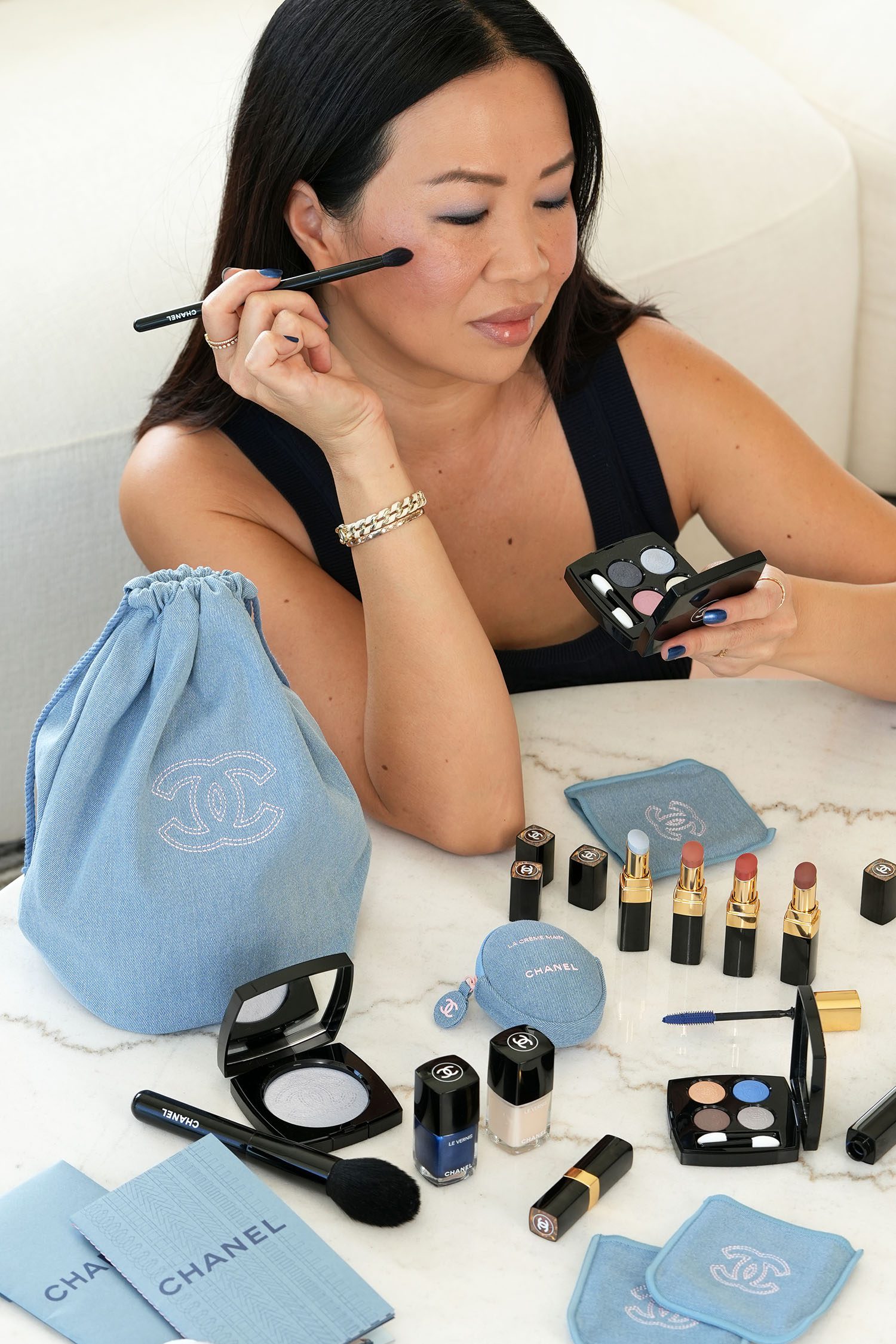
Chanel Beauty launched their limited edition Denim Makeup Collection and if you have your eye on anything I recommend checking your local stores or counters ASAP as things are selling out fast. Some pieces can still be found at Chanel.com and Nordstrom right now.

I was lucky to get a press package from Chanel beauty on most of these pieces. I tracked down a couple of the lipsticks so I could swatch them all for you.

Chanel Denim Makeup Collection review and swatches

Chanel Hand Cream

Chanel Denim Hand Cream and Pouch

I think the La Crème Main + Denim Pouch ($85, Chanel and Nordstrom) is beyond cute! I love the denim + pink colors, it’s so fun, I hope Chanel makes more fun accessories like this!

Coco Denim Illuminating Powder Highlighter

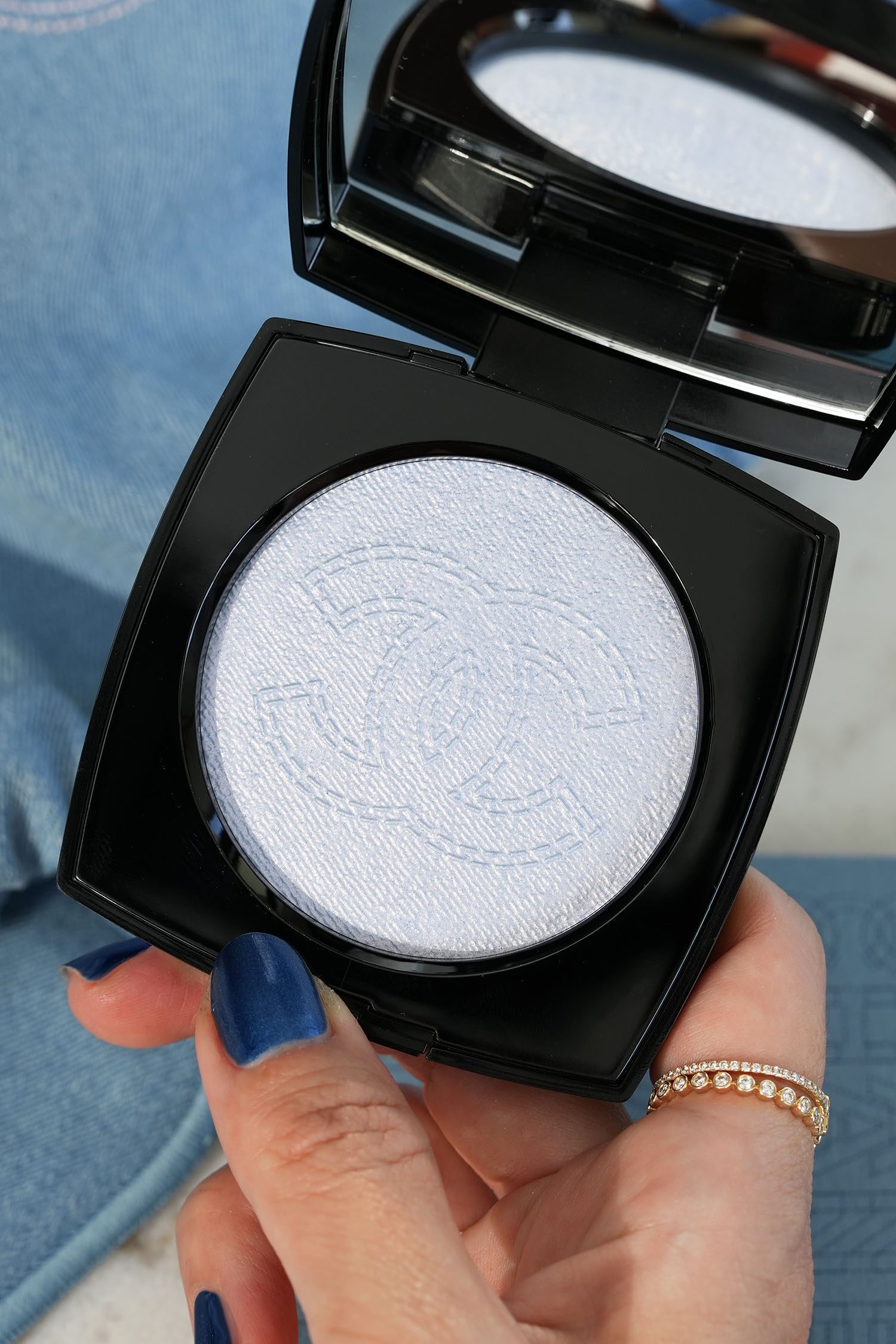
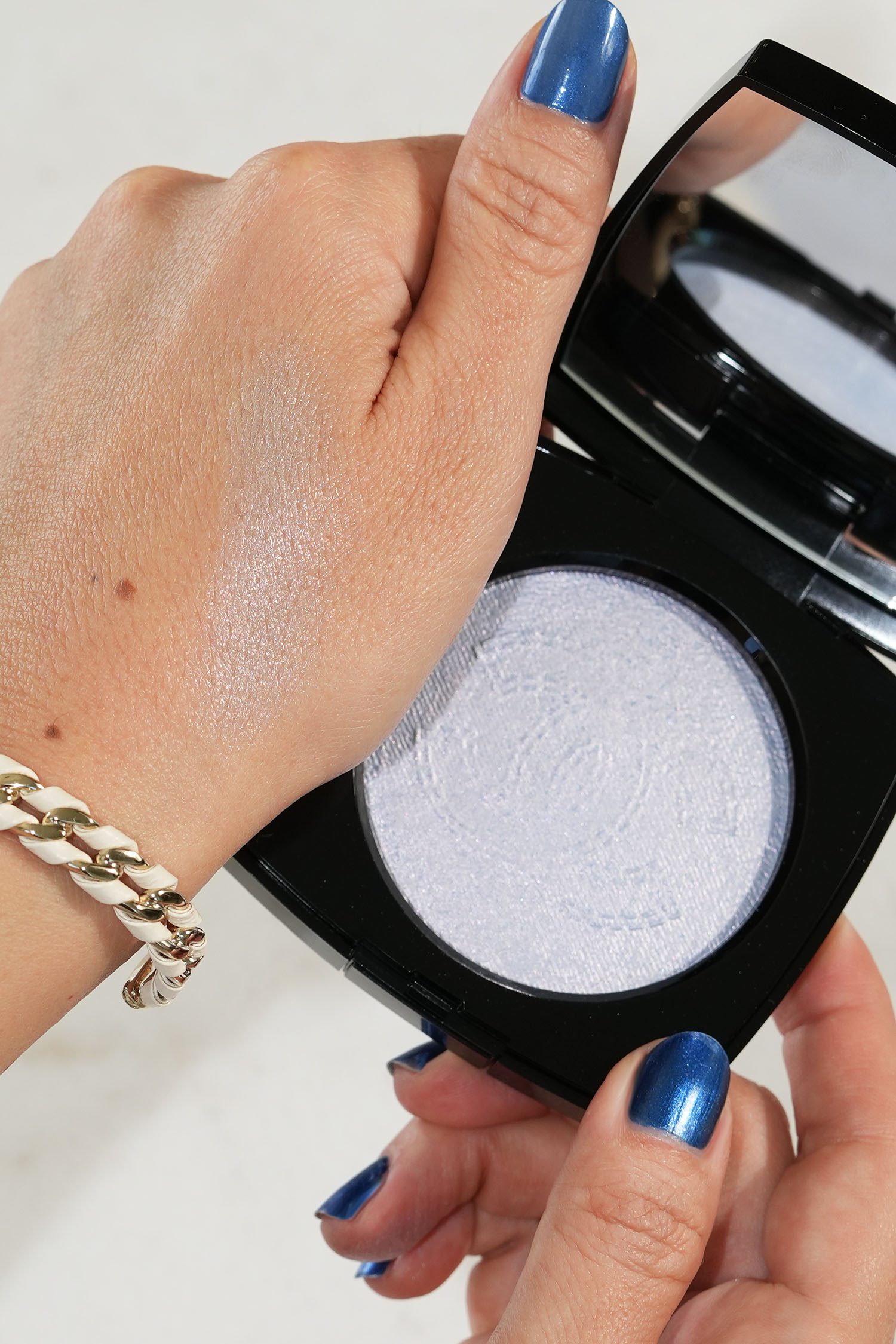
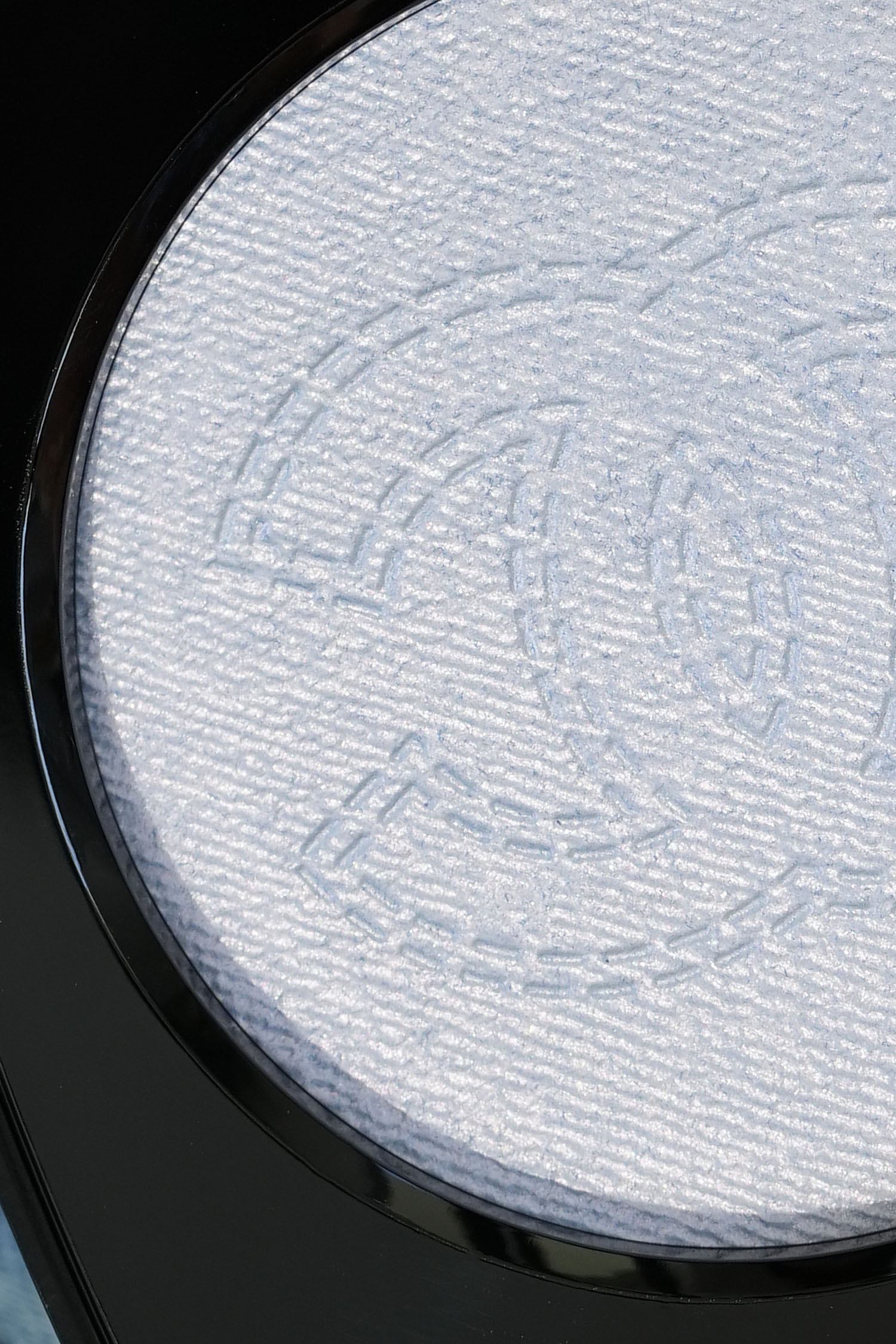
The Coco Denim Illuminating Powder Highlighter ($82, Chanel and Nordstrom) is the stand out in the collection for me. It’s a pearlescent blue pink shimmer with a subtle duochrome shift. I would never think to wear blue on the cheeks but it has a very pretty interesting glow if you apply with a light hand. I really love this one on the eyes.

Chanel Denim Coco Denim Illuminating Powder Highlighter

Chanel Coco Denim Illuminating Powder Highlighter

Chanel Coco Denim Illuminating Powder Highlighter swatches

Les 4 Ombres Eyeshadow Palettes

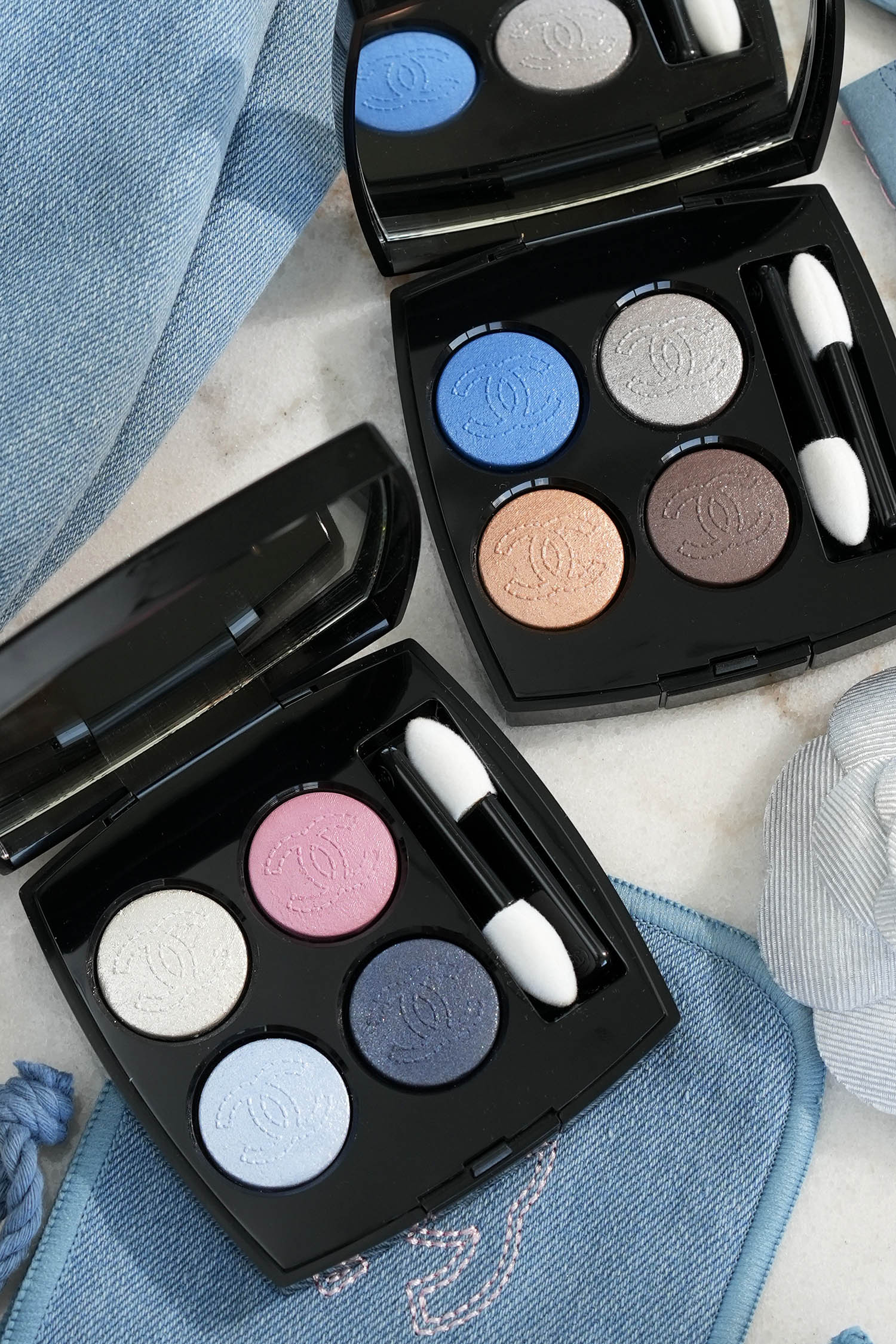
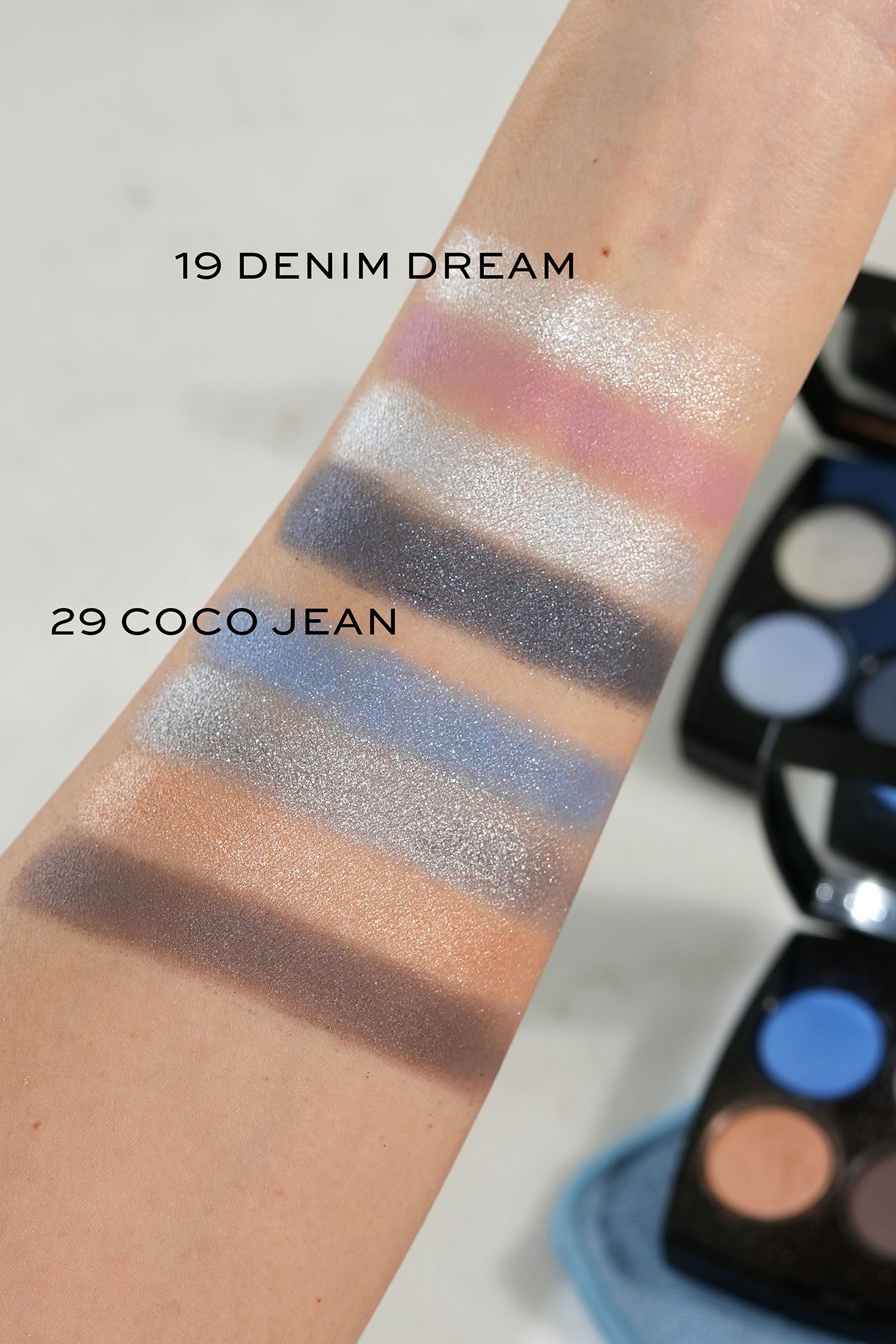
The two Denim Les 4 Ombres Eyeshadow Palettes ($90 each) seem to be the items most of you have been most excited about. I’ll be very frank with you, I am not a blue eyeshadow wearer, I don’t think I can pull it off, but the lighter one seems to be wearable for me! These are inspired by different denim washes.

Chanel Denim Makeup Collection review and swatches

Chanel Denim Les 4 Ombres Eyeshadow Palettes Denim Dream and Coco Jean

Denim Dream (Chanel and Nordstrom) has an iridescent white gold shimmer, a satiny pink, a silvery baby blue and darker navy with silver flecks. Coco Jean has a denim blue with silver sparkles, a medium silver shimmer, a peach shimmer and satiny brown. I think they’re super fun and for the denim lover or blue eyeshadow lover, they’re perfect.

Chanel Denim Les 4 Ombres Eyeshadow Palettes Denim Dream and Coco Jean

Black Allure Mascara

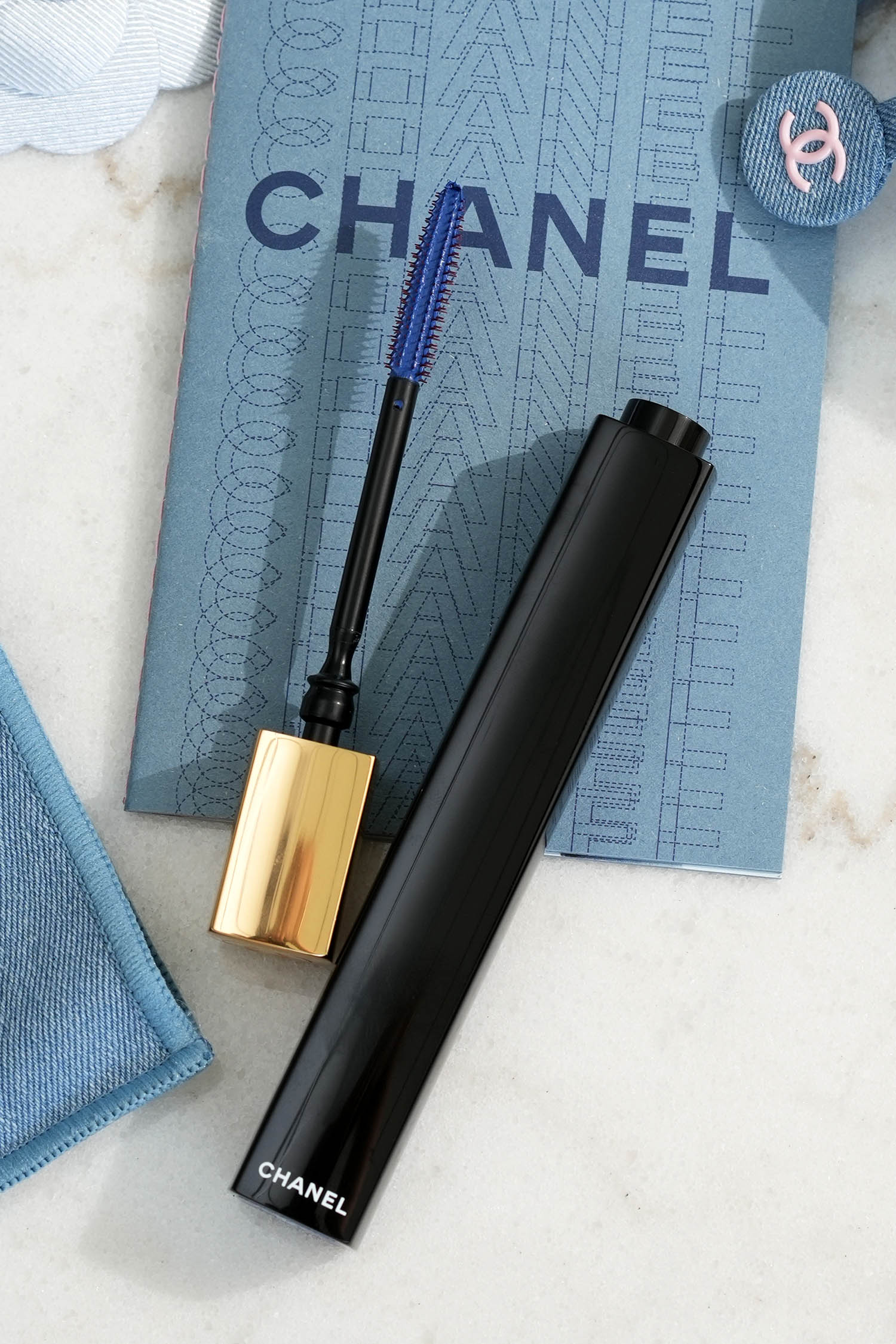
The Noir Allure Mascara ($43) in Indigo was a pleasant surprise for me! I think the mascara in this format is hit or miss, but this one was a huge hit for me. Lengthened and thickened the lashes in a beautiful way. The indigo is a dark blue but adds a fun twist to the lashes.

Chanel Noir Allure Mascara Indigo

Rouge Coco Flash

Chanel Rouge Coco Flash

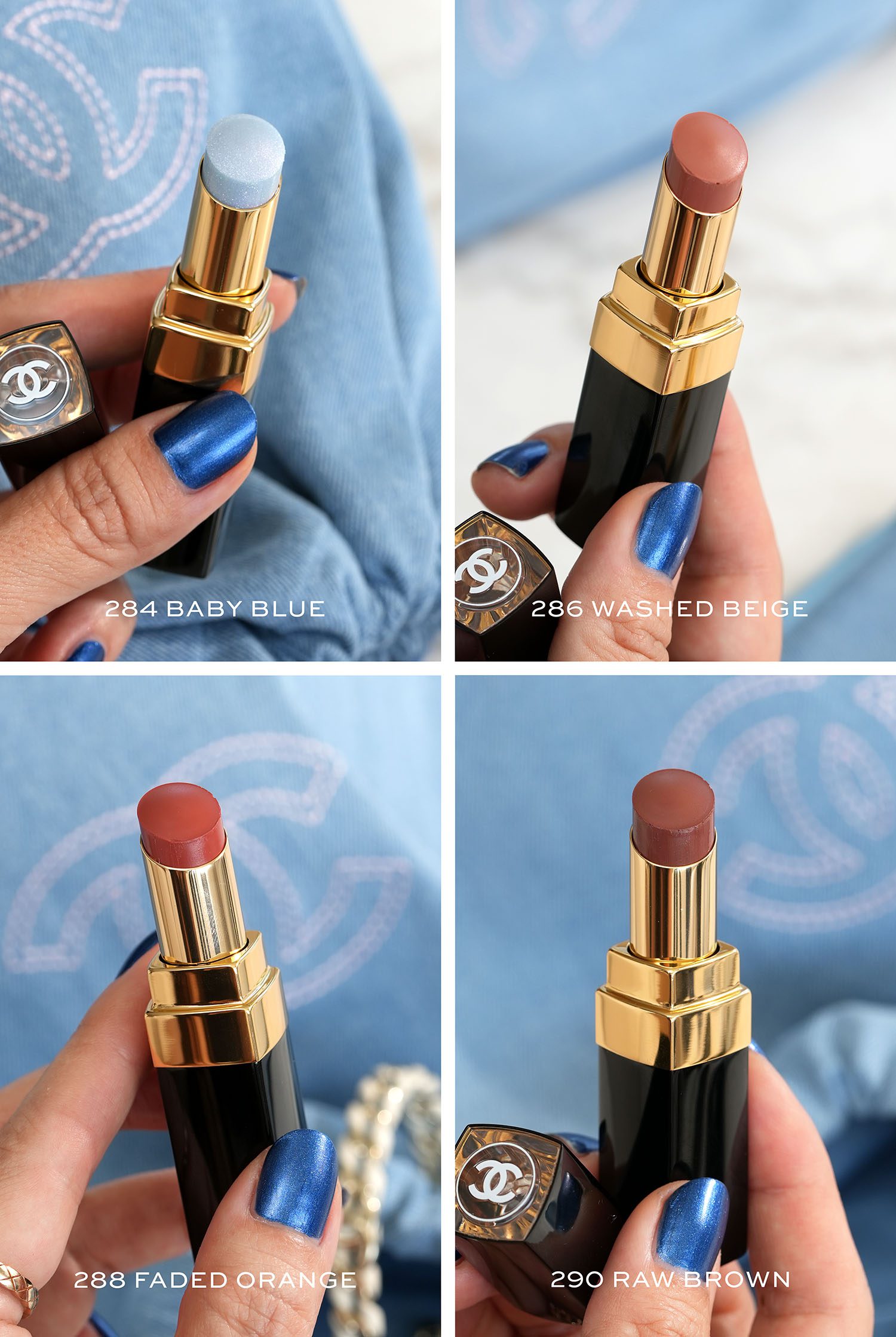
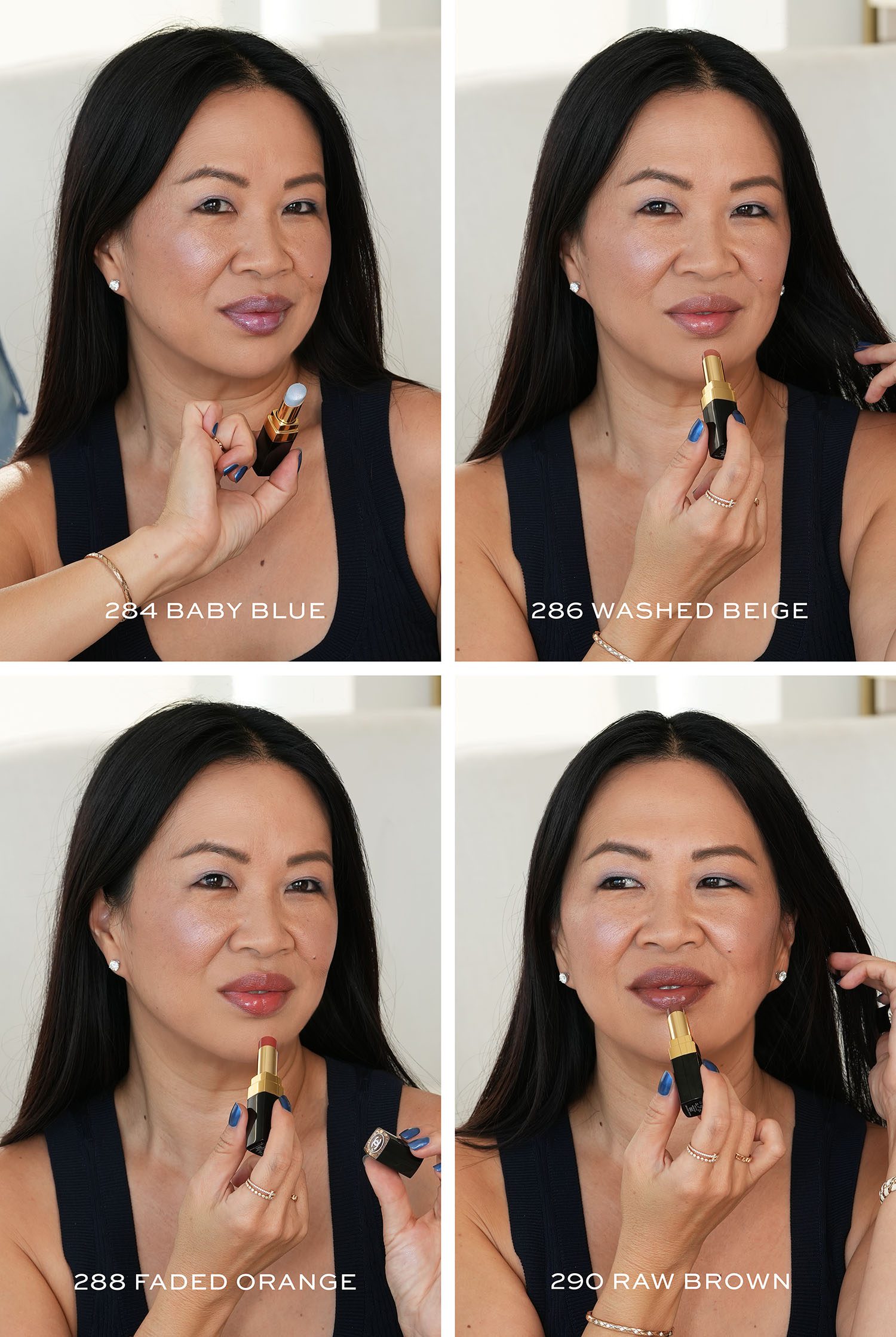
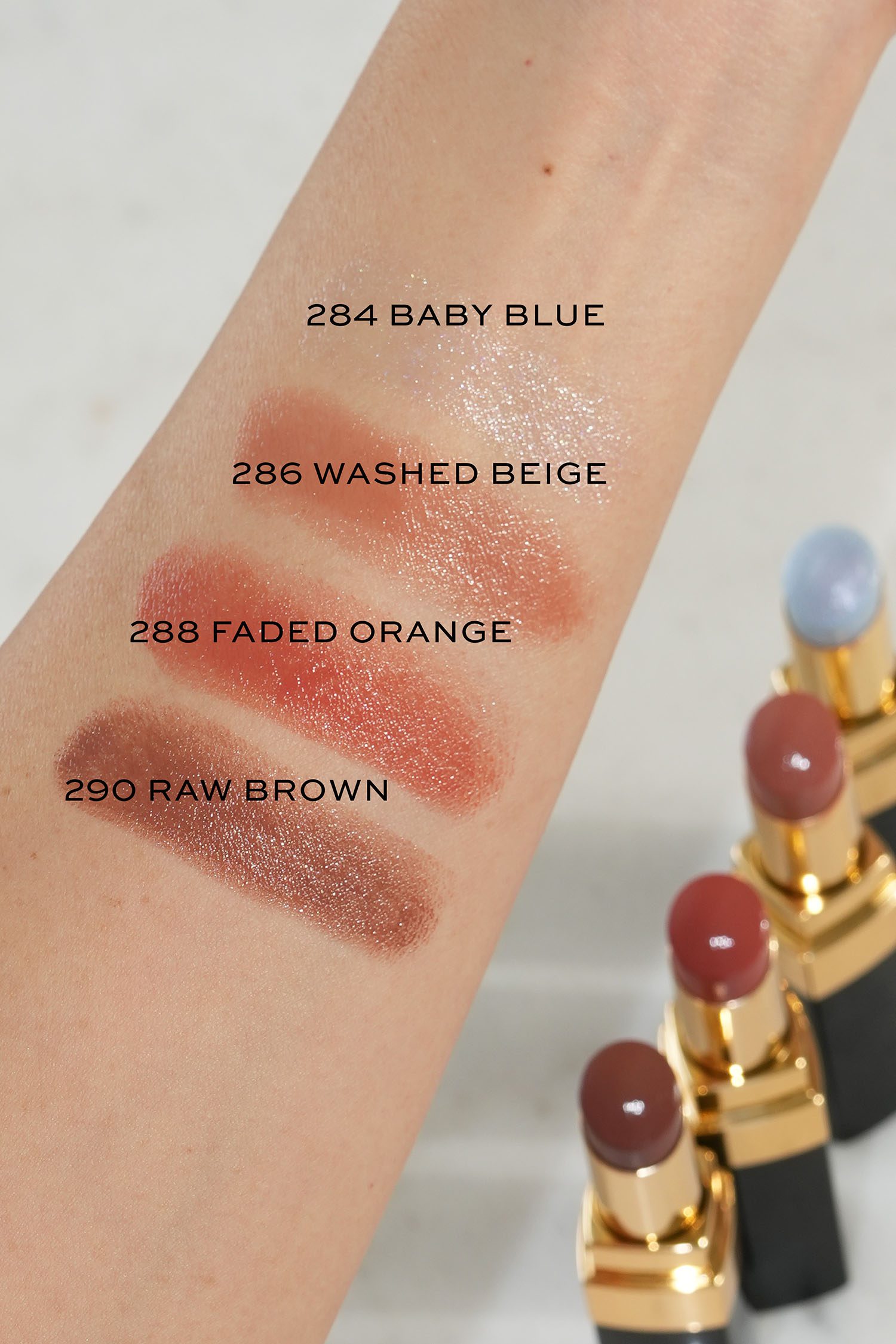
I’m the biggest fan of the Chanel Rouge Coco Flash ($53 at Chanel and Nordstrom) and they have four new shades. I feel like I can only really pull off one of them (washed beige). The others are beautiful, I just don’t think they complement my skintone.

  • Baby Blue is a pearlescent blue shimmer
  • Washed Beige is a soft tan beige caramel
  • Faded Orange is a burnt orange peach
  • Raw Brown is a cool toned brown

Chanel Rouge Coco Flash swatches Denim Makeup Collection

Chanel Rouge Coco Flash swatches Denim Makeup Collection

Le Vernis Nail Polish in Legend

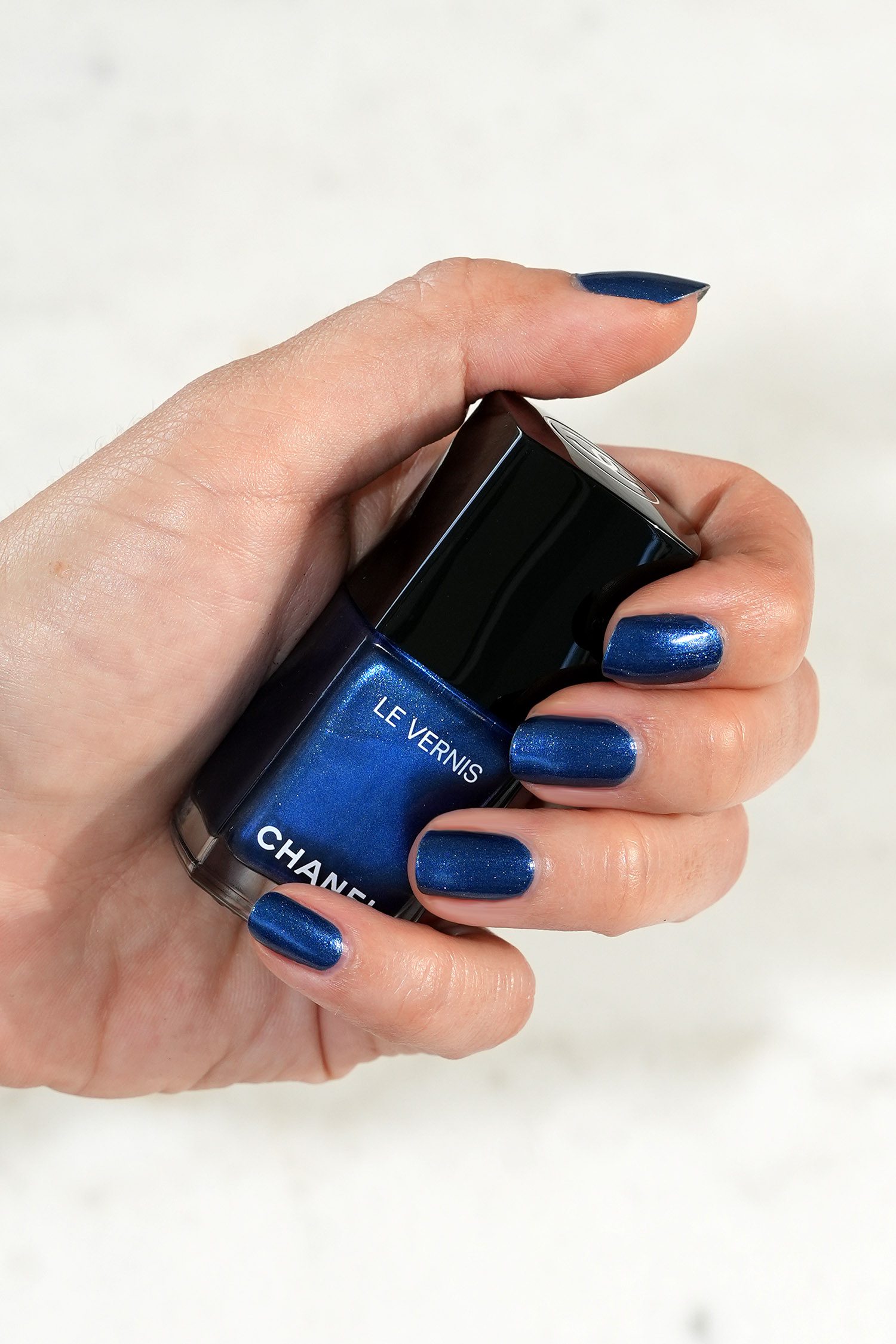
Chanel launched a new shade of Le Vernis in Legende ($34). It’s a metallic blue but a smooth one. I can get full coverage with just one coat, but two gives the nails a more intense look.

Chanel Le Vernis Legende

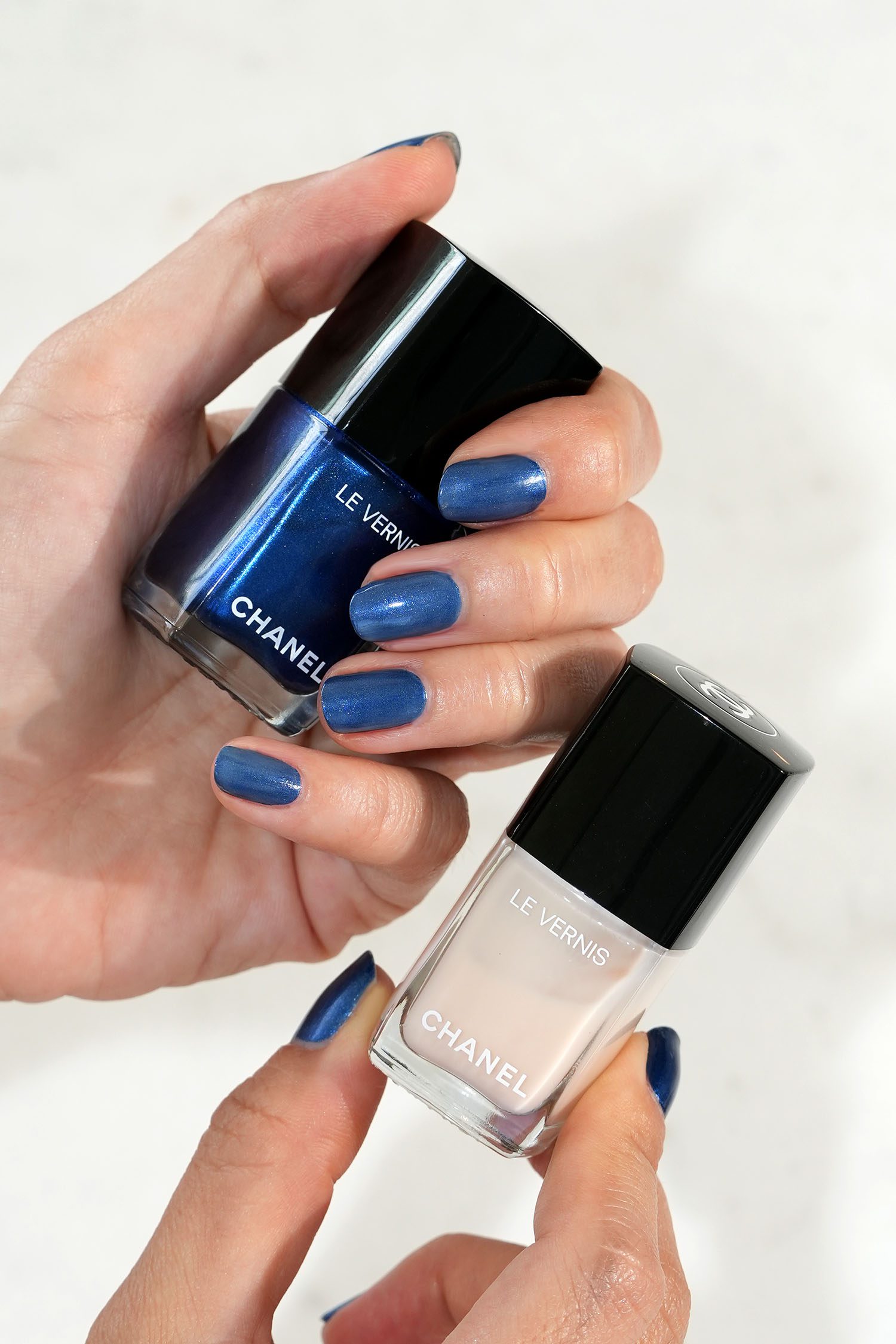
Online Chanel suggested a layering combo to give a more subdued denim look by layering one coat of Ballerina on top. I think it’s a fun twist.

Chanel Le Vernis Legende + Ballerina

That wraps up my Chanel Denim Makeup Collection haul! I hope you are able to find the pieces you have your eyes on!

Do Detoxes Work? What “Detoxing” Actually Means

0

What Does “Detoxing” Actually Mean?

As a Western-trained physician who has landed in the world of wellness, I fall somewhere along the middle section of the Purely-Science-to-Purely-WooWoo Spectrum. It makes me sad that mainstream medicine labels things like acupuncture, meditation, whole food diets, and yoga with the word alternative when they should be labeled fundamental. But I also believe that the non-medical wellness industry is prone to misinformation and fear-based language, which is quietly fueling a health-anxiety epidemic.

Specifically, the word detox is starting to concern me.

Those of us trying to live a healthy life walk around with a pulsing, ever-present fear of “toxins,” constantly feeling like we need to detox, but not exactly clear on we’re trying to avoid or achieve. This can create some truly toxic anxiety. So let’s clarify the basic facts.

What Is a Toxin?

A toxin is defined by Merriam-Webster as “a poisonous substance that is a specific product of the metabolic activities of a living organism and is usually very unstable, notably toxic when introduced into the tissues, and typically capable of inducing antibody formation.”

In other words, a true toxin is produced by organisms as a form of defense—a scorpion’s venom, botulinum toxin in spoiled canned food, or ricin, a lethal toxin produced by the castor oil plant.

A toxicant, on the other hand, is simply a toxic agent such as a pesticide, mercury, or lead that can cause harmful effects in the body. We’re far more likely to encounter toxicants than true biological toxins, and we encounter them through food, air, water, occupational exposure, and yes, sometimes cosmetics.

The distinction matters, because detox marketing often uses the word toxin loosely, without clarifying what is actually being discussed.

How Does the Body Detoxify Itself?

Here’s the part that gets lost in detox culture: your body is already detoxing. It does that for you all day every day, in the following forms:

  • Your lungs exhale carbon dioxide.
  • Your kidneys filter blood and excrete waste in urine.
  • Your liver transforms fat-soluble substances into water-soluble ones.
  • Your colon eliminates what cannot be absorbed.
  • Your skin provides a barrier that prevents many substances from entering in the first place.

Inside the liver, detoxification occurs in two major phases.

Phase I detoxification uses enzymes—primarily the cytochrome P450 system—to modify substances chemically, breaking them down into component parts or altering them for easier processing.
Phase II detoxification binds those modified compounds to molecules that make them easier to excrete.

These systems are not theoretical. They are measurable, biochemical pathways that operate around the clock.

Only when these organs are compromised—or when someone experiences a high-dose exposure to a toxic substance—do we worry about an inability to detoxify effectively. In those situations, expert medical care is required, not a juice fast.

Do Cleanses Work to Detox the Body?

There is no strong scientific evidence that juice cleanses, short-term fasts, or commercial detox kits measurably increase toxin elimination in otherwise healthy individuals.

Your liver does not need green juice to begin working. It is already working.

The possible exception—though still not well proven—may be certain medically supervised or traditional protocols, such as specific Ayurvedic approaches that attempt to mobilize fat-soluble substances. Even there, data are limited.

So why do people often feel better after a cleanse?

  • Because they’ve removed alcohol.
  • Because they’ve reduced sugar.
  • Because they’re sleeping more.
  • Because they’re paying attention.

The improvement in energy or clarity likely has more to do with stabilized blood sugar, reduced inflammatory foods, and improved hydration than with measurable toxin removal.

That doesn’t make the experience invalid. It just reframes the mechanisms.

What About Environmental Toxicants?

Just because environmental toxicants are not true toxins does not mean there’s nothing to learn or understand about them.

There are legitimate concerns about chronic exposure to certain environmental toxicants—BPA, heavy metals, persistent organic pollutants, tobacco smoke, and endocrine-disrupting compounds.

We should educate ourselves. We should reduce unnecessary exposure. We should choose safer products when possible.

But we do not need to live in a constant state of fear.

Low-level, chronic exposure is not the same as acute poisoning. Supporting your overall health with regular attention to sleep, exercise, fiber intake, adequate protein, and antioxidant-rich foods does more to support detoxification pathways than any packaged cleanse ever could.

Can You Detox Your Skin?

The word detox gets used heavily in skincare, often without precision.

Skin is a barrier organ. Its primary job is to keep bad things out, not to function as a major route of toxin elimination.

However, pollutants, particulate matter, excess sebum, and cosmetic buildup can sit on the surface of the skin and contribute to congestion or inflammation. Deep cleansing can remove those external substances.

Oil cleansing can dissolve oil-soluble debris. Clay can bind impurities.Activated charcoal can adsorb certain compounds.

But let’s be clear: you are not drawing mercury out of your bloodstream with a face mask.

A good, deep cleanse supports skin health and allows your skin to keep doing its job well. It does not replace liver function.

Why Use Activated Charcoal on Skin?

Activated charcoal is one of the few substances that physically binds other compounds through adsorption. I used it regularly in the emergency department to treat overdoses. It has an extraordinary surface area and can prevent absorption of certain toxins when administered appropriately.

The trouble with charcoal is that it doesn’t know what it’s grabbing. People often take charcoal supplements because they believe it contributes to daily detoxification, but it grabs nutrients and medications and other supplements in addition to toxic substances on its way through the gastrointestinal system. In short, it’s a bit of a gamble.

On skin, charcoal is less aggressive but still nonselective. That’s why formulation matters. We combine activated charcoal with nourishing ingredients like cacao and honey in our Detox Exfoliating Maskand with shea butter and coconut milk in Oh So Detox Body Soap. Used alone and undiluted, charcoal would leave your skin stripped and uncomfortable.

It’s a very useful tool, but it needs to be used skillfully and in moderation.

How to Support Your Natural Detox Pathways

If you truly want to “detox,” here’s what actually supports the body’s existing systems:

  • Eat fiber-rich foods to support bowel elimination.
  • Stay well hydrated to assist kidney function.
  • Consume adequate protein to support liver phase II detoxification.
  • Eat antioxidant-rich fruits, vegetables, herbs, and plant oils.
  • Move your body to support circulation and lymphatic flow.
  • Sleep well, with enough deep sleep and a regular schedule.

None of this is glamorous. None of it comes in a kit. But it all works.

Frequently Asked Questions About Detoxing

Do detox teas or detox drinks remove toxins?

There is no strong evidence that commercial detox beverages remove measurable toxins in healthy individuals. Many function primarily as laxatives or diuretics.

Can sweating detox the body?

Sweat eliminates small amounts of certain substances, but it is not a primary detox pathway. The liver and kidneys do the majority of detoxification.

Is fasting necessary for detoxification?

Fasting is not required for detoxification. In fact, severe calorie restriction may reduce nutrient availability needed for proper liver function.

Are charcoal supplements safe for daily detox?

Activated charcoal can interfere with medications and nutrient absorption. It should not be used routinely without medical supervision.

So, Does Detoxing Actually Work?

Circling back to the dictionary, the Mirriam-Webster definition of toxicity is twofold:

  1. “the quality, state, or relative degree of being poisonous”
  2. “an extremely harsh, malicious, or harmful quality”

While we have to worry about both forms of toxicity in life, the second definition may be more prevalent than the first. Amidst climate change, angry neighbors, fear-based marketing, and the incessant turmoil of politics, your choice to care for yourself in any form—going for a walk, cooking a meal, painting on a face mask—is a way to limit your exposure to toxicity, even if it’s not removing measurable toxins.

So eat beautiful, nourishing foods, clean up your home and your skincare the best you can, spend time with people who make you feel loved and grounded, and trust your organs to do the heavy lifting.
With love and less toxin-anxiety from us to you,


The information contained in this post is for educational interest only. This information is not intended to be used for diagnosis or treatment of any physical or mental illness, disease, or skin conditions.