
Home Blog Page 10

CDC warns of infection and safety risks linked to cosmetic surgery tourism

0

THE WHAT? The U.S. Centers for Disease Control and Prevention (CDC) has warned of serious health risks associated with travel-related cosmetic procedures after reviewing a decade of reported complications among American patients

THE DETAILS A CDC study published in the agency’s Emerging Infectious Diseases journal reviewed more than 2,100 reports involving U.S. residents who travelled domestically and internationally for cosmetic procedures between 2014 and 2024. Researchers identified 21 investigations involving around 145 patients who experienced adverse outcomes, including postsurgical infections. Twenty of the reports involved infections, with 12 suspected or confirmed bacterial outbreaks. The CDC also cited four reports involving patient deaths. Investigations into some clinics and surgical centres identified deficiencies in environmental cleaning, hand hygiene, use of personal protective equipment and surgical equipment sterilisation. The cases involved procedures such as liposuction and breast augmentation, with patients frequently travelling to destinations including Mexico, Canada, Central America, South America and the Caribbean.

THE WHY? The agency is seeking to raise awareness of the potential risks associated with medical tourism and is calling for stronger surveillance, better collaboration between healthcare providers and public health authorities, and improved patient education to help identify complications earlier and improve safety standards.

Source: Reuters

9 Best Brown Mascaras for When Black Feels Like Too Much

0

Frequently Asked Questions

Why should I choose brown mascara?

Brown mascaras are ideal for accentuating lashes without looking like makeup was applied. According to New York City-based makeup artist Steven Canavan, “Brown mascara is best if you’re looking to achieve a more natural look, and black [is best] if you want more drama.” Sure, you could spare some change for a lash lift or extensions to create a similar finish, but if you don’t want to spend your coins on monthly treatments, brown mascara is a much more accessible option.

On top of affordability, New York City- and Stockholm-based makeup artist Linda Gradin notes that these mascaras can add more dimension and enhance the color of your eyes, depending on the shade you use. “For a darker eye, a nearly black or dark brown mascara adds definition, but a classic brown gives a softer impression,” she says. “For lighter-colored eyes, true-to-light brown mascaras are most flattering, as they can bring out gold, green, or grey highlights in your eyes that black can’t.”

How to apply brown mascara

However you prefer to wear makeup is your business, but there are some general best practices. If you have straight or downward-pointing lashes, prep them with a curler. Then ensure you pick up an even amount of product on the mascara wand—swipe off excess product against the perimeter of the tube opening as needed—so you end up with clump-free, perfectly separated lashes. Starting at the base of your lashes, lightly swipe up, coating each lash. To separate your lashes while you apply, wiggle the wand as you sweep the formula toward the tips. Repeat as needed for your desired results and keep in mind that some mascaras dry faster than others.

If you really want to make your eye color and shape stand out, Gradin recommends pairing your brown mascara with a dark brown, charcoal, or black eyeliner pencil.

Meet the experts

How we test and review products

Before reviewing any makeup, we ask questions about a number of factors: What ingredients are in it? Does the brand offer a wide, inclusive shade range with all skin tones and undertones? Is it safe for readers who have sensitive skin or wear contact lenses? Is it on the affordable side or more of a splurge? Is the packaging consciously designed or needlessly wasteful?

For our review of the best brown mascaras, we enlisted the help of multiple editors, writers, contributors, and makeup artists. This ensures our testing base spans different skin tones, genders, and dermatological conditions. We considered each product’s performance across four primary categories: ingredients, wear and longevity, packaging, and inclusivity. For more on what’s involved in our reporting, check out our complete review process and methodology page.

Our staff and testers

A beauty product is a personal purchase. You might be searching for a face cream to address persistent dryness, a new nail product to add to your Sunday self-care routine, or you may simply be browsing around for the latest launches to hit the hair market. No matter what you seek or your individual needs and concerns, Allure wants to ensure that you love anything we recommend in our stories. We believe that having a diverse team of writers and editors—in addition to the wide range of outside testers and industry experts we regularly call upon—is essential to reaching that goal.

After all, can we really say a skin-care product is the “best” for people over 50 if the only testers we’ve solicited opinions from are folks who have yet to hit 30? Can we honestly deem a high-end diffuser worthy of your hard-earned cash if it’s never been tested on curls? We’re proud that our staff spans a wide range of ages, skin tones, hair textures, genders, and backgrounds, which means that we are able to fairly assess any beauty product that comes into the beauty closet.

Done reading? Now, watch Oliva Dean’s 10-minute routine for healthy hair and dewy skin:

Summer 2026’s Short Nail Designs Prove Natural Nails Don’t Have to Be Boring

0

Micro-fruit nails were especially trendy last summer when fashion and fragrance brands (like Jacquemus and Phlur) leaned into fruits, including cherry and strawberry. The summer 2026 take includes mixing this adorable motif with other minimal designs like stripes, French tips, and beaded details. The result? A detailed manicure that turns heads without looking busy.

For short nails, we’re zooming in on the cute design. Instead of mini berries clustered on the nail, “you can cover the whole nail with a single strawberry,” says Miss Pop. “This gives the design a more three-dimensional element,” she adds, noting that texture and dimension are big underlying trends this season.

Short seashell nails

Courtesy of @concon_wi

Seashell nails

Courtesy of @kalalastrzelbicka

Seashell nails evoke the feeling of hunting for shells and sand dollars on the beach. The seasonal design makes its way onto our feeds every summer, and this year, many of those seashell manicures we’ve been seeing are on short nails. The horizontal lines or ridges in the design elongate, making short, natural nails look instantly elegant. “On short nails, the basic seashell pattern looks even punchier since it’s on a smaller canvas,” says Eunice Park, a nail artist in Los Angeles and brand director at Aprés Nail. “It looks really cute and impactful.”

And this summer’s seashell nails are more realistic than ever. “I’ve seen shell nails on TikTok held next to an oyster shell and the nails look almost exactly like the real thing,” says Park, who adds that previous versions of the trend were more artistic: curved, vertical, 3D gel ridges polished with pearlescent chrome powder.

On short nails, Miss Pop recommends adding a small pearl in the center of the nail near the cuticle to add to the illusion of length. “When the point of interest is all the way down at the bottom or at the cuticle line, it makes the nail look longer,” she says.

Olivia Rodrigo Wore the Most ’90s (and Least Expensive) Hair Accessory — See Photos

0

If you didn’t live through the ‘90s in your teens or twenties, I’m not sure I can convey in a glorifying enough way the ubiquity, the importance, the power of a single bobby pin positioned just above eyebrow height in the hair. Whether or not you were using it to keep bangs off your face, it was a must-have hair accessory. Sure, we wore cute clips, too, but there was something about a lazy bobby pin that so perfectly captured a cross-section of the era’s styles. And while Olivia Rodrigo wasn’t even born yet, she absolutely nailed the look on her current trip to London.

The singer-songwriter is promoting her new album, You Seem Pretty Sad for a Girl So in Loveand on June 4, she made a stop at BBC Radio One. Rodrigo was spotted wearing a cropped, lime-green, knit vest over a black and white polka dot mini dress, as well as thigh-high white socks and black heels. The fit perfectly nailed influence 1960s mod style had on 1990s trends, worn in a 2026 way.

Photo: Getty Images

But what really brought it all together was one tiny detail: a bobby pin. Rodrigo’s signature long hair was side-parted, with the thicker side held ever so slightly back by a little, folded piece of metal that cost maybe a few cents.

Olivia Rodrigo wearing a black and white polka dot dress and green vest

Photo: Getty Images

What They Mean + How to Use Them

0

Let’s talk about hair color numbers and letters!

You know that feeling when you’re standing in the hair color aisle staring at a box that says something like “6NW” or “5RV” and you have absolutely no idea what any of it means?

I fielded this question all the time when I worked at Sally Beauty Supply.

Women would pick up a box, look at the label, put it back down, and walk away confused. And honestly, it doesn’t have to be that way. The hair color numbering system looks complicated but it’s actually pretty logical once someone breaks it down for you.

That’s exactly what this post does. By the end of it, you’ll be able to pick up any box of hair color and understand exactly what you’re looking at.


💡TIP: Save this article to your Hair Color board on Pinterest so you always have it handy when you need it! 👇🏼👇🏼👇🏼

How to read hair color numbers and letters on the hair color box

*This post contains affiliate links meaning that if you make a purchase after clicking the link, I earn a small commission at no additional cost to you. This helps me provide the best possible content on this site for free. Keep in mind that I only link to quality products that I use myself and feel would be beneficial for my readers.

Please read my full affiliate disclosure for more information.


The Number: Your Hair Color Level

Hairstylist with book of hair swatches.Hairstylist with book of hair swatches.

Let’s start with the hair color numbers.

The first thing you’ll see on a box of hair color is a number, and that number tells you one thing: how light or dark the color is.

Hair color levels are measured on a scale from 1 to 10. Level 1 is the darkest black, and level 10 is the lightest blonde. Every shade in between falls somewhere on that scale. The higher the number, the lighter the color.

Here’s a general guide to what each level looks like:

Hair Color Number Chart

Hair color numbers/level chart system.Hair color numbers/level chart system.

Some color lines go up to level 11 or 12, which are high-lift blondes designed to lift the hair lighter than a standard level 10. You’ll usually see these labeled as “high-lift” on the box.

The hair color numbers tells you the depth of the color but nothing about its tone or warmth. That’s where the letters come in.


The Letter: Your Hair Color Tone

Star IconStar Icon

The letter (or letters) after the number tells you the base tone of the color. This is what determines whether the color is warm, cool, or neutral.

Here’s a breakdown of the most common hair color letters:

Letter Meaning
A Ash
B Blue
BV Blue-Violet
C Cool
G Gold
M Mahogany
N Neutral
THAT Neutral Ash
NB Neutral Brown
NN Natural/Neutral (no excess warmth)
O Orange
OR Orange-Red
P Platinum or Purple
R Red
RR Really Red (red without brown undertones)
RB Red-Brown
RC Red-Copper
RO Red-Orange
RV Red-Violet
V Violet
VR Violet-Red
W Warm

When a color has double letters like RV or NW, the first letter is always the dominant tone and the second is a supporting tone that adds depth or balance. So RV (red-violet) means the color is primarily red with violet woven through it.


How to Read a Full Hair Color Code

Hairstylist showing a client book of hair swatches.Hairstylist showing a client book of hair swatches.

Now that you understand the level and the tone separately, let’s put them together.

5RV means a level 5 (light brown) with a red-violet tone. More red than violet.

8A means a level 8 (light blonde) with an ash tone. Cool and muted, no warmth.

6NW means a level 6 (dark blonde) with a neutral-warm tone. A natural, slightly warm shade without being overtly golden.

10G means a level 10 (lightest blonde) with a gold tone. Warm, bright, and luminous.

Once you know the formula, any combination of numbers and letters becomes readable.


The Professional Number System (Decimal System)

Hair Color IconHair Color Icon

If you’ve ever looked at a professional hair color brand like Wella, L’Oréal Professionnel, or Redken, you may have noticed they use a slightly different system with decimal points instead of letters. For example: 6.3 or 5.1.

In this system, the number before the decimal is still the level (how light or dark). The number after the decimal is the primary tone, and if there’s a second number after that, it’s the secondary tone.

Here’s what the tone numbers mean in the professional system:

Number Tone
.0 Natural
.1 Ash
.2 Violet/Iridescent
.3 Gold
.4 Copper
.5 Mahogany
.6 Red
.7 Brunette/Brown
.8 Mocha
.9 Soft Brown

So 6.3 means a level 6 (dark blonde) with a gold tone. 5.1 means a level 5 (light brown) with an ash tone.

Some brands use a combination of both systems, with a level number plus letters.

For example, L’Oréal Professionnel might label a color as 6.13, which means level 6, with a primary ash tone (.1) and a secondary gold reflect (.3). It sounds complicated but once you see the pattern it becomes second nature.


Are Hair Color Numbers Universal?

Hairstylist mixing hair color in a bowl.Hairstylist mixing hair color in a bowl.

The level system (1 to 10) is pretty consistent across most brands. If you’re a level 6 with one brand, you’ll generally be a level 6 with another.

The tone letters and numbers are where things vary. Every brand has its own system for coding tones and reflects. Clairol uses letters like N, W, and A. Wella uses decimal numbers. Redken uses a combination. Some brands create their own proprietary tone codes to differentiate themselves.

The practical takeaway is this: always check the shade name alongside the hair color numbers. Most brands give their colors descriptive names like “Light Ash Blonde” or “Medium Golden Brown” that tell you what the tone is regardless of the coding system they use. When in doubt, the name is your best guide.

💡TIP: You can always check with the manufacturer if you’re unsure.


How to Find Your Current Level

Magnifying Glass IconMagnifying Glass Icon

Before you can choose the right hair color, you need to know your starting level. Here’s how to figure it out.

Look at your natural roots in natural light, not bathroom light, which can distort the color. Compare what you see against a hair color level chart. Your roots are always your most accurate representation of your natural level because the lengths and ends may have been lightened or colored previously.

A few things to keep in mind when assessing your current level:

  • Your natural level is the darkest part of your hair, usually at the roots and around the nape of your neck.
  • The lengths and ends of your hair may be lighter due to sun exposure, heat styling, or previous color.
  • Virgin hair, which is hair that has never been colored, is the most straightforward to assess because there’s no color history affecting the result.
  • If you’re working with previously colored hair, your starting level and your natural level may be different, and that affects which developer you’ll need. You can read more about that in my guide to the different volumes of developer.

How to Choose the Right Hair Color Number

Hair Color Bowl IconHair Color Bowl Icon

Once you know your current level and your target level, choosing the right hair color numbers becomes much more straightforward.

Going darker: Choose a color that’s 1-2 levels below your current level. Going darker is generally easier and more predictable than going lighter, and you can use a lower volume developer.

Staying at the same level: Look for a color at your current level with the tone you want. This is straightforward for adding a new tone without changing the depth.

Going lighter: This is where it gets more complicated. If you’re going 1-2 levels lighter on virgin hair, a permanent color with the right developer can work. If you’re going more than 2 levels lighter, or if your hair has been previously colored, you’ll likely need bleach first. Check out my guide to lifting hair color for the full breakdown.

Covering gray: Use a level that matches your natural base and choose an N (neutral) or W (warm) tone for the most natural-looking gray coverage. A cool or ash tone on gray can sometimes look flat or blue-toned, especially on coarser gray hair.


A Few More Things Worth Knowing

Hair Coloring IconHair Coloring Icon

Some brands use double numbers before the tone to indicate extra intensity or gray coverage. For example, 33/02 or 55N means the color has an intensified base for stronger coverage on resistant gray hair.

If a color has the same tone letter repeated, like NN or RR, it means the tone is extra intense. NN means there’s double the neutral base, which makes it great for resistant gray. RR means the red is very vivid with no brown softening it.

The letter N on its own means neutral, which is a good middle-ground tone that works on most skin tones without pulling too warm or too cool.

When you see a W (warm) with hair color numbers, it means the color has warm golden undertones built in. This is often recommended for gray coverage because the warmth helps the color look natural and dimensional rather than flat.


FAQ

FAQ IconFAQ Icon

What do the numbers mean on hair color?

Hair color numbers refer to the level system, which measures lightness or darkness on a scale from 1 to 10. Level 1 is black and level 10 is the lightest blonde. All other shades fall in between those points.

What do the letters mean in hair color?

The letters refer to the base tone of the color. Common letters include N (neutral), A (ash), G (gold), W (warm), R (red), and V (violet). When a color has two letters like NW or RV, the first letter is the dominant tone and the second is a supporting tone.

What does 5N mean in hair color?

5N means a level 5 (light brown) with a neutral tone. It has no dominant warm or cool undertones, making it a natural-looking brown that works on most skin tones.

What is a level 5 hair color?

Level 5 is a light brown on the hair color scale. It sits in the middle of the scale between dark brown (level 4) and dark blonde (level 6).

What does the second number mean in hair color?

In the professional decimal system, the number after the decimal point indicates the primary tone. For example, in 6.3, the .3 means gold. If there’s a second number after that, like 6.13, the .1 is the primary tone (ash) and the .3 is the secondary tone (gold).

Are hair color numbers universal?

The level system (1 to 10) is consistent across most brands. The tone letters and decimal numbers vary by brand. Always check the shade name alongside the code to confirm the tone, especially when switching between brands.

How do I find my current hair color level?

Look at your natural roots in natural light and compare them to a hair color level chart. Your roots are the most accurate representation of your natural level because the lengths and ends may have been affected by sun exposure or previous color.


Final Thoughts

Final Thoughts IconFinal Thoughts Icon

Once you understand how the level system works and what the tone letters mean, reading a hair color box becomes second nature. You really are learning a kind of shorthand that stylists use every day, and knowing it puts you in a much better position to choose a color that actually does what you want it to do.

The level tells you how light or dark. The letter tells you how warm or cool. Put them together and you have everything you need.

Until next time,

HolleeHollee

Your Turn: Did this help decode the hair color numbers for you? Drop your questions in the comments below!👇🏼👇🏼👇🏼


RELATED:


5 Best Flip Flops 2026, Reviewed

0

Flip flop FAQs, answered:

If you opt to wear flip-flops for an extended period of time, look for pairs with arch support and a bit of a heel. “Having somewhat of a heel allows the foot to function appropriately during a normal gait cycle, where the heel strikes the floor, then your foot plants on the ground, and then proceeds to toe-off before the other foot does the same thing,” details Sidney Weiser, podiatrist and CEO of Quality Podiatry Group.

She also suggests taking note of material, too: “Plastics and vinyl materials that flip-flops are made from cause sweating, which can contribute to skin problems such as fungi. Blisters are also very prevalent. Essentially, look for foam, rubber, leather, and synthetic materials instead.

Marion Yau, podiatrist at Harley Medical Foot & Nail Laser Clinic, suggests paying close attention to the straps attached to your chosen flip flops, too. “Avoid sandals with thin straps that are glued rather than stitched or moulded into the sole as they detach easily and cannot be repaired.

She continues: “Fit matters too; feet should sit entirely within the footbed, as overhang causes the toes to grip the sandal, straining the flexor tendons over time. Always check that the sole is fully waterproof or water-resistant, as a footbed that absorbs moisture creates a warm, damp environment where bacterial and fungal infections thrive.

“Finally, replace your flip-flops once the sole has visibly compressed or the straps begin to fray as worn-out sandals put unnecessary stress on the heels, arches, and ankles.”

What makes a flip-flop ‘good’ or ‘high quality’?

“Material and construction are the two things that separate a well-made flip-flop from one that fails by mid-summer,” adds Marion. “Premium sandals are made from genuine leather, natural rubber, or high-density EVA foam materials that hold their shape under regular use. Low-grade synthetics compress quickly, and once the sole loses its density, it loses its ability to support the foot.

“Sole thickness matters too; anything under 1cm offers very little shock absorption, sending impact straight through the heel and into the joints.”

Are flip-flops with arch support really better?

According to the experts, yes — and I’d agree if comfort is the priority. “From a podiatric standpoint, yes,” shares Marion. “A flat flip-flop provides no support to the medial longitudinal arch, leaving the plantar fascia to absorb a disproportionate load with every step. Over time, this is a well-established pathway to plantar fasciitis, heel pain, and chronic foot fatigue.

“A contoured footbed that mirrors the natural shape of the arch distributes body weight more evenly, reducing that strain considerably. For anything beyond a short beach walk, built-in arch support is worth prioritising.”

How long should you really wear flip-flops?

It goes without saying, really, that flip-flops aren’t as supportive as walking shoes or walking sandals. “Wearing flip flops is probably not the best shoe gear one should wear on a daily basis,” confirms Weiser. “They’re associated with many types of injuries, including falls due to slippage on wet surfaces and blisters due to the plastic material between toes.”

“You should never run or play sports in flip-flops. Never wear them in the rain as they may become slippery. Wearing them to the pool, beach, locker room, and sauna is okay.” Noted.


Meet the experts:


How I tested the best flip flops:

I wish testing flip flops involved booking a long weekend in Europe, using each day to test a new pair, considering their comfort, fit and durability while exploring. Instead, I spent two months wearing each pair as much as possible — for my morning commute, around the supermarket, and for Sunday walks around Wimbledon Common with my other half.

After wearing each pair at least three times, I rated them against the following criteria:

Design Are the flip-flops fit for purpose — supportive and not too bouncy? Did I experience any rubbing or chafing? Are they aesthetic, and do I have options in terms of colour and design?
Fit Are the flip-flops true to size? Are there narrow and wide fit options? Is the sizing and associated guide easy to understand?
Support Do the straps keep the flip-flop attached to my foot? Did I feel supported underfoot, especially around the arch? Is there ample room for my toes to splay naturally?
Price point Would I be willing to spend that much on a pair of flip-flops again? Did they wear well?
Delivery How quickly did each pair of flop flops arrive, and what were the associated costs?

As you’d hope, only the flip flops that impressed made it into this edit. However, I also tried the following, which sadly didn’t meet my standards:

  • Crocs Getaway Platform Flip Flops, £44.99 — I had high hopes after seeing these go semi-viral on TikTok, and while I loved the platform design, I didn’t find them the most comfortable, and I finished the day with blisters on the first three wears. They also didn’t feel the most premium!
  • Topshop’s Sky Real Leather Toe Thong Sandal, £38 — I loved the fire-engine red colour of these Topshop slides, as well as the fact they’re leather and under £50. However, they were SO loud under foot and a little slippery on extra hot days.

In terms of what I’m currently testing, stay tuned for these reviews:

Ancient Greek Sandals Saionara Jelly PVC Flip Flops

Trim Detail Flat Toe Post Sandals

Birkenstock Honolulu Toe Thong Sandals


Why you can trust me:

I’ve been reviewing functional fashion for years — whether it be new underwear, shapewear or activewear, I’m well-versed with putting designers’ claims to the test so as to publicly declare the brands and products worth your money. For context, this includes everything from walking shoes to period pants, as well as gym leggings, t-shirt bras and comfortable heels.

In terms of my working week, it tends to involve hours of personal testing, plenty of writing and countless press events, discovering the latest innovations in practical fashion. I also regularly chat one-on-one with fashion designers and health experts, including leading podiatrists, to ask for their insight, shopping tips and product recommendations.

In terms of my experience with flip flops, I’m a recent convert. In summers past, I’ve relied on sandals to carry me through sweaty commutes and my summer travels. However, after seeing the fashion set rely on slimline thong sandals, I decided it was time to track down the most supportive and stylish. For this piece, I tried a variety of styles, all in a UK 6 or 6.5, to see which were most comfortable, supportive and worked with the majority of my wardrobe.

How I’m Preventing Hyperpigmentation During Laser Hair Removal

0

This year, I finally decided to do something I’d spent more than a decade writing about as a beauty editor: laser hair removal. For nearly 12 years, I’ve waxed almost every part of my body, with regular appointments for my bikini, Brazilian, and underarm areas. But that didn’t mean I enjoyed the treatment. Each time, I’d brace myself as hot, melted wax was smeared across my skin.

The catalyst for my decision to get laser treatment was my first wax after giving birth. I’d gone through the most physically intense experience of my life, so I assumed going back to waxing would be a breeze. It wasn’t. The anticipation of ripping off hard wax didn’t magically disappear, and for my first few waxes post-birth, my skin felt more sensitive than usual. In other words: It still hurt like hell.

Hyperpigmentation was also a huge concern for me following all the hormonal changes I was experiencing. Lasers have long had a reputation for being a risky treatment for melanin-rich skin due to the heightened risk of burns or discoloration. That’s because laser hair removal literally targets melanin. “It works through a process called selective photothermolysis,” says Naana Boakye, MD, a board-certified dermatologist in Hackensack, New Jersey. That’s just a fancy way of saying that melanin in the hair follicle absorbs the laser energy. “That energy converts to heat and damages the follicle so it can no longer grow.”

For decades, lasers were designed for lighter skin tones, and there are still technicians who are inexperienced in treating melanin-rich skin. As a Black woman who has dealt with post-inflammatory hyperpigmentation from acne on my face and body, the idea of triggering more discoloration by way of laser treatments has always made me nervous. Despite that, I’ve understood laser hair removal to be a gold-standard treatment for anyone who wants to remove body hair more permanently. So I decided to take the leap, but not without advice from board-certified dermatologists as I go through the multi-week process. The first areas I’m zapping are my underarms and Brazilian area.

What are the risks of laser hair removal for melanin-rich skin?

Laser hair removal on all skin types poses risks—especially if you undergo the treatment without the supervision of a board-certified dermatologist. You are aiming beams of heat energy at your skin, after all. Dr. Boakye says common side effects include temporary redness and swelling around the hair follicles and mild discomfort during treatment. “Less common complications include blistering, crusting, erosions, and, very rarely, scarring,” Dr. Boakye says.

For people with melanin-rich skin, hyperpigmentation and burns are among the most common concerns and typically occur when an inexperienced provider uses a device incorrectly. “When the laser wavelength, settings, or technique are not appropriate for the patient’s skin tone, the energy can be absorbed by the skin instead of the follicle, increasing the risk of injury,” Dr. Boakye explains. “In melanin-rich skin, there is more pigment in the epidermis, which means the laser energy can be absorbed earlier than intended.”

Jeanine Downie, MD, a board-certified dermatologist in Montclair, New Jersey, says melanin-rich skin has “melanocytes that are larger and generally have higher baseline activity levels.” She adds that these pigment-producing cells “release more inflammatory ‘mediators’ faster than in those [in lighter skin tones] in response to heat or other trauma.”

Signs of a poor reaction to laser hair removal would be “pretty immediate” during treatment. “All lasers elicit a skin response,” Dr. Downie says, pointing to mild inflammation. “Pigmentary changes, like dramatic darkening rather than transient redness, are immediate signs that something isn’t right.”

Pure Pride and Joy: The Wade Family Steps Out in Style for a Beautiful Cause

0

Photo Credit: IG@gabunion

look at this stunning family because they are truly the blueprint for holding each other down with pure, unconditional love! The stunning Gabrielle Union took to social media to share an absolute dream of a photo gallery from the 2nd Annual Translatable Ball, and the pure elegance is completely off the charts. In the gorgeous images, Zaya Wade takes center stage looking like an absolute high fashion queen in a structured, textured black floor length gown with a dramatic jagged neckline. Standing proudly right by her side are her incredible parents, with Dwyane Wade looking sharp in a sleek black double breasted suit and a unique black eye mask, while Gabrielle looks like an ethereal vision in a flowing, sleeveless high neck white gown.

The moving tribute from Gabrielle’s caption highlights the beautiful reality of watching Zaya step fully into her own power, noting how much pride it brings to witness her joy, passion, and authenticity inspire so many people. This incredible moment coincided perfectly with the start of Pride Month and Zaya’s birthday, making the evening a massive double celebration of love and identity. The spectacular Gabrielle Union Translatable Ball post quickly went viral, reminding everyone of the vital importance of protecting and uplifting our LGBTQ plus youth within the Black community. Seeing a family stand together with this much grace, unshakeable support, and undeniable glamour is exactly what real love looks like, and we are sending the biggest birthday blessings to Zaya as she continues to shine her beautiful light!

Why You Can’t Let Go of Your Clothes (And What to Actually Do About It) — Inside Out Style

0

twitterpinterestlinkedinmail

Lois wrote to me recently with something I hear all the time: “I’ve got too many clothes and I love them all. I need to donate more and I can’t seem to cull them out.”

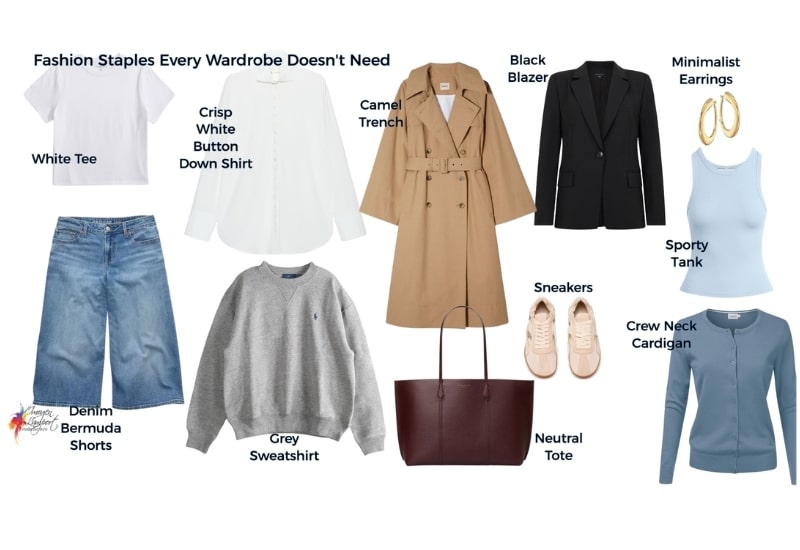
Sound familiar? You’re not alone. Wardrobe overwhelm is one of the most common things my clients come to me with, and the reason it feels so paralysing is that there’s no single right answer, and most of the advice out there is too blunt to be useful.

So let’s talk about what actually works.

1. First, ditch the “haven’t worn it in six months or 1 year” rule

This is the advice that gets repeated endlessly, and it drives me a little mad. Because here’s the thing: maybe you haven’t worn that dress because it’s been the wrong season, or you simply haven’t had the occasion. Special-occasion wear, especially, gets penalised by this rule, and it’s not fair.
A much better question to ask is: if this is an everyday piece, why am I not reaching for it? Or, can I imagine enjoying wearing this again?

That’s where the useful information lives.

2. Start with colour (it’s not superficial, it’s strategic)

Colour is the single most powerful filter you have, and it’s the one people most often skip. Here’s how I think about it: if you find a dress in the perfect style, the perfect cut, it makes your body look amazing, but the colour is wrong, I still wouldn’t buy it. Because if the colour doesn’t work with your complexion, you’ll never quite feel right in it. You’ll be piling on extra makeup just to compensate; it won’t work with your existing jackets and outer layers, so you can only wear it when it’s exactly the right temperature, and that’s the garment working against you, not for you.

when colours work it's easy to decide to keepOnce you know your colour palette (and if you don’t, that’s a genuinely worthwhile investment), you can run everything in your wardrobe against it. Things you’re not wearing suddenly become much easier to release when you can see, clearly, that the colour was the problem all along.

One small note: if you love a garment but the colour isn’t quite right, consider dyeing it. It’s not the first thing people think of, but it can save a piece you genuinely love.  I’ve got lots of tips here on how to overdye your clothes.

3. Does it fit the body you have today?

Not the body you had ten years ago. Not the body you’re planning to have after some future goal. The body you are living in right now.

Keeping clothes “for when I lose the weight” is one of the most common reasons wardrobes become places of low-level guilt rather than daily joy. Those pieces are not motivating you. They’re just quietly making you feel bad every time you open the door. Let them go.

4. Is it still you?

Our personalities evolve. Our lives change. A piece that felt completely right five years ago might now feel like a costume from a previous chapter. Ask honestly: Does this reflect who I am now? Does it suit my style today, not the style I used to have or the style I think I should have?

If the answer is a wobble rather than a yes, that tells you something.  If you’re not yet ready to completely let go, pop it in a box or bag out of your wardrobe and put it out of sight.  If you haven’t gone back into the bag to get it in the next few months, likely you’re not missing it and can let it go.

5. The most underrated wardrobe editing tool: actually wearing the clothes

Here’s my favourite practical fix for overwhelm. Instead of standing in front of a full wardrobe trying to make decisions on the spot (which is cognitively exhausting and rarely works), start wearing one new thing each day.

At the end of the day, check in with yourself. Did you fidget with it all afternoon? Did you feel slightly off in it, or did you feel like yourself? Did you spend energy managing it rather than just living your day? That feedback is gold. You cannot get it from a hanger.

If you felt frumpy, or uncomfortable, or like you were wearing someone else’s idea of you, that’s your answer. You don’t need to justify it or find a logical reason. You just need to notice it.

A word about capsule wardrobes

I want to say this clearly: a capsule wardrobe is not a moral achievement, and it is not for everyone. Some people genuinely thrive on variety, on options, on the pleasure of a broad range of clothes. There is nothing wrong with that. The goal isn’t minimalism for its own sake. The goal is that your wardrobe feels like yours, and that opening it feels like a possibility rather than pressure.

If it currently feels like the latter, that’s your signal that something needs to shift. But the solution doesn’t have to be ruthless culling. Sometimes it’s just clarity about what’s actually working.

Where to start

If you’re feeling overwhelmed right now, here’s the simplest version: pick something you haven’t worn in a while and wear it today. See how it lands. That one small act will tell you more than an hour of staring at rails ever could.

And if you want more structure for this kind of wardrobe edit, my Evolve Your Style 31-Day Style Challenge walks you through exactly this process, with prompts and frameworks to help you figure out, piece by piece, what’s genuinely working and what’s quietly taking up space.
Your wardrobe should make you feel more like yourself, not less. That’s the whole point.

Why You Can't Let Go of Your Clothes (And What to Actually Do About It)

Facebooktwitterpinterestlinkedinmail

Best Non-Toxic Retinol Alternatives – Organic Bunny

0

Retinol and Tretinoin get called the gold standard of anti-aging as we discussed in our last blog post and fair enough. They speed up cell turnover, soften lines, even out tone. We’re not arguing the results. We’re arguing the price your skin pays in the long run. Flaking, redness, tightness, and a weeks-long “purge” where things look worse before they look better. Retinoids can wreck your moisture barrier, make you more sun-sensitive, and they’re a no-go during pregnancy. So, what can we do instead!? Well, as always, we reach for two gentler swaps that chase the same results.

Nature’s Retinol: Rosehip Oil

Have you ever wished that there was an organic or natural swap for retinol? Well, it turns out that there is and there is major data to support this! Here’s the data point that matters: Rosehip Oil naturally contains trans-retinoic acid, an actual form of vitamin A which is in the same family as retinol, however, this is the all natural version, true luxury. Anytime you see Rosehip Oil on an ingredient list, that’s the good stuff.

It’s also loaded with fatty acids, vitamin C, and antioxidants. Translation: it renews and brightens skin like a retinoid would, while the fatty acids hydrate and rebuild your barrier at the same time. Great for scars, dark spots, and dull skin… minus the chaotic aftermath.

The Retinol Mimic: Bakuchiol

Another must ingredient we can’t go without is Bakuchiol. This comes from the babchi plant, and it’s been studied head-to-head with retinol. The result? Comparable improvements in lines, firmness, and tone with noticeably less irritation. Here’s the twist: it’s not vitamin A at all. It just signals your skin the same way retinol does. No peeling, no sun sensitivity, works morning and night and it’s a much safer swap for those expecting. (Pregnant? Still worth a quick word with your doctor.)

Rosehip vs. Bakuchiol

Rosehip seed oil and bakuchiol are a perfect pairing because they work at different levels. Use either on their own, or together for maximum results! Here is how to choose which is best for your goals…

Choose Rosehip Seed Oil if you…

  • Have skin that feels tight, flaky, or rough, especially in winter or after cleansing.
  • Get red or stingy easily from active ingredients and have given up on products that “work but hurt”.
  • Are in your 20s or early 30s and want prevention and glow rather than correction.
  • Have visible dryness-related fine lines (the kind that disappear when you hydrate).
  • Want to fade the look of old breakout marks or even out patchy tone.
  • Have eczema-prone, rosacea-prone, or generally reactive skin and need to play it safe.

Choose Bakuchiol if you…

  • See fine lines that stay put even when your skin is well-hydrated, especially around the eyes, forehead, or mouth.
  • Notice skin looking less firm or “bouncy” than it used to, or a softening jawline.
  • Have sun-related dark spots, uneven tone, or rough texture you want visibly refined.
  • Tried retinol but quit because of peeling, redness, or irritation.
  • Are in your mid-30s+ and up and want genuine anti-aging correction, not just maintenance.
  • Want one clear “treatment” step that earns its place in the routine.

Choose both if you…

  • Have mature skin that’s also dry or sensitive, you need real renewal and barrier repair.
  • Get visible results from actives but pay for it with dryness and tightness.
  • Want a complete morning-and-night system: bakuchiol to treat, rosehip oil to nourish and seal.
  • Are doing a full “retinol breakup” and want a routine that feels as good as it works.

The quick rule: If your main complaint is discomfort and dullnessstart with rosehip oil. If it’s lines, firmness, and texture that won’t budgego straight to bakuchiol. If it’s bothuse them together, bakuchiol to treat, rosehip oil to nourish.

How To Use This Duo

Want to give either a try!? Here is how you would incorporate both into your routine! You always want to go thinnest to thickest. Watery serums and treatments go first so they reach the skin directly. Then, oils and creams go last because they seal everything beneath them. Rosehip oil is the heaviest step, so it always comes after your bakuchiol treatment and just before (or mixed into) your moisturizer! So, cleanse, tone, treat with bakuchiol, nourish with rosehip and moisturize if needed last. Here are some of our faves to use and yes, you can use both! Cleanse, tone, treat with Bakuchiol, nourish with Rosehip Seed and then moisturize last.

Eco By Sonya Glory Cream

Five scientists, five years in the making and it shows. The Glory Cream pairs bakuchiol (firms, evens tone, blurs pores, zero irritation) with a serious moisture cushion: organic apricot oil and cacao seed butter that repair the barrier and melt right in. It treats and deeply nourishes in one step. Since this is a heavier cream, you would apply the Rosehip and then this last!

Best For: Dry or mature skin that wants rich, melt-in moisture with its retinol-free results. Try it here.

Aleavia Biome Luxe Prebiotic Serum

Double the retinol-swap power: bakuchi oil to smooth fine lines, plus paracress oil, aka “the New Botox” to lift and firm. There’s rosehip in here too, so you’re getting both of our hero alternatives in one bottle. It’s light, fast-absorbing, and microbiome-friendly, feeding your skin’s good bacteria while it works. This would be applied after Rosehip Seed Oil.

Best For: Anyone who wants their retinol swap in a light serum, not a heavy cream. Try it here.

Apply Bakuchiol Serum

Bakuchiol, stripped right back to basics… just bakuchiol and olive-derived squalane, nothing else! You get the clinically studied collagen boost, smoother lines, and more even tone, with none of retinol’s irritation or sun sensitivity. The squalane adds light, barrier-loving moisture without tipping into cream territory. This would be applied before Rosehip Seed Oil.

Best For: Anyone wanting a clean, no-frills bakuchiol serum, sensitive and acne-prone skin included. Try it here.

Inika Overnight Repair Mask

The lazy-genius option: bakuchiol that works while you sleep. It boosts collagen and evens tone like a retinol would, backed by hyaluronic acid to plump and Rose of Jericho plus vitamin E to strengthen. One of my fave masks to use on days I need some extra skin TLC! Slather it on, sleep, rinse, repeat once a week.

Best For: Anyone who wants retinol-swap results from a low-effort weekly treatment, not a nightly step. Try it here.

Living Libations CoQ10 Royal Rose Serum

Our rosehip MVP. Cold-pressed rosehip seed oil delivers trans-retinoic acid, real, gentle vitamin A, to renew cells and soften lines without the irritation. Then it goes full luxe: CoQ10 (an enzyme skin loses with age) plus Rose Otto, Myrrh, and Immortelle to firm and even tone. This would be applied after Bakuchiol and before moisturizer.

Best For: Anyone who wants pure rosehip power with a treatment-grade botanical blend. Try it here.

RMS Beauty Kakadu Beauty Oil

A cult classic, leveled up. Rosehip fruit oil brings the gentle, retinol-like renewal; superfruit Kakadu Plum, the highest natural source of vitamin C, plus adaptogenic herbs handle antioxidant defense and all-day hydration. Light but concentrated: two or three drops on damp skin, morning or night. This would be applied after Bakuchiol.

Best For: Anyone who wants rosehip in a multi-tasking daily face oil that doubles as makeup prep. Try it here.

Scentual Aroma Youthful Eye Serum

The eyes show age first so this eye serum brings rosehip right where you need it! Rosehip seed oil delivers gentle, vitamin A-rich renewal exactly where fine lines start, while argan oil and calming chamomile and calendula nourish and de-puff. All plant oils, no synthetic retinol, which matters a lot on thin, sensitive eye skin. This would be applied after Bakuchiol and before moisturizer.

Best For: Anyone who wants a gentle, retinol-free fix for fine lines and puffiness around the eyes. Try it here.

The Bottom Line

You don’t need to suffer with rashes and burns to create good skin. Rosehip and bakuchiol prove you can get the renewal, the firmness, and the glow, without the flaking, the purge, or the pregnancy caveats! Pick the swap that fits your skin, layer them if you’d like, and let your routine work with your skin instead of against it. To view all of the above items in one cart, click here.

Not sure which is best for you!? Book a FREE consult with our Holistic Esthetician today and we will map it all out, just for you and your goals!