

Home Blog Page 65

How to Match Shoes to Your Outfit Without a Massive Shoe Collection — Inside Out Style

0

twitterpinterestlinkedinmail

You do not need a wardrobe full of shoes to create stylish, cohesive outfits.

In fact, having too many options often makes getting dressed harder, not easier. What matters far more is choosing the right shoes that work across multiple outfits and occasions.

When you understand how to match your shoes to your outfit using a few simple principles, you can create endless combinations with a much smaller, more intentional collection.

Start with Versatile Shoe Colours

If you want to simplify your shoe wardrobe, begin with colour. Rather than buying a different pair for every outfit, focus on a small number of highly versatile options that will work across your wardrobe.

There are three key colour strategies that make this easy.

The first is a shoe in your hair colour. This creates a visual connection between the top and bottom of your body. It feels balanced and intentional, and it works with almost any outfit. Whether it is boots, sandals, or sneakers, this is one of the most versatile choices you can make. My recommendation is to have a variety of shoes in your hair colour, sandals in summer,  boots in winter and a ballet flat or loafer that is more transseasonal.  This is because you’re always wearing your hair, and the visual grouping (technical term) of creating a bookend with your hair and your feet creates an aesthetically pleasing effect.

match shoes to hair

The second is a nude shoe. This is particularly useful with skirts and dresses. When the shoe blends with your skin tone, it visually elongates your legs and keeps the focus on your outfit rather than your footwear.

Nude shoes are great with skirts and dresses

The third is a neutral that relates to your wardrobe, other than your hair colour. If you wear a lot of navy, a navy or deep blue shoe will integrate seamlessly. If your wardrobe leans towards browns or earthy tones, a shoe in that colour family will feel cohesive and easy to style.

blend shoes to your bottom or to your hairWith just these three colour directions, you can cover the majority of your outfits without needing endless variations.

Match the Level of Formality

Colour is only part of the equation. The style of the shoe also needs to match the level of formality of your outfit.

Think of your shoes in three broad categories.

You have your more formal or dressy shoes. These might include heels, refined flats, or elegant boots. These work best with structured outfits or occasions where you want to feel polished.

Then there is your smart-casual-to-casual category. This includes loafers, simple sneakers, ankle boots, or relaxed flats. These are often the most worn shoes in your wardrobe as they bridge comfort and style.

Finally, there are your very casual or leisure shoes. These are your most relaxed options, designed for comfort and practicality rather than polish.

When your shoe matches the formality of your outfit, everything feels more aligned. When it does not, the outfit can feel slightly off, even if you cannot immediately explain why.
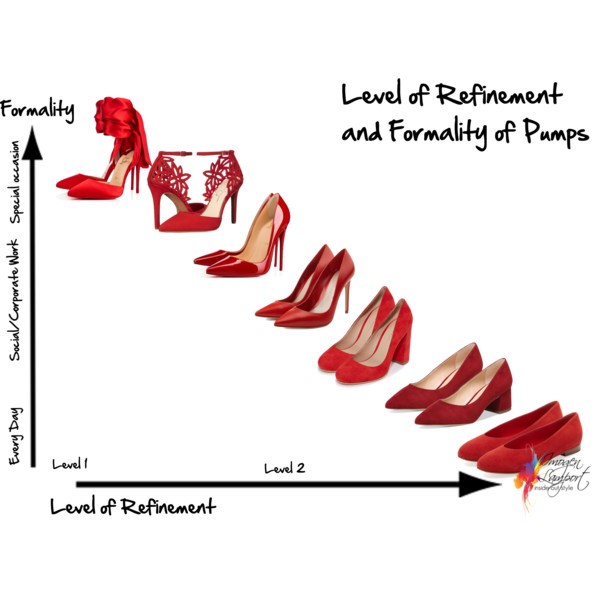
What's in your shoe wardrobe? Understand all the aspects of choosing shoesConsider Proportion and Leg Line

The shape of your shoe also affects how your outfit looks on your body.

One of the most important elements to understand is the vamp of the shoe. This refers to how much of your foot the shoe covers.

A lower vamp, which exposes more of the top of your foot, creates a longer leg line. This is particularly helpful if you feel your legs are shorter or if you are wearing skirts and dresses.

A higher vamp can shorten the visual line of the leg, which may or may not be something you want depending on your proportions and outfit.

These small details make a significant difference. When your shoes support your proportions, your whole outfit feels more balanced.
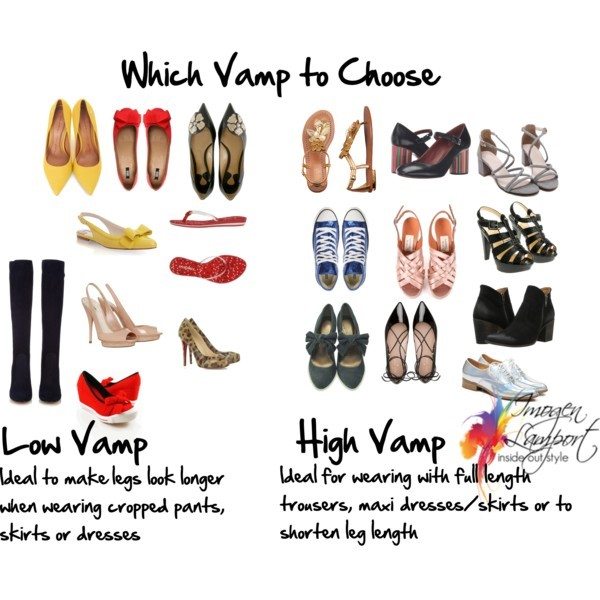
Which shoe vamp to choose - discover which is ideal for you and your outfitLet Your Lifestyle Guide Your Choices

The most practical shoe wardrobe is one that reflects how you actually live.

If you spend most of your time in casual settings, it makes sense to invest more in your everyday shoes. If you attend regular events or work in a more formal environment, you may need a stronger focus on dressier options.

Rather than aiming for a perfectly balanced theoretical wardrobe, build one that aligns with your real life.

This is where many women go wrong. They buy for a life they imagine rather than the one they are living day to day.

What's in your shoe wardrobe? Understand all the aspects of choosing shoesPersonality and Comfort Still Matter

Even the most practical shoe strategy needs to reflect your personal style and comfort preferences.

If a shoe is not comfortable, you will not wear it. If it does not feel like you, it will sit in your wardrobe untouched.

This is where your personality comes into play. You might prefer classic, minimal styles, or you may enjoy something with more detail or interest. Both are valid. What matters is that your shoes feel like a natural extension of your overall style.

A Smarter Approach to Your Shoe Wardrobe

When you combine these elements, colour, formality, proportion, lifestyle, and personality, you create a shoe wardrobe that works far harder with far fewer pieces.

Instead of asking, “What shoes match this outfit?” you begin to ask, “Do these shoes align with my outfit, my lifestyle, and my style?”

That shift changes everything.

You no longer need a massive collection. You need a thoughtful one.

And when your shoes truly support your wardrobe, getting dressed becomes simpler, faster, and far more enjoyable.

Want more tips on choosing shoes and all other accessories?  Grab a copy of my book The Finishing Touch: Perfecting the Art of Accessorising

Related Reading

How to Look Polished in Casual Clothes

How to Have the Perfect Wardrobe of Shoes

How to Choose Shoes with Style When You Have Foot Issues

What Shoes to Wear? Tips for Stylish, Warm, and Comfy Choices
How to Match Shoes to Your Outfit Without a Massive Shoe Collection

Facebooktwitterpinterestlinkedinmail

Good news from the beauty industry that will make you smile

0

If your newsfeed has felt overwhelmingly negative lately, this episode of the Green Beauty Conversations podcast is exactly the antidote you need.

While headlines often focus on conflict, crisis and environmental decline, there’s another side to the beauty industry – one filled with innovators, changemakers and entrepreneurs quietly building solutions for a better future.

In this uplifting episode, Formula Botanica CEO and podcast host Lorraine Dallmeier takes a step back and reflects on the inspiring people she has interviewed over the years on the podcast.

From ingredient suppliers turning food waste into valuable cosmetic materials, to companies restoring forests and marine ecosystems while supporting local livelihoods, the stories reveal a powerful pattern: across the globe, people in the beauty industry are independently arriving at the same hopeful conclusions about regeneration, sustainability and responsible business.

Last week’s interview with John Goedschalk of BioTara highlighted how innovation can drive positive change in beauty.

This week’s episode zooms out even further to connect the dots between many of the podcast’s most inspiring guests. The result is a collection of stories that demonstrate how the beauty industry – particularly at the grassroots level – can truly be a force for good.

Listen here

“When you zoom out and connect all these dots, something becomes very clear – this isn’t isolated good behaviour. It’s a pattern.”— Lorraine Dallmeier

Key takeaways:

  • Waste is increasingly being reimagined as a valuable resource: In episode 211, Lorraine spoke with Harry McIlwraith of the Upcycled Beauty Company about transforming food industry by-products – such as berry seeds and spent grains – into cosmetic ingredients. Rather than allowing these materials to go to waste, the company recovers and repurposes them into valuable formulation inputs. A similar approach appears in episode 199, where Thomas Kerfoot of O&3 and Inky Ingredients explains how fruit waste from juice and jam production is cold-pressed into high-quality oils. Even the remaining by-products are redirected into animal feed, showing how thoughtful design can eliminate waste across the entire supply chain.
  • Protecting ecosystems and local livelihoods: Several podcast guests have demonstrated how ethical sourcing can benefit both people and nature. In episode 239, Jane Dunlop of aluan discussed producing coconut oil on a small Indonesian island while protecting surrounding rainforest and marine ecosystems. Episode 255 featured ChloĂ© VallĂ©e from Primegreen, who works with Amazonian communities to help them become long-term ingredient suppliers rather than exploited resource providers. This same philosophy appears in episode 289, where Asa Suguitan of Essential Farms & Forests described the long-term restoration of Hawaii’s sandalwood forests, and in episode 291, where Alexander van Oord of ForestWise explained sourcing models designed to keep forests standing by default.
  • Seaweed innovation to support marine regeneration: In episode 235, Catarina Ricca of Ínclita Seaweed Solutions discussed working with Portuguese coastal communities to harvest seaweed in ways that actively regenerate marine ecosystems. Episode 181 highlighted a different approach, as Geoff Chapin of Carbonwave described transforming problematic sargassum seaweed blooms in the Caribbean into cosmetic emulsifiers. Meanwhile, in episode 215, Matthew Perkins of Macro Oceans shared how ocean farming in Alaska can grow seaweed sustainably for cosmetic ingredients without fertilisers, pesticides or waste.
  • Sustainability requires proper infrastructure behind the scenes: In episode 203, Joel Tasche of CleanHub explained the importance of waste management infrastructure to prevent plastic from being burned or dumped in regions without proper disposal systems. Episode 265 continued this conversation with Carly Snider of the PACT Collective, who discussed what happens to beauty packaging after consumers discard it. She described the painstaking processes involved in collecting, sorting and recycling beauty packaging – highlighting how meaningful change depends on building systems that make responsible choices possible.
  • A regenerative beauty industry supports both ecosystems and people: In episode 213, Lorraine spoke with Ruth Andrade from Lush about the broader meaning of regeneration in beauty. Their conversation explored how the industry can move beyond harmful beauty standards and instead help people feel more comfortable in their own bodies and connected to the world around them. This perspective ties together the many stories shared in this episode – reminding us that a truly regenerative beauty industry protects ecosystems, empowers communities and supports human wellbeing at the same time.

Thank you for joining us for this episode of the Formula Botanica Green Beauty Conversations podcast. If you enjoyed listening, please share, subscribe and review this episode on Apple Podcasts, Spotify or Youtube so that more people can enjoy the show. Don’t forget to follow and connect with us on Facebook and Instagram.

FREE TRAINING

Learn how to become an
Organic Skincare Formulator

Join over 100,000 other Formulators

By providing your details, you agree to receive additional educational & marketing emails from Formula Botanica, which further introduce our curriculum. Your data is never shared or sold. Read our Privacy Policy.

FREE TRAINING

How to become an
Organic Skincare Entrepreneur

Join over 100,000 other Formulators

By providing your details, you agree to receive additional educational & marketing emails from Formula Botanica, which further introduce our curriculum. Your data is never shared or sold. Read our Privacy Policy.

FREE TRAINING

How to become an
Organic Skincare Entrepreneur

Join over 100,000 other Formulators

By providing your details, you agree to receive additional educational & marketing emails from Formula Botanica, which further introduce our curriculum. Your data is never shared or sold. Read our Privacy Policy.

KIKO 3d Hydra Lipgloss Review: “I’ve repurchased this ÂŁ13 lip gloss more than 10 times”

0

Throughout my twenties, I’ve found plenty of beauty products I like: ones that do the job, sit in my makeup drawer then become quickly forgotten when I’ve reached the end of the bottle. It’s a rarer occurrence to find one I really love: that earns a permanent place in my handbag and my makeup routine. Even rarer than that? Finding a product that I adore so muchI’ll repurchase it enough times to make it feel a part of my identity.

KIKO’s 3d Hydra Lipgloss falls firmly into that latter category. I’ve repurchased their bestselling ÂŁ13 lipgloss more than 10 times – and I don’t plan on stopping. Even my friends have become obsessed (which is pretty handy on a night out, if I leave my 3d Hydra at home).

The love affair started sometime circa five years ago, when I first got pulled (via magnetic force) into their brightly-lit Regent Street store: a space packed full of affordable foundations, bronzers, skincare and mascaras (among much else). I picked up the lip gloss on a whim. It’s a formula enriched with 3D Lip Complex – a unique blend of bidens pilosa extract, cottonseed oil and linseed oil – that promises soft, hydrated lips with regular use. Online, KIKO promised me that it’d lasts up to ten hours, have a non-sticky finish, and that my lips would appear plumped after 28 days of use. So long, lip-plumper.

I tend to be a ‘find something I love, I’ll keep using it forever’ type of girl. From my signature perfumes of Yves Saint Laurent Libre Eau de Parfum and Armani Si Eau de Parfum to my staple Chanel Bronzing Cream, I don’t tend to veer out of my lane when it comes to make-up bag essentials. And from my very first application, this KIKO lipgloss was cemented as a small luxury and a serious hard worker.

So many lip glosses promise comfort, instead falling short: either drying out my lips or leaving behind that uncomfortable stickiness. I’ve tried plenty that taste horrible, too: those that makes your prosciutto and mozzarella baguette taste of artificial strawberry. KIKO gets it right with the 3D Hydra gloss, every time, balancing hydration with its lightweight feeling, no stickiness and no gross taste. Re-applying during the day is a pleasure, rather than a chore.

3 Signs You’re the ‘Fringe Friend’ of Your Group, According to a Psychologist

0

3. You only ever talk or meet if you initiate.

“Life, of course, can get busy, and a temporary imbalance is normal,” Dr. Ferrari says. But when you’re truly in the crew, your absence will be missed or, at the very least, acknowledged. Someone will notice: “Wait, where have you been?” “I haven’t seen you in forever.” “We never see you anymore.” “Let’s catch up.”

There’s usually, in other words, a small moment of recognition—an indication that you exist in their shared awareness when you’re not physically present, which is why when you don’t get any of those little check-ins, it’s disorienting. It’s as if you’re not important enough to be missed.

How to stop feeling like the fringe friend

Bring it up, and you risk sounding insecure. Say nothing, and you’ll continue to overanalyze every delayed invite, every inside joke, and every Instagram story you weren’t tagged in.

None of the options above sounds appealing. Though if you do want to say somethingDr. Ferrari recommends a low-pressure check-in like: “I always have such a great time when we all hang out. Next time, I’d love to be looped in!” It’s warm, subtle, and assumes good intent—the kind of communication that makes your intentions clear without putting anyone on the defensive. But in ambiguous situations like these—where your gut is whispering that something’s off, yet no one is technically doing you wrong—even the most carefully crafted messages can’t give you the reassurance (or confidence) you’re seeking.

That’s why the solution isn’t necessarily, “How do I become a core member of this group?” Dr. Ferrari says, but instead: “Am I spending my energy where I actually feel like I matter?”

Nobody deserves to feel disposable with people they care about most. And it’s worth remembering that not being fully “in” in one circle doesn’t mean you’re inherently less than, which is where a different solution comes in: Expand your social network instead of over-investing in your current one.

The rise of the elevated general store

0

Our Love Letter to the Planet – 100% PURE

0

Introduction: A Love Letter Written in Fruits, Flowers, and Time

There are some relationships that define everything that follows.

They shape how we think, how we create, and how we choose to exist in the world. For us, that relationship has always been with the Earth.

This is not a metaphor. It is a reality that touches every formulation, every ingredient, every decision made over the past twenty-five years. Because before there was a product, there was a question: What does it mean to create something that does not take more than it gives?

On Earth Day, this question becomes more than philosophy. It becomes a moment of reflection. A pause to recognise that everything we place on our skin begins somewhere far beyond the bottle—within soil, within sunlight, within ecosystems that have existed long before us.

The antioxidants that brighten your complexion begin as fruits exposed to natural stress, developing protective compounds to survive. The oils that nourish your skin are pressed from seeds that carry the entire blueprint of life within them. The botanicals that calm and restore are shaped by seasons, rainfall, and time itself.

Every formula is, in essence, a translation of nature’s intelligence.

At 100% PURE, this understanding has always guided our work. We do not see skincare as separate from the environment. We see it as an extension of it. This is what we call Conscious Chemistry—a philosophy where science does not override nature, but learns from it, refines it, and preserves its integrity.

But gratitude alone is not enough.

To truly honour the Earth, we must go beyond what we create and examine how we create it. Because sustainability is not defined by ingredients alone. It is defined by energy, by sourcing, by manufacturing, by every invisible step that transforms raw material into a finished product.

This is our love letter—not written in words alone, but in systems, in choices, in a commitment that has evolved over decades.

Purity Park: A Facility Powered by the Wind

Imagine a place where science and nature do not compete but collaborate.

This is Purity Park—our San Jose manufacturing facility. It is not just a production site. It is the physical embodiment of our philosophy, where every formula is brought to life under conditions designed to minimise environmental impact while maximising product integrity.

What makes Purity Park fundamentally different is not just what happens inside it—but what powers it.

The facility operates on renewable wind energy.

This is not a symbolic gesture. It is a structural decision that changes the entire environmental footprint of production. Traditional manufacturing relies heavily on fossil fuels, contributing to carbon emissions that accelerate climate change. By shifting to wind power, we significantly reduce the energy-related impact of every product created within this space.

This means that when you apply the Vitamin C Face Creamyou are not only benefiting from a carefully stabilised antioxidant system—you are using a product that was created without contributing to the same environmental stressors that accelerate skin ageing.

The same applies to the Vitamin C Eye Creamwhere delicate formulations require controlled environments to maintain stability. These environments are powered cleanly, ensuring that precision does not come at the cost of pollution.

From a scientific standpoint, this matters more than it seems.

Manufacturing conditions influence ingredient stability. Temperature fluctuations, contamination risks, and oxidative exposure can all degrade sensitive compounds like Vitamin C. By maintaining tightly controlled environments powered by renewable energy, we ensure that the molecules remain intact—from formulation to application.

This is where sustainability and performance intersect.

Because clean energy is not just about reducing harm. It is about enabling better outcomes.

Born from a Discovery, Driven by a Mission

Every movement begins with a moment of refusal.

For us, that moment came in the late 1990s and early 2000s, when a simple observation revealed a deeper problem. Vitamin C, one of the most powerful antioxidants in skincare, was failing.

Formulations would turn brown—an indication of oxidation. At a molecular level, this meant that Vitamin C had lost its electron stability. Instead of neutralising free radicals, it had become one.

What was marketed as beneficial was compromised.

This was not just a formulation issue. It was a question of integrity.

The decision that followed was not to accept this limitation, but to challenge it. To stabilise Vitamin C in a way that preserved its function. To create formulations that remained active, effective, and true to their purpose.

This pursuit became the foundation of our expertise in anti-oxidation engineering.

But something else happened along the way.

The same mindset that refused unstable ingredients began to question everything else. If we could not accept compromised efficacy, how could we accept toxic chemicals? If we could not tolerate degradation in a formula, how could we ignore degradation in the environment?

This is where Chemical Vigilance was born.

It was no longer just about what worked. It was about what was right.

And that is how sustainability became inseparable from science.

The Radiance of Responsibility

A product is never just a product.

It is a system of choices—each one carrying weight.

The Radiance Renewal System represents the culmination of these choices. It is not just a collection of formulations. It reflects what happens when performance, purity, and responsibility align.

The Virgin Coconut Moisturizing Milk Foam begins the ritual. Its coconut-derived surfactants cleanse without stripping, preserving the lipid barrier that protects the skin. But beyond its function, it represents a sourcing philosophy—using renewable, plant-based ingredients that minimise ecological disruption.

The Vitamin C Glow Max Bright Mask transforms treatment into experience. Its enzymatic exfoliation gently removes dead cells while maintaining barrier integrity. The sensory experience—the cooling texture, the lightness—reminds us that effectiveness does not require aggression.

The Brightening Serum delivers stabilised Vitamin C in its most functional form. Here, science reaches its peak—ensuring that every molecule performs exactly as intended. But it also reflects a deeper commitment: to create without compromise.

The Vitamin C Face Cream and Vitamin C Eye Cream complete the system. They seal hydration, reinforce the barrier, and protect the results achieved by earlier steps.

Together, these products from more than a routine.

They form a chain.

A Chain of Custody that begins with responsible sourcing, continues through clean energy manufacturing, and ends with a product that supports both your skin and the environment.

Our Plastic-Free Vision

Sustainability is not a fixed state. It is a direction.

And one of the most complex challenges in that direction is packaging.

Plastic, while functional, carries long-term environmental consequences. It persists, accumulates, and disrupts ecosystems in ways that extend far beyond its initial use.

At 100% PURE, reducing plastic is not a trend-driven initiative. It is an ongoing commitment to rethinking how products are protected, preserved, and delivered.

This involves continuous innovation.

From exploring alternative materials to redesigning packaging structures, every decision is evaluated based on its environmental impact. The goal is not just reduction—but transformation.

To create systems where protection and sustainability coexist.

This is not simple. It requires balancing:

‱ Product stability
‱ Consumer safety
‱ Environmental responsibility

But this is where innovation thrives.

Because the future of skincare is not just about better formulas.

It is about better systems.

Conclusion: A Promise That Extends Beyond the Bottle

A love letter is not defined by what it says, but by what it does.

Over the past twenty-five years, our commitment has remained consistent—to create products that honour both the skin and the Earth.

This means choosing ingredients that are effective and responsibly sourced.

It means manufacturing in ways that reduce environmental impact.

It means questioning every process, every material, every assumption.

Because beauty, at its core, is not about appearance alone.

It is about alignment.

When what you use supports not just your skin, but the world around you, something shifts.

Care becomes connection.

Routine becomes responsibility.

And sustainability becomes something you participate in—not something you observe from a distance.

This Earth Day, we celebrate that connection.

Not as a destination, but as an ongoing journey.

One that we are honoured to share with you.

FAQ Section

How does wind power change the way skincare is made?

Wind power fundamentally changes the environmental footprint of skincare manufacturing by replacing fossil fuel-based energy sources with renewable energy. This reduces greenhouse gas emissions associated with production processes. Additionally, clean energy allows facilities to maintain controlled environments necessary for stabilising sensitive ingredients like Vitamin C without contributing to pollution. The result is a product that is not only effective but also aligned with sustainable energy practices.

What does “Conscious Chemistry” mean for the environment?

Conscious Chemistry is the practice of designing formulations that work in harmony with both the skin and the environment. It involves selecting ingredients that are safe, biodegradable, and responsibly sourced, while also ensuring that manufacturing processes minimise waste and energy consumption. For the environment, this means reduced ecological impact, lower chemical pollution, and a more sustainable lifecycle from ingredient sourcing to product disposal.

Is 100% PURE committed to becoming a zero-waste brand?

Yes, the long-term vision includes moving toward significantly reduced waste across all operations. While achieving complete zero-waste status is a complex challenge, continuous efforts are being made to minimise packaging, explore alternative materials, and improve supply chain efficiency. Sustainability is treated as an evolving process, with ongoing innovation aimed at reducing environmental impact at every stage.

7 Subtle Signs You’re Dating for Validation, Not Connection

0

For a long time, I thought I was doing everything right in dating. After getting out of an eight-year relationship—and then a rebound that emotionally wrecked me in ways I didn’t fully process for at least a couple years—I spent the next few years in a strange in-between.

In theory, I was putting myself out there: going on dates, meeting people, and staying open even when it felt exhausting. But in reality, it felt more like going through the motions, like I was playing a role I had gotten really good at. I had just enough distance to feel in control, but not enough awareness to realize how that distance was shaping my behavior.

But after what felt like an uncountable number of first dates in New York City, I started to notice a pattern: I treated dates like auditions. I would show up polished, engaged, and asking the right questions. If they liked me—texted after, complimented me, and wanted to see me again—I felt this immediate sense of relief, almost like I had passed a test. But that feeling rarely lasted, and more importantly, I almost never stopped to ask myself the most basic question: Did I even like them?

It took me a long time to realize that I wasn’t actually dating for connection—I was dating for validation. And according to therapists, that distinction can be subtle but significant, often showing up in patterns that feel normal on the surface but are actually rooted in the need to feel chosen rather than the desire to truly know someone.

Here are some red flags that indicate you might be seeking companionship for the wrong reasons, according to dating experts.

Signs you’re dating for the ego boost—and not a true connection

1. You think more about having a partner than being with this person.

If your mind tends to jump ahead to what your life would look like in a relationship, how it would feel to have a partner, and how this person fits into that picture, you may be more attached to the idea than the reality. As Moe Ari Brown, LMFT, therapist and Hinge’s in-house Love and Connection Expert explains, genuine interest feels grounded in the person themselves: “You should see them as a whole person, not a flattened version or a fantasy.” When you’re dating for validation, the emotional payoff often comes from imagining being chosen, rather than engaging with who the person sitting across from you actually is.

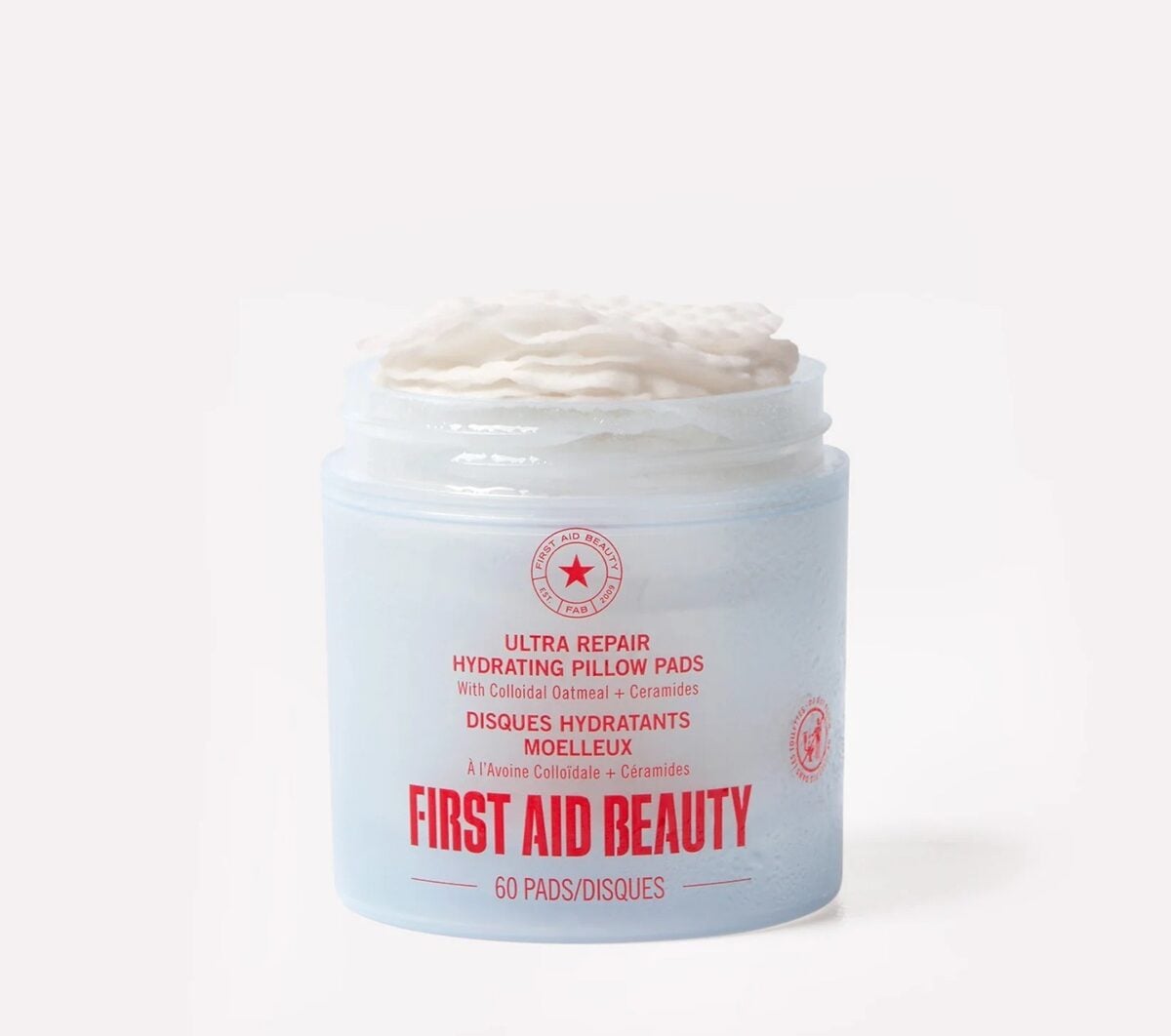
First Aid Beauty Ultra Repair Pillow Pads Review

0

*Links marked with asterisks are affiliate links, these help Ree with running costs of the blog

Priced at

First Aid Beauty Ultra Repair Pillow Pads Review

If your skin has been feeling a bit stressed, dry, or just generally not itself, this is the kind of product that immediately catches your attention. The First Aid Beauty Ultra Repair Pillow Pads are all about comfort-first skincare, and honestly, that’s exactly what so many of us need right now.

These promise instant soothing hydration, barrier support, and that soft, plumped skin feeling we’re all chasing
 but do they actually deliver? I’ve been putting them to the test.

What Are First Aid Beauty Ultra Repair Pillow Pads?

What are First Aid Beauty Ultra Repair Pillow Pads?

These are pre-soaked, ultra-soft toner pads designed to give your skin a boost of hydration while calming irritation at the same time.

They’re saturated in a milky essence and are slightly thicker than your average pad, almost cushiony, which is where the “pillow” name comes from. You can swipe them over the skin like a toner, or press them on areas that need extra TLC like a mini mask.

The idea is that they act as the first hydrating step in your routine, helping everything you apply afterwards work better.

Key Ingredients

This is very much a barrier-loving, sensitive-skin-friendly formula:

  • Colloidal Oatmeal – instantly soothing and calming (a First Aid Beauty signature)
  • Ceramides – help repair and strengthen the skin barrier
  • Squalane – lightweight hydration without heaviness
  • Cica (Centella Asiatica) – great for reducing redness and sensitivity

It’s very much designed for dry, sensitive, or eczema-prone skin typesand everything about the formula leans gentle and comforting.

Texture & Application

These are not your typical thin toner pads.

First Aid Beauty Ultra Repair Pillow Pads texture

They’re noticeably thicker and you can swipe across the skin for a quick refresh or press onto dry areas for a few minutes for extra hydration

They leave behind a light, slightly milky layer that sinks in nicely without stickiness.

My Review of First Aid Beauty Ultra Repair Pillow Pads

First Aid Beauty Ultra Repair Pillow Pads for sensitive skin

First Impressions

These instantly feel different from your standard toner pads. They’re thicker, softer, and nicely loaded with product, you get that satisfying, cushiony feel straight away. The milky essence gives them a slightly more skincare-heavy vibe rather than just a quick swipe-and-go step, which I really like.

How They Feel on the Skin

This is where they really shine. They feel cooling, calming and properly comforting on contact. If your skin is even slightly irritated or tight, you’ll notice an immediate difference. There’s no sting, no tingle, just that soft, hydrated feeling.

They leave behind a light veil of moisture, but nothing sticky or heavy. Skin just feels quenched.

Hydration & Skin Barrier Support

These are all about supporting your skin rather than pushing it. I found they take away that tight, post-cleanse feeling and help reduce visible redness. They’re especially good on days when your barrier feels a bit compromised, whether that’s from weather, over-exfoliation, or just general sensitivity.

How I’ve Been Using Them

I’ve been using them in two ways:

  • Quick swipe in the morning as a hydrating prep step
  • Mini mask moment – pressing them onto cheeks or forehead when my skin needs extra TLC

Makeup Prep Test

They work beautifully under makeup. Skin feels smoother, and foundation seems to sit better, especially if you’re dealing with dryness or texture.

Who I Think They’re Perfect For

These are ideal if your skin:

  • is dry or dehydrated
  • feels sensitive or reactive
  • needs barrier support
  • is recovering from over-exfoliation or strong actives

They’re not an exfoliating product, they’re all about hydration and repair.

Where to buy it

First Aid Beauty Ultra Repair Hydrating Pillow Pads are ÂŁ34 available now via the links below:

If you are looking for something a bit more active, but still super soothing and hydrating, I am loving the Niacinamide pad from Anua. They are absolutely soaked in serum! For more info on those, read, Anua Niacinamide 5 TXA Brightening Pads Review.

Want to Live Longer? Start Flossing Your Teeth

0

There’s no shortage of hacks, snacks, and habits that purportedly help you stay healthier for longer. But while we’re busy chasing cutting-edge upgrades—from cold plunges and greens powders to living by the gospel of your Oura ring—we tend to miss out on less sexy yet still powerful tweaks that have been shown to meaningfully move the needle on long-term health.

One such staple is the humble roll of floss, which is probably collecting dust in your medicine cabinet. However, you should probably break it out nightly not just for a brighter, cleaner smile, but to potentially benefit your heart and brain, too.

Keep reading to see why skipping that single strand of string could have consequences that go far beyond tender gums.

Why flossing is non-negotiable

If you believe that brushing twice daily will suffice for oral health, you’re in for some sobering news. According to Kami Hoss, DDS, author of If Your Mouth Could Talk: An In-Depth Guide to Oral Health and Its Impact on Your Entire Lifeyour toothbrush cleans only 60 percent of the surface of your teeth. Read: If you don’t floss, nearly half of your mouth goes uncleaned day after day.

“Flossing is a simple but critical intervention because it disrupts bacterial biofilm between the teeth—areas a toothbrush cannot reach,” adds board-certified periodontist Richard Nejat, DDS. When you floss consistently, you reduce bacterial load, plaque buildup, and gum inflammation—all of which can help keep periodontal disease (a.k.a. gum disease) at bay. And there’s a decent chance you’ll be affected: Per the Cleveland Clinic, about half of adults in the U.S. have some form of gum disease.

The tissue surrounding these small crevices also warrants your full attention. “The sulcus—the shallow groove where your gum meets your tooth—is lined with some of the most permeable tissue in the human body,” Dr. Hoss tells SELF. “It’s richly vascularized, meaning bacteria and whatever compounds we introduce there have a remarkably direct pathway into the bloodstream.” And here’s where the longevity benefits of flossing come into play.

The link between flossing and disease prevention

On top of staving off periodontal disease, research shows that regular flossing is associated with reduced risk of dementia, Alzheimer’s disease, and stroke. It can also be an important part of managing diabetes. Meanwhile, poor flossing habits have been associated with a higher risk of cardiovascular disease (CVD) and CVD mortality. And according to one study of over 5,000 older adults, never flossing increased mortality risk by 30% compared to flossing daily.

From tradition to trend: Ayurveda in transformation

0

First question: what is Ayurveda?

It is an ancient preventive and curative system of healthcare originating from India. Its meaning can be translated as āyuáž„ (life, vital power) and vedaáž„ (knowledge). It is shaped by the five elements—Earth, Water, Fire, Air, and Space—and is based on the understanding of the doshas (body humors): Vata, Pitta, and Kapha, which are linked respectively to movement, metabolism, and structure.

The level of sophistication of Ayurveda—in terms of concepts, diagnosis, practices, preparation methods, and pharmacopeia—is impossible to cover in a single article. It encompasses a wide range of practices, from panchakarma (a detox regimen) to navel oiling, oil pulling with ghee, ashwagandha supplements, all of the latest knowing a high level of excitement on Tiktok recently.

One thing is certain: the Ayurvedic beauty landscape has recently garnered significant attention, with major companies investing in and/or acquiring Ayurvedic brands (e.g., EstĂ©e Lauder’s full acquisition of Forest Essentials).

The key drivers of Ayurveda’s growth lie in the appeal of Eastern medicine, the rise of Indian soft power (alongside a booming cosmetics market), and a new wave of indie brands reinventing their cultural heritage to resonate with younger and broader audiences.

1. Reinventing the heritage

Interestingly, local brands have begun targeting younger generations by reinterpreting Ayurveda through modern storytelling, rituals, and strong social media strategies. Take Inde Wildoften described as the “Rhode of India,” and its Champi Styling Stick — a product rooted in Ayurvedic ingredients while addressing global trends such as sleek “clean girl” looks and frizz control.

2. Elevating traditional vision with science

Another level of modernization is illustrated by iconic mass-market hair oil brands like Indulekhawhich are now leveraging science to enhance their formulations and demonstrate efficacy. In 2025, the brand launched a new scalp serum, the Bringha Hair Growth Treatment Scalp Serumclinically proven to regrow up to 11,000 new hairs in three months. The product is backed by scientific research while still relying on traditional processes such as Arka and Kashayam Vidhi (distillation and decoction techniques).

This “Ayurveda meets science” territory has also been explored by international brands such as Ayurscience in Australia, Sachi in the UK, and Vedic Lab in Switzerland. By pairing traditional wisdom with advanced scientific research and proprietary complexes, these brands are able to claim efficacy rooted in both a millennia-old health approach and modern scientific principles.

3. The appeal of wellness and grounding rituals

In contrast, some internationally based Ayurvedic brands are focusing on the very essence of Ayurveda: precious ingredients, heritage beauty, wellness rituals, and holistic practices. US-based brand Ranavatfor instance, has launched a facial essence inspired by saffron milk while sharing evocative storytelling around this tradition: “Saffron milk has been a beauty ritual in India for centuries, brightening, calming, and deeply luxurious.” The brand’s founder also highlights its role as a comforting drink in South Asian households—moving beyond mere premiumization to tap into a deeply emotional dimension: everyday, family-inherited rituals.

Another interesting Ayurveda-inspired brand is UK-based Bouriiwith its range of body oils designed to be paired with breathing techniques to help balance each dosha within an elevated ritual experience.

4. Naturality and holistic care

From an Asian perspective, Ayurveda can strongly resonate with consumers who are increasingly drawn to sustainability and naturality-driven trends. Aryurvista Japanese haircare brand, has launched a 4-in-1 scalp care shampoo inspired by “Shiro Pichu,” a traditional Ayurvedic calming hair ritual. Beyond highlighting traditional ingredients such as sesame oil, amla, and gotu kola, the brand introduces Ayurveda to a Japanese audience through texture and application rituals—seamlessly integrating another Eastern health and wellness practice into an already holistic beauty culture.

Takeaways and to go further

Ayurveda’s global rise is not simply a trend but a reflection of a broader shift in how consumers approach beauty and wellness—seeking meaning, efficacy, and emotional connection in equal measure. Whether through science-backed formulations or ritual-led storytelling, brands are redefining Ayurveda beyond its origins, translating its principles for a global, modern audience.

The real challenge ahead will not be adoption, but preservation: maintaining the depth, authenticity, and cultural integrity of Ayurveda as it continues to scale. In this balance between heritage and innovation lies its true power—and its future.

Asia Cosme Lab has created a full report on the Ayurveda Global Panorama. This report provides the data and insights brands need to make informed, data driven decisions in India’s fast growing market and in Ayurveda’s booming ecosystem worldwide. Contact us for more information.

Contact :h.lefebvreduprey@asiacosmelab.com