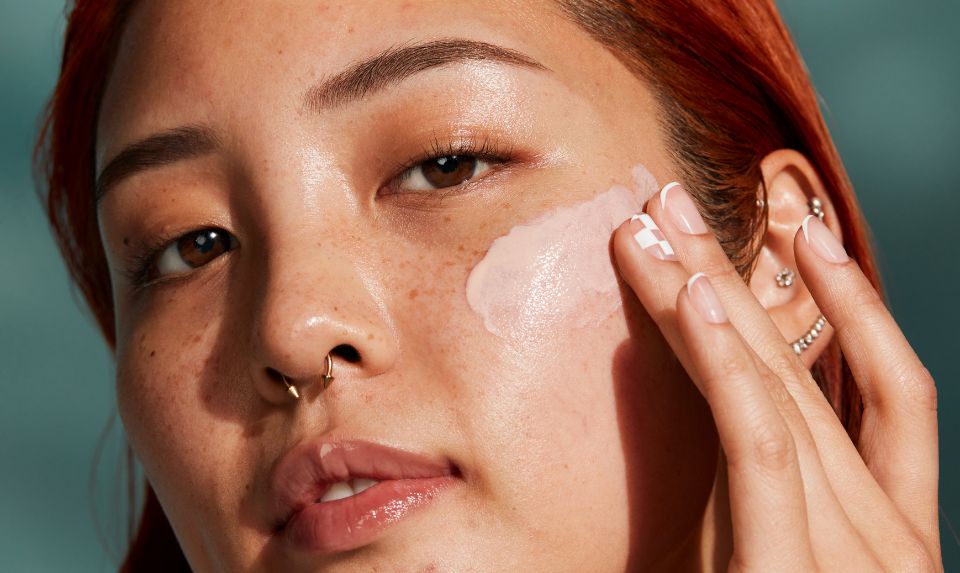
Navigating the winter months can be challenging for your skin, and it’s essential to be mindful of some common mistakes that might compromise your skin’s health. One common misconception is that you can skimp on sunscreen during the colder seasons. However, harmful UV rays are present year-round, and they can still cause damage to your skin. Consider using a broad-spectrum sunscreen with at least SPF 30 and more than 5% of zinc oxide daily, such as Colorescience® Sunforgettable® Total Protection™ Face Shield Glow SPF 50 (1.8 oz, $45)even on cloudy days.
Another pitfall is forgetting to exfoliate.In the winter, dead skin cells can accumulate, leading to a dull complexion. Regular exfoliation helps remove these cells, allowing the skin to absorb skincare products more effectively. Look for gentle exfoliants like Revision® Brightening Facial Wash (6.7 oz, $40)or consult our skincare experts to find the right product for your skin type.
Hydration is vital during winter, both internally and externally. Lack of humidity in the air can strip your skin of moisture. Invest in a rich, nourishing moisturizer to combat dryness. epionce® Intensive Nourishing Cream (1.7 oz, $120) is an excellent moisturizer for most skin types during the winter months! For an added boost, consider incorporating hydrating serums into your routine. These products provide intense moisture and can help repair your skin’s natural barrier. SkinMedica® HA5® Rejuvenating Hydrator (2 oz, $184) is a great option to incorporate into your skincare routine because it has 5 types of hyaluronic acid that deliver immediate and long term benefits.
While hot showers may be tempting in the cold weather, they can contribute to dryness.Opt for lukewarm water to prevent stripping your skin of its natural oils. Following up with a fragrance-free moisturizer for the body, such as Avène XeraCalm A.D Lipid Replenishing Cream (13.5 fl oz, $49)can help lock in hydration. Additionally, consider adding a humidifier to your home to introduce moisture into the air.
Finally, remember your lips!The delicate skin on your lips is prone to drying and cracking in the winter. Try to avoid matte lipstick and lipgloss during the winter months. Keep them soft and supple with a nourishing lip balm. Avène Cold Cream Lip Balm (0.1 oz, $18) immediately hydrates, nourishes, and relieves lips upon application. It calms and soothes irritation while relieving dry, cracked lips.
You can maintain a hydrated and fresh complexion throughout the colder months by avoiding these common winter skincare mistakes. Please visit us at skinfo® so we can enhance your winter skincare routine.
It seems we’re going through a cheeky time indeed as blush has become the hottest item in everyone’s makeup bag these days. From fashion magazines to social media influencers, the rouge game has officially begun. And with it, is a whole new world of formulas and textures such as liquid blush which has become all the rage on TikTok and Instagram. This can be very exciting for some but a little daunting for others.
As we walk the aisles of our favorite beauty stores, there are so many blush possibilities to choose from. It isn’t surprising that many of us get overwhelmed.
To simplify things, we’ve created a comprehensive guide that will help you understand the key differences and features and benefits of each of these trend-setting favorites.
What Makes Liquid Blush Different from Powder Blush?
For those of us who haven’t tried multiple blush formulas, there may be an unfamiliarity that makes us resistant to venture out of our comfort zone. So, let’s start by exploring the key facts and differences between powder and liquid blush.
Powder Blush
Although powder blush is a more common format, contrary to popular belief, it isn’t the oldest. Cream blushes date back to Egyptian and Greek times while powder blushes only came into being in the 18th and 19th centuries.
Powder blushes have traditionally been more popular for those with oily skin as they have the ability to absorb oil and mattify skin when necessary.
They are buildable, easy to control and have a longer shelf life in retail settings.
There are misconceptions however that powder blushes can dry the skin. This isn’t always the case. At Jane Iredale, we formulated ours with Shea Butter and Jojoba Oil to give a creamier application and add hydration to the skin.
Liquid Blush
Liquid blushes have a surprisingly natural and seamless finish that mimics a natural flush, a highly desired look in today’s style.
They create a luminosity that cannot typically be achieved with powders. This dewy appearance is so desirable in fashion and red carpets that industry makeup artists have embraced it whole heartedly.
We’re also finding that liquid blushes are perfect for mature skin as they don’t settle into fine lines and they can even plump the complexion.
Like a powder blush, they can also be buildable and easy to control if formulated correctly.
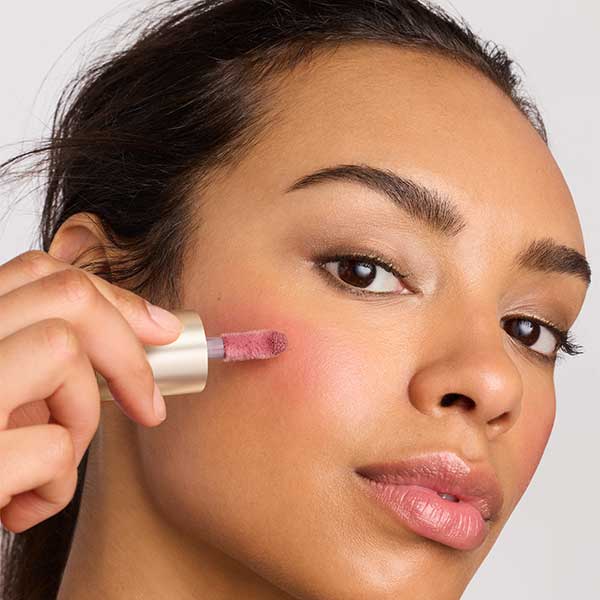
Our NEW ColorLuxe Liquid Blush has exceeded everyone’s expectations with an incredibly easy application, a dewy finish and a buildable color payoff from sheer to intense with a beautiful range of shades to choose from.
The Science Behind Liquid Blush: Why It’s Taking Over Beauty Routines
Right now, beauty experts across the board seem to be gravitating to liquid blush as their go-to cheek enhancement tool. The liquid format and pigment-packed formulas combine to create a dewy, saturated and blendable flush that looks natural and youthful. They’re using it to create that “lit from within” glow that has become so popular on runways and red carpets. On TikTok, the “Cold Girl Makeup” trend has found great use of liquid blushes across the apples of the cheeks and the top of the nose for a flushed, youthful appearance. Applied alone or combined with shimmers and bronzers, liquid blush is definitely dominating the trends.
Liquid Blush Benefits: 5 Reasons to Make the Switch
If you’ve been a powder blush fan and are thinking of making the switch to a liquid blush format, here are five reasons to love liquid blush!
Natural, seamless finish that mimics a natural flush.
Buildable color – from subtle to dramatic
Dewy finish for fresh, youthful appearance – perfect for mature skin
Blends effortlessly without harsh lines
Long-lasting, fade-resistant formula
When Powder Blush Still Wins: The Case for Traditional Formulas?
There are still many good reasons to keep powder blush in your makeup bag. There are always occasions when luminosity is less desirable and a fresh matte cheek becomes the look for the day. In the heat of the summer, many women prefer a powder blush to keep away shine and make skin look more airbrushed. You can also top your liquid blush with a powder blush for longer wear and a greater intensity of color. Our recommendation is to keep both formats in your kit.
Best Blush Formula by Skin Type
Best Blush for Dry Skin
Best Blush for Oily Skin
Best Blush for Combination Skin
Our favorite recommendation is a powder bronzer placed in the outer parameters of the face with a liquid blush on the apples or tops of the cheek bones.
Best Blush for Sensitive Skin
Before choosing a formula, take a look at the ingredients to make sure it is free of irritants like Talc, Perfumes and Parabens. Over and above that, both formats may work well based on whether you want a matte or luminous finish.
How To Apply Liquid Blush Like a Pro: Step-by-Step Tutorial
If you’re interested in trying liquid blush, the application technique is slightly different from powder blush, but we think you’ll get the hang of it very easily. Here’s a basic technique to try:
Begin by prepping the skin for a good skincare regimen. Remember that any blush will look better over well prepped and hydrated skin.
Next, always prime your skin with a good primer regardless of what foundation you wear.
Apply your foundation and concealer to even out your complexion and wait before applying any powder as your liquid blush is a great next step.
When applying liquid blush, start by choosing a shade that will work well with your complexion or style.
Dot one dot for a sheer application to start. Blend it out with a Cheek Brush in a soft stippling motion. Apply to the apples of cheeks for a fresh natural look or the tops of the cheeks for a more fashion forward or lifted look.
If you want more color, repeat the process until you get the saturation you like.
Next apply a sheer layer of your powder and set with Hydration Spray to complete the complexion.
Finish the look with eye and lip colors of your choice.
PRO-TIPS For Liquid Blush Application
If you plan on wearing a powder with higher coverage or a very matte finish, don’t be afraid to be more generous with your Liquid Blush. The glow will come through after you spritz with Hydration Spray.
For a multi-dimensional look, dust over the liquid blush with a PureBronze Shimmer Bronzer for added glow!
If you feel like you’re getting too much color, don’t try to remove it. Just dust over it with your complexion powder and/or Bronzer to create a more muted look.
Use a Cheek Brush in a stippling motion rather than swirling to best control your application.
Liquid Blush vs Powder Blush: The Final Verdict
With benefits to both kinds of formulas, we know that you may still be torn as to which one is best for you. Remember that our blush is allowed to change from day to day and occasion to occasion. We would no sooner wear the same blush every day than the same dress or outfit. Mix it up, have a few of both in your makeup bag and practice using each of them so you feel completely confident in your choice whatever the occasion or look. And never hesitate to reach out to our professionals at janeiredale.com for advice. We’re here to help!
Thinking about switching up your hair this summer? You’re not alone. When the sun comes out, so does the urge to refresh your look… and one of the easiest ways to do that is with a new hair color.
This year’s hottest summer hair colortrends are all about warmth, softness, and personality. Whether you’re going for a subtle sun-kissed vibe or a bold, pastel statement, there’s a 2025 trend with your name on it.
The best part? Many of these colors are designed to grow out gracefully, which means less salon maintenance and more summer fun.
In this post, you’ll find soft blondes, dimensional brunettes, spicy coppers, and playful pops of color… all broken down with tips on who they’re best for, how to care for them, and why they’re everywhere right now.
Let’s dive in!
💡TIP: Pin this article to your Hair Color board on Pinterest so you can always come back when you need to! 👇🏼👇🏼👇🏼
*This post contains affiliate links meaning that if you make a purchase after clicking the link, I earn a small commission at no additional cost to you. This helps me provide the best possible content on this site for free. Keep in mind that I only link to quality products that I use myself and feel would be beneficial for my readers.
Please read my full affiliate disclosure for more information.
#1: Linen Blonde
If you love blonde hair but hate constant touch-ups, linen blonde might just be your dream shade. It’s a soft, muted blonde with taupe and beige undertones…basically the color of sun-bleached linen.
It’s super wearable, natural-looking, and doesn’t say, “I just spent 6 hours at the salon.”
Linen blonde is trending because it’s so low-maintenance. Instead of a harsh grow-out line, it blends effortlessly with darker roots, especially when paired with techniques like root smudging or lived-in highlights.
It looks amazing on a wide range of skin tones and is perfect if you’re into that cool-girl, effortless vibe.
Maintenance tip: Use a purple shampoo once a week to keep brassiness at bay and add a monthly gloss to keep things shiny and fresh.
#2. Golden Hour Blonde
You know that magical time of day when the sun makes everything look golden and glowy? That’s the inspiration behind golden hour blonde. This shade mixes warm blonde with soft copper and caramel tones, creating a luminous, light-reflecting effect that makes your hair look like it’s lit from within.
This is the perfect summer hair color for anyone who wants to add warmth and radiance without going full-on ginger. It’s soft, vibrant, and flattering on almost every skin tone—especially if you have golden or peachy undertones.
Ask your stylist for face-framing highlights to really brighten your look and give your hair that “just got back from vacation” feel.
Maintenance tip: Keep the glow going with a color-safe shampoo and a lightweight hair oil to enhance the shine.
#3. Burnt Sugar Brunette
If you’re a brunette looking for a subtle upgrade, say hello to burnt sugar. This gorgeous shade blends deep chocolate brown with caramel-gold highlights, creating a multidimensional, glossy finish that looks rich and expensive.
It’s kind of like if brown sugar and toasted caramel had a hair baby—warm, sultry, and totally delicious.
What makes this color great is that it works with your natural brunette base instead of against it. You don’t need a dramatic transformation to pull it off. Plus, it looks incredible in the sunlight and gives your hair that “rich girl” depth without going blonde.
Maintenance tip: A sulfate-free shampoo and a caramel-toned gloss every few weeks will keep your color looking vibrant.
#4. Young Bronde
Can’t decide between blonde and brunette? You don’t have to. Mocha bronde is the perfect in-between shade that blends cool-toned brown with soft, ashy blonde for a neutral, sophisticated look.
This shade is inspired by Pantone’s Mocha Mousse and has that soft, latte-like vibe that works for just about everyone. It’s a natural-looking color that gives you depth, dimension, and a little bit of that sun-kissed summer brightness.
It’s especially flattering if you have a medium skin tone or want something that feels fresh but not over-the-top. Bonus: the blend of colors means it grows out beautifully.
Maintenance tip: Use a blue or violet toning shampoo every couple weeks to keep the ash tones from turning brassy.
#5. Honey Blonde
Honey blonde is one of those timeless summer shades that never really goes out of style—but in 2025, it’s having a major moment. This warm, golden blonde is rich without being too brassy and gives your hair that soft, sunny glow like you’ve been vacationing in Greece for weeks.
It’s perfect if you want to go lighter without diving into icy or platinum territory. Honey blonde flatters warm and neutral skin tones beautifully, and it’s super versatile: you can go full honey or add it in as highlights over a darker base.
This is a go-to shade if you want that natural, beachy vibe without looking like you’re trying too hard.
Maintenance tip: Use a color-safe shampoo and try a weekly gloss or mask designed for warm blondes to keep that sweet golden tone alive.
#6. Muted Auburn
If you’ve ever wanted to try red hair but weren’t ready to commit to fire engine vibes, muted auburn is the perfect gateway. It’s a soft, earthy copper-red with a slightly toned-down finish, giving it a more natural and wearable feel.
Think of it like cinnamon meets terracotta—it still gives you that vibrant, spicy energy, but in a more grown-up and low-key way. Muted auburn looks amazing on warm or neutral undertones and can be customized to suit your level of boldness.
Whether you go all-in or just add some copper balayage to your brunette base, it’s a great way to shake things up for summer.
Maintenance tip: Red tones fade quickly, so use a sulfate-free, color-protecting shampoo and consider using a color-depositing conditioner to keep that rich hue looking fresh.
#7. Iced Brunette
For the girls who want something sleek and refined (but still summery), iced brunette is a must-try. This cool-toned brunette has ashy undertones that give it a smoky, dimensional vibe—kind of like the brunette equivalent of platinum blonde.
It’s effortlessly cool and works well for natural brunettes looking to try something different without going lighter. It’s also a great option for people who want a chic, low-maintenance color that’s resistant to brassiness.
Maintenance tip: Keep the cool tones intact with a blue or purple shampoo every other week, and use a shine serum or spray to bring out the icy depth.
#8. Calico Hair
Ready to make a serious statement? Calico hair is one of the boldest summer hair color trends of 2025, and it’s perfect for the creative souls out there. Inspired by the multicolored coats of calico cats, this look combines blonde, brunette, and red tones in chunky, contrast-heavy sections.
It’s playful, edgy, and all about making a statement. You’ll often see it paired with asymmetrical patterns, vibrant contrast panels, or thick stripes that create visual interest from every angle.
This look isn’t for the faint of heart, but if you’re into maximalist beauty or want your hair to be your personality piece, calico hair is the move.
Maintenance tip: Bold colors like these require more frequent upkeep. Use color-safe products, wash less often, and refresh the brighter tones regularly with gloss or toner.
#9. Apricot Copper
Apricot copper is the fruit-inspired hue you didn’t know you needed. Somewhere between peach, strawberry, and light copper, this shade brings a playful, juicy warmth to your hair that feels 100% like summer
It’s also a super fun choice if you’re transitioning out of blonde or looking to try something new without going too dark.
Maintenance tip: Use a pigmented copper conditioner to keep the color from fading too fast, and protect it from sun exposure with a UV hair mist.
#10. Statement Pastels
Pastel hair has officially made its comeback in 2025, and it’s more wearable than ever. This season, smoky lilac, soft peach, mint, and cherry cola hues are dominating Pinterest boards and festival lineups. These shades are bold but diffused, with just the right amount of softness to make them look dreamy instead of cartoonish.
Whether you go full cotton candy or just add pastel streaks to your bangs, this trend is all about self-expression. It’s perfect for blondes or pre-lightened hair and lets you switch up your vibe without totally changing your identity.
If you’ve been itching to try something fun, summer is the perfect time to go pastel.
Maintenance tip: Pastels fade fast, so use a color-refreshing conditioner and avoid hot water. Also, keep your color locked in with a nourishing leave-in treatment that has UV protection.
Final Thoughts
And that’s a wrap on the top summer hair color trends for 2025! From soft, sun-kissed blondes to rich brunettes and bold pastels, there’s something for every vibe and personality.
Whether you’re ready for a big change or just want a little refresh, summer is the perfect time to try something new. These colors are not just trendy… they’re a fun way to express yourself and feel more confident.
Just don’t forget to take care of your color! A little extra love will keep your hair looking amazing all season long.
Now I’d love to know: which color are you feeling the most this year? Drop your fave in the comments!
Here’s to fresh starts, sunny vibes, and hair that turns heads all summer. ☀️
Here’s my theory. The 2020s hasn’t actually started properly because the first five years were stalled due to Covid and its after effects. Fashion-wise, could we be at the turning point now, with all the big runway debuts ringing in major changes (we hope)? Let’s see. For now, I’m still in my classics era, so I’m spotlighting the people and brands doing that really well, including the labels to target for the best pieces at non-crazy prices. Plus, a 90s shoe revival, some beauty updates and what’s on my culture wish list…
1/ USE YOUR POCKETS. Slouching towards Bethlehem? Slouching towards the local tube station more like, with both hands stuffed into side pockets a la Happy, Prada and Coach. Something about this gesture signals ease, nonchalance and practicality which are always welcome in my world.
2/ A TACTILE COLLAR. I love an accessory that can easily transform an otherwise verging-on-blah outfit. One of Prada’s furry collars worn atop an overcoat, oversize denim jacket or blazer would add the required amount of ‘Grey Gardens’ awkwardness. Miu Miu showed longer furry stoles for a similar piece of oddball fashion theatrics, and Me+Em demonstrates the ease of upgrading your formalwear with its shearling collar*. Keep an eye out for Arket too (I spotted this one – below – accessorising a sweater on the website), or for the real Little Edie deal, there’s always vintage of course.
3/ IN THE MOOD FOR PAINTER PANTS. Something about the utility staple with its wide leg, high waist and patch pockets is speaking to me. So far I’ve not seen many examples but J Crew’s* is looking like a good candidate (as demonstrated by Olympia Gayotbelow) while Polo Ralph Lauren’s Ricky trouser* and Me+Em’s Engineered Pants* and jeans* are in the same ballpark.
4/ LET THEM WEAR 90S MANOLOS. I’m seeing a lot of elegant (50mm) mules and slingbacks and much as I’m mule-averse, I can’t help feeling there’s a Manolo Blahnik revival brewing. It chimes with the relentless 90s CBK redux (Jackie Kennedy meets Helmut Lang), the upcoming Issy Blow biopic) and the subtle shift to hyper-feminine dressing. To back this up, there’s the V&A’s new Marie Antoinette exhibition which boasts its own Manolo Blahnik capsule collection inspired by the shoes he designed for Sofia Coppola’s 2006 film. I’m all about an unexpected twist so I’d love to see these frou frou shoes teamed with long or short socks, a pleated midi skirt or baggy painter pants (see above).
5/ WALES BONNER’S PLAYFUL UNIFORM. I’m so here for Wales Bonner womenswear – “a playful uniform that everyone wants to wear” (top and below). Boyish proportions, fine tailoring (by Anderson & SheppardI hope), plus a tee featuring a model photographed for Ebony magazine in collab with Theaster Gates’s The Black Image Corporation.
6/ KNITS FOR NOW.Since 90% of my winter wardrobe is knitwear, here’s my current wish list. 1990s high V necks courtesy of Calvin Klein or Phoebe Philo (below) to wear tucked into slim pants or a pencil skirt; Studio Nicholson’s fine but fuzzy alpaca-merino cardigan (below) – teamed with a full-legged pant; Double-faced Shetland jumpers and cardigans from ex Marc Jacobs Meryll Rogge (now also at Marni) and Sarah Allsopp’s B.B. Wallace (below). Plus, Johnstons of Elgin has had a dose of modernity injected into it with gauzy cashmere rollnecks, superfine layering sweaters and this fabulous cape (I’ve toured the factory and can vouch for the quality).
7/ KNOT A KNIT.And how to wear your knits? In knots! Head to Hermes (below), Sacai (below) and Area* for a knitwear knotting masterclass. Max Berlinger on Substack waxes lyrical in his ode to what stylists call a ‘shoulder sweater’: “It is a bit of poetry to offset the humdrum prose of routine existence… And yet it also transmits a variety of moods and flavors, ranging from quirky eccentricity to a slightly patrician formality, an affect that adds a sheen of propriety to an otherwise sloppy look.” Seriously, this is the easiest trend to tap into; who doesn’t have many sweaters in their sweater drawer? But if you need a top-up, I rate M&S men’s pure lambswool crew necks* or Arket* (below) for its styling potential.
8/ LIP OILS CONTINUED. Still on the hunt for the elusive lip product that delivers shine, hydration and more than a suggestion of a tint (but not a full-on stain). I’m inching towards Start Homidi’s Soft Glass Lip Plumping Oil in Pomme* (loaded with peptides, ceramides and hyaluronic acid) but I need a physical UK store to try it on. Come onHarrods/Liberty/Space NK please!
9/ RETHINKING THE L WORD. Putting aside that everyone has their own definition of luxury these days (I’ve always put it at the intersection of quality, specialness and rarity), it seems there’s a big conversation around what can be considered ‘luxury’ for the tier below Prada, Jil Sander and The Row. Stepping into the void are some relatively more affordable options. They’re design conscious, well-made, logo-free and easy to personalise. Think Lemaire for separates and accessories, General Pharmacy for tailoring and outerwear, Literary Sport for workout to workwear, plus Auralee for styling ideas and colour juxtapositions (using their own dying processes – I need this colour combo in my life).
10/ AT HOME WITH ZARA. For small lifestyle uplifts, Zara Home hits the mark. The VM of their home office supplies (below) is especially appealing; the paper goods promising instant efficiency and organisational superpowers, while a desk lamp will hopefully illuminate your ideas. (For the bedroom, these Gwyneth-worthy clothes rails have been getting attention too.)
11/ ARPA STUDIOS. New to Mouki Mou is Arpa Studiosan intriguing fragrance brand from the nose that gave us some classic Aesop fragrances (included my fave Marrakech Intense). Barnabé Fillion’s scent compositions are inspired by his travels as well as synaesthesia and the intersections of art, scent, and other disciplines. The bottles are stunning, made from colourful layers of handblown glass by Jochen Holz. I like the look and sound of Spectrum Bow (below) which is inspired by the coloured landscape of an Ethiopian salt desert.
12/ REST AND REVIVE. Nesting season is upon us, so it’s time to pull on your CharvetPrada pyjamas-as-daywear (below), while lighting a Tekla refillable scented candle (below) and sipping your ginger tea from a JW Anderson x Wedgwood mug*(below). Discover ‘The Sleepers’ exhibition at the Women’s Art Collection in Cambridge, which highlights art depicting rest such as Gwen Raverat’s lithograph, ‘Sleepers’ (below). Then indulge in the new Perfumer H bathing collection (including Rain Wood soap, hand wash and body lotion, below) or Sharmadean Reid’s new 39BC oil body cleanser in fig milk (below).
13/ KIM JONES’ DIOR FINALE. The René Gruau blindfolds! The needlework chatelaines! The leather-laminated neoprene! I was a fan of the Kim era and his grand finale for Dior menswear was superb (below).
14/ THINGS TO SEE AND DO.Cecil Beaton’s Fashionable World (at the NPG) and Marie Antoinette Style (at the V&A) are the two blockbuster exhibitions you need to book asap first (I’ve heard good reports for both). Kerry James Marshall: The Histories (at The Royal Academy) is on my personal list for his depictions of modern Black American life, and Dirty Looks: Desire and Decay in Fashion (at the Barbican) is the one to go to to get your hands dirty (figuratively speaking) – a deep dive into fashion’s penchant for all things filthy and decayed. Meanwhile, for the bookshelf there’s Liz Johnson Artur’s‘I Will Keep You in Good Company’, a look at ‘fragments’ from the photographer’s personal workbooks including photos, texts and ephemera, plus ‘All of Us Stars’, Sean Redmond’s tribute to Bobby Busnach’s portraits of 70s glam-era friends and family, an 8-year labour of love (read more here).You probably know about Marisa Meltzer’s book, It Girl: The Life and Legacy of Jane Birkin*. If you enjoyed it, the podcast Fashion People features an insight into the writing process, while her Substack has an excerpt on Jane Birkin and the ageing dilemma.
NOW CLICK BELOW TO SHOP THE POST (I MAY EARN A COMMISSION ON THE BASKET VALUE OF ITEMS BOUGHT*)…
WORDS: Disneyrollergirl / Navaz Batliwalla IMAGES: Wales Bonner AW25; Prada AW25; Coach AW25 x 2; Prada AW25; Arket AW25; J Crew x2; Jo Ellison/Sandra Semburg; Manolo Blahnik; The Etiquette magazine; Wales Bonner AW25 x 3; Phoebe Philo; Studio Nicholson; BB Wallace; Hermes AW25; Sacai AW25; Arket AW25; Begin Homidi Soft Glass Lip Plumping Oil; Auralee AW25 x 2; General Workshops AW25; Lemaire AW25; Zara Home; Arpa Studios; Prada AW25; Tekla x Sara Flynn; JW Anderson x Wedgwood; Sleepers by Gwendolen Raverat1957; Perfumer H; 39BC oil body cleanser; Dior Men winter ’25 x 5; Kerry James Marshall ‘De Style’ 1993; Bobby Busnach ‘All Of Us Stars’; It Girl: The Life and Legacy of Jane Birkin NOTE: Most images are digitally enhanced. Some posts use affiliate links* and PR samples. Please read my privacy and cookies policy here.
CLICK HERE to get Disneyrollergirl blog posts straight to your inbox once a week CLICK HERE to buy my book, The New Garconne: How to be a Modern Gentlewoman CLICK HERE to buy my beauty book, Face Values: The New Beauty Rituals and Skincare
Disneyrollergirl Art, Beauty, Books, Brands, Business of fashion, Design, Designers, Fashion shows, News, Shopping, Trends39BC, Arpa Studios, Auralee, AW25, B.B wallace, Bobby Busnach, books, Dior, exhibitions, Fara Homidi, fragrance, Hermes, J Crew, Jane Birkin, JW Anderson, Kerry James Marshall, Kim Jones, Literary Sport, Manolo Blahnik, Marisa Meltzer, Officine Générale, Perfumer H, Phoebe Philo, Prada, Rohe, Sacai, shopping, Tekla, trends, Wales Bonner, Wedgwood, Zara
If you have oily skin, skincare ingredients like salicylic acid and retinol are probably on your mind — if they’re not already in your skincare routine.
If you’ve never heard of these exfoliating ingredients before, then prepare to get a whole new perspective on breakout-prone skincare solutions.
Today, we’re going to talk about the science behind salicylic acid and retinol, two of the strongest and most popular skincare ingredients for oily and breakout-prone skin types.
Stick around to learn the benefits and drawbacks of both salicylic acid and retinol for your skin — and to learn which ingredient deserves a spot in your skincare routine.
How To Manage Oily and Breakout-Prone Skin
While we are all made up of the same cell types and (relatively similar) DNA patterns, our skin is unique to just us.
What keeps one person’s skin clear and smooth might not do the same for another. However, that doesn’t mean you have to reinvent the wheel when it comes to building your skincare routine.
Dermatologists have identified five skin types that describe different types of skin:
Normal skin
Sensitive skin
Dry skin
Oily skin
Combination skin
Today, we’re going to address oily skin types specifically. This type of skin produces more oil than it needs, resulting in a shiny or greasy skin look — even too much of a good thing can be harmful, which is exactly the case with oily skin types and sebum.
This excess oil can get trapped in your pores and cause breakouts, blemishes, and flare-ups. This is why oily skin types are often also considered breakout-prone.
Because oily and breakout-prone skin types are constantly struggling with excess oil and the breakouts that come with it, it’s important that oily skincare routines are equipped with the right ingredients to handle that.
What Is Salicylic Acid?
Salicylic acid is a common skincare ingredient used to address blemishes and dry or rough skin. The ingredient can be prescribed at high dosages by dermatologists or included in over-the-counter skin treatments, like skincare serums.
Chemically speaking, salicylic acid is a beta-hydroxy acid (BHA). Hydroxy acids are made of carbon, hydrogen, and oxygen atoms that work together to exfoliate the skin.
There are also alpha-hydroxy acids (AHAs). While both BHAs and AHAs remove layers of dead cells from the skin, AHAs work primarily on the surface while BHAs target the deeper layers of skin.
What Are the Benefits of Salicylic Acid?
When it comes to skincare, salicylic acid offers a variety of benefits for oily skin types. Here are three of the most common.
1. Helps Manage Flare-Ups
Salicylic acid is a powerful skincare ingredient that can soothe breakouts on the skin and promote a clear complexion. It does this by helping to flush out excess oil trapped in the pores and forming a layer of build-up on the skin.
By clearing away this junk clogging your skin, you remove the impurities fueling your blemishes.
2. Exfoliates Oily Skin
However, excess oil isn’t the only impurity salicylic acid removes from the skin. This powerful skin acid also rids your complexions of dead skin cells.
Dead skin cells that become stuck on the surface of your skin or within the deeper skin layers can dull your natural glow and contribute to rough skin. By purging your skin of these dead cells, salicylic acid acts as the ultimate exfoliator for your oily skin.
3. Smooths Rough Skin Texture
Getting rid of these jagged dead skin cells also benefits your skin by promoting a smoother texture. Without the rough patches caused by dried-out cell membranes, your complexion can feel smooth and soft to the touch.
What Is Retinol?
You’ve probably heard of retinol as a skincare ingredient, but this acid is just one form of a larger group of ingredients called retinoids.
Retinoids are an entire class of chemical compounds that derive from vitamin A and are known for their ability to support skin cell turnover. All retinoids (including retinol) are converted into retinoic acid, which then delivers benefits directly to your skin.
What Are the Benefits of Retinol?
Retinol is a popular skincare ingredient for a reason: it offers real results for oily skin types. Here are three of the most common.
1. Smooths Out the Look of Wrinkles and Fine Lines
There are two structural proteins in your skin that are responsible for the firm and supple nature of your complexion: collagen and elastin.
When you’re young, your body produces a lot of these proteins, which is why your skin is so flexible early in life. However, collagen and elastin synthesis naturally starts to slow as you age, resulting in the most common sign of aging: wrinkles.
Retinol works to smooth out the look of wrinkles and fine lines by encouraging your skin to create more collagen and elastin. With these structural proteins in place, your skin is strong enough to resist wrinkling.
2. Improves Skin Texture
Increasing the amount of collagen and elastin in the skin has a secondary benefit for oily skin types: shrinking your pores.
When the skin appears fuller and more supple thanks to collagen and elastin, the appearance of pores also goes down. This results in a smoother skin texture because your minimized pores can’t contain as much build-up.
3. Evens Out Skin Tone
Another skin concern that retinol can help with is dark spots. When pigment-producing melanocytes become overactive, patches of skin can start to become darker in color than the surrounding area, resulting in pigmentation issues.
Retinol works to fade the appearance of this excess pigment by interacting with the cells producing the color in the first place. This results in a brighter, more even-looking skin tone.
How Do Salicylic Acid and Retinol Compare?
It can’t be argued that both salicylic acid and retinol are powerful skincare ingredients that have the right qualities to transform an oily and damaged complexion into fresh and blemish-free skin. However, how do you know which skincare solution is right for you?
When it comes to choosing between salicylic acid and retinol, it all comes down to what oily skin concern is your top priority.
For Breakout-Prone Skin, Choose Salicylic Acid
Though most oily skin types struggle with blemishes in some form or another, some people experience long-lasting flare-ups that they just can’t seem to escape. If this describes your skin, then salicylic acid might be the best choice for you.
Salicylic acid is first and foremost a skin exfoliant. The skincare ingredient works by dissolving the chemical bonds holding dead skin cells and other impurities to your healthy skin and flushing them away.
Our Blemish Clearing Salicylic Acid Serum does just that. With a 0.75% salicylic acid formula, potent organic fruit acids, and soothing botanical antioxidants, this Juice Beauty serum clears excess oil from the skin and rehydrates it for a fresh, redness-free skin look.
In fact, 100% of participants in our clinical study saw definite blemish clearing in just two weeks, and 94% saw improved to complete clearing by the end of the month.
Salicylic acid’s unique ability to scoop out any lingering dirt, debris, dead skin cells, and excess oil and to unclog pores makes it the ultimate option for breakout-prone skin types.
For Aging Skin, Choose Retinol
While breakouts don’t necessarily go away with age, older skin tends to struggle with pimples and blackheads less than younger skin.
This is because oil production in your skin naturally slows down as you get older, so there’s less sebum to become trapped in your pores. That doesn’t mean oily skin types will suddenly go away after a certain age, but it does change how oily skin manifests later in life.
For aged oily skin types, the top skin concern isn’t typically breakouts. Instead, this skin struggles the most with wrinkles.
Because oily skin is naturally thicker, it is more prone to deep wrinkles later in life, especially on the bottom half of the face. This is because there is simply more skin there to fold in on itself as the structural proteins that once kept your skin tight and taut start to disappear.
This makes retinol an important skincare ingredient for aging, oily skin. Retinol can stimulate the growth of those fading structural proteins to restore the smooth strength of your skin.
Our STEM CELLULAR Anti-Wrinkle Retinol Overnight Serum is made with 2.5% Bio-Retinol + Retinol formula to help fuel the skin and reduce the appearance of fine lines and wrinkles.
Clinically validated results show that 36% less roughness and 28% fewer wrinkles in just a month and a half.
Achieve Clear Skin With the Best Ingredients
Here at Juice Beauty, we don’t believe in empty promises. That’s why all of our skincare solutions are filled with the best organic ingredients nature has to offer. We rely on the power of juice — not the promise of junk — to support your skin.
Both retinol and salicylic acid are powerful skincare ingredients that can sweep away dead skin cells and other debris that might be keeping you from a healthy, clear complexion.
While you and your skin might have a preference for one over the other, each is a potent skincare solution that can make a difference for oily and breakout-prone skin types.
Sources:
Skin care tips dermatologists use | American Academy of Dermatology Association
Acne | Mayo Clinic
Beta Hydroxy Acids | FDA
Retinoid or retinol? | American Academy of Dermatology Association
Although there is still a lot of stigma attached to men taking care of their skin, it’s high time when people stopped being sexist about things so personal and fundamental to every human. As an initiative we bring you a skin care routine exclusively designed for men so that they can have a healthy looking skin without feeling embarrassed about it.
Let’s just begin with a little insight into your skin. Fact number 1. men’s skin is not the same as women. Fact number 2. it’s actually a lot harder than women. Fact number 3. although a man’s skin is different from a woman’s , men do have the same skin types ranging from sensitive skin to combination skin, but that certainly does not mean you can use women skin care products – because you get to have your own range of skin products designed especially for men!
So, start off by identifying your skin type:
Sensitive skin may be prone to rashes and burns after using any products on it.
Normal skin doesn’t have any complications it’s just regular skin.
Dry skin is flaky, itchy and prone to irritation.
Oily skin is greasy and acne prone.
Combination skin is a mixture of oily and dry skin.
After identifying your skin type go for a little shopping spree; buying the most suitable skin care products depends on your skin type. For example, If you have a skin that gets irritated easily or if you have acne go for cleansers and moisturizers that are oil free and non comedogenic i.e. they have non clogging properties.
Now let’s start with the routine:
Say no to soaps from today, no matter how long they have existed and how prehistoric they seem but it’s time to bid them farewell and welcome mild facial cleansers and face wash. So wash your face with luke warm water after waking up and after working out, this will cleanse off any dead skins from the night before and after work out it will prevent your pores from clogging.
Watch that razor. Shaving too close to skin often leads razor bumps and ingrown hair so try using a single blade razor. Furthermore, use a moisturizing shaving cream instead of a regular one if you have dry skin that gets patchy after shave.
After cleansing your face, it’s time for moisturizing. Moisturizers trap water in your skin and prevent it from appearing dull and aged. So if you want to keep those fine lines and wrinkles away for a year or so then start your skin care routine from today!
Another very important point to keep in mind when starting your skin care routine is that you eat and sleep well too because without proper diet and sleep it’s very unlikely to get a skin that’s same as when you were a kid.
Last but not the least, always, remember always wear your sunscreen – because nothing damages your skin as bad as harsh sunlight!
With that we have reached the end of this article, we really hope we were helpful in charting down the skin care routine for you!
To subscribe to our blog’s RSS feed enter https://boyfaceme.com/blogs/news.atom.
Online Lash Courses That Will Elevate Your Lash Career from Anywhere
In today’s competitive beauty industry, continuous education is key—especially for lash artists who want to stand out. Whether you’re a beginner lash artist or a seasoned pro, our online lash extension courses make it easy to grow your skills, build confidence, and scale your lash business from the comfort of your own home.
At EBL Lasheswe offer one-hour mini lash courses designed to fit into your busy schedule and give you the exact tools you need—fast. Each month, we release a new virtual lash training classwith expert insights and step-by-step techniques you can apply right away.
Why Lash Artists Love Our Online Lash Training:
✔️ 100% online and self-paced – learn anytime, anywhere
✔️ Designed for beginner and advanced lash artists
✔️ Just 1 hour each – quick and practical
✔️ Affordable pricing
✔️ Packed with actionable lash business strategies and techniques
Whether you’re looking to improve lash retention, fill your books, or start teaching lash courses yourself, there’s something here for every stage of your lash journey.
Our 3 Best-Selling Lash Training Courses:
1. Lash Retention Course: How to Finally Make It Stick
Struggling with poor retention or clients asking why their lashes fall out so quickly? This online lash retention training covers everything from adhesive usage and humidity to client prep and long-term aftercare. Stop the guesswork and start getting reliable retention, every time.
Best for: Lash artists of all levels who want longer-lasting lash sets and happier clients.
2. Your Roadmap to Becoming a Lash Educator
Want to teach lash extensions and become a certified lash trainer? This online course for lash educators shows you exactly how to transition from artist to teacher—how to build your own lash course, price it, and find students. We break it all down so it feels achievable, not overwhelming.
Best for: Experienced lash artists ready to grow their brand and income through teaching.
3. 5 Steps to Filling Your Lash Books
If your client list is inconsistent, this course is your solution. We teach you how to attract loyal lash clientsbuild a strong brand presence, and create repeat business—without relying on discounting or dancing on TikTok (unless you want to 😉).
Best for: Lash techs wanting a fully booked schedule and consistent income.
Start Learning Today – Your Lash Career Deserves It
No matter your skill level, our online lash extension training courses are here to support you. We keep things simple, effective, and real—just like you.
👉 View All Lash Mini Courses Here
New course every month. One hour. Lifetime access. All online. Invest in your craft—and watch your lash career grow.
There’s a quiet shift happening in aesthetics: patients aren’t just looking to turn back time—they’re trying to stay a step ahead of it. More people are exploring facelifts, brow lifts and skin-tightening treatments earlier than they might have a decade ago. The goal isn’t to stop aging, but to keep results soft and subtle, so no one can quite pinpoint what’s changed—only that you look refreshed.
Plastic surgeons say there’s value in being proactive, but timing is everything. Supporting collagen early or addressing the first signs of laxity can make a real difference, but the experts agree: anatomy, not age, should lead the way.
Ahead, board-certified plastic surgeons share when a preventative approach makes sense—and why subtle, well-timed care often yields the most natural-looking results.
The Best Procedures to Start Early
Surgeons agree: the best results come from thoughtful timing, but that doesn’t mean rushing into anything. “I don’t believe in performing facelifts too early,” says Newport Beach, CA plastic surgeon Dr. Goretti Ho Taghva. “For most women, it’s much wiser to wait until some of the menopausal changes begin—when skin quality, elasticity and deeper support structures truly warrant structural correction.”
That said, she notes there’s room for earlier, smaller tweaks that can make a difference. “What can and should be done earlier are eyelid procedures, since eyelid skin is the thinnest on the body and often shows aging first,” she explains. “An endoscopic brow lift may also be appropriate in younger patients with naturally low-set brows or in those who have had years of Botox use that weakened the brow elevator muscles, leading to mild, iatrogenic brow descent.”
Other surgeons echo this approach, stressing subtlety and timing over aggressiveness. “I do not believe in doing procedures before you need them, but I also do not believe in waiting too long once signs of aging are present,” says Montclair, NJ plastic surgeon Dr. Anthony Berlet. “When performed at the appropriate moment, procedures like lower face and neck lifts can look incredibly natural because the skin still has good elasticity and tissue quality.”
He adds that small refinements often yield the most seamless results. “When excess skin or puffiness begins to affect the eyes, addressing it earlier often yields a fresher, more seamless result,” he notes. “In the early stages of facial volume loss, fat grafting is a powerful option because it restores fullness and improves skin quality with your body’s own stem-cell-rich fat.”
That philosophy extends to Toronto plastic surgeon Dr. Asif Pirani, who says early, well-timed care helps patients maintain their features instead of overhauling them later. “When facial rejuvenation is done early, the outcome usually looks far more natural because you’re preserving what’s already there rather than trying to rebuild it later,” he explains. “For instance, a subtle deep-plane or short-scar facelift in the late 40s or early 50s can lift and re-support tissue before significant laxity develops. The same principle applies to an endoscopic brow lift or a conservative upper eyelid procedure—they can bring back a rested, alert look without changing someone’s facial character.”
Still, San Francisco facial plastic surgeon Dr. Raj Dedhia reminds patients that anatomy—not anxiety—should drive decision-making. “The most natural results come from addressing true anatomic changes rather than chasing ‘prevention,’” he says. “Facelifting achieves the most elegant and seamless results when there’s early descent of facial tissues, not before. Doing surgery before anatomy justifies it rarely looks natural.”
How to Take a Preventative Approach
Preventative care doesn’t always mean surgery. In fact, the foundation for graceful aging often begins with noninvasive treatments and consistent skin health. “There is a fine line between caring for yourself and trying to fight time,” says Dr. Taghva. “The goal is not to erase aging, it’s to age well. We are not chasing filter-like perfection; that’s unattainable and often counterproductive.”
That sense of moderation extends to the way treatments are planned. “Think of prevention as maintenance, not transformation. The goal is not to chase aging, but to guide it. Subtle, well-planned treatments over time create the most natural aesthetic, compared to doing nothing for years and then making drastic changes all at once.”
Preservation, not reinvention, is also the focus for Dr. Pirani. “The goal with prevention is to protect what makes you look like you, not to erase it. I tell patients that the focus should always be on preservation, not transformation. Treatments should match what you actually see happening in your face—not what’s trending on social media or what your friends are doing.”
Before surgery becomes part of the plan, Dr. Raj Dedhia says the smartest move is protecting your skin and collagen early. “Prevention should focus on maintaining the quality of the tissues,” he says. “That means protecting skin health, elasticity and collagen through lifestyle and non-surgical means. A healthy lifestyle, diet, exercise and skin care are the best methods of prevention. Nonsurgical treatments such as botox, lasers and microneedling can also help.”
The Nonsurgical Layer
Preventative care doesn’t always mean surgery. In fact, the foundation for graceful aging often begins with noninvasive treatments and consistent skin health.
“Preventive toxin treatments are a thing,” says Dr. Franco. “If you can prevent lines from ever forming, it is going to help you age naturally and limit the treatments needed to correct them after they form.”
He adds that preventative and comprehensive care often work hand-in-hand. “Lasers, fillers and lifts are part of the overall treatment plans for patients,” Dr. Franco explains. “There are things such as laser resurfacing and biostimulants that can be used as preventive treatments. There is undoubtedly a transition from preventive to comprehensive treatments. Once we see things we don’t like, we are in the treatment phase. Patients have become much more proactive about preventive treatments to help age gracefully.”
Dr. Ho Taghva agrees that regenerative therapies can make a real difference over time. “Treatments like Ultherapy Prime, Thermage FLX, microneedling and BBL help preserve the skin’s architecture long before visible aging appears,” she says. “Biostimulatory injectables such as Sculptra, PRF or growth-factor therapy and targeted peptides further strengthen the skin’s repair capacity and slow visible aging.”
Dr. Pirani’s approach pairs in-office treatments with at-home consistency. “I often start patients on Botox to soften early expression lines before they become etched in, and combine that with fractional laser treatments like CO₂ or Clear + Brilliant laser to boost collagen and refine skin texture,” he says. “Beyond in-office procedures, daily habits make the biggest difference—consistent sunscreen, retinol and a high-quality vitamin C serum are essential for long-term skin health.”
As Dr. Ho Taghva sums up, “The best approach is thoughtful and consistent—small, smart interventions guided by real biology, not trends. That’s what keeps beauty effortless and timeless.”
Here’s a bit of a throwback look for ya! I did these nails probably about a year ago, and while I posted about them on social media, they never made it to the blog here. Plus, with fall arriving, these neutral tones with a slight twinge of grey are right on schedule.
This look is done with Shellac. It is much easier to do this style with gel, though you could accomplish it with regular polish, too.
After prepping your nails properly, apply your base gel and cure.
Apply one coat of CND Shellac in Field Fox, and cure. Repeat with a second coat.
Use a dotting tool or Crystal Katana to individually place pieces of round glitter to form flowers and falling petals.
Since the cured layer of Shellac is so sticky, I was able to pop them right on a cured nail and have them stay. If your gel isn’t as tacky, you can also place the glitters into a layer of uncured gel and then cure them together.
Topcoat generously and cure. Add a second layer if necessary.
I purchased my round glitters from Presto via Nail Labo. Wildflower’s Nails also has a huge selection of glitters that would be fun to build flowers or other shapes from!
No round glitters? No problem! You can use a dotting tool with a large and small side to accomplish this same look. Just go slowly and work carefully — part of what makes this style so appealing is that the dots are all the same size.
What do you like to wear on your nails when fall comes around? Do you change your polish shades for the season, or keep on rocking brights and pastels?
When it comes to healthy, glowing skin, daily sun protection is non-negotiable. Sun protection is vital to prevent skin cancer and maintain skin health. Yet with endless options lining store shelves, choosing sunscreen can feel overwhelming. From gels to drops, SPF 30 to 50+, mineral to chemical—how do you know what’s best for your skin?
With decades of experience caring for skin of all types, we’re here to help you navigate sunscreen like a pro. Whether your skin is oily, dry, sensitive, or somewhere in between, we’ll help you find the perfect match for your lifestyle and skin goals.
Why Sunscreen is Essential for Everyone
Let’s start with the basics: why is sunscreen so important? The right sunscreen acts as a shield against harmful sun exposure.
Your skin is exposed to UVA and UVB rays every day, even when it’s cloudy or you’re indoors. Applying sunscreen daily helps mitigate these damaging effects. UVA rays penetrate deep into the skin and are primarily responsible for premature aging and health issues¹. UVB rays affect the skin’s surface and cause sunburn. Using a sunscreen with an appropriate SPF is crucial to safety. Both can lead to skin cancer. The Skin Cancer Foundation² recommends embracing sunscreens in a skincare routine.
Daily sunscreen use helps:
Prevent premature aging
Reduce the risk of skin cancer
Minimize pigmentation and dark spots
Keep skin smooth, healthy, and glowing
Myth buster: Yes, you canget a sunburn on a cloudy day.
Understand Your Skin Type to Effectively Choose the Right Sunscreen
Normal to Combination Skin
If your skin isn’t particularly dry or oily, you’ll want a sunscreen that feels light, absorbs well, and keeps your skin hydrated.
Look for: lightweight lotions, hydrating gels or drops.
Kate’s Pick: HydraKate Illuminating 50+SPF Drops. These ultra-light drops deliver a radiant glow while offering high SPF protection, perfect for enhancing natural skin tone.
Oily or Acne-Prone Skin
Finding the right sunscreen can be tricky for those prone to breakouts or shine. The key? Choose oil-free, non-comedogenicand mattifying formulas.
Avoid: heavy oils and pore-clogging silicones.
Kate’s Pick: UncompliKatedSPF 50 Setting Spray. This fine mist sunscreen is oil-free, fast-drying, and perfect for touch-ups—plus, it sets makeup while protecting your skin.
Dry or Sensitive Skin
Choose products that are specifically safe for sensitive skin. Dry and sensitive skin needs hydration and soothing ingredients to calm irritation.
Look for: creamy, hydrating formulas that are fragrance-free, hypoallergenicand mineral-based when possible.
Kate’s Recommendation: Either the HydraKate Illuminating 50+ SPF Drops or the UncompliKated SPF 50 Setting Spray works beautifully here. Both are gentle and effective, giving you options based on your texture preference.
Mature or Aging Skin
As skin matures, it benefits from sun protection that includes anti-aging ingredients and hydrating properties to combat dryness and dullness. This helps in maintaining healthy skin and avoiding sunburn.
Kate’s Pick: HydraKate Illuminating 50+ SPF Drops. Infused with antioxidants, these drops protect while promoting radiance, making them a must-have for mature skin.
Key Factors to Consider When Choosing Sunscreen
SPF Level: What Number is Right?
SPF refers to how well a sunscreen protects against UVB rays. Selecting the correct SPF is an important step in choosing sunscreen. Here’s a quick guide:
Dermatologist tip: Choose sunscreen with an SPF of at least 30⁴ for everyday use and ensure it offers broad-spectrum protection. Our sunscreens meet these important standards.
Physical (Mineral) vs Chemical Sunscreens
When comparing mineral vs chemical sunscreens, physical (mineral) sunscreens sit on top of skin and deflect rays. Consider mineral sunscreens for comprehensive care. Chemical sunscreens absorb UV rays and convert them into heat. Chemical sunscreens are effective in providing robust sun defense.
Chemical sunscreens absorb UV rays and convert them into heat, offering optimal use benefits.
Physical: Great for sensitive skin, but can leave a white cast
Chemical: Lightweight, blendable, and ideal for everyday wear
Kate Somerville’s sunscreens primarily use chemical filters designed for comfort, performance, and skin-friendliness.
Additional Features to Look For
Water resistance: Great for outdoor adventures
Hydrating and anti-aging benefits: Keep your skincare routine streamlined
Texture and finish: Should feel good on your skin
Bonus: The HydraKate Illuminating 50+ SPF Drops double as a skin brightener, making SPF part of your daily glow routine.
How to Properly Apply Sunscreen for Maximum Protection
Applying sunscreen the right way makes all the difference.
How much sunscreen? About a teaspoon of sunscreen for your face or a few drops of serum-style SPF
When? Apply at least 15 minutes before sun exposure
How often? Reapply every 2 hoursor immediately after sweating or swimming
For a tip: Mix HydraKate Illuminating 50+ SPF Drops with your foundation or layer under makeup for a seamless, glowing finish.
Sunscreen FAQs
Is a higher SPF always better? SPF 30–50 offers safe and effective protection for most daily situations. What matters most is proper application and reapplication.
Can sunscreen cause breakouts? Not when you choose non-comedogenic formulas like UncompliKated SPF 50 Setting Spray.
What if I have sensitive skin? Look for fragrance-free, soothing, mineral-based formulas. Kate Somerville products are crafted to be gentle and effective, and such ingredients play a vital role in protecting sensitive skin.
How often should I reapply sunscreen during the day? Every 2 hours—more often if you’re sweating, swimming, or towel drying.
Need more guidance? Explore the full range of our sunscreen blogs for expert tips.
Protect Your Skin with Kate Somerville
The right sunscreen can be the best way to ensure long-term skin health and radiance. Whether you’re heading out for a sunny day or working indoors by a window, daily SPF is essential.
Your skin deserves this glow. Let Kate Somerville help you protect it beautifully.
Sources:
University of Iowa Hospitals & Clinics. (2018, April). What is the difference between UVA and UVB rays?https://uihc.org/health-topics/what-difference-between-uva-and-uvb-rays
The Skin Cancer Foundation. (2025, May). All about sunscreen. https://www.skincancer.org/skin-cancer-prevention/sun-protection/sunscreen/
Northwestern Medicine. (2025, May). What Do the SPF Numbers Mean? Reduce Your Risk of Skin Cancer and Skin Damage https://www.nm.org/healthbeat/healthy-tips/quick-dose-how-much-spf-do-you-really-need
The Skin Cancer Foundation. (2023, May). Ask the expert: Does a high SPF protect my skin better? https://www.skincancer.org/blog/ask-the-expert-does-a-high-spf-protect-my-skin-better