Home Blog Page 100

Media interest in beauty constantly growing, according to Onclusive

0

The Onclusive Beauty Barometer is based on the analysis of editorial content from around 140 print press titles, as well as 77 digital sites. “ On the web we operate a strategic selection by tracking 121 reference brands in a corpus of 77 press sites, blogs and pure players “, noted Lauren Robert.

The results show a overall increase of 2% in editorial space devoted to the subject in relation to 2024, confirming its media interest. The web today represents the main engine of visibility with 67% of editorial content compared to 33% for the press.

« This distribution demonstrates the importance for brands to adopt hybrid communication strategies, combining traditional and digital media in order to maximize their exposure. », Underlines the Onclusive analyst.

Prestige dominates, other circuits gain ground

Equipped with greater resources, the brands of the selective circuit continue, unsurprisingly, to largely dominate the editorial coverage. They represent 61% of the brands mentioned in the press.

However, the analysis also highlights the 5% increase in brands sold in pharmacies, as well as brands sold in mass distribution (+9%).

Care, leader in editorial content

In terms of market segments, skincare stands out as the most publicized category, at 25% in the press and 30% on the web, driven in particular by facial care and the rise of instrumental cosmetics. However, it is perfume which shows the greatest progress, particularly on the web, with 28% additional presence compared to 2024. Makeup, for its part, appears to be in slight decline in the press and on the internet.

« We can assume that this decline in makeup brands comes from a shift in communication strategies towards social networks, where tutorials and influencer content lend themselves particularly well to this category. », note Lauren Robert.

Visibility levers

Innovation remains the major asset to capture the attention of journalists and readers. In 2025, nearly 29% of editorial space will be devoted to new products, to differentiate from the number of new products whose result is slightly lower than that of previous years.

« There were 4,143 pages devoted to innovation in all segments, the care category dominates and represents 25% of all new products. We are seeing fewer launches this year but brands are communicating better and stronger », continues the specialist.

In addition to innovation, brand incarnation through musesas well as events or societal positions brands, also have strong media appeal.

« We analyzed the twenty brands occupying the most media space. L’Oréal Paris thus holds its first place thanks to the fallout from its parade of stars and muses which gave rise to many articles, particularly on the web. Topics related to reactivation of heritageor the highlighting certain iconic products such as Shalimar by Guerlain or Boite Bleue by Nivea, have also helped propel these brands into the ranking », points out Lauren Robert.

Beauty Tech and CSR: two trending topics

Among the main topics observed in editorial content, instrumental cosmetics stands out and records a 31% increase in editorial impact.

At the same time, CSR issues continue to take an important place with a 15% increase in content. Environmental initiatives, societal commitments or dedicated ambassadors are part of the visibility strategies of players in the sector.

Generally speaking, in view of global media news, beauty retains its power of attraction, particularly during major events, such as the Cannes Film Festival, spectacular fashion shows or even immersive brand activations.

« Beauty remains a vector of dreams and freedom in the world of media », concludes Lauren Robert.

What Perfume Does Hailey Bieber Wear?

0

It’s no secret that Hailey Bieber is a beauty lover (hello, Rhode). While she’s known for perfecting the art of the lip balm and on-point nail colors, her scent rotation is pretty impressive, too. We can only assume her collection is vast and ever-evolving—she’s the queen of beauty trends, after all—there are a handful of perfumes and mists that are her self-proclaimed favorites.

Will Mrs. Bieber ever create a fragrance of her own? Time will only tell (we’re still waiting on the Eau d’Nepo release). But, until then, we’ll be taking notes from her current roundup of essential scents. Because we know you’re just as curious as we are, we dug deep into the internet archives to find every scent Bieber swears by, from viral fragrant hits to niche finds that’ll elevate your own curation.

Ex Nihilo Fleur Narcotique Eau de Parfum

Out of Nothing

Fleur Narcotique Eau de Parfum

If there’s one fragrance that can be considered Bieber’s verified signature, it’s the Ex Nihilo Fleur Narcotique Eau de Parfum. Previously, the model shared that no matter how many fragrant elixirs come and go from her collection, this floral-forward fragrance always finds a way back into her rotation. “That’s the scent I’ve actually been wearing for a few years, and I find myself always going back to that one,” she said.

This captivating fruity-floral blend bursts with a juicy mix of peach, lychee, and bergamot. As it dries down, a mix of soft jasmine and orange blossom combines seamlessly with warm musk and fresh, earthy moss.

Ex Nihilo Lust in Paradise Eau de Parfum

Ex Nihilo Lust in Paradise Eau de Parfum in branded component on a light gray background

Out of Nothing

Lust in Paradise Eau de Parfum

Bieber must have quite the collection of Ex Nihilo fragrances. In conversation with GQthe model revealed that she’s run through multiple bottles of this French Riviera-inspired fragrance, stating she was already halfway through her third at the time (which was 2023, by the way—who knows how many empty glass bottles of this fragrant elixir she’s run through by now). “This fragrance lives up to its name,” she said. “It smells kind of beachy and floral-y. Think a Hawaii kind of vibe.”

Trend report: What to wear for SS26

0

I Became A Foster Mum At 28 – It’s The Best Decision I Ever Made

0

After being fostered for six months in my own childhood, I knew from a very early age that I wanted to foster, too. Fostering was what I was going to do and the person I was marrying had to be on board with it.

I got married at 26 and two years later we said, ‘This is what we’re doing to start the process’. I decided to reach out to an agency called Foster Care Associates and they walked me through it. Vetting took about six months, and eventually, we fostered two boys, brothers, who are now 22 and 18 and have stayed in our household. Then I had my biological daughter, who’s now 11, and we’ve since fostered three-year-old twins, a boy and a girl.

What surprised me the most about fostering was discovering the resilience of children. You get to witness the smallest of victories. For example, the twins have been with three other families. They were just two years old and when they came, the boy was non-verbal.

Read More

I never thought I’d be a single mum, but I wouldn’t change it for the world

When 30-year-old Ellie’s relationship unexpectedly ended midway through her pregnancy, she was suddenly faced with the reality of raising a child on her own. But nothing prepared her for the moment she nearly lost her daughter during childbirth. Here, she shares how they pulled through – together.

I started learning a bit of Makaton [a super-simple form of sign language] to try and find ways to communicate with him. Within four days, this boy was talking. That’s all it took. It just completely blew our minds.

Today he’s still a little bit behind his sister in terms of speech development, but he’s going in strides and he’s talking all the time. With just a little bit of routine and love, the things that a parent does can completely turn around a child.

Image may contain Head Person Face Photography Portrait Adult Happy Smile Accessories Earring Jewelry and Selfie

Claudia with her husband

Claudia Myrie

Image may contain Face Head Person Photography Portrait Happy Smile Accessories Earring Jewelry People and Child

Claudia Myrie

The biggest challenge for me is, you have to realise that they’re not your biological children. When you have known your child all their life, you have oversight as to why your child may be behaving in a particular way. But with foster children, as much as you may get a lot of information, no one truly knows what’s going on with them. Luckily as a foster parent, I get free access to mandatory training as well as modules on things like how children form identity and sibling rivalry – I’ve done about 15 modules in the last six months.

With foster children there’s also a lot more supervision. For example, my daughter went for a sleepover the other day and it wasn’t a big decision for us to make. But for my foster sons, a social worker would need to have got involved and made the decision as well as us. Holidays need risk assessment and approval as well. Luckily it’s not difficult – it’s just protocol.

The Best Anti Aging Moisturizers for Mature Skin

0

Mature skin is characterized by loss of elasticity and tone, significant discoloration, dullness, dry patches, larger pores, and more profound wrinkles and expression lines. Additionally, it becomes thinner and more fragile. But here’s the thing: “mature” skin isn’t just about getting older. While intrinsic (chronological) aging does play a role, other influential factors include genetics, skin type, lifestyle factors (think poor diet, sun exposure, lack of sleep, excessive alcohol, stress, illness, etc.), and potential skin conditions such as eczema, acne, or psoriasis.

Whether you’re looking older than your years because you spent too much time in the sun sans SPF or you’re at the age when your skin is changing significantly, here are the best moisturizers for mature skin.

The List

BEST OVERALL

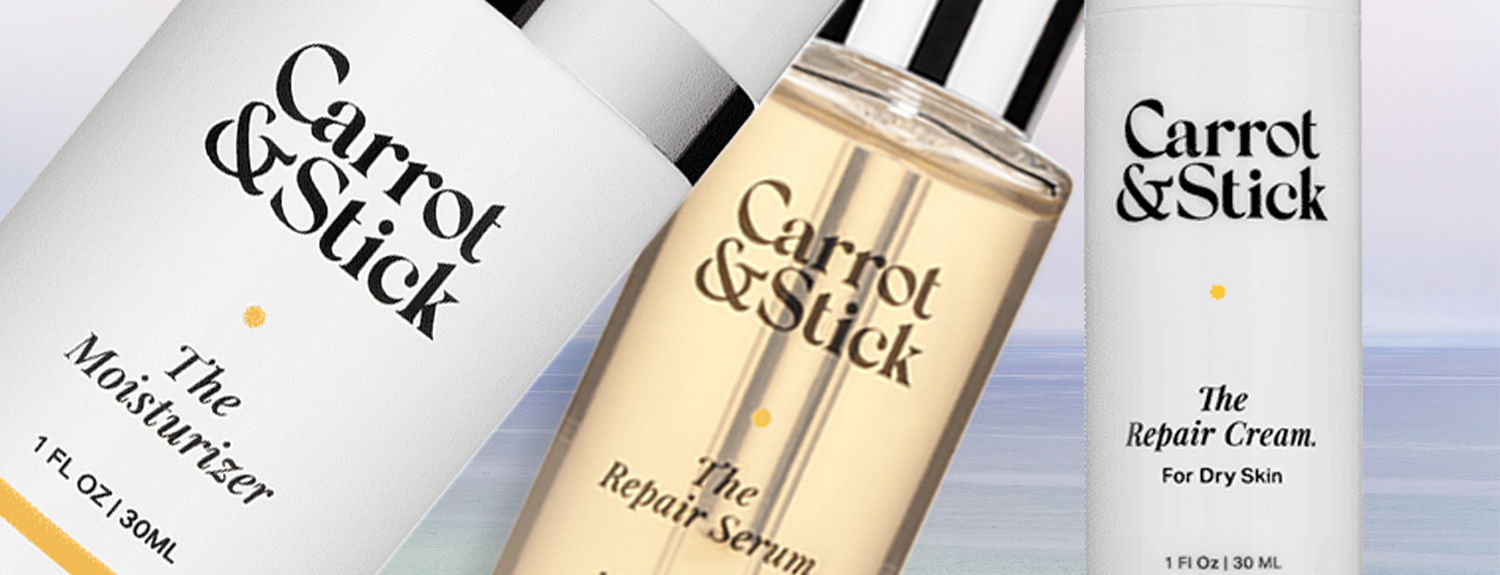
BEST: Carrot & Stick The Multi Lift Moisturizer$80

Best Bet

Carrot & Stick routines take the guesswork out of building the perfect routine for your skin.\ You save up to $160 with a routine. Plus, use code DERMG to receive a free full size gift..

Carrot & Stick Repair Serum, $80

FULL LIST

Formulyst Anti-Aging Night Cream$80

Dermalogica Pure Night$82

Dr. Brandt Hyaluronic Facial Cream, $72

Lancôme Renergie Lift Multi-Action Ultra Firming and Dark Spot Correcting Moisturizer SPF 30$109

Neostrata Pigment Controller$74

SkinCeuticals Triple Lipid Restore 2:4:2$128

Strivectin Advanced Retinol Intensive Moisturizer$112

EltaMD UV Clear Broad-Spectrum SPF 46$37

What Defines “Mature” Skin?

Sixty is the new fifty, and fifty is the new forty, right? Society has changed substantially over the past few decades, so it’s not fair to only pinpoint those who are 60-plus as having mature skin. In fact, those who took preventative measures to take care of their skin in their late 20s, early 30s, and beyond are likely to have healthier, younger-looking skin down the road than those who did not. A solid, daily skincare routine that includes sunscreen (an SPF of at least 30) and healthy lifestyle habits can help slow down the aging process a bit.

Ingredients to Look For In a Mature Skin Moisturizer

Here’s the thing: While a moisturizer is a crucial component to any skincare routine, slathering it on every day isn’t going to prevent wrinkles. However, what a hydrator will do is keep your skin’s lipid barrier intact and prevent crucial moisture loss, both of which make wrinkles and other signs of aging less prominent.

Some of the age-fighting ingredients are vitamins A (retinoids) and C, alpha hydroxy acids, niacinamide, flavonoids, and resveratrol. They correct the signs of age and protect against harmful UV rays, neutralize skin-damaging free radicals, and brighten and tone.

However, there’s no one-size-fits-all skincare routine. The combination of products and ingredients that work for someone else may not be effective for you and vice versa regardless of your age — mature or otherwise. Skin type and tone, the climate where you live, and whether or not you have an underlying skin condition (thing eczema, rosacea, etc.) are a few factors that should shape your skincare routine. Also, patience is a virtue. On average, most anti-aging products take approximately six weeks to start producing a result — longer in some cases — so don’t expect an overnight miracle.

The Best Moisturizers for Mature Skin

BEST OVERALL

BEST CREAM: Carrot & Stick The Multi Lift Moisturizer$80
Carrot & Stick’s anti aging cream utilizes potent plant actives and peptides to help boost natural collagen, reduce the appearance of fine lines and wrinkles and support aging skin.

BEST TREATMENT: Carrot & Stick Repair Serum, $80
Apply this serum daily to keep skin hydrated and protected from free radical damage. The Repair Serum by Carrot & Stick helps lift, tighten and firm the look of skin thanks to seven plant-based neuropeptides, while synthesized growth factors help keep skin looking its radiant best.

FULL LIST

Formulyst Lifting and Wrinkle Smoothing Cream$80
This velvety smooth formula contains a powerful blend of lipids and botanicals that help lift, smooth, and refine the appearance of mature skin. Moringa seed oil provides intense moisturization, evodia rutaecarpa fruit extract helps to visibly brighten and refine, and peony extract improves skin density. In the short term, skin appears smoother and healthier looking, while over time, your complexion feels firmer and visually lifts with a radiance that imparts a beautiful, youthful glow.

Formulyst Anti-Aging Night Cream, $80
When sleeping, your body goes into repair mode, so it’s an excellent opportunity to nourish crepey, mature skin with a cream formulated with retinol, the gold standard for anti-aging. This vitamin A derivative helps boost cell turnover and smooth out the appearance of crepey skin while soothing safflower seed and jojoba oil seal in moisture, leaving skin refreshed and renewed.

Dermalogica Pure Night$82
Formulated with niacinamide, vitamin C, and zinc glycinate, this nourishing night treatment cream works overtime to brighten and deeply hydrate the skin. Pumpkin enzyme improves texture while white bird of paradise seed extract restores the skin’s luminosity. For an extra brightening effect, use it in conjunction with Dermalogica’s C-12 Pure Bright Serum.

Dr. Brandt Hyaluronic Facial Cream, $72
Anyone with dry, mature skin knows that if they skimp out on moisturizer just once, their parched facial features pay the price. While we don’t want to give you an excuse to become lazy with your skincare routine, this peptide-packed moisturizer keeps the skin moist and supple for an impressive 72 hours while targeting loss of tone in the process. As the product’s name implies, hyaluronic acid works to hydrate and plump the skin, reducing the look of fine lines and wrinkles.

Lancôme Renergie Lift Multi-Action Ultra Firming and Dark Spot Correcting Moisturizer SPF 30$109
This day cream is an excellent choice for those who are battling with mature skin that’s associated with dark patches. Hydroquinone-free, glycolic acid is the key ingredient that improves skin texture, reduces wrinkles and pigmentation, lifts, and firms. The addition of an SPF 30 protects the skin from the sun’s damaging rays.

Neostrata Pigment Controller$74
This brightening treatment is packed with an arsenal of natural ingredients to treat stubborn pigmentation issues. One of the key components is SabiWhite, derived from turmeric root. It lightens skin and fights free-radical damage and is a natural alternative to hydroquinone. NeoGlucosamine is a proprietary blend that exfoliates dark spots and increases cell turnover rate. Rounding out the formula is retinol to boost skin renewal and stabilized vitamin C to even out the skin tone and brighten the complexion while reducing the signs of age.

SkinCeuticals Triple Lipid Restore 2:4:2$128
Typical characteristics of a mature skin type include uneven texture, fine lines, wrinkles, and a loss of fullness. This rich yet fast-absorbing cream helps combat all of these issues by restoring essential skin lipids (fatty acids, natural cholesterol, and ceramides) lost with age. The result? Improved moisture levels, tone, texture, and luminosity.

Strivectin Advanced Retinol Intensive Moisturizer$112
Sure, this is an anti-aging cream — but retinol stimulates cell turnover and inhibits tyrosinase, the enzyme our skin needs to produce melanin, which means it’s an effective option for treating melasma, too. It should be used at night and paired with sunscreen during the day.

EltaMD UV Clear Broad-Spectrum SPF 46$37
As we’ve mentioned, sun exposure is the number one cause of crepey skin — and aging skin, for that matter — so it should be included in your skincare routine daily. The sunscreens from EltaMD are favored by dermatologists and the Skin Cancer foundation alike. This particular version is formulated with niacinamide (vitamin B3), hyaluronic acid, and lactic acid, promoting healthy-looking skin while protecting it from harmful UVA/UVB rays. It’s lightweight and suitable for even the most sensitive skin types. It’s your choice if you want to wear it alone or with makeup, but it should always be applied after your moisturizer.

Mature Skin: The Bottom Line

Our favorite products are Carrot & Stick The Multi Lift Moisturizer for normal skin. And Carrot & Stick Repair Serum for dry skin.

The most significant cause of mature skin is what’s known as intrinsic aging, a genetically determined process that we cannot manipulate. Contributing factors include oxidative stress, glycation, your DNA, and fluctuating hormones, all of which contribute to the loss of collagen and elastin, roughness, uneven and dull skin, and (of course) wrinkles. On the other hand, extrinsic aging is caused by circumstances we can change, such as smoking, poor sleep habits, the environment (think pollution), an unhealthy diet, drinking too much alcohol, and sun exposure — the number one cause of aging skin.

Society has changed substantially over the past few decades, so it’s not fair to only pinpoint those who are 60-plus as having mature skin. In fact, those who took preventative measures to take care of their skin in their late 20s, early 30s, and beyond are likely to have healthier, younger-looking skin down the road than those who did not. A solid, daily skincare routine that includes sunscreen (an SPF of at least 30) and healthy lifestyle habits can help slow down the aging process a bit.

While a moisturizer is a crucial component of any skincare routine, slathering it on every day isn’t going to prevent wrinkles. However, what a hydrator will do is keep your skin’s lipid barrier intact and prevent crucial moisture loss, both of which make wrinkles and other signs of aging less prominent. Some of the age-fighting ingredients are vitamins A (retinoids) and C, alpha hydroxy acids, niacinamide, flavonoids, and resveratrol. They correct the signs of age and protect against harmful UV rays, neutralize skin-damaging free radicals, and brighten and tone.

Best Bet

Carrot & Stick routines take the guesswork out of building the perfect routine for your skin. You save up to $160 with a routine. Plus, use code DERMG to receive a free full size gift..

Sources:
“Wrinkles,” Mayo Clinic.
“The Truth About Anti-Aging Products,” Live Science.

The Stylist Red Flag Report: Why Modern Booking Policies Are a Major Turnoff

0

Hey Hype Baes! Welcome to your new favorite corner of the internet. We are kicking things off with a little salon therapy because, let is be real, the state of the salon industry has us all feeling a little stressed out lately. There was a time when going to the salon was the ultimate form of self care, but these days, just getting through the booking site feels like a full time job. Between the paragraphs of rules and the hidden fees, many of us are wondering if the luxury experience we used to love is officially a thing of the past.

Photo Credit: Google

The Rise of the Red Flag Booking Rules

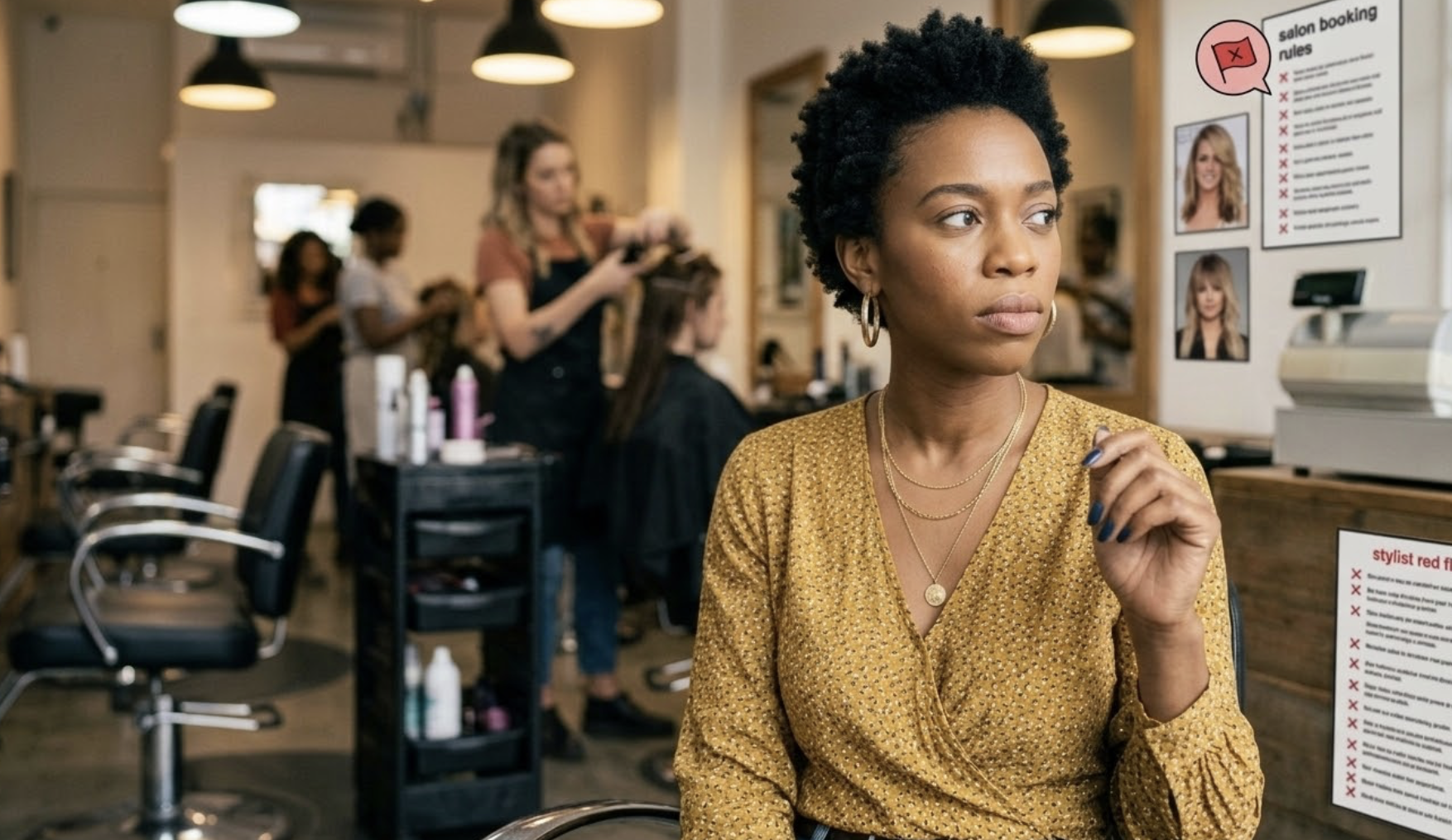
We have all seen the new “booking rules” that have taken over our timelines. You know the ones: hair must be washed, deep conditioned, blown out, and perfectly stretched before you even step foot in the door. Sometimes it feels like you have to do half the service yourself just to be seen! While we understand that time is money for our stylists, it is hard not to feel like the actual “service” part of the appointment is shrinking while the prices are rising.

What is the one Stylist Red Flag policy that makes you close the tab immediately? Is it the non refundable deposit that costs as much as the actual style? Or maybe it is the “no extra guests” rule that includes your own newborn? Some policies are understandable for a smooth business, but others feel like they are intentionally making the client’s life harder. We are all for supporting our stylists, but we have to ask: at what point does a policy become a deterrent?

Screenshot 2026 03 05 At 103200 AM
Photo Credit: Google

Is Luxury Service Dead or Are We Being Difficult?

There is a big debate happening in the comments right now. One side argues that luxury service means being pampered from start to finish, including the wash and blow dry. The other side says that these rules allow stylists to work faster and see more clients. But when you are paying premium prices, you expect a premium experience. When a Stylist Red Flag pops up, like being charged a “late fee” when the stylist hasn’t even finished their previous client, it breaks the trust that makes the stylist client relationship so special.

We aren’t just being difficult; we are asking for a return to the basics of hospitality. We miss the days when a salon visit meant sitting back and letting a professional handle everything. Now, the anxiety of making sure your hair is “prepped” correctly can almost ruin the excitement of a new look. If the rules make us want to cancel the appointment before we even book it, something has to change.

The Final Verdict

At the end of the day, we just want to look good and feel respected. We love our stylists and the magic they work on our crowns, but the Stylist Red Flag culture is making it harder to stay loyal. We want to hear from you! What is the craziest rule you have seen lately? Are you still booking, or have you started your DIY journey at home?

Why you can’t smell certain scents

0


style=”;”
/>

Ever opened a brand new Woohoo Natural Deodorant, taken a big sniff and thought…

“Hmm. That’s subtle.”

Or maybe even…

“Can I smell anything at all?”

It’s actually more common (and more fascinating) than you might think.

What you’re experiencing is actually a very normal quirk of human biology. When it comes to scent, our noses are surprisingly individual and that means two people smelling the exact same product can have completely different experiences.

Let’s chat about why this happens.

Everyone’s Nose Is Different

Studies show that humans have around 400 different smell receptors in the nose that detect scent molecules.

But here’s the interesting part: everyone has a slightly different combination of those receptors.

This means some people are super-sniffers (this is called hyperosmia), able to pick up the tiniest scent notes, while others may be completely blind to certain molecules.

Scientists even have a name for it: specific anosmia.

According to research, a portion of people cannot smell certain fragrance molecules at all. So while one person smells something bright and tropical, another might smell very little.

Neither person is wrong. Their noses are simply wired differently.

Some Scents Are Naturally Subtle

Another reason some Woohoo scents might seem lighter than expected is because they were designed that way.

Take Drift and Surf, for example.

These deodorants were intentionally formulated to be fresh and gentle, rather than loud or overpowering.

Drift blends notes of:

  • sea salt
  • peppermint
  • orange
  • cypress
  • lavender
  • melon

The overall effect is beachy and breezy, like standing near the ocean. It’s meant to feel light and clean, not like a strong perfume cloud.

Surf leans into tropical notes like:

But here’s where it gets interesting. Surf uses a natural food flavour rather than a traditional cosmetic fragrance. That means it’s made with ingredients normally designed for taste, not long-lasting scent.

Food flavours don’t contain the heavier fragrance components called base notes. These are the molecules that make perfumes linger for hours.

Without those base notes, a scent can smell bright and delicious when you first open it, but become softer once applied.

In other words, Surf is more of a tropical whisper than a tropical shout.

Nose-Blindness Is Real

Even if you can smell your deodorant at first, there’s another reason the scent might disappear after a while.

It’s called olfactory adaptation, also called nose blindness.

Your brain is extremely good at filtering out smells that stay constant. This helps it focus on new or important scents in the environment.

That’s why:

  • you stop smelling your own perfume after a few minutes
  • you can’t smell your house but guests can
  • your deodorant seems to disappear during the day

Your brain basically decides: “Got it. That smell is normal now.”

So while you may no longer notice the scent on yourself, someone standing nearby may still pick up the scent perfectly well.

Natural Deodorant Is Different

Another thing to remember is that natural deodorants behave differently from conventional ones.

Traditional deodorants often rely on synthetic fragrance blends designed to last a very long time and project strongly.

Woohoo natural deodorants use essential oils, natural fragrances and flavour components, which tend to sit closer to the skin and feel more subtle.

Our goal isn’t to make your armpits smell like a perfume counter.

It’s to keep you smelling fresh and feeling comfortable without overpowering your senses.

Interesting, eh?

SHOP DEODORANT

7 Best Cheap Mattresses 2026 Under £500, Tested & Reviewed

0

The best cheap mattresses FAQs:

Our buying guide covers everything from the type of cheap mattresses available – whether pocket-sprung, memory foam, or hybrid – to firmness levels, taking in what’s best for those who suffer from back pain, to mattress size, and advice on how often you should replace your mattress.


What are the benefits of a cheap mattress?

Aside from providing buyers with a better mattress deal, value-wise, than their premium counterparts, an inexpensive mattress can often do away with some of the more superfluous mattress features. For instance, while a gel-infused mattress may boast some serious sleep appeal, you might find that similar and more affordable materials and technologies can offer the same spinal support and breathability. Take the Simbatex foam alternative within Simba’s bed-in-a-box foam rolled mattress; it “provides 30x more airflow than standard memory foam” according to the brand, not to mention supporting the shoulders specifically with its zoned foam layer, much like a gel-infused mattress.

We believe that this, alongside other high-end mattress technologies, like wool-fill and ‘no-flip’ models, do not define the perfect double, king or single mattress. Of course, there are benefits to be had of an extra 3-7 layers of foam, pocketed coils and/or tufting but, in 2025, the cheap mattress market has a lot to be said for it.


How often should you replace your mattress?

As a general rule of thumb, you should be looking to replace your mattress every 7 to 10 years. Over time, even the best mattresses can lose their support and comfort, leading to disrupted sleep and potential aches and pains. But the actual lifespan of your mattress can vary depending on factors like the quality of materials, how well it’s cared for, and how much use it gets.

Signs that it’s time to replace your mattress include visible sagging, lumps, or indentations, waking up with stiffness or discomfort, and noticing that you sleep better on other beds (like in hotels). If yours is affecting your sleep quality or showing significant wear and tear, it might be time to start shopping for a new mattress, even if it hasn’t quite reached the 7-year mark.


What is a reasonably priced mattress?

A reasonably priced mattress in the UK typically ranges between £200 to £600, depending on the size, materials, and brand. Within this range, you can find quality options that offer a good balance of comfort, support, and durability. Memory foam mattresses and pocket-sprung models are often available in this bracket, too, providing various levels of firmness and comfort features to suit different sleepers.

While it’s possible to find a low-price mattress for less than £200, these may compromise on quality or longevity. On the other hand, spending more than £600 can get you premium features, such as advanced cooling technology, higher coil counts, or hybrid designs that blend memory foam with springs for enhanced support.

Ultimately, if you’re after bang for your buck, it’s worth stretching to the best you can afford – you won’t regret investing in your sleep.


Are expensive mattresses better?

When it comes to mattress buying, the old adage ‘you get what you pay for’ often rings true, but it’s not always that simple. Some of the best hybrid mattresses tend to be made from high-quality materials, such as advanced memory foam, latex, or pocket springs, which can provide better support, durability, and comfort over time. They often come with extra features like cooling technologies, luxurious fabrics, and longer warranties, all of which can enhance your overall sleep experience.

But a higher price doesn’t automatically guarantee a better mattress for everyone. What matters most is finding a mattress that suits your specific needs — whether that’s firm support, pressure relief, or temperature regulation. An expensive mattress might offer a premium experience, but if it doesn’t align with your sleep preferences, it might not be worth the investment.


How can you extend the life of a cheap mattress?

Michal’s maintenance tips are simple but effective: “To increase the lifespan of a mattress, start by rotating or flipping it regularly (every 3–6 months) to prevent uneven wear and sagging, and use a high-quality mattress protector to guard against spills, stains, dust, and allergens. Keep the mattress clean by vacuuming and spot-cleaning any stains promptly, and ensure it is properly supported with a sturdy bed frame or foundation to avoid structural damage. When It comes to creating a luxurious feeling, a trusty mattress topper is great for adding plushness and helps with temperature regulation that you often get with a higher quality mattress.” A mattress topper, in particular, is the quickest way to make even a basic mattress feel hotel-level plush.


What is the difference between memory foam, spring and hybrid mattresses?

It can get confusing when shopping for cheap mattresses, so you need to know what type of mattress is best. How does memory foam support you? What even is a hybrid?

Memory foam is a layer of foam that moulds with your body shape, helping to distribute your body weight, while responding to your body temperature. “The benefits of memory foam are that it is very durable so easy to care for as it won’t need turning as often, and it also offers great pressure relief”, says Hannah.

Most spring-based beds today are supported by pocket springs – small wire springs, surrounded by fabric, which help to support and create the bounce in a mattress. And you’ve guessed it – a Hybrid mattress is when these two forms of support are mashed together to allow for the benefits of both.


Is it worth buying a cheap mattress? The verdict:

It’s important to consider that you spend about a third of your life in bed. While it might be tempting to go for a cheaper option, it’s essential to weigh the pros and cons. A cheaper mattress might seem like a good deal upfront, but it could lack the durability, support, and comfort you need for a good night’s sleep. Poor-quality mattresses can lead to discomfort, restless nights, and even long-term health issues like back pain.

However, not all affordable mattresses are bad – far from it! If you’re on a budget, look for mattresses that offer good value – those that use decent materials, have positive customer reviews, and come with a reasonable warranty. You can, in fact, find budget-friendly options with a tantalising price point that provide adequate support and comfort, especially if you’re using it temporarily or for a guest room.


How the best affordable mattresses compare:

The woman who invented the modern beauty industry (and you’ve never heard her name)

0

The modern beauty industry feels incredibly scientific – lab coats, clinical language, “clinically-proven” claims and glossy counters that promise transformation in a jar. But what if all of that was manufactured?

And what if it was designed by one woman whose name has faded from public memory, even though her ideas still shape how we buy, sell and think about beauty today?

In this episode of Green Beauty Conversations, Formula Botanica CEO Lorraine Dallmeier tells the astonishing story of Helena Rubinstein and why her influence is everywhere, even if most of us don’t realise it.

Before Helena Rubinstein, people made their own beauty products, with recipes being handed down through generations, just like cooking. Then Helena arrived, and the beauty industry pivoted so hard that we are still living with the aftershocks more than a century later.

From white lab coats to staged “scientific” imagery and the invention of skin typing, this episode reveals how one woman didn’t just build a business – she rewrote the rules of the entire industry.

This is a powerful story about ambition, storytelling, marketing genius, and the moment beauty stopped being something we made for ourselves and became something we were told we had to buy.

If you think you know where modern beauty comes from, this episode will make you question everything. And once you hear it, you’ll never look at the beauty industry in quite the same way again.

Listen here

“Helena didn’t create ‘scientific beauty’. She created the performance of scientific beauty, and the industry scaled that performance until it became the default.” — Lorraine Dallmeier

Key takeaways:

  • The invention of scientific theatre: Helena Rubinstein didn’t just sell skincare – she changed how the beauty industry presents itself. By using white lab coats, staged laboratory settings and clinical-looking imagery, she created a powerful visual language of authority and trust. Her competitors copied this approach so thoroughly that it became the industry standard, and we still see it echoed today in department stores and advertising.
  • Beauty before laboratories: Before Helena’s influence, skincare lived in kitchens, notebooks, and family traditions. People made their own products themselves using local ingredients and shared knowledge. Helena’s approach shifted beauty away from the domestic and into the hands of perceived experts. That single change altered not just what people bought, but how they thought about who was “allowed” to formulate.
  • The creation of skin typing: The familiar categories of normal, dry, oily and combination skin were not born from rigorous dermatological science. They were Helena’s own classifications, based on observation and a sharp understanding of human psychology. By giving people a label, she gave them an identity – and each identity conveniently required different products. This drove consumption and changed customer expectations almost overnight.
  • A complicated but brilliant legacy: Helena Rubinstein was fearless, ambitious and extraordinarily resourceful in a world that offered women very little authority. She carved out credibility by borrowing the symbols of science when she couldn’t access the institutions behind them. At the same time, her success helped create a long-lasting narrative that formulation belongs only to laboratories and experts. This episode challenges that idea.
  • Why this still matters today: The beauty industry is still full of the visual language Helena popularised – from “clinically-proven” claims with no shared definition to molecule diagrams, pipettes and intimidating ingredient names used for effect. These are echoes of the same strategy: performance over substance. Understanding Helena’s story helps explain why modern beauty looks the way it does. It also proves that anyone can formulate.

Thank you for joining us for this episode of the Formula Botanica Green Beauty Conversations podcast. If you enjoyed listening, please share, subscribe and review this episode on Apple Podcasts, Spotify or Youtube so that more people can enjoy the show. Don’t forget to follow and connect with us on Facebook and Instagram.

FREE TRAINING

Learn how to become an
Organic Skincare Formulator

Join over 100,000 other Formulators

By providing your details, you agree to receive additional educational & marketing emails from Formula Botanica, which further introduce our curriculum. Your data is never shared or sold. Read our Privacy Policy.

FREE TRAINING

How to become an
Organic Skincare Entrepreneur

Join over 100,000 other Formulators

By providing your details, you agree to receive additional educational & marketing emails from Formula Botanica, which further introduce our curriculum. Your data is never shared or sold. Read our Privacy Policy.

FREE TRAINING

How to become an
Organic Skincare Entrepreneur

Join over 100,000 other Formulators

By providing your details, you agree to receive additional educational & marketing emails from Formula Botanica, which further introduce our curriculum. Your data is never shared or sold. Read our Privacy Policy.

DS & Durga Debaser in Bloom and 4 New Beauty Launches Worth Your Attention

0

Last Updated on March 14, 2026 by omgbart

Five new launches have been competing for space in my routine lately. D.S. & Durga Debaser in Bloom started it all.

DS & Durga Debaser in Bloom

I had ten minutes to kill before our lunch reservation. The restaurant next door was not open yet so I ducked into the perfume shop next door, not looking for anything, definitely not prepared to buy. We were also, as it happened, celebrating a small anniversary. One year since my first visit to Madrid. Ten months of actually living here. The kind of day that earns a little something.

D.S. & Durga Debaser in Bloom in a box.

Debase in Bloom was on the counter. I knew Debase well, had spent a long stretch on the DS & Durga media list before a PR switch up ended that, and had been following the brand from a distance since. I sprayed it mostly out of curiosity.

D.S. & Durga Debser in Bloom box with detail on notes.

I wore it to lunch.

If you know Debase you know it does not behave like a fig scent should. No sweetness, no obvious fruit. It is sharp and green, all leaf and stem, like something freshly crushed. Debase in Bloom does not sand that down. It just lets a little light in. The white florals are led by gardenia, which on paper should worry anyone. Gardenia can go powdery and suffocating fast. Here it stays clean and almost skeletal, stripped of excess, paired with musk and coconut husk in a way that keeps the whole thing airy and modern.

D.S. & Durga fragrances ranked.

The detail I keep coming back to is the cassette tape accord. DS & Durga built it from white currant and rosemary tuned so precisely into each other that neither reads as itself. What comes through is a composite, something that smells unmistakably like the early 90s without being able to explain why. Born in 1980, I did not expect a fragrance to make me feel something about a dead format.

It was a good ten minutes.

$225 (50ml) and $300 (100ml) at dsanddurga.com

Paula's Choice longevity serum on a counter.

Paula’s Choice CellularYouth Longevity Serum

If you had told me back in 2001 when I first started using Paula’s Choice that the brand would one day have a department store aesthetic, I would have told you to put the drugs away. Paula’s Choice was always about efficacy over elegance, the anti-fancy. The CellularYouth Longevity Serum is the fanciest thing they have ever made, it comes in a glass bottle which may actually be a first for the brand, and it looks every bit the part.

Paula's Choice Cellular Youth serum texture on skin.

Firming is the primary objective and Acetyl-Tetrapeptide 2 leads that charge, working to keep the dermis infrastructure tight and comfortable. A superfood edit of goji berry, reishi mushroom, and sunflower sprout extracts amplifies hydration and antioxidant protection. The slightly pink-pearlescent texture lands almost weightlessly on skin. It works morning or night, layers clean under SPF or under a richer moisturizer for PM use. For a serum with this level of ambition, that flexibility is not nothing.

$72 (30ml) at paulaschoice.com and sephora.com

African Botanics Intense Recovery Cream on a counter.

African Botanics Intense Recovery Cream

African Botanics built this one specifically for nighttime, and the logic is sound. Skin in its overnight state is at its most recuperative, which means the right formula applied at the right moment can work harder than it ever could during the day. This cream works very hard indeed. The texture is rich without being greasy, a harder balance to strike than brands make it sound, with a light clean scent and a finish that absorbs cleanly and leaves skin feeling replenished rather than just coated.

African Botanics most advanced moisturizer texture of product.

The ingredient list is where this one gets serious. One percent retinol, vitamin C in THA form, azelaic acid, ceramides, peptides, and stem cell exosomes form the active backbone. Layered over that is a botanical medley that reads like a roll call of African biodiversity: calendula, baobab, kigelia africana fruit extract, rooibos, marula, rosehip. Sensitive skin types should ease in slowly, once or twice a week, and build from there.

$249 (50ml) at africanbotanics.com

Votary barrier balm tube in hand.

Votary Super Barrier Balm

Do not let the 30ml tube fool you. It looks travel-sized at first glance but a balm this dense requires very little per application, so that small tube goes considerably further than it appears.

Unscented but far from joyless, the Super Barrier Balm is Votary doing what Votary does best: straightforward, effective skin calming with no unnecessary noise. The formula leans into restoring compromised or irritated skin almost immediately, fueled by cica, buriti fruit oil, kelp extract, squalane, echium seed oil, and cardiospermum halicacabum among others. Anti-inflammatory, nourishing, and redness-reducing across the board.

Votary barrier balm texture of product.

I reach for it in two specific situations. In-flight and post-flight, when recycled cabin air does its worst, and on tretinoin nights to buffer the more reactive areas of my face before any irritation has a chance to take hold. It handles both without missing a beat.

If your barrier is unhappy, this fixes it fast.

£35.00 (30ml) at spacenk.com

Remedy eye cream for dark circles in a box.

Remedy For Dark Circles

Let me start with some shade. Remedy’s website is currently showcasing a before and after for this product where the lighting differential between the two shots is so extreme that a black hole in space would glow in comparison. It is one of the more egregious examples of B&A manipulation I have seen recently and worth calling out.

What in the world is this mess of a light show… (photo courtesy of Remedy)

The actual product is pretty great, which makes the bad marketing more frustrating than it needs to be.

I am already a fan of Remedy For Dry Lips and Remedy For Pore Size, both of which are spectacular, so this was not a cold introduction to the brand. For Dark Circles brings six brightening agents to the undereye area: kojic acid, niacinamide, hexylresorcinol, ascorbyl glucoside, licorice, and turmeric extract. Caffeine extract handles depuffing, algae extract and Matrixyl 3000 firm, and hydrolyzed hyaluronic acid alongside squalane do the plumping work. It is a thorough formula that does not cut corners.

Remedy for dark circles eye cream.

The texture is creamy with a comfortable glide, fast absorption, and a no-slip finish that actually works under concealer. My undereye area looks noticeably more alert in the mornings, which for an eye cream is the whole point.

One note: the ceramic cooling tip is included and positioned as a selling point. I find it gimmicky and dispense onto my finger instead, which I also consider more hygienic.

$24 (15ml) at remedyskin.com

Final Thoughts

It is not often that five new products land in the same week and all of them stick. Madrid, it turns out, is good for a lot of things. Including knowing when to duck into a perfume shop with ten minutes to spare.


This post contains affiliate links. If you click through and make a purchase, I may earn a small commission—at no cost to you. It helps keep my mist habit funded and this blog running. Thank you for reading.