

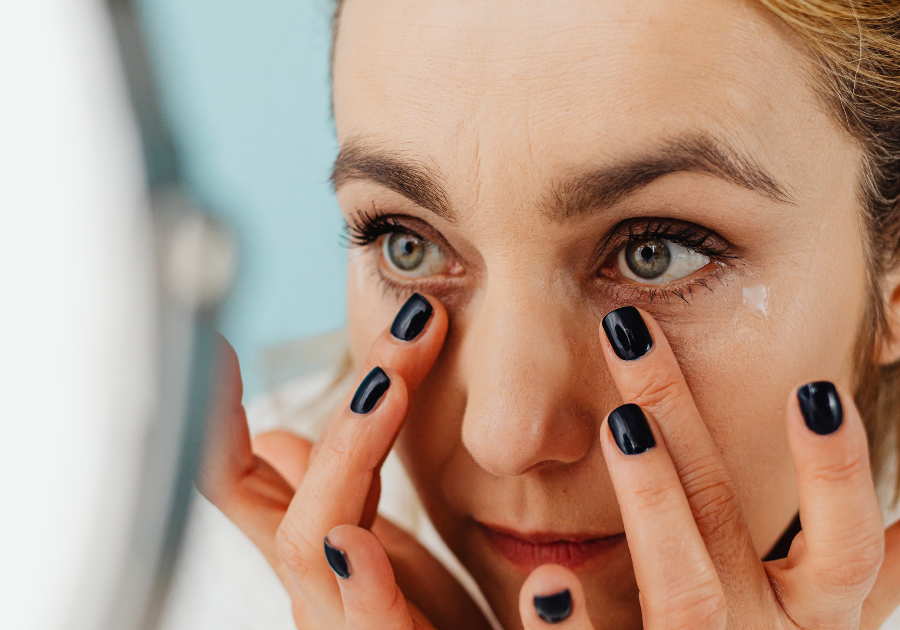
What Actually Works for At-Home Under-Eye Treatment
Topical products can support the under-eye area, but the right ingredients matter. Fraicola’s top two recommendations are retinol and caffeine.
- A low-strength retinol specifically formulated for the eye area because it helps renew the skin over time. Don’t use a retinol meant for the rest of your face beneath your eyes. The skin in this area is much thinner and more prone to dryness, redness, and irritation and requires a specific formula.
- Caffeine can also be helpful for the under-eye area, particularly when puffiness is contributing to the appearance of tired-looking eyes.
- For pigment concerns, skin-brightening ingredients like tranexamic acid and kojic acid can help gradually improve discoloration over time.
One product worth knowing about from Apex Skin’s own line is Eye Rehabwhich combines both caffeine and retinol in a single formula.
It’s important to remember that under-eye concerns can be treated in the office or with products but to get the best results, they should be paired with lifestyle improvements like more sleep and proper hydration.
Trends and Products to Avoid Near Eyes
Not every skincare ingredient belongs near the eyes. Alpha-hydroxy acids (AHAs) and beta-hydroxy acids (BHAs), including salicylic acid and lactic acid, can be very irritating around the eyes. Fraicola recommends keeping at least half a thumb’s length of clearance below the waterline when applying these exfoliating products.
One trend Fraicola has seen more frequently lately is patients using Korean skincare “fat plumper” sticks beneath the eyes.
Her concern is that many of these products contain ingredients that can cause irritation, dryness, and flakiness. When the skin barrier becomes compromised, treatments such as microneedling and chemical peels may need to be postponed until the skin has recovered.
When in doubt, consult a qualified provider before trying trending products in such a delicate area.
“Just make sure you know what’s in your products,” she says, “and that you’re consulting with a nurse, nurse practitioner, physician, or PA so that you know what’s good for your skin.”
