

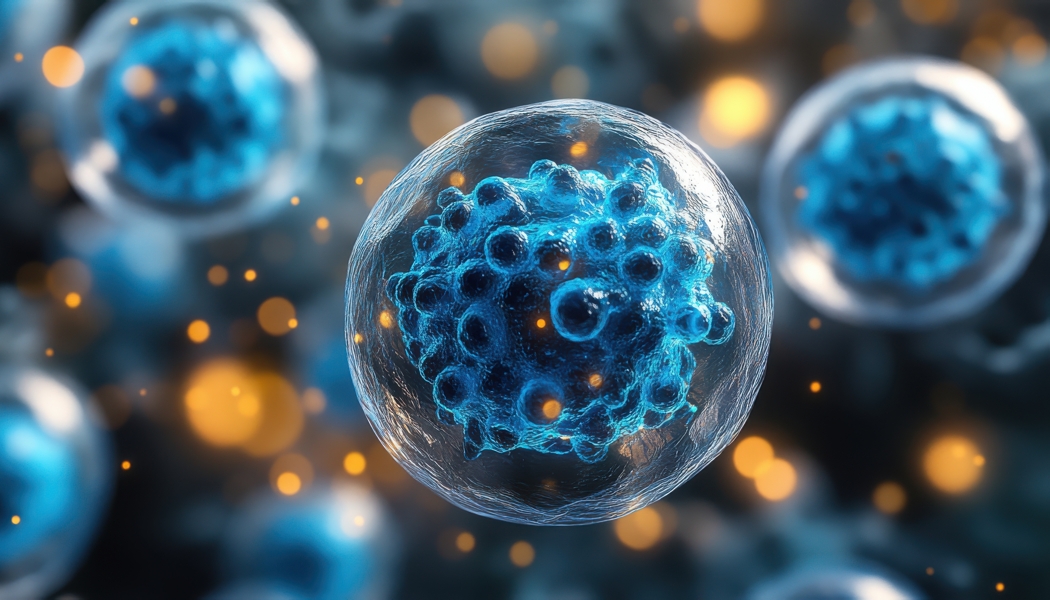
Exosomes are a subtype of extracellular vesicles (EVs), released by cells and originating from endosomal pathways. They contribute to cellular homeostasis by removing metabolic waste while also facilitating communication between cells.
Since 2010, research on exosomes has experienced exponential growth. The number of publications per year on PubMed mentioning the term “extracellular vesicles” is close to 5,500 (according to Bazzan et al., 2021), representing an annual growth of 30%.
In 2024, Saranya P. Wyles, PhD, Assistant Professor of Dermatology, Pharmacology, and Regenerative Medicine at Mayo Clinic College of Medicine and Science, published a study on the topical use of platelet-derived exosomes in 56 adults. After 12 weeks, 87.3% of participants reported visible improvements in facial skin aging, including reductions in redness, pigmentation, and overall sun damage. These findings were supported by histological analysis, which showed an increase in collagen thickness.
Although some dermatologists have expressed reservations about the study, the potential of exosomes in cosmetic applications appears promising.
A winning synergy
The K-beauty phenomenon has highlighted the complementary relationship between exosomes and PDRNs. PDRNs provide the essential building blocks for cell regeneration and tissue repair—stimulating collagen and elastin synthesis, reducing chronic inflammation, and helping to restore skin damaged by environmental stressors such as UV radiation and pollution—while exosomes act as messengers, delivering biological signals between cells.
Traditionally, PDRN (sodium DNA) is derived from trout or salmon sperm, making it highly concentrated in nucleotides, carefully purified to minimize the risk of allergic reactions, and biocompatible with human tissue. More recently, the rise of vegan formulations has encouraged the development of plant-based alternativesderived from sources such as ginseng, rice, green tea, or rose. However, some experts question this terminology, arguing that so-called “plant-based PDRNs” differ from true PDRNs and are closer to plant extracts or fermentation lysates, which are rich in polyphenols, saponins, and antioxidants.
Most recently, the first microbiologically derived PDRN (L-PDRN) from Lactobacillus rhamnosus has emerged. A study published in January 2025 (PubMed, National Library of Medicine) highlights the potential of L-PDRN as a multifunctional and sustainable alternative to salmon-derived PDRN. “The use of microbially derived PDRN opens new avenues for therapeutic applications in oxidative stress management, tissue regeneration, and immune modulation, paving the way for a paradigm shift in PDRN supply and functionality,” the authors explain.
The study, conducted by a Korean team dispatched into several laboratories, showed that L-PDRN exhibits superior antioxidant activity, as well as increased efficacy in cell migration and wound repair. Electrophoretic analysis revealed that L-PDRN is composed of smaller DNA fragments (less than 100 bp) than those of PDRN extracted from salmon (200–800 bp), suggesting improved bioavailability and skin absorption.
Cosmetics and exosomes
The Cellogic range from the Bio Logica Cosmetics brand, launched in 2025 by Dr. Laurent Blascois rooted in biomimicry and Phytobolites® exosomes—plant-derived biological messengers. Its creator explains that biomimicry, the focus of his thesis, inspired him to “design cosmetics by applying the logic of living systems, replicating the structure and functioning of the skin.”
Replicating the skin in order to better respect it thus became his guiding principle. “I collaborated with a Swiss company to develop plant-derived exosomes,” he explains. “These act like intercellular ‘express couriers,’ stimulating aging cells. When a biological imbalance occurs, they transmit signals between skin cells, activating natural defense and repair mechanisms.”
Exosomes and PDRNs represent a highly innovative and promising area of research, particularly for their regenerative potential. They offer a compelling alternative to more invasive aesthetic procedures. As non-invasive approaches that do not rely on injections, they empower individuals to take a more active role in managing their skin and hair concerns. These solutions promote a gentler, more natural approach, with results that are often more progressive and long-lasting.
|
Read the full article in our special issue on Cosmetic Ingredients (April 2026 )available to read here.
|
